
SpaceX Starlink FCC Approval 2026: The Race for 15,000 Satellites
SpaceX has secured FCC approval to launch 7,500 more Gen2 Starlink satellites, bringing the total to 15,000. Discover the new 2028 deadlines and regulatory waivers.
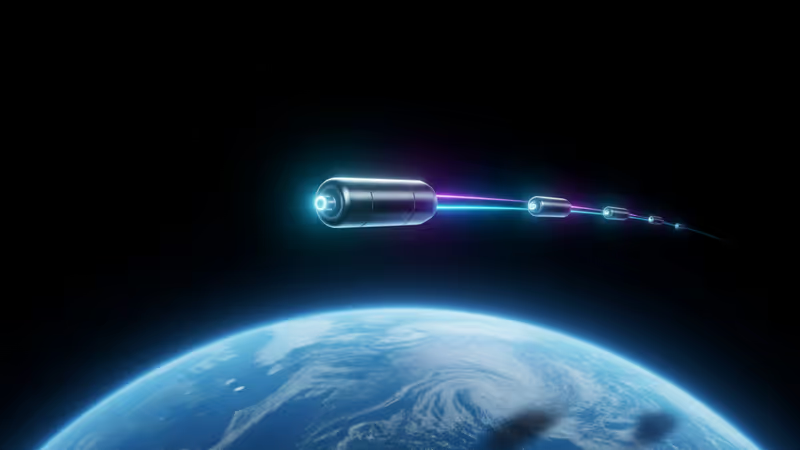
There'll soon be 15,000 satellites circling the globe. According to The Verge, the FCC gave SpaceX the green light last Friday to launch an additional 7,500Gen2 Starlink satellites. This effectively doubles the company's approved orbital fleet.
SpaceX Starlink FCC Approval and Capacity Boost
The approval comes with a major regulatory shift. The government is waiving previous restrictions that once prohibited overlapping coverage. This change is designed to enhance capacity and provide more reliable high-speed internet globally. While SpaceX originally pushed for 30,000 satellites, the FCC is keeping a tighter leash for now, capping the total at around 15,000.

The 2028 Deadline for Gen2 Deployment
Time's ticking for the aerospace giant. The mandate requires that 50% of these Gen2 satellites must be operational by December 1st, 2028. The remaining half must be in orbit by December 2031. It's a massive logistical challenge that'll test the limits of SpaceX's rapid launch capabilities.
Authors
Related Articles
American Airlines just signed Starlink for 500+ aircraft. It's not just about faster inflight internet — it's a calculated move in the run-up to what could be the largest IPO in history.

SpaceX's upgraded Starship V3 completed its first test flight, deploying 20 Starlink simulators but losing the Super Heavy booster. With an IPO weeks away, the stakes just got higher.

SpaceX's IPO filing puts AI at the center, claiming a $26.5 trillion market opportunity. But can Grok compete with OpenAI and Anthropic for enterprise customers?
SpaceX filed a nearly 400-page S-1 with the SEC, targeting an IPO as early as June 12. Here's what the filing reveals—and what it doesn't.
American Airlines just signed Starlink for 500+ aircraft. It's not just about faster inflight internet — it's a calculated move in the run-up to what could be the largest IPO in history.
SpaceX's upgraded Starship V3 completed its first test flight, deploying 20 Starlink simulators but losing the Super Heavy booster. With an IPO weeks away, the stakes just got higher.
SpaceX's IPO filing puts AI at the center, claiming a $26.5 trillion market opportunity. But can Grok compete with OpenAI and Anthropic for enterprise customers?
SpaceX filed a nearly 400-page S-1 with the SEC, targeting an IPO as early as June 12. Here's what the filing reveals—and what it doesn't.
Thoughts
Share your thoughts on this article
Sign in to join the conversation