
Why SpaceX's Rocket Just Passed Its Ice Water Test
SpaceX completes cryogenic proof testing on Super Heavy booster, marking a critical safety milestone after previous rocket failures. What this means for the space industry.
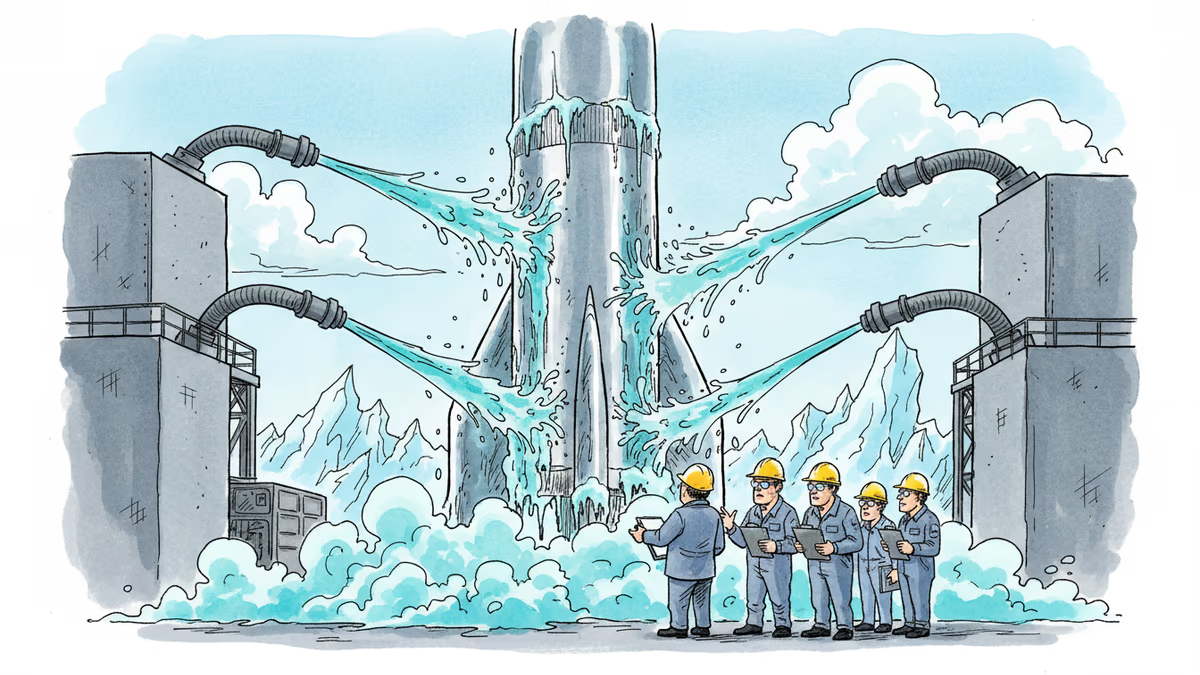
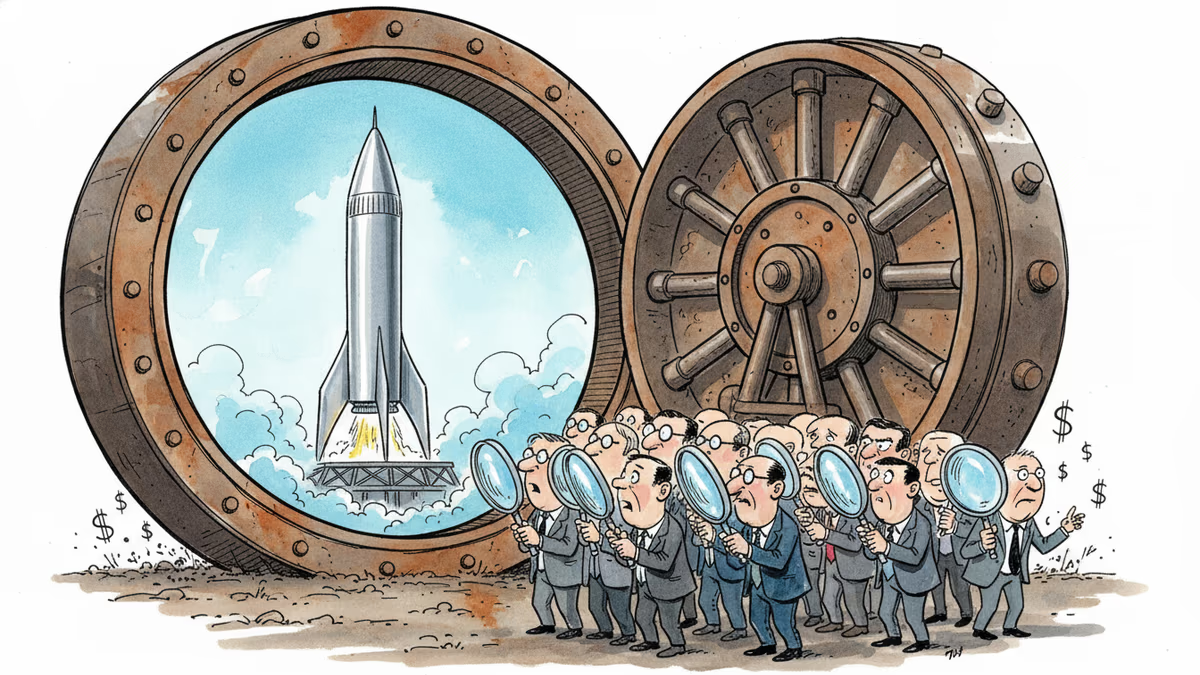
Six days. Four rounds of ice-cold liquid nitrogen. SpaceX's latest Super Heavy booster just survived what's essentially a rocket torture test—and that's bigger news than it sounds.
The company announced Tuesday that its 237-foot-tall stainless steel booster completed "cryoproof operations" for the first time with the V3 design. But this isn't just another box-checking exercise. It's SpaceX learning from its explosive past.
The Method Behind the Madness
At Starbase, Texas, ground crews rolled the massive booster from factory to test site for what amounts to industrial-grade stress testing. First came pressure tests at room temperature. Then the real fun began: four cycles of super-cold liquid nitrogen flooding the rocket's tanks over six days.
Why liquid nitrogen? It's a safe stand-in for the cryogenic methane and liquid oxygen that'll actually fuel the rocket. The goal is simple: find weak points before they become catastrophic failures at Mach 3 and 200,000 feet up.
The testing mimics the thermal shock rockets experience during real operations—tanks expanding and contracting as they're filled with propellant at -297°F, then drained, then filled again. It's like putting your car through a thousand winter-to-summer cycles in a week.
Learning from Spectacular Failures
This methodical approach marks a shift for SpaceX. After multiple Starship test flights ended in spectacular explosions, the company doubled down on ground testing. The V3 booster features redesigned propellant systems specifically to address issues that destroyed previous versions.
Elon Musk's "fail fast, learn faster" philosophy gets the headlines, but the real story is increasingly sophisticated risk management. Each explosion taught lessons that now get baked into pre-flight testing protocols.

Industry observers see this as SpaceX maturing from startup to aerospace prime contractor. "They're moving from 'move fast and break things' to 'move fast and don't break expensive things,'" notes one former NASA engineer.
The Bigger Picture: Reliability vs Innovation
For the broader space industry, SpaceX's testing evolution raises interesting questions. Traditional aerospace companies like Boeing and Lockheed Martin have always emphasized extensive ground testing—sometimes to the point of analysis paralysis.
SpaceX proved you could innovate faster by accepting more risk. But as Starship approaches operational status (and paying customers), that calculus changes. The company now needs both speed and reliability.
This tension plays out across the commercial space sector. Startups like Rocket Lab and Virgin Orbit must balance investor pressure for quick results against the physics reality that rockets are unforgiving machines.
What's at Stake
Successful cryoproof testing clears SpaceX for the next Starship flight, likely within weeks. But the broader implications extend beyond one test flight.
NASA is counting on Starship for its Artemis moon program. Commercial satellite operators need reliable, cheap access to orbit. The entire "New Space" economy depends on companies like SpaceX proving that private industry can match or exceed traditional aerospace reliability.
Meanwhile, competitors aren't standing still. Blue Origin's New Glenn and ULA's Vulcan rockets are advancing through their own testing regimens, each taking different approaches to the reliability-innovation balance.
Authors
Related Articles
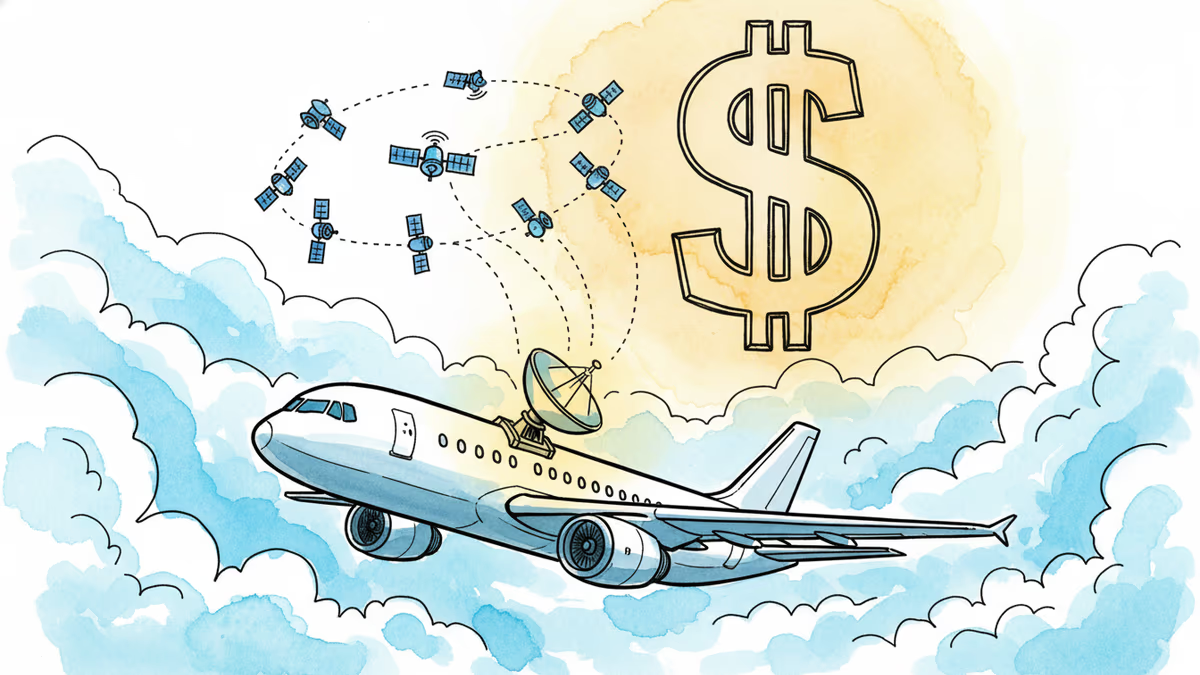
American Airlines just signed Starlink for 500+ aircraft. It's not just about faster inflight internet — it's a calculated move in the run-up to what could be the largest IPO in history.
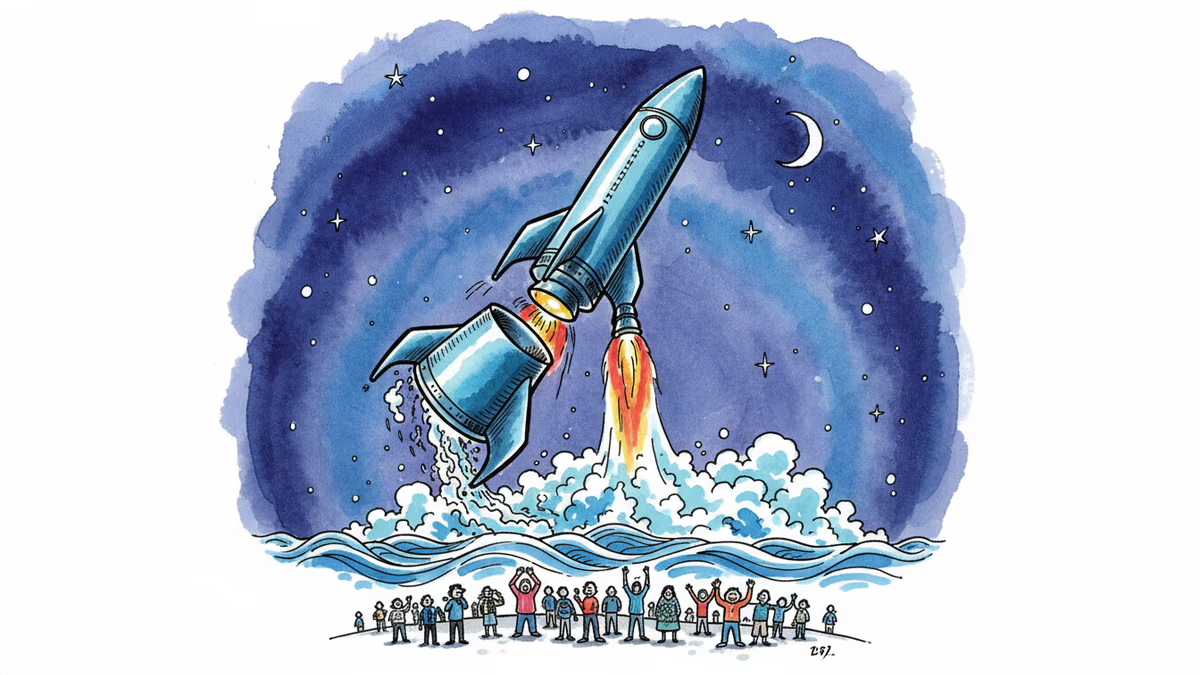
SpaceX's upgraded Starship V3 completed its first test flight, deploying 20 Starlink simulators but losing the Super Heavy booster. With an IPO weeks away, the stakes just got higher.
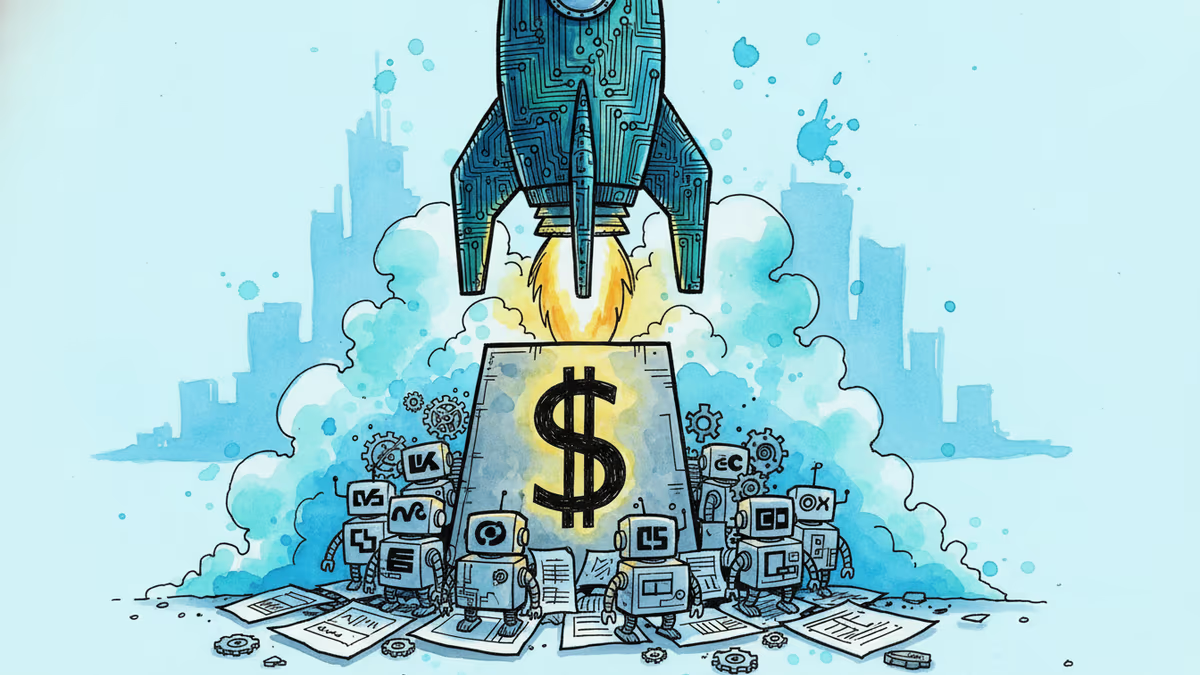
SpaceX's IPO filing puts AI at the center, claiming a $26.5 trillion market opportunity. But can Grok compete with OpenAI and Anthropic for enterprise customers?
SpaceX filed a nearly 400-page S-1 with the SEC, targeting an IPO as early as June 12. Here's what the filing reveals—and what it doesn't.
American Airlines just signed Starlink for 500+ aircraft. It's not just about faster inflight internet — it's a calculated move in the run-up to what could be the largest IPO in history.
SpaceX's upgraded Starship V3 completed its first test flight, deploying 20 Starlink simulators but losing the Super Heavy booster. With an IPO weeks away, the stakes just got higher.
SpaceX's IPO filing puts AI at the center, claiming a $26.5 trillion market opportunity. But can Grok compete with OpenAI and Anthropic for enterprise customers?
SpaceX filed a nearly 400-page S-1 with the SEC, targeting an IPO as early as June 12. Here's what the filing reveals—and what it doesn't.
Thoughts
Share your thoughts on this article
Sign in to join the conversation