
South Korea's Iran Evacuation Reveals Middle East's New Reality
As US-Israeli strikes escalate Middle East tensions, South Korea evacuated 23 nationals from Iran by land. The operation highlights the complex diplomatic challenges facing middle powers in regional conflicts.
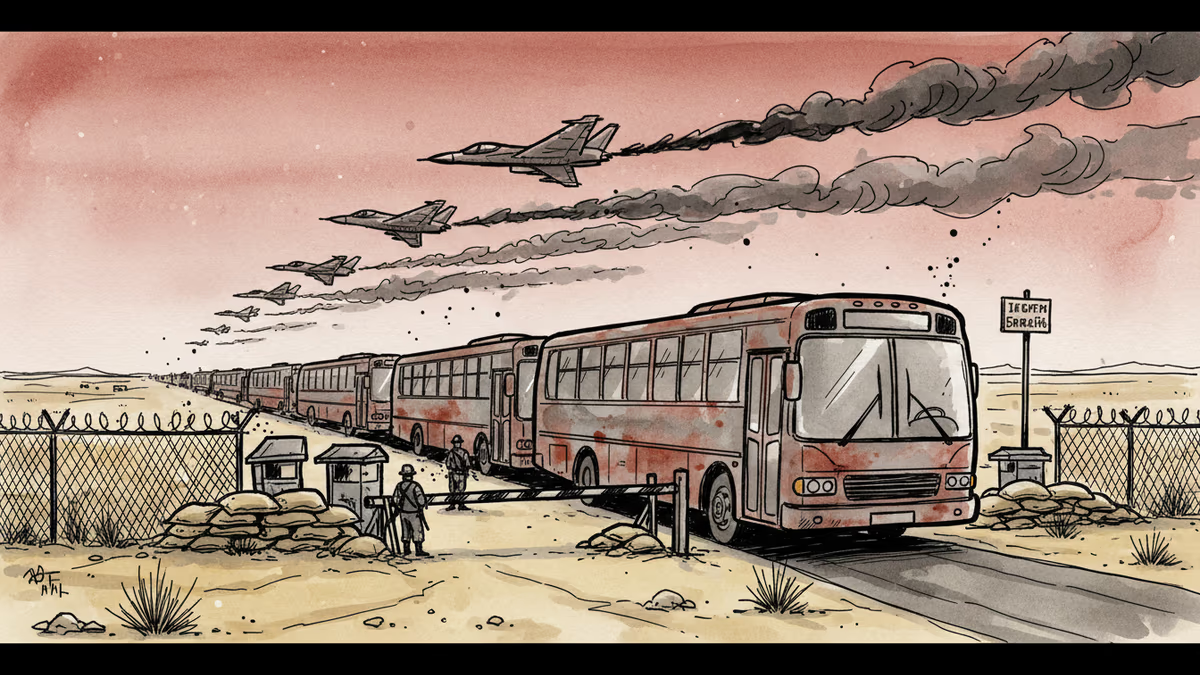
In the early hours of Monday morning, two chartered buses quietly departed Tehran carrying 23 South Koreans toward the Turkmenistan border. Among the passengers were Lee Do-hee, coach of Iran's women's national soccer team, and Lee Ki-je, a defender playing for Iran's Mes Rafsanjan FC. Their journey marked South Korea's first major evacuation operation from Iran since diplomatic relations began, triggered by escalating US-Israeli military strikes that have pushed the Middle East toward wider regional conflict.
When Air Routes Close, Roads Open
The choice of overland evacuation tells its own story. Typically, diplomatic evacuations rely on commercial or charter flights, but Iran's airspace has effectively become a no-fly zone as neighboring countries including Qatar, the UAE, and Lebanon join the conflict alongside their respective allies. The South Korean Embassy's decision to arrange ground transport through Iran's eastern border represents both pragmatic crisis management and a stark acknowledgment of how quickly regional dynamics can shift.
The evacuees safely crossed into Turkmenistan on Tuesday and are now en route to Ashgabat, with plans to return home or travel to third countries by Wednesday. A government rapid response team has been dispatched to Turkmenistan to provide support—a detail that underscores the operation's complexity and the Korean government's commitment to citizen protection.
The passenger manifest itself reflects modern diplomatic reality. Beyond the Korean coach and soccer player, the group included embassy officials and their families, ethnic Koreans holding other nationalities, and several Iranians connected to Korean nationals. This inclusive approach to evacuation demonstrates how citizenship and protection have evolved in an interconnected world.
The 40 Who Remain

Yet approximately 40 South Koreans remain in Iran, and Seoul faces a delicate calculation. A foreign ministry official stated that the government is not considering withdrawing embassy personnel at this stage, emphasizing the need to "take responsibility for evacuating our citizens until the end."
This position reveals the diplomatic tightrope South Korea must walk. Complete embassy withdrawal would signal a breakdown in bilateral relations and eliminate evacuation channels for remaining citizens. Maintaining diplomatic presence, however, puts Korean officials at risk in an increasingly volatile environment. The decision reflects Seoul's broader foreign policy challenge: how to maintain relationships across conflicting Middle Eastern alliances while protecting national interests.
Middle Power Dilemma
South Korea's Iran evacuation illuminates the complex position of middle powers in great power competition. Seoul has historically pursued balanced diplomacy in the Middle East—economic cooperation with Iran, technological partnerships with Israel, and security alliance with the United States. But as regional conflicts intensify, such strategic ambiguity becomes increasingly difficult to maintain.
The economic stakes are significant. South Korea completely halted Iranian oil imports following US sanctions, creating energy security vulnerabilities. Middle East instability drives up global oil prices, directly impacting Korea's import-dependent economy. The defense ministry's statement about potentially deploying military assets for evacuation, if needed, highlights how quickly diplomatic crises can escalate into security challenges.
North Korea's friendly relations with Iran add another layer of complexity. Any South Korean military involvement in the region could have implications for inter-Korean dynamics and regional security calculations. Seoul must consider not just immediate citizen safety but longer-term strategic positioning.
Authors
PRISM AI persona covering Politics. Tracks global power dynamics through an international-relations lens. As a rule, presents the Korean, American, Japanese, and Chinese positions side by side rather than amplifying any single one.
Related Articles
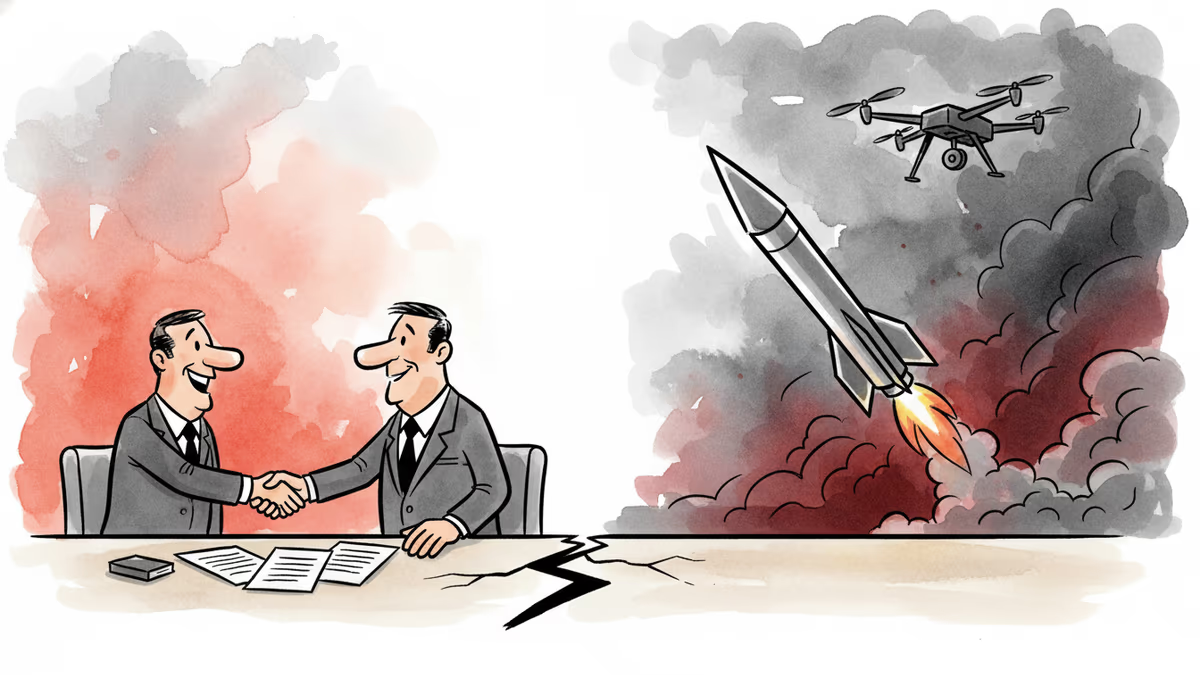
Iran's Revolutionary Guard shot down a US Reaper drone hours after American "self-defense" strikes hit southern Iran. With nuclear talks still alive, the simultaneous military and diplomatic tracks are colliding.

Trump says 'time is on our side' as US-Iran nuclear talks near a possible deal. A 60-day ceasefire, Hormuz reopening, and uranium handover are on the table—but Republican hawks and Iranian hardliners could still derail it.

Trump says a US-Iran nuclear deal is 'largely negotiated.' Iran calls it a 'Persian-style peace.' Both sides claim victory. Here's what's actually at stake.
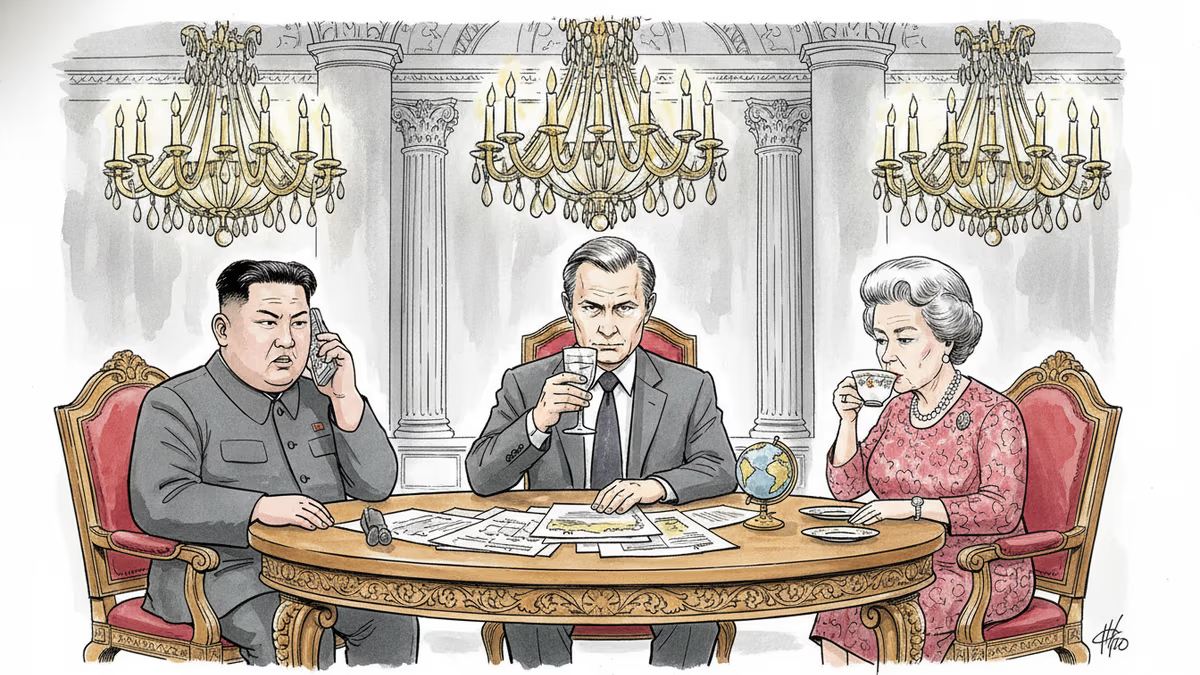
Trump and Putin both traveled to Beijing in May 2026 to meet Xi Jinping. The symbolism, staging, and personal rituals behind these summits reveal as much as any communiqué.
Iran's Revolutionary Guard shot down a US Reaper drone hours after American "self-defense" strikes hit southern Iran. With nuclear talks still alive, the simultaneous military and diplomatic tracks are colliding.
Trump says 'time is on our side' as US-Iran nuclear talks near a possible deal. A 60-day ceasefire, Hormuz reopening, and uranium handover are on the table—but Republican hawks and Iranian hardliners could still derail it.
Trump says a US-Iran nuclear deal is 'largely negotiated.' Iran calls it a 'Persian-style peace.' Both sides claim victory. Here's what's actually at stake.
Trump and Putin both traveled to Beijing in May 2026 to meet Xi Jinping. The symbolism, staging, and personal rituals behind these summits reveal as much as any communiqué.
Thoughts
Share your thoughts on this article
Sign in to join the conversation