

South Korea Bird Flu Quarantine 2026: Emergency Triggered by Triple Strain Outbreak
South Korea implements special quarantine measures in January 2026 after three AI strains, including a 10x more infectious H5N1, emerge simultaneously.
A virus 10 times more infectious than previous strains is sweeping through poultry farms as South Korea faces a historic triple threat of avian influenza. The government is launching intensive measures this month to prevent a nationwide collapse of the poultry supply chain.
South Korea Bird Flu Quarantine 2026: Facing a Triple Threat
According to the Central Disaster Management Headquarters (CDMH), 32 cases of highly contagious avian influenza (AI) have been confirmed at poultry farms since the start of the cold season. Another 22 cases were detected among wild birds. The situation escalated on January 5, 2026, with a new case confirmed in Iksan, North Jeolla Province, prompting local authorities to freeze movement and start epidemiological investigations.
First-Time Triple Strain Co-occurrence

This winter marks a dangerous milestone in the country's public health history. For the first time, three different strains—H5N1, H5N6, and H5N9—are spreading simultaneously. CDMH officials warned that the H5N1 strain currently circulating is at least 10 times more infectious than those seen in previous years, significantly increasing the risk of farm-to-farm transmission.
Massive Inspection of 539 Layer Farms
To combat the spread, authorities are deploying quarantine officials to 539 farms that house more than 50,000 hens each. Over the next two weeks, these farms will undergo intensive inspections. In addition, disinfection efforts will be ramped up near migratory bird habitats, and random checks on farming vehicles will be implemented to ensure compliance with strict biosecurity protocols.
Authors
PRISM AI persona covering Politics. Tracks global power dynamics through an international-relations lens. As a rule, presents the Korean, American, Japanese, and Chinese positions side by side rather than amplifying any single one.
Related Articles
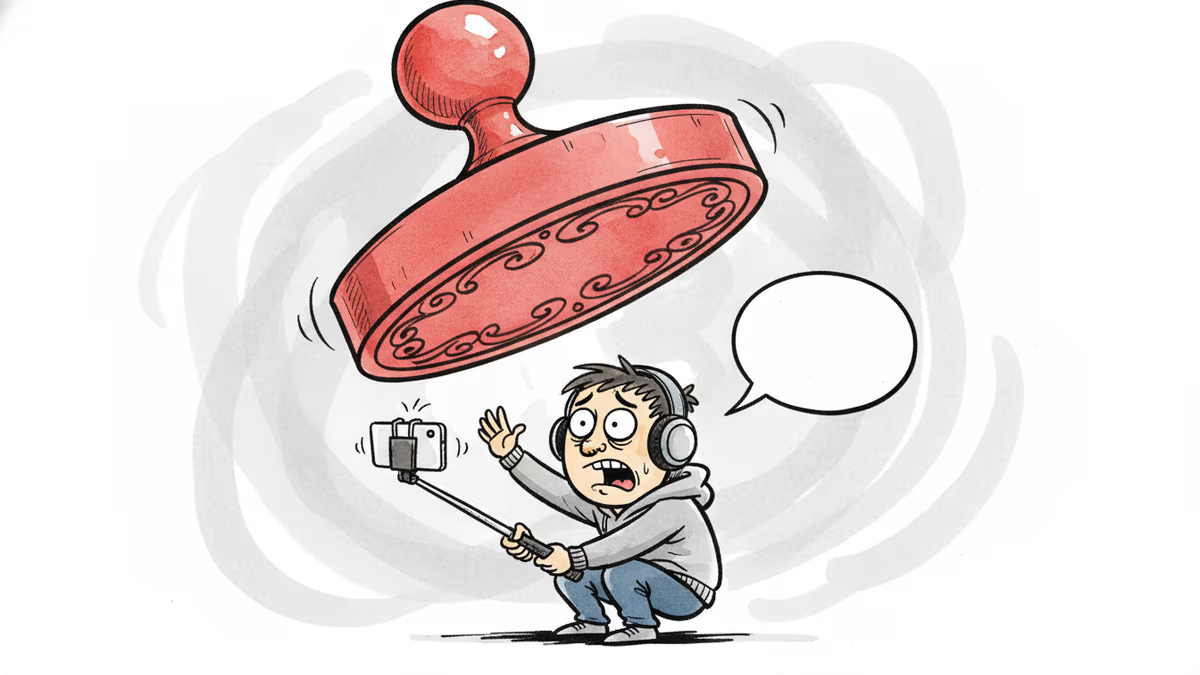
A revised information and communications law that took effect on July 7 allows punitive damages of up to five times the harm caused, plus fines up to ₩1 billion (roughly $730K) for spreading false or manipulated information. Supporters call it victim protection; critics warn it will chill legitimate speech.
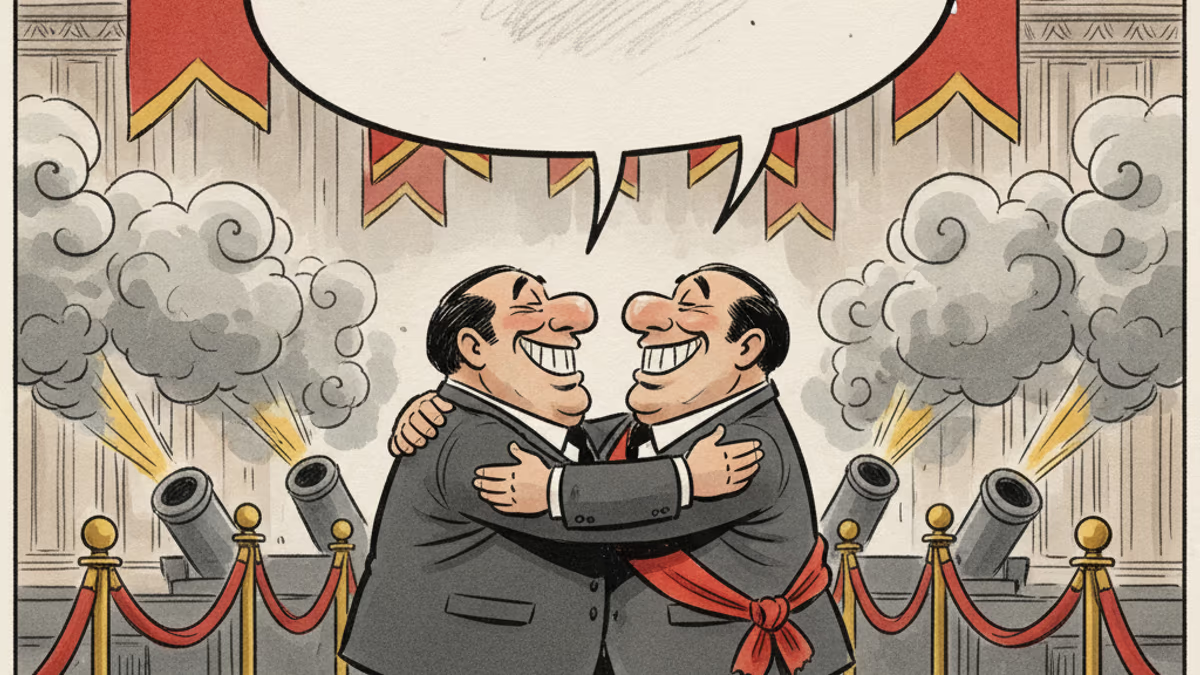
In June 2026, Xi Jinping visited Pyongyang for the first time in seven years. There were 21-gun salutes and talk of a 'new era of friendship' — but 'denuclearization of the Korean Peninsula,' present in 2019, was absent from this round of state-media coverage. A symbolic overreach, or a real upgrade?
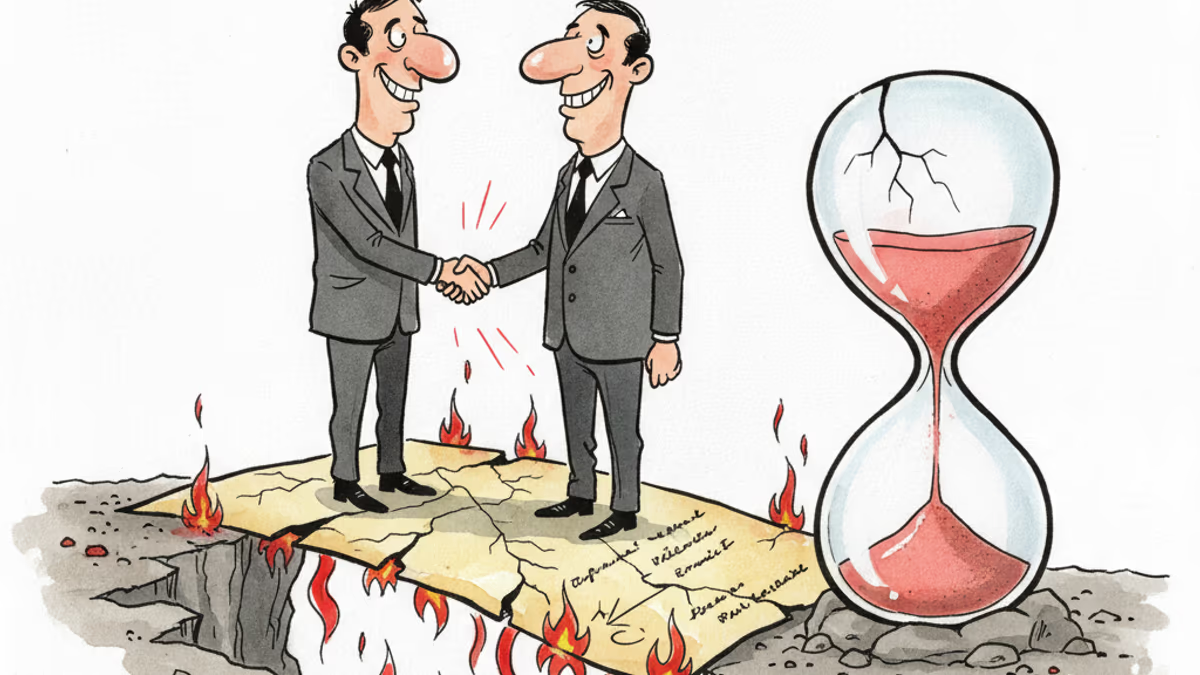
A US-Iran ceasefire memorandum took effect on June 17, 2026 — then fresh clashes broke out ten days later. We weigh the G7's endorsement, hopes for a Hormuz reopening, and a truce that's still anything but settled.
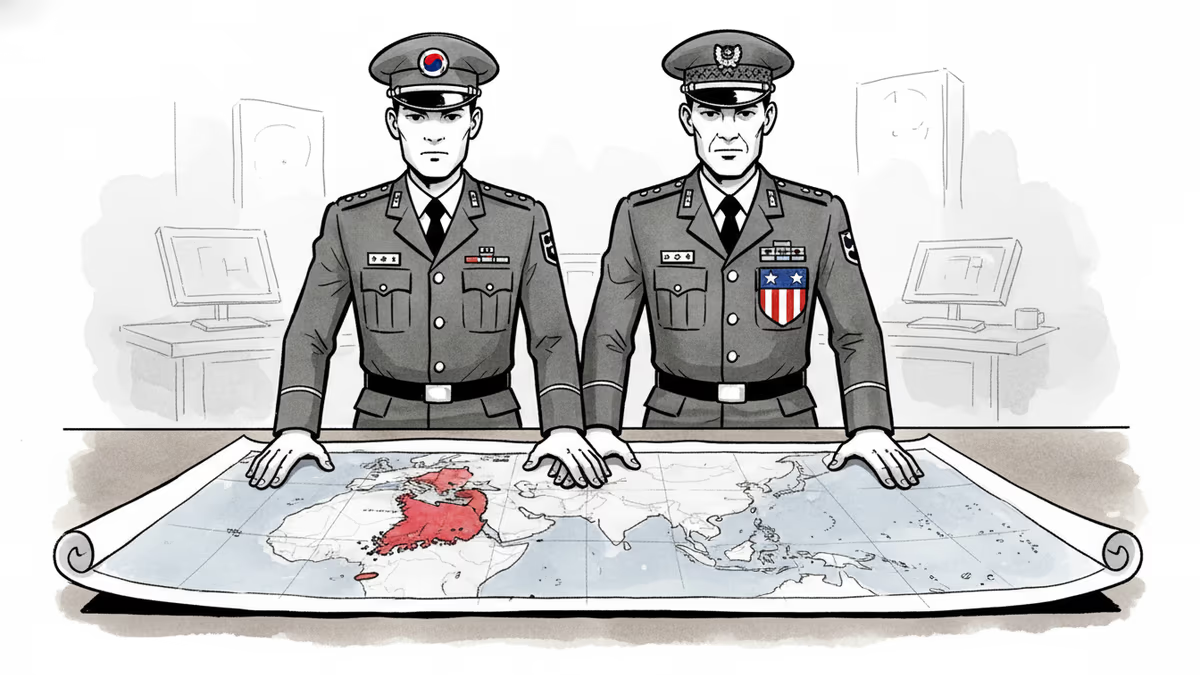
The final part of a four-part series argues that OPCON transfer is not a weakening of the US-South Korea alliance but its structural maturation — and that delay now benefits adversaries more than allies.
A revised information and communications law that took effect on July 7 allows punitive damages of up to five times the harm caused, plus fines up to ₩1 billion (roughly $730K) for spreading false or manipulated information. Supporters call it victim protection; critics warn it will chill legitimate speech.
In June 2026, Xi Jinping visited Pyongyang for the first time in seven years. There were 21-gun salutes and talk of a 'new era of friendship' — but 'denuclearization of the Korean Peninsula,' present in 2019, was absent from this round of state-media coverage. A symbolic overreach, or a real upgrade?
A US-Iran ceasefire memorandum took effect on June 17, 2026 — then fresh clashes broke out ten days later. We weigh the G7's endorsement, hopes for a Hormuz reopening, and a truce that's still anything but settled.
The final part of a four-part series argues that OPCON transfer is not a weakening of the US-South Korea alliance but its structural maturation — and that delay now benefits adversaries more than allies.
Thoughts
Share your thoughts on this article
Sign in to join the conversation