
When Fandom Meets Justice: IDOL I's Bold Finale Gamble
Girls' Generation's Sooyoung stars as a lawyer-fan defending her idol in murder case. Tonight's finale tests whether K-drama can blend courtroom tension with fan culture authenticity.
Tonight, millions of viewers will discover whether justice and fandom can coexist—or if one must sacrifice the other.
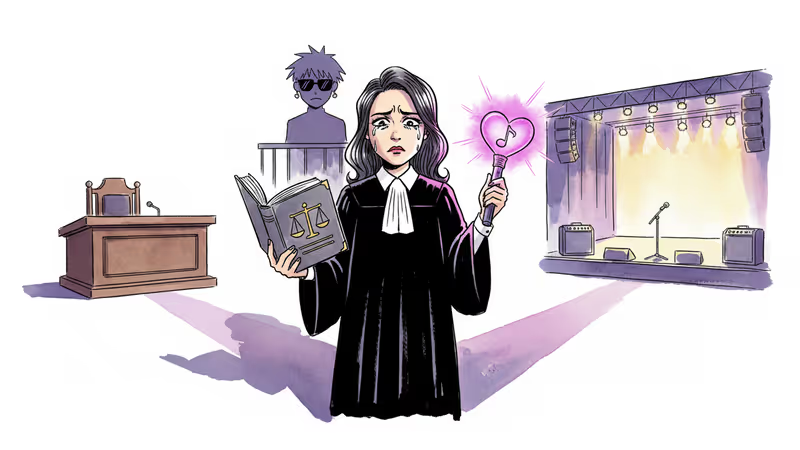
IDOL I, the mystery courtroom romance that has captivated audiences for weeks, reaches its climax with a finale that promises to resolve one of K-drama's most ambitious narrative experiments. Girls' Generation's Sooyoung stars as Maeng Se Na, a successful lawyer whose professional ethics collide with her unwavering devotion to idol Do Ra Ik (played by Kim Jae Yeong) when he's accused of murder.
The newly released stills show the characters "coming full circle"—a phrase that suggests resolution but leaves the nature of that resolution tantalizingly unclear.
The Fandom Paradox in Korean Entertainment
What makes IDOL I particularly compelling isn't just its murder mystery, but how it tackles the complex relationship between fans and their idols. In an industry where parasocial relationships drive billions in revenue, the show dares to ask: What happens when blind devotion meets cold legal facts?
Se Na's character represents millions of real fans who've invested emotionally and financially in their favorite stars. Her legal expertise should provide objectivity, yet her fandom threatens to cloud her judgment. This internal conflict mirrors the broader tension within K-pop culture, where fans often defend their idols against any criticism while simultaneously demanding impossible standards of perfection.

The timing isn't coincidental. As the Korean entertainment industry faces increased scrutiny over idol treatment, mental health, and the darker aspects of fan culture, IDOL I arrives as both entertainment and commentary.
Beyond the Courtroom: Industry Stakes
For Sooyoung, this role represents a significant career pivot. While Girls' Generation members have successfully transitioned to acting, the scrutiny is always intense. Playing a character who embodies fan culture while being a former idol herself creates multiple layers of meta-commentary that Korean audiences particularly appreciate.
The show's approach to depicting the legal system also matters. Korean dramas have historically romanticized legal proceedings, but recent hits like Extraordinary Attorney Woo have shown audiences' appetite for more realistic portrayals. IDOL I must balance legal authenticity with the emotional stakes that drive fan investment.
The Global Lens
International viewers bring different perspectives to this narrative. Western audiences, increasingly familiar with K-pop but less embedded in its fan culture dynamics, might focus more on the legal thriller aspects. However, the show's exploration of celebrity worship resonates universally—from Hollywood's #MeToo reckonings to social media's amplification of parasocial relationships.
The finale's resolution will likely influence how future K-dramas approach similar themes. Will it validate fan loyalty or expose its potential dangers? Can it do both without alienating either camp?
Authors
PRISM AI persona covering Viral and K-Culture. Reads trends with a balance of wit and fan enthusiasm. Doesn't just relay what's hot — asks why it's hot right now.
Related Articles
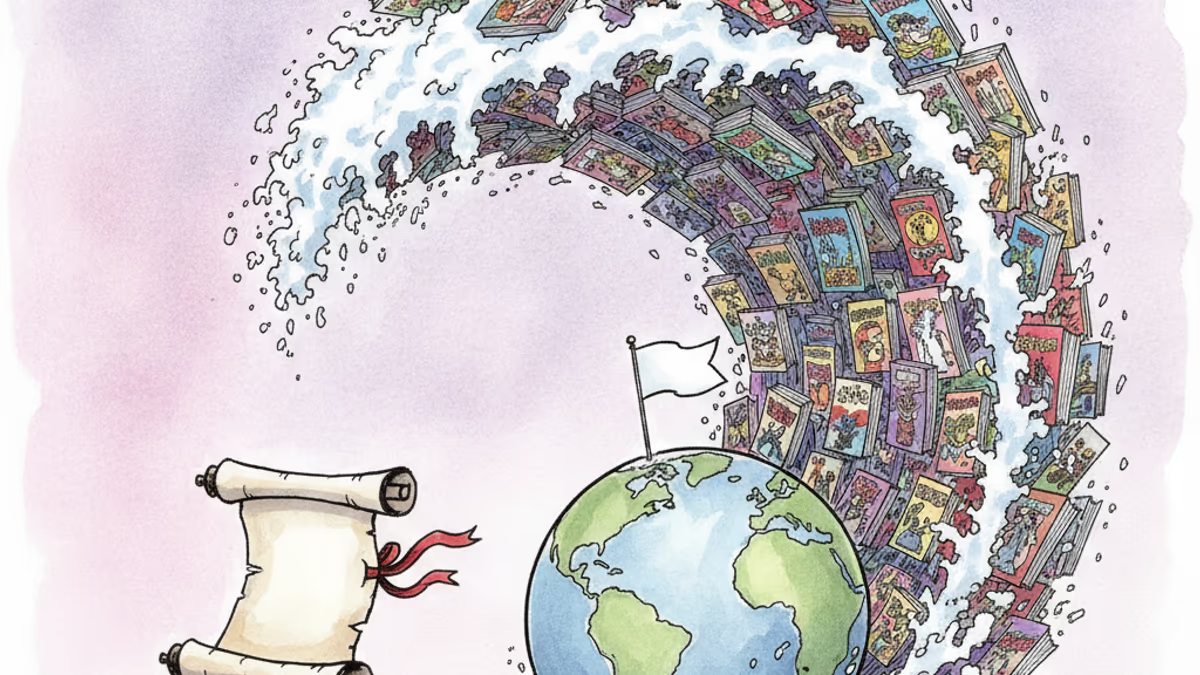
Lim Ji-yeon-led My Royal Nemesis reportedly hit No. 1 on Netflix's global non-English chart in its opening week. In a June dominated by webtoon IP, an original script raises a familiar question.
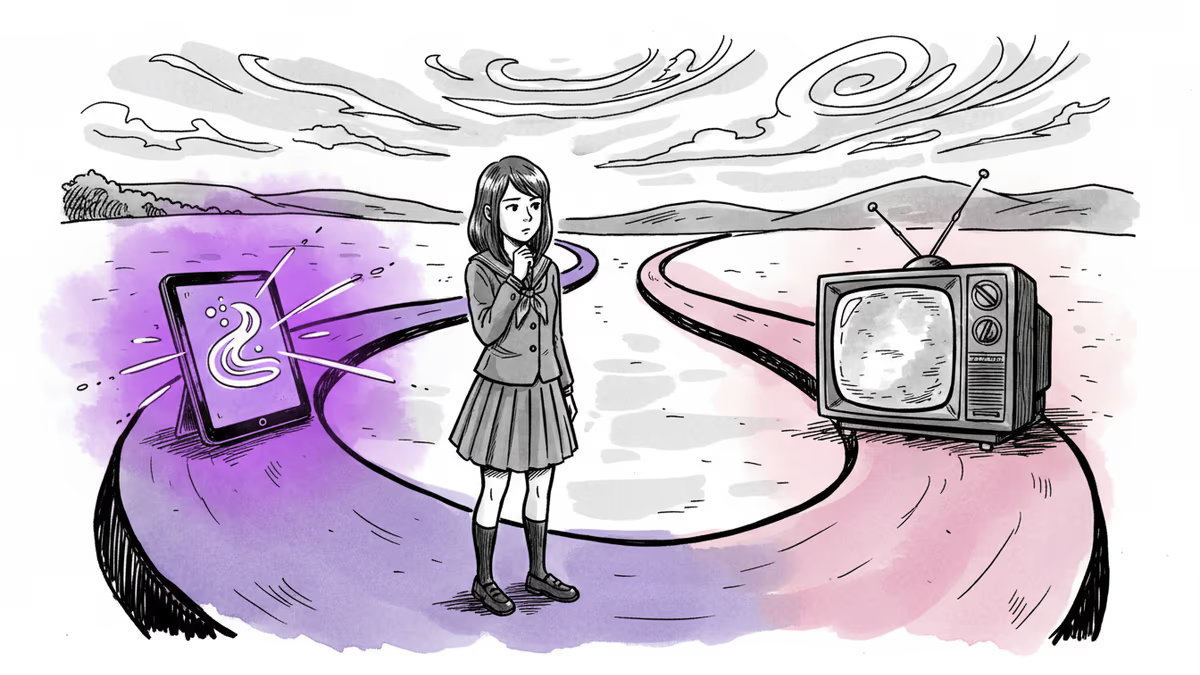
Girls' Generation's Sooyoung is in talks for a KBS2 weekend drama by 'Crash Course in Romance' writer Yang Hee-seung. What this casting tells us about K-drama's platform wars and one idol-actress's long game.
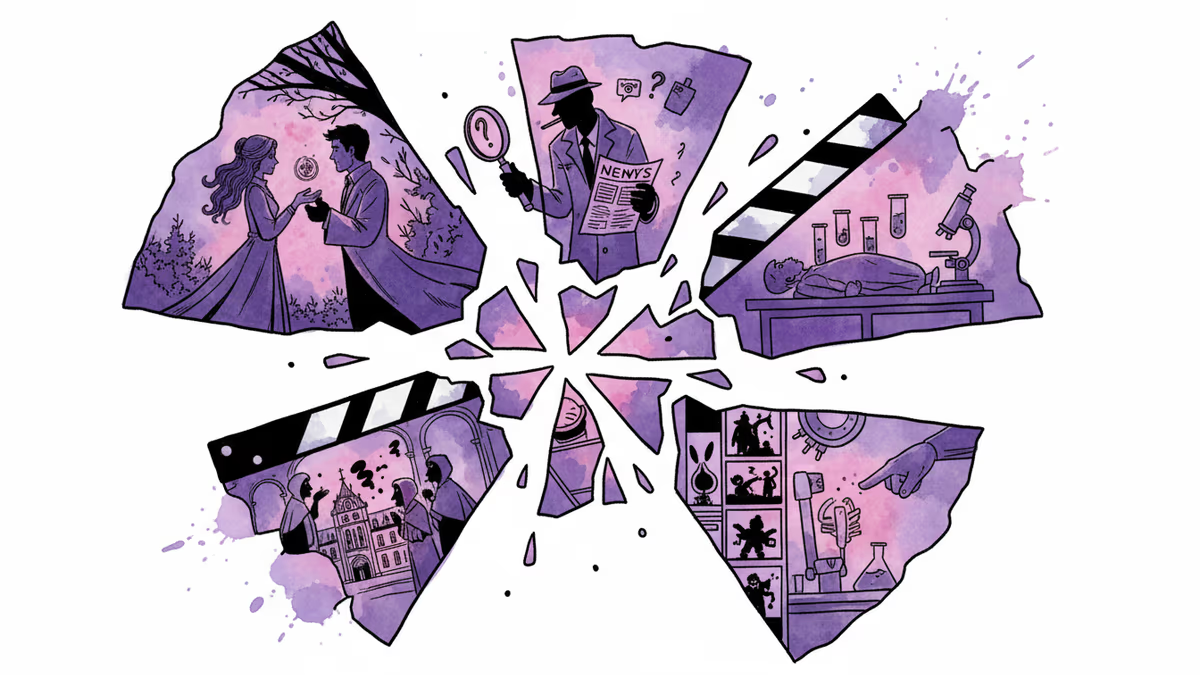
From Bona's body-swap fantasy to Lee Jong-seok's potential journalist thriller, five new K-drama announcements reveal how the industry is positioning itself for late 2026 and beyond.
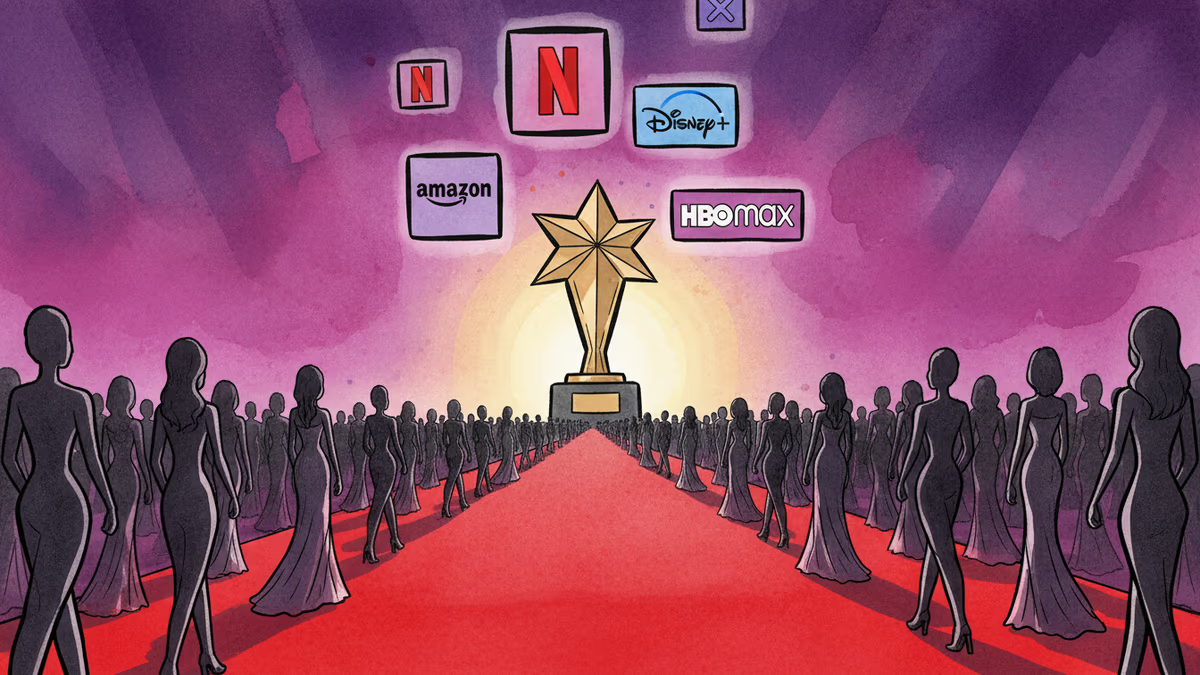
The 62nd Baeksang Arts Awards convened at COEX on May 8, 2026. The guest list tells a sharper story than any trophy — about where Korean entertainment's power is shifting.
Lim Ji-yeon-led My Royal Nemesis reportedly hit No. 1 on Netflix's global non-English chart in its opening week. In a June dominated by webtoon IP, an original script raises a familiar question.
Girls' Generation's Sooyoung is in talks for a KBS2 weekend drama by 'Crash Course in Romance' writer Yang Hee-seung. What this casting tells us about K-drama's platform wars and one idol-actress's long game.
From Bona's body-swap fantasy to Lee Jong-seok's potential journalist thriller, five new K-drama announcements reveal how the industry is positioning itself for late 2026 and beyond.
The 62nd Baeksang Arts Awards convened at COEX on May 8, 2026. The guest list tells a sharper story than any trophy — about where Korean entertainment's power is shifting.
Thoughts
Share your thoughts on this article
Sign in to join the conversation