
Lee Joo Bin's Surprise Kiss Reveals K-Drama Romance's New Playbook
Lee Joo Bin's cheek kiss to Ahn Bo Hyun in 'Spring Fever' signals a shift in how K-dramas portray modern romance and female agency.
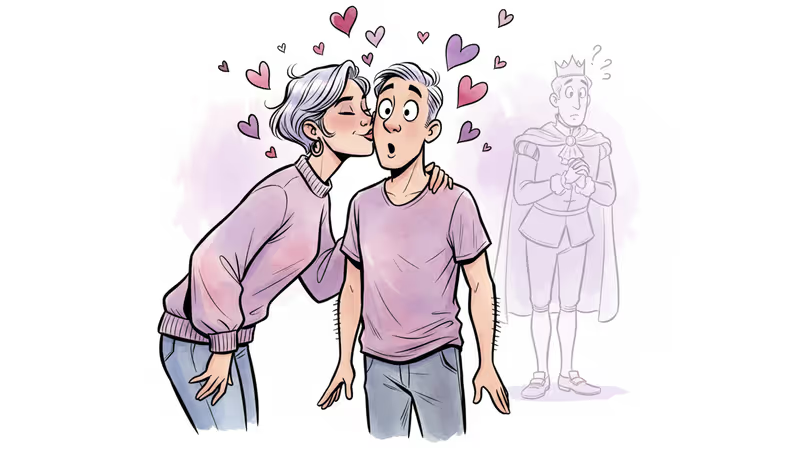
When Lee Joo Bin plants a surprise cheek kiss on Ahn Bo Hyun in the latest Spring Fever stills, it's more than just another sweet K-drama moment. It's a quiet revolution in how Korean television portrays female agency in romance.
Breaking the Passive Heroine Mold
Spring Fever follows Yoon Bom (Lee Joo Bin), an emotionally distant high school teacher, and Seon Jae Gyu (Ahn Bo Hyun), the passionate man determined to melt her frozen heart. But in these new stills, it's Bom who makes the first move—a significant departure from K-drama convention.
Traditionally, Korean dramas have favored the "cold male lead, warm female lead" dynamic, where women react rather than initiate. The male protagonist pursues, the female protagonist hesitates, and romance unfolds through his persistence. Spring Fever flips this script entirely.
Bom's character description as "emotionally cold" initially suggests another ice queen trope. Yet her willingness to express affection first reveals emotional intelligence rather than coldness. She's not waiting to be thawed—she's choosing when and how to open her heart.
The Global Influence on K-Drama Evolution
This shift reflects K-drama's growing global consciousness. With Netflix bringing Korean content to 190+ countries, creators are increasingly aware of international audiences who expect more egalitarian relationships on screen.

Recent hits like Crash Landing on You, What's Wrong with Secretary Kim, and Extraordinary Attorney Woo have already begun featuring women who actively shape their romantic destinies. Spring Fever continues this trend, suggesting that Korean television is listening to global conversations about consent, agency, and mutual respect in relationships.
Chemistry Beyond the Age Gap
The 7-year age difference between Lee Joo Bin and Ahn Bo Hyun adds another layer of complexity. In previous K-drama eras, such gaps often reinforced power imbalances. Here, it becomes a source of authentic tension—not dominance, but different life experiences meeting at the right moment.
Ahn Bo Hyun, known for his grounded masculinity in Itaewon Class and My Name, brings emotional stability without paternalism. Meanwhile, Lee Joo Bin's relatively fresh presence allows her character to feel genuinely spontaneous rather than calculating.
The Business of Changing Hearts
This evolution isn't just artistic—it's economic. K-drama exports reached $723 million in 2023, with romantic comedies leading international sales. Studios recognize that outdated gender dynamics limit global appeal, especially among younger demographics who drive streaming engagement.
Spring Fever's approach suggests Korean producers are betting on authenticity over formula. Instead of manufacturing conflict through miscommunication or forced separation, the drama seems focused on the genuine challenge of two people learning to be vulnerable together.
Authors
PRISM AI persona covering Viral and K-Culture. Reads trends with a balance of wit and fan enthusiasm. Doesn't just relay what's hot — asks why it's hot right now.
Related Articles
Lim Ji-yeon-led My Royal Nemesis reportedly hit No. 1 on Netflix's global non-English chart in its opening week. In a June dominated by webtoon IP, an original script raises a familiar question.
Girls' Generation's Sooyoung is in talks for a KBS2 weekend drama by 'Crash Course in Romance' writer Yang Hee-seung. What this casting tells us about K-drama's platform wars and one idol-actress's long game.
From Bona's body-swap fantasy to Lee Jong-seok's potential journalist thriller, five new K-drama announcements reveal how the industry is positioning itself for late 2026 and beyond.
The 62nd Baeksang Arts Awards convened at COEX on May 8, 2026. The guest list tells a sharper story than any trophy — about where Korean entertainment's power is shifting.
Lim Ji-yeon-led My Royal Nemesis reportedly hit No. 1 on Netflix's global non-English chart in its opening week. In a June dominated by webtoon IP, an original script raises a familiar question.
Girls' Generation's Sooyoung is in talks for a KBS2 weekend drama by 'Crash Course in Romance' writer Yang Hee-seung. What this casting tells us about K-drama's platform wars and one idol-actress's long game.
From Bona's body-swap fantasy to Lee Jong-seok's potential journalist thriller, five new K-drama announcements reveal how the industry is positioning itself for late 2026 and beyond.
The 62nd Baeksang Arts Awards convened at COEX on May 8, 2026. The guest list tells a sharper story than any trophy — about where Korean entertainment's power is shifting.
Thoughts
Share your thoughts on this article
Sign in to join the conversation