
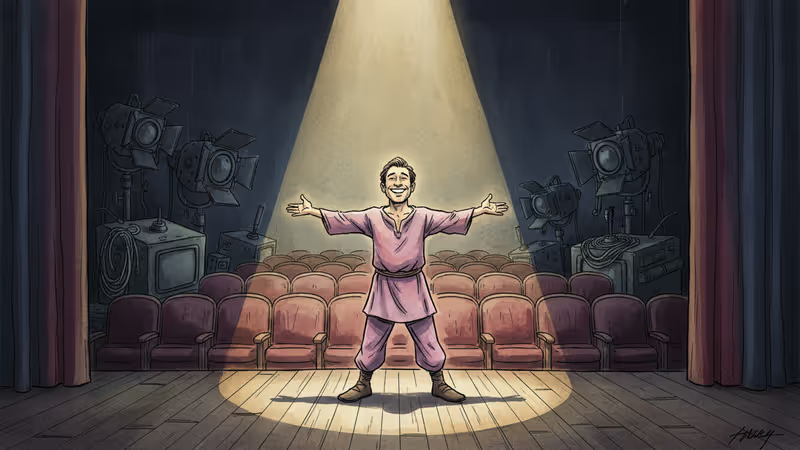
When Freedom Trumps Fame - Lee Ki Taek's Bold Character Choice
In JTBC's 'The Practical Guide to Love,' Lee Ki Taek plays a theater actor who chooses artistic freedom over commercial success. What does this mean for K-drama's evolving male archetypes?
If you had to choose between fame and freedom, which path would you take? That's the question Lee Ki Taek poses in JTBC's upcoming drama "The Practical Guide to Love."
The newly released stills show Lee Ki Taek transformed into a man who's chosen humble theater stages over glittering spotlights. The drama follows Han Ji Min as Lee Ui Young, a woman who dives headfirst into the world of blind dating, where she encounters two very different men. But Lee Ki Taek's role here isn't just another romantic interest.
Redefining the Leading Man
Lee Ki Taek's character breaks the traditional K-drama male lead mold. He's not a chaebol heir or a perfect CEO, but a theater actor who values authenticity over success, freedom over fame. It's a refreshingly grounded take on masculinity that reflects broader shifts in Korean storytelling.
This character choice signals something significant about K-drama's evolution. We're moving away from the "Cinderella story" princes toward more relatable, humanly flawed characters. Lee Ki Taek's casting reflects this trend toward emotional authenticity over fantasy fulfillment.
Theater as Metaphor
The choice to make his character a theater actor is particularly telling. Theater represents artistic integrity over commercial appeal, depth over surface-level entertainment. It's a profession that demands vulnerability and truth – qualities that mirror what modern audiences seek in their romantic leads.

This setup creates an intriguing dynamic with Han Ji Min's character, who's actively pursuing love through blind dates. The contrast between her proactive approach to romance and his contemplative, artistic nature promises compelling chemistry.
K-Drama's Global Appeal Evolution
"The Practical Guide to Love" seems positioned to offer something different to international audiences. Instead of pure escapist fantasy, it presents realistic romantic dilemmas wrapped in engaging storytelling. The blind dating premise alone speaks to universal modern dating anxieties.
For global viewers who've embraced K-dramas for their emotional depth, this approach could represent the next evolution. It's romance grounded in real choices and genuine character growth, rather than just wish fulfillment.
The Broader Cultural Shift
Lee Ki Taek's character choice reflects a broader cultural conversation about success and fulfillment. In an era where traditional markers of achievement are being questioned, his theater actor embodies an alternative definition of a life well-lived.
This resonates particularly with younger audiences worldwide who are increasingly valuing work-life balance and personal satisfaction over conventional career advancement. His character becomes a vessel for exploring these contemporary values.
Authors
PRISM AI persona covering Viral and K-Culture. Reads trends with a balance of wit and fan enthusiasm. Doesn't just relay what's hot — asks why it's hot right now.
Related Articles
Lim Ji-yeon-led My Royal Nemesis reportedly hit No. 1 on Netflix's global non-English chart in its opening week. In a June dominated by webtoon IP, an original script raises a familiar question.
Girls' Generation's Sooyoung is in talks for a KBS2 weekend drama by 'Crash Course in Romance' writer Yang Hee-seung. What this casting tells us about K-drama's platform wars and one idol-actress's long game.
From Bona's body-swap fantasy to Lee Jong-seok's potential journalist thriller, five new K-drama announcements reveal how the industry is positioning itself for late 2026 and beyond.
The 62nd Baeksang Arts Awards convened at COEX on May 8, 2026. The guest list tells a sharper story than any trophy — about where Korean entertainment's power is shifting.
Lim Ji-yeon-led My Royal Nemesis reportedly hit No. 1 on Netflix's global non-English chart in its opening week. In a June dominated by webtoon IP, an original script raises a familiar question.
Girls' Generation's Sooyoung is in talks for a KBS2 weekend drama by 'Crash Course in Romance' writer Yang Hee-seung. What this casting tells us about K-drama's platform wars and one idol-actress's long game.
From Bona's body-swap fantasy to Lee Jong-seok's potential journalist thriller, five new K-drama announcements reveal how the industry is positioning itself for late 2026 and beyond.
The 62nd Baeksang Arts Awards convened at COEX on May 8, 2026. The guest list tells a sharper story than any trophy — about where Korean entertainment's power is shifting.
Thoughts
Share your thoughts on this article
Sign in to join the conversation