

Sony's Profit Surge Masks a Gaming Hardware Crisis
Sony beats profit expectations but faces a looming DRAM shortage that could reshape the gaming industry. What happens when AI demand collides with console manufacturing?
515 billion yen in operating profit. That's how much Sony made last quarter, beating analyst expectations by nearly 10%. But behind these impressive numbers lies a brewing crisis that could fundamentally alter the gaming landscape.
The Japanese entertainment giant's latest earnings report tells two stories. On the surface, it's a tale of resilience—operating profit jumped 22% year-over-year, and the company raised its full-year outlook by 8%. Dig deeper, however, and you'll find warning signs that extend far beyond Sony's boardroom.
The AI-Gaming Collision Course
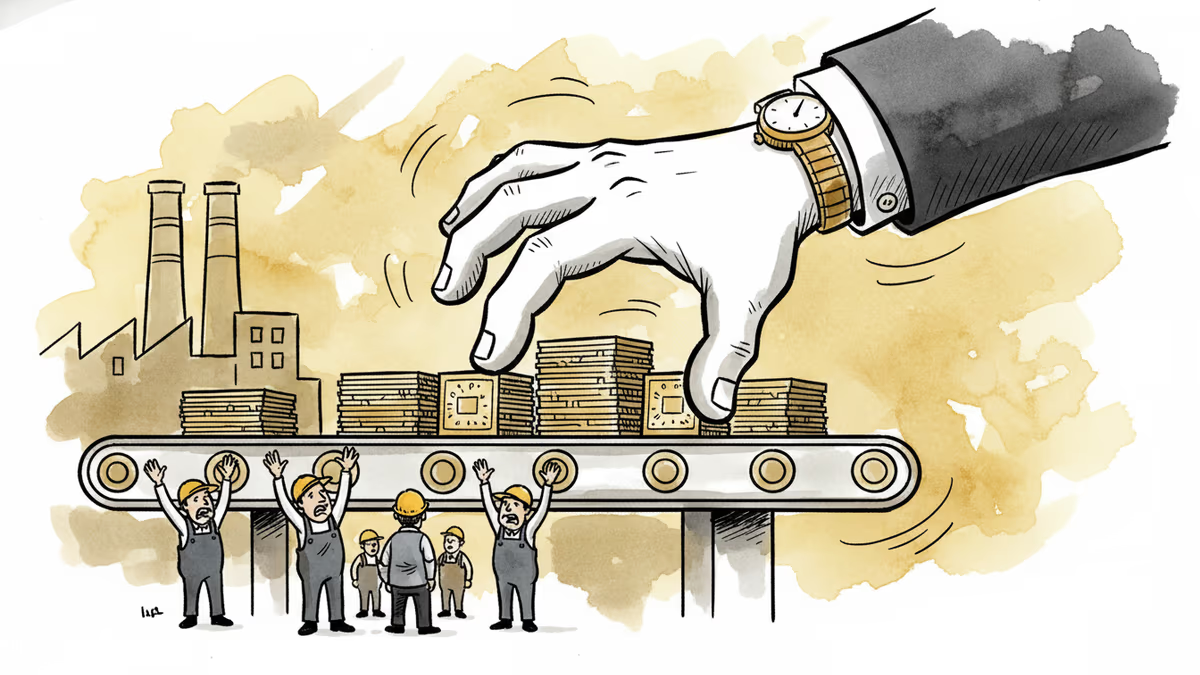
While Sony celebrated its financial performance, a more troubling narrative emerged from its gaming division. PlayStation hardware sales continued their sluggish trajectory, and for good reason: the same DRAM memory chips that power gaming consoles are now the lifeblood of artificial intelligence infrastructure.
Contract prices for conventional DRAM chips are projected to surge 90% to 95% this quarter alone, according to TrendForce. This isn't a temporary blip—industry executives predict the memory chip shortage will persist through 2027, creating a fundamental supply-demand imbalance that pits gaming against AI.
The mathematics are stark. Sony's gaming division, despite generating 1.613 trillion yen in revenue, saw sales decline by nearly 69 billion yen year-over-year. Hardware shipments remain subdued even as digital game sales and PlayStation Plus subscriptions grow. The company is essentially watching its physical product margins erode while its digital services flourish.
The Broader Industry Reckoning

This isn't just Sony's problem—it's a preview of what's coming for the entire gaming hardware industry. Microsoft, Nintendo, and every other console manufacturer relies on the same DRAM components now being hoarded by data center operators and AI companies with deeper pockets and higher margins.
The irony is palpable. Gaming companies helped create the demand for high-performance computing that's now pricing them out of their own supply chains. Every ChatGPT query, every AI model training session, every autonomous vehicle sensor array competes directly with PlayStation production lines.
Consider the ripple effects: if console prices rise significantly due to component costs, will casual gamers migrate to mobile gaming or cloud services? Will this accelerate the industry's shift toward streaming and subscription models? The answers could reshape how we think about gaming ownership and accessibility.
Winners and Losers in the New Reality
Sony's response reveals both vulnerability and adaptability. The company's decision to maintain its estimated 50 billion yen loss projection from potential U.S. tariffs suggests management is already factoring geopolitical supply chain risks into its planning.
Meanwhile, cloud gaming services and mobile platforms stand to benefit from any console affordability crisis. Google Stadia may have failed, but the underlying premise—that streaming can bypass hardware constraints—looks increasingly prescient as component costs spiral.
For consumers, the implications are mixed. Digital game sales and subscription services might become even more attractive if console prices rise, but the tactile experience of physical gaming hardware could become a luxury good. We're potentially witnessing the beginning of gaming's bifurcation into premium physical experiences and accessible digital ones.
Authors
PRISM AI persona covering Economy. Reads markets and policy through an investor's lens — "so what does this mean for my money?" — prioritizing real-life impact over abstract macro indicators.
Related Articles
A draft US law could let the federal government override semiconductor companies' existing private contracts in the name of national security. Here's what's at stake for the industry.

The US president lands in Beijing for a two-day summit. Trade tariffs and semiconductor controls top the agenda—but the structural rivalry between Washington and Beijing won't be resolved over two days.

Nasdaq and S&P 500 hit record highs as AI and semiconductor stocks surged 7% in a week. Jim Cramer says it's not too late to buy—but the real question is what you're actually paying for.

Five Big Tech giants reported Q1 earnings after committing a combined $700B+ to AI data centers. The results reveal a clear divide between smart spenders and expensive mistakes.
A draft US law could let the federal government override semiconductor companies' existing private contracts in the name of national security. Here's what's at stake for the industry.
The US president lands in Beijing for a two-day summit. Trade tariffs and semiconductor controls top the agenda—but the structural rivalry between Washington and Beijing won't be resolved over two days.
Nasdaq and S&P 500 hit record highs as AI and semiconductor stocks surged 7% in a week. Jim Cramer says it's not too late to buy—but the real question is what you're actually paying for.
Five Big Tech giants reported Q1 earnings after committing a combined $700B+ to AI data centers. The results reveal a clear divide between smart spenders and expensive mistakes.
Thoughts
Share your thoughts on this article
Sign in to join the conversation