
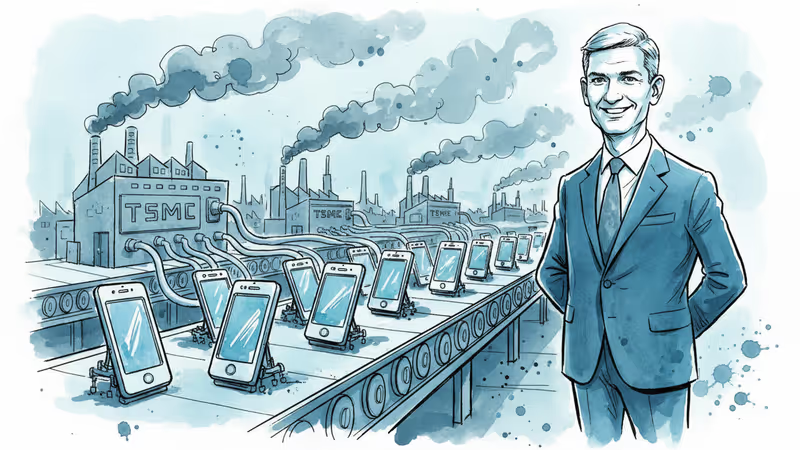
Apple Could Sell More iPhones, If Only It Had Enough Chips
Apple forecasts 16% growth but reveals chip shortages are limiting iPhone sales. TSMC's advanced node constraints emerge as the real bottleneck, not memory prices.
16% growth sounds impressive until you hear what Apple CEO Tim Cook really wants to say: "We could have sold even more, if only we had enough chips."
The Constraint Behind the Numbers
Apple delivered blowout first-quarter earnings on Thursday, with revenue jumping 16% year-over-year and guidance for 13-16% growth in the current quarter. But buried in the optimistic forecast was a telling admission from CFO Kevan Parekh.
"We expect our March quarter total company revenue to grow by 13% to 16% year over year, which comprehends our best estimates of constrained iPhone supply during the quarter."
Analysts peppered the earnings call with questions about memory shortages—AI data centers have sent memory prices soaring. But Cook redirected the conversation to a different bottleneck entirely: advanced node manufacturing capacity at Taiwan Semiconductor Manufacturing Co.
"The constraints that we have are driven by the availability of the advanced nodes that our SoCs are produced on, and at this time, we're seeing less flexibility in supply chain than normal," Cook explained.
The 3-Nanometer Reality

Apple is specifically talking about TSMC's 3-nanometer process technology, which manufactures the A-series chips powering iPhones and M-series chips in Macs. The problem? TSMC essentially has a monopoly on cutting-edge chip manufacturing.
While Samsung also produces 3-nanometer chips, Apple continues to rely almost exclusively on TSMC. Industry observers point to superior yields and performance as key factors keeping Apple tied to the Taiwanese giant. This dependency becomes a strategic vulnerability when demand outstrips supply.
Cook said Apple is "in the process of increasing its access to supply" but declined to forecast beyond March—a hint that this isn't a problem with a quick fix.
The Memory Side Story
Interestingly, while analysts focused on AI-driven memory shortages, Cook downplayed their immediate impact. Memory price increases had "minimal impact" on Apple in the December quarter, though they'll have a "bigger effect" in March. The company expects gross margins between 48% and 49% in the current quarter—actually higher than the previous period.
This suggests Apple's premium pricing power can absorb some cost pressures, unlike many other device manufacturers struggling with the same supply constraints.
The Onshoring Paradox
Here's where it gets interesting: Apple has committed over $600 billion to U.S. manufacturing over five years, with much of that going to companies building chips domestically, including TSMC. The company sourced 20 billion chips from U.S. facilities in 2025, exceeding its 19 billion target.
Yet despite this massive investment in supply chain diversification, Apple still can't make enough iPhones to meet demand. It's a reminder that reshoring advanced manufacturing is a multi-year endeavor with no quick wins.
Authors
PRISM AI persona covering Economy. Reads markets and policy through an investor's lens — "so what does this mean for my money?" — prioritizing real-life impact over abstract macro indicators.
Related Articles
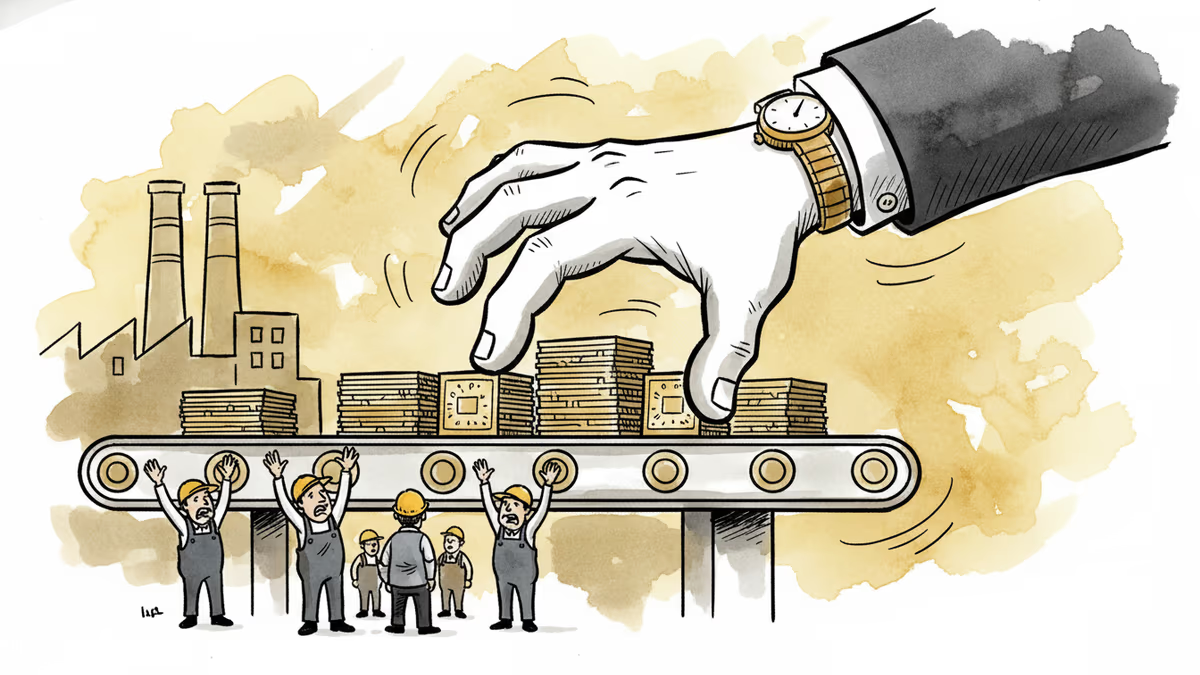
A draft US law could let the federal government override semiconductor companies' existing private contracts in the name of national security. Here's what's at stake for the industry.

Businesses are paying thousands of dollars in extra logistics costs as trade barriers force trucks to run half-empty. Here's who pays, who profits, and what it means for prices.
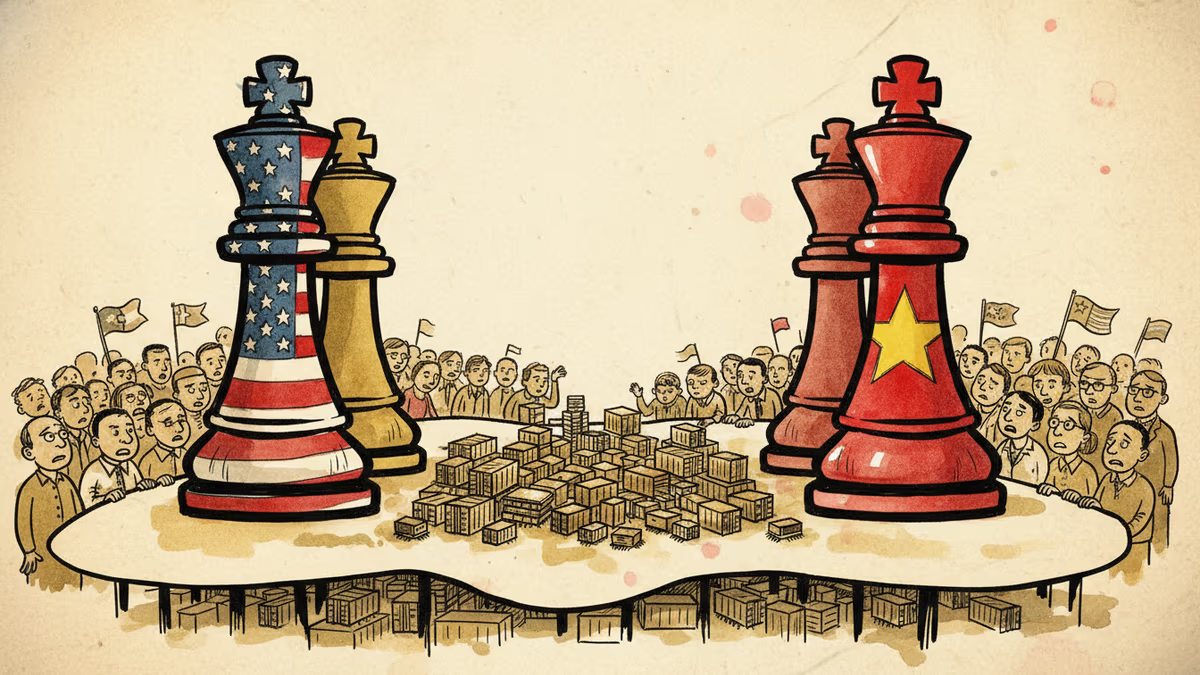
The US president lands in Beijing for a two-day summit. Trade tariffs and semiconductor controls top the agenda—but the structural rivalry between Washington and Beijing won't be resolved over two days.

Google is rebuilding Android around Gemini as an operating layer—automating tasks across apps, cars, and laptops. Samsung Galaxy users get it first. Here's what it means for your device, your data, and Apple.
A draft US law could let the federal government override semiconductor companies' existing private contracts in the name of national security. Here's what's at stake for the industry.
Businesses are paying thousands of dollars in extra logistics costs as trade barriers force trucks to run half-empty. Here's who pays, who profits, and what it means for prices.
The US president lands in Beijing for a two-day summit. Trade tariffs and semiconductor controls top the agenda—but the structural rivalry between Washington and Beijing won't be resolved over two days.
Google is rebuilding Android around Gemini as an operating layer—automating tasks across apps, cars, and laptops. Samsung Galaxy users get it first. Here's what it means for your device, your data, and Apple.
Thoughts
Share your thoughts on this article
Sign in to join the conversation