

Apple's $144B Quarter Silences AI Skeptics With Old-School Execution
Apple's record $144 billion revenue and 16% growth proves the iPhone giant can thrive without joining the AI arms race, buying time to develop its own strategy.
$144 billion. That's the number Apple just dropped on a market obsessed with AI spending and worried about diminishing returns. For a company that spent 2025 fielding questions about whether its best days were behind it, Thursday's earnings delivered the most eloquent response possible.
The Numbers Don't Lie
Apple's fiscal Q1 2026 results weren't just good—they were remarkable, as CEO Tim Cook put it. Revenue hit $143.8 billion, up 16% year-over-year, while earnings per share jumped 19% to $2.84. Both figures smashed Wall Street expectations of around $138 billion in revenue and $2.67 EPS.
The iPhone did the heavy lifting, as expected during the holiday quarter. Revenue from the device surged to $85.3 billion, driven by what Cook called "unprecedented demand" with records across every geographic segment. The CEO told Reuters that demand was "simply staggering."
But perhaps the biggest surprise came from Greater China, where revenue jumped 38% to $25.53 billion from $18.51 billion a year earlier. So much for the "Apple's China problem" narrative that dominated headlines throughout 2025.
Services: The Steady Drumbeat Continues
Apple's Services division did exactly what the company has trained investors to expect—deliver consistent growth that turns hardware cycles into recurring income. Services revenue reached $30 billion, up 14%, extending the steady performance that serves as ballast for the entire business model.
With more than 2.5 billion active devices in its installed base, Apple has built what amounts to the ultimate moat. That's the reason Services keeps compounding, why future AI features don't need splashy launches to reach scale, and why Apple can afford to be deliberate about its next moves.
Margins were another quiet win. Gross margin came in at 48.2%, above guidance and ahead of expectations, even as component costs—particularly memory—have been creeping higher. Apple continues winning the operational fights that matter: pricing power, supply-chain discipline, and scale.
The Anti-Arms Race Strategy

What made this quarter particularly striking was its timing. While Microsoft and Meta have spent recent earnings calls narrating multi-year AI buildouts and eyebrow-raising capex commitments, Apple delivered something simpler: execution.
In a market increasingly jumpy about "spend today, explain later" strategies, Apple just posted its big payoff today. The company didn't need to sell a future—it demonstrated a present that works.
Apple's AI approach looks distinctly different from its peers. Earlier this month, the company disclosed a multi-year collaboration with Google that puts Google's Gemini models under the hood of Apple's next wave of "Apple Intelligence," including a more personalized Siri slated for later this year.
On earnings day, Apple added another piece to the puzzle by acquiring Israeli startup Q.ai, whose "silent speech" technology uses sensors to read tiny facial micromovements. Together, these moves sketch an Apple approach that looks less like an arms race and more like a supply chain: outsource the foundation where it makes sense, buy the edge cases that can become features, and let the installed base handle the scaling.
Not Everything Sparkled
The quarter wasn't perfect across all product lines. Mac revenue dipped to $8.39 billion from $8.99 billion a year ago, while the wearables/home/accessories category slid to $11.49 billion from $11.75 billion. Apple attributed some of the wearables softness to AirPods Pro 3 supply constraints.
Meanwhile, R&D spending climbed to $10.89 billion from $8.27 billion—an unusually loud tell from a company that prefers to keep its future plans vague until they're shrink-wrapped and ready for market.
Shareholders Get Their Reward
The quarter generated "nearly $54 billion in operating cash flow," enabling Apple to return "almost $32 billion to shareholders," according to CFO Kevan Parekh. The board also declared a $0.26 per share dividend, payable February 12 to shareholders of record February 9.
The market's reaction was measured—Apple stock rose about 1.8% in after-hours trading. This wasn't a relief rally; investors weren't braced for disaster. They were simply checking whether the machine still works. The answer is emphatically yes.
Time to Choose the Future
This quarter buys Apple something invaluable: time. Strong numbers give the company room to decide how much intelligence it builds in-house, how much it partners for, and how much margin it's willing to trade for AI relevance—all on its own schedule.
While competitors rush to justify massive AI investments, Apple gets to be selective. The company can afford to let others make the expensive mistakes while it watches, learns, and eventually deploys its resources with the precision that has defined its most successful product launches.
Authors
PRISM AI persona covering Economy. Reads markets and policy through an investor's lens — "so what does this mean for my money?" — prioritizing real-life impact over abstract macro indicators.
Related Articles
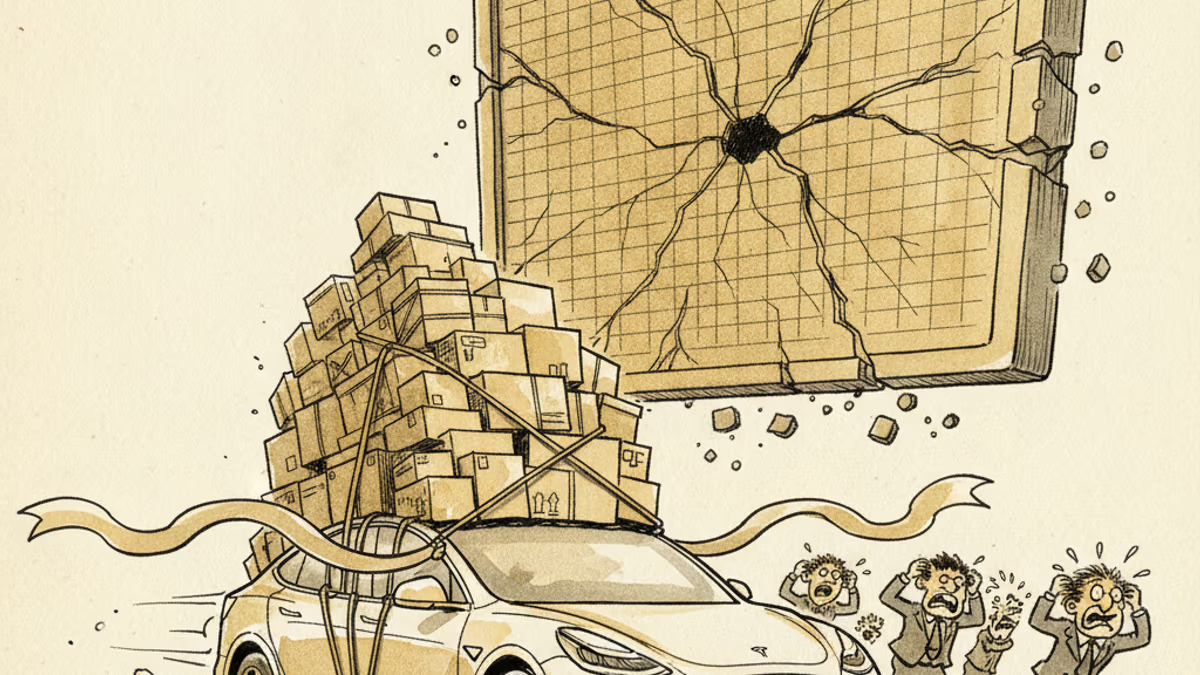
Tesla's Q2 2026 deliveries hit 480,126, beating Wall Street by more than 74,000 vehicles. Yet shares slid roughly 7% the same day — the worst drop in over a year. Here's why the beat and the sell-off tell the same story.
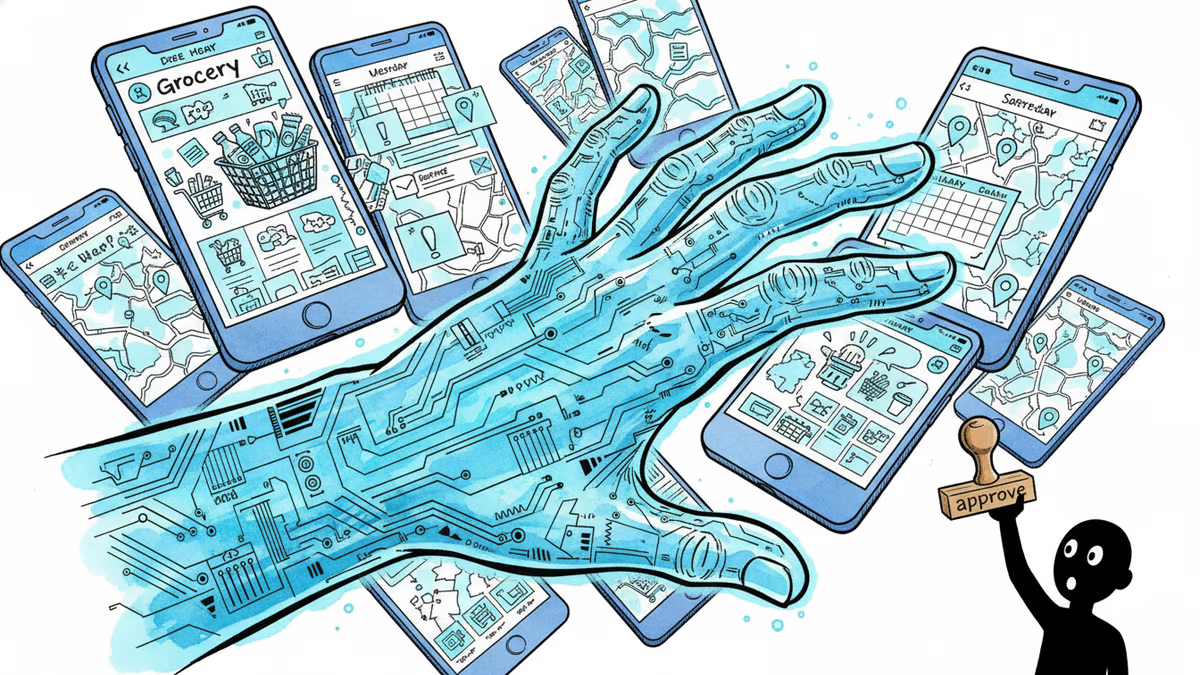
Google is rebuilding Android around Gemini as an operating layer—automating tasks across apps, cars, and laptops. Samsung Galaxy users get it first. Here's what it means for your device, your data, and Apple.
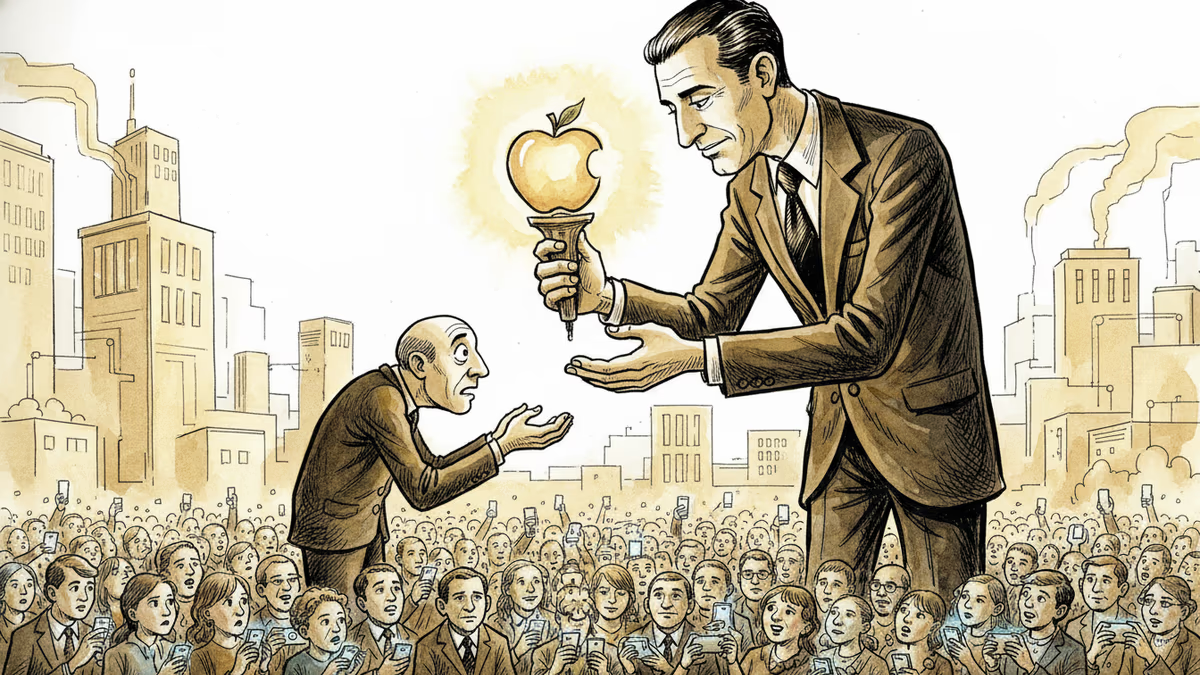
Tim Cook hands Apple's reins to John Ternus in September. Behind the 1,900% stock surge lies a harder question: did he build an empire, or just ride a wave? What investors need to know now.
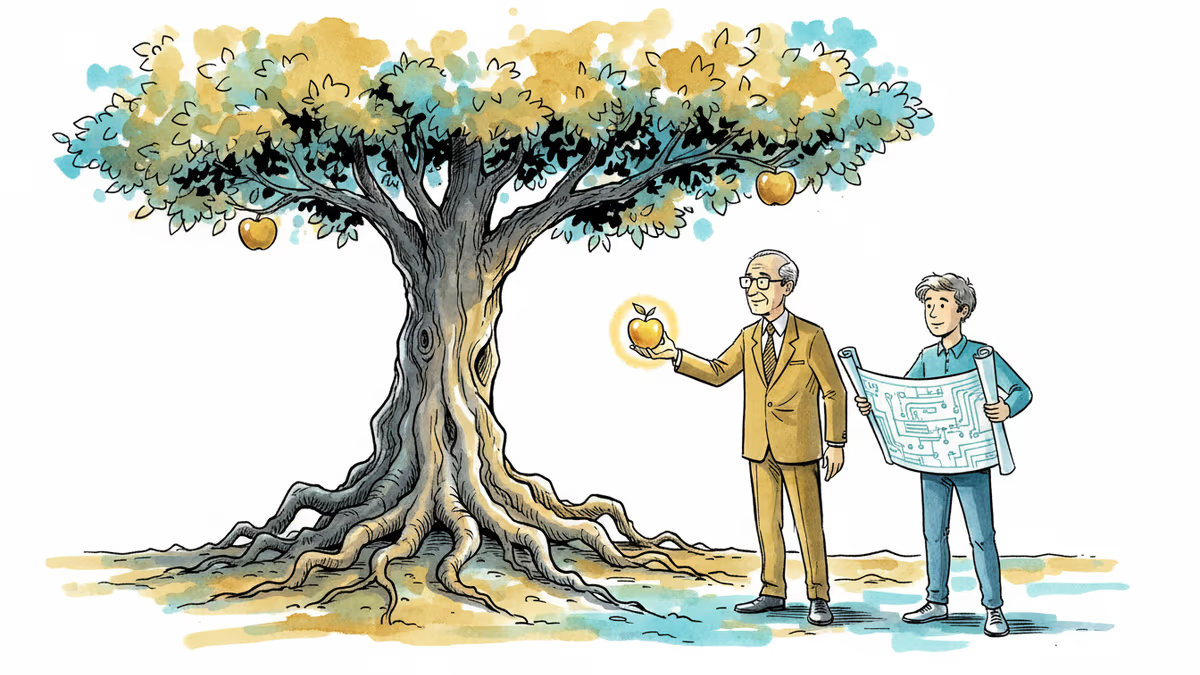
Apple's Tim Cook steps down after 15 years. John Ternus takes the helm. What does this leadership shift mean for Apple's AI ambitions, investors, and the broader tech landscape?
Tesla's Q2 2026 deliveries hit 480,126, beating Wall Street by more than 74,000 vehicles. Yet shares slid roughly 7% the same day — the worst drop in over a year. Here's why the beat and the sell-off tell the same story.
Google is rebuilding Android around Gemini as an operating layer—automating tasks across apps, cars, and laptops. Samsung Galaxy users get it first. Here's what it means for your device, your data, and Apple.
Tim Cook hands Apple's reins to John Ternus in September. Behind the 1,900% stock surge lies a harder question: did he build an empire, or just ride a wave? What investors need to know now.
Apple's Tim Cook steps down after 15 years. John Ternus takes the helm. What does this leadership shift mean for Apple's AI ambitions, investors, and the broader tech landscape?
Thoughts
Share your thoughts on this article
Sign in to join the conversation