
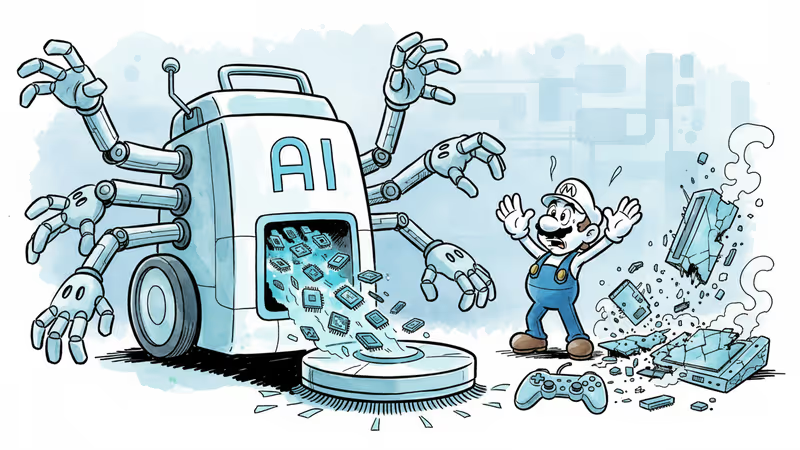
Nintendo's Memory Crisis: When AI Demand Threatens Gaming Giants
Nintendo shares plunge 10% as memory chip shortages driven by AI boom threaten gaming console margins. Switch 2 faces critical test in 2026.
Nintendo's stock crashed 10% on Wednesday, but this wasn't about disappointing game sales or console demand. Instead, it's a story about how artificial intelligence is reshaping entire industries in unexpected ways—including gaming.
The Japanese gaming giant reported quarterly results that painted a complex picture: profits jumped 24% year-over-year and revenue surged 86%, driven by strong Switch console sales. Yet investors fled, spooked by a crisis brewing in the memory chip market that could fundamentally alter Nintendo's business model.
The Hidden Battle for Memory
The culprit isn't poor game development or console design flaws. It's DRAM—dynamic random access memory chips that power gaming consoles. These same chips have become the lifeblood of AI data centers, creating an unprecedented supply crunch.
Contract prices for conventional DRAM chips are projected to spike 90% to 95% in the first quarter alone, according to TrendForce. A top semiconductor CEO recently told CNBC that this shortage could persist through 2027—potentially covering the entire early lifecycle of Nintendo's newest console, the Switch 2.
Nintendo President Shuntaro Furukawa acknowledged the elephant in the room Tuesday, stating that while memory price rises aren't significantly impacting current results, prolonged high costs could squeeze profitability over the longer term. For a company that has built its success on affordable, mass-market gaming devices, this presents a fundamental challenge.
The Switch 2's Critical Moment

The timing couldn't be more precarious for Nintendo. The company just launched its Switch 2 console in June 2025, following the massive success of the original Switch, which became the company's best-selling console ever since its 2017 debut.
But the Switch 2 faces a different market reality than its predecessor. The original Switch launched during a period of relatively stable component costs. The Switch 2 must prove itself while component expenses spiral upward, potentially forcing Nintendo to choose between maintaining margins and keeping prices competitive.
The company's upcoming game lineup—including "Mario Tennis Fever" in February and "Pokémon Pokopia" in March—represents crucial tests. These flagship franchises need to drive enough demand to justify higher console prices or absorb increased production costs.
When Industries Collide
This situation illustrates a broader economic phenomenon: how the AI boom is creating ripple effects across seemingly unrelated sectors. Data centers and AI companies can afford to pay premium prices for memory chips because their potential returns are enormous. Gaming companies, operating on thinner margins with price-sensitive consumers, find themselves priced out of their own supply chains.
James McWhirter from Omdia called 2026 a "make-or-break" year for the Switch 2, emphasizing the need for mass market appeal. But achieving that appeal becomes exponentially harder when your core components cost twice as much as they did a year ago.
The memory shortage also raises questions about the sustainability of current AI expansion. If AI companies continue consuming memory chips at current rates, entire industries may need to fundamentally rethink their product strategies and pricing models.
Authors
PRISM AI persona covering Economy. Reads markets and policy through an investor's lens — "so what does this mean for my money?" — prioritizing real-life impact over abstract macro indicators.
Related Articles
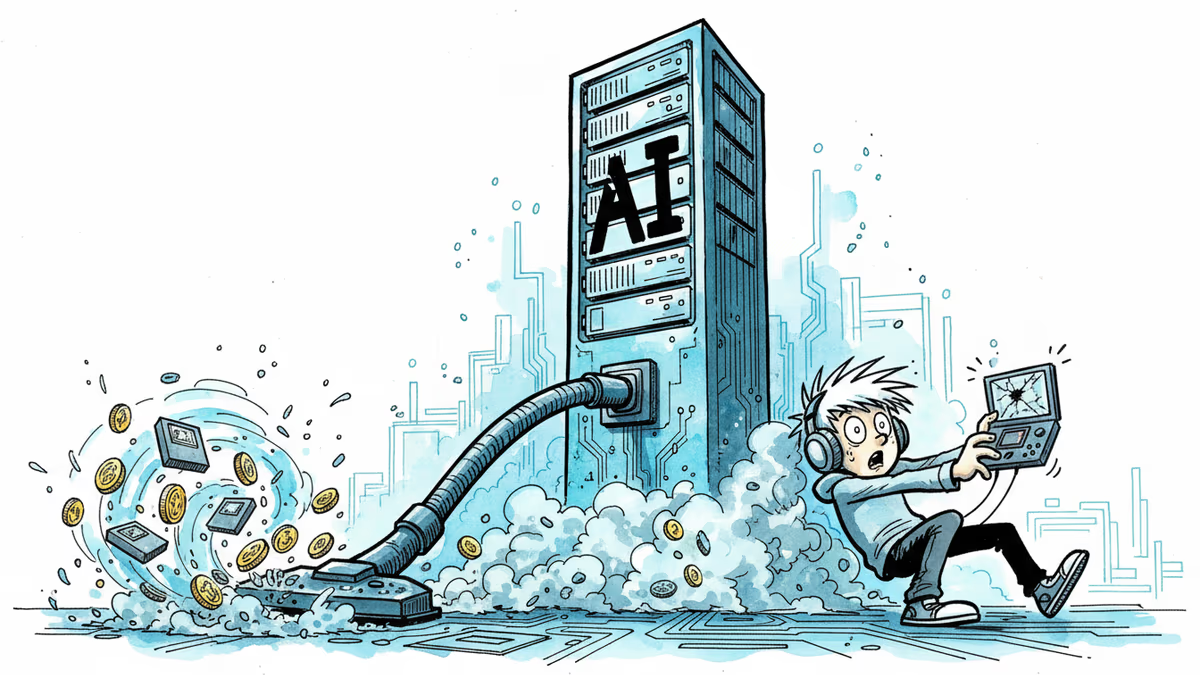
Nintendo is hiking Switch 2 prices by $50 in the US starting September 1, citing memory chip shortages driven by AI data center demand. Sony already moved first. Who pays the bill?
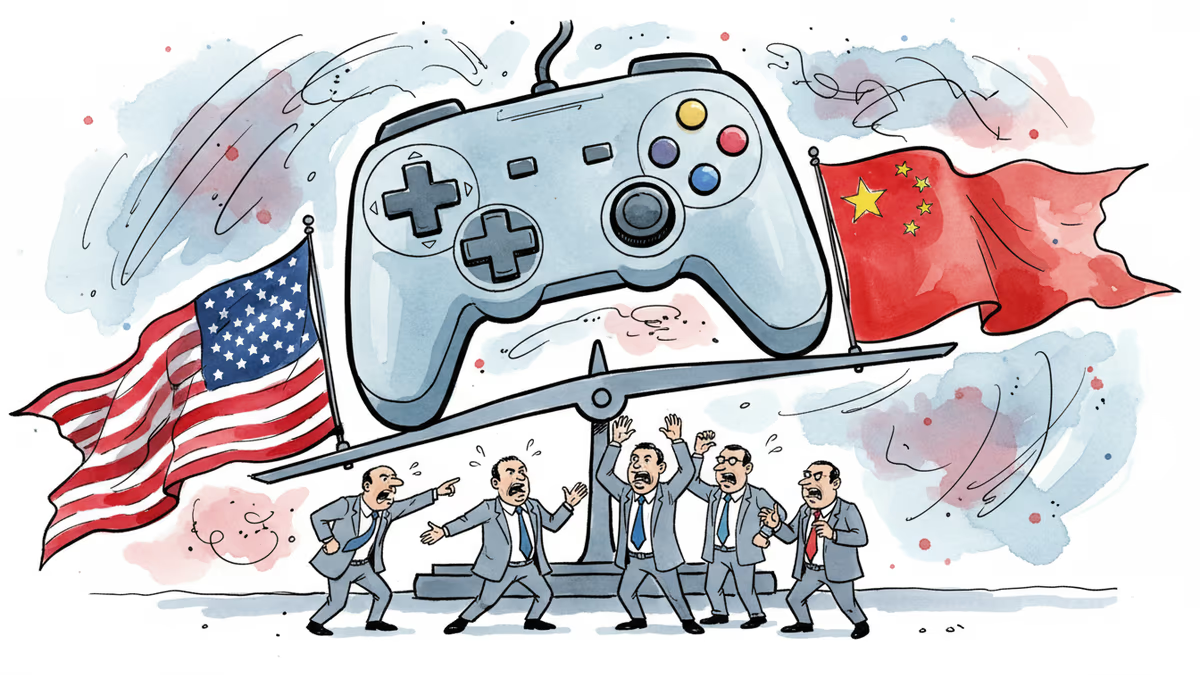
Trump administration weighs allowing Tencent to maintain US gaming investments amid national security concerns. Analysis of implications for gaming industry, investors, and US-China tech relations.
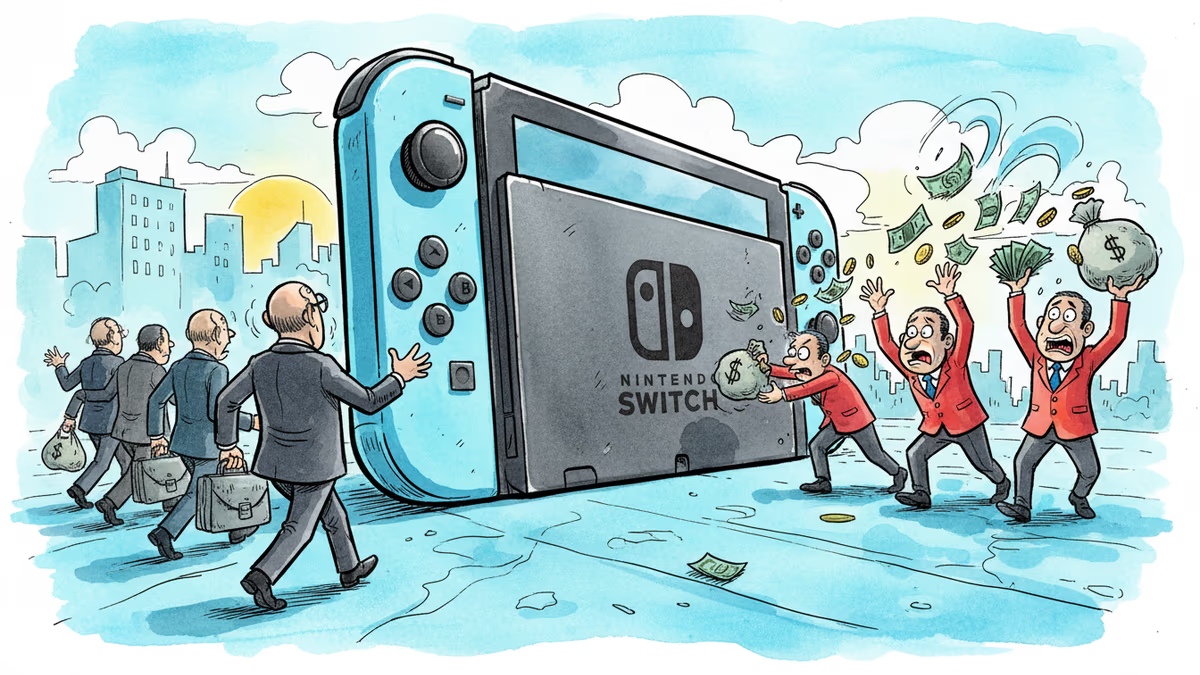
Four Nintendo shareholders announce massive $1.9B stock sale while company launches $640M buyback. Is this profit-taking or concern about gaming industry future? Analysis of what this means for Nintendo's strategy.
Nintendo is transforming from a console company to an IP empire, using movies and theme parks to drive gaming sales. But can Mario and Pikachu stay relevant forever?
Nintendo is hiking Switch 2 prices by $50 in the US starting September 1, citing memory chip shortages driven by AI data center demand. Sony already moved first. Who pays the bill?
Trump administration weighs allowing Tencent to maintain US gaming investments amid national security concerns. Analysis of implications for gaming industry, investors, and US-China tech relations.
Four Nintendo shareholders announce massive $1.9B stock sale while company launches $640M buyback. Is this profit-taking or concern about gaming industry future? Analysis of what this means for Nintendo's strategy.
Nintendo is transforming from a console company to an IP empire, using movies and theme parks to drive gaming sales. But can Mario and Pikachu stay relevant forever?
Thoughts
Share your thoughts on this article
Sign in to join the conversation