

Sony's LinkBuds Clip: Innovation or Incremental Evolution?
Sony launches its first clip-style earbuds at $229.99. Can they differentiate in an increasingly crowded open-ear market?
$229.99. That's what Sony is asking consumers to pay for its first foray into clip-style earbuds. The LinkBuds Clip continues the company's open-ear philosophy, allowing users to hear their surroundings while enjoying music or taking calls.
But in a market where clip-style earbuds have gained traction over the past couple of years, the question isn't whether Sony can make a good product—it's whether they can make one that stands out.
The Open-Ear Revolution
The LinkBuds Clip wraps around your ear helix like an ear cuff, positioning a small spherical speaker near your ear without blocking the ear canal. This design philosophy isn't new for Sony—they've been pioneering it with their donut-shaped LinkBuds and LinkBuds Open.
What's driving this trend? Our relationship with audio is changing. We want to stay connected to our environment while consuming content. Whether it's hearing traffic while jogging, staying alert to colleagues in open offices, or simply maintaining social awareness, the always-on, always-isolated approach of traditional earbuds doesn't fit every situation.
The timing makes sense. As remote work blurred the lines between personal and professional spaces, and as outdoor activities surged post-pandemic, the demand for situational awareness grew. Open-ear designs address this need directly.
The Differentiation Challenge
Here's where Sony faces a problem. According to The Verge's review, while the LinkBuds Clip offers "solid design and good sound," there's "nothing significant that sets them apart from competitors" at their $229.99 price point.

This reflects a broader challenge in consumer electronics: when form factors mature, meaningful differentiation becomes harder. The clip design itself is no longer novel—multiple brands offer similar solutions, often at lower price points.
For Sony, this creates a classic premium brand dilemma. They're asking consumers to pay more for what appears to be incremental improvements over cheaper alternatives. The question becomes: what justifies the premium?
Beyond the Product: Market Signals
The LinkBuds Clip's real significance might lie not in its individual merits but in what it signals about the audio industry's direction. We're witnessing a shift from the "more isolation is better" philosophy that dominated headphone development for decades.
Traditionally, audio quality was measured partly by how well a device could block external noise. Noise cancellation became a key selling point. But now, the focus is shifting toward selective audio experiences—giving users control over when to engage with their environment and when to tune it out.
This represents a fundamental change in how we think about personal audio. Instead of creating perfect isolation, the goal is creating perfect choice.
The Competitive Landscape
Sony enters a market that's no longer nascent. Established players and newcomers alike offer clip-style and open-ear designs. Some focus on ultra-low prices, others on specific use cases like sports or work calls.
The challenge for Sony—and other premium brands—is proving that brand heritage and incremental quality improvements justify significant price premiums. In a category where "good enough" might actually be good enough for most users, this becomes increasingly difficult.
Authors
Related Articles
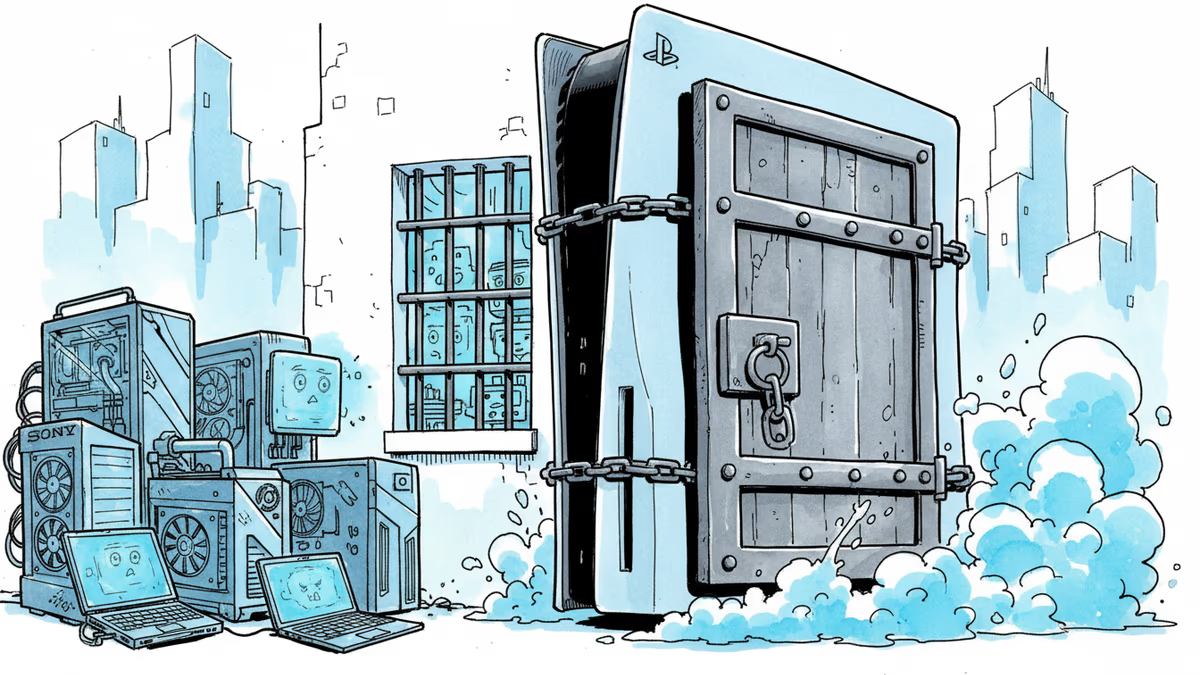
Sony is pulling its major single-player PlayStation games from PC. After six years of multiplatform expansion, the reversal raises hard questions about exclusivity, hardware sales, and who really controls gaming's future.
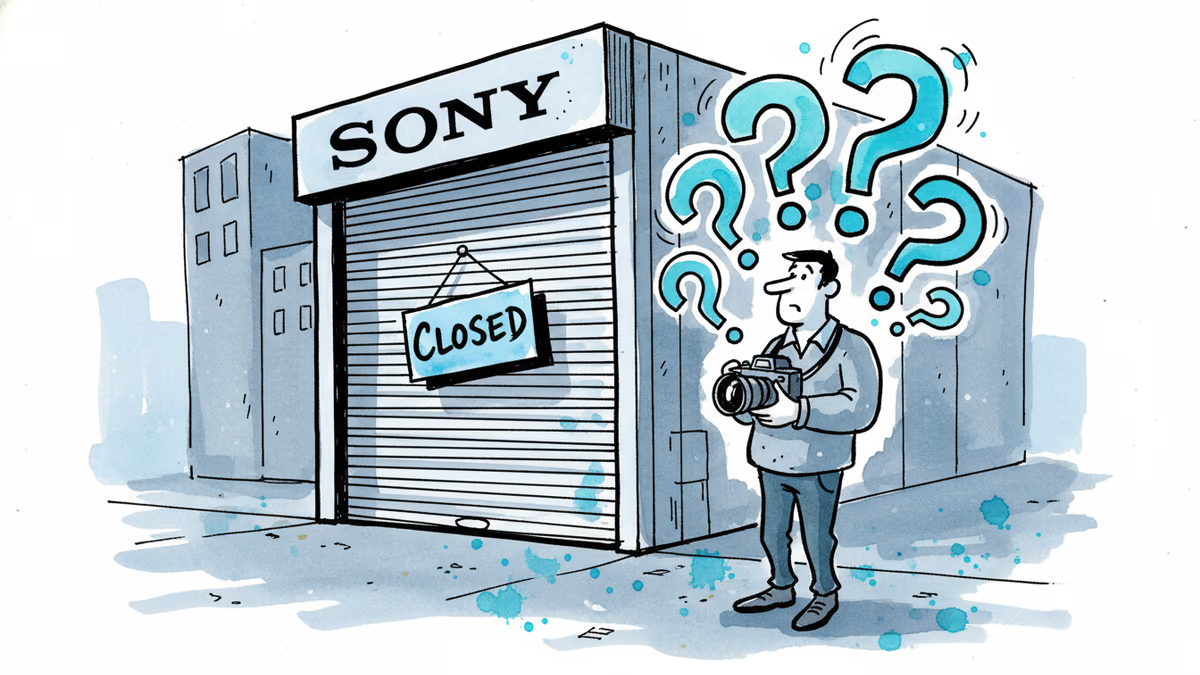
Sony halted orders for most of its CFexpress and SD card lineup on March 27, 2026 — the same day it raised PS5 prices. What does this mean for photographers, consumers, and Sony's broader strategy?
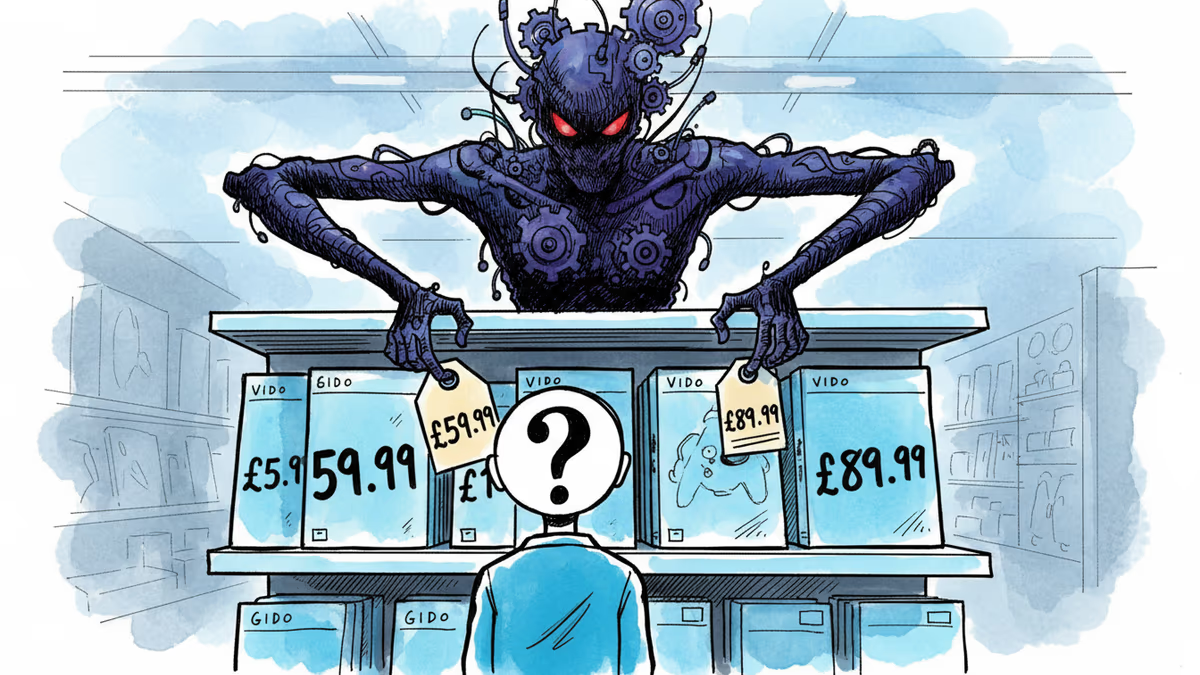
Sony's PlayStation Store has been quietly A/B testing personalized game prices across 150+ titles in 68 regions. Is dynamic pricing coming to gaming — and what does that mean for players?
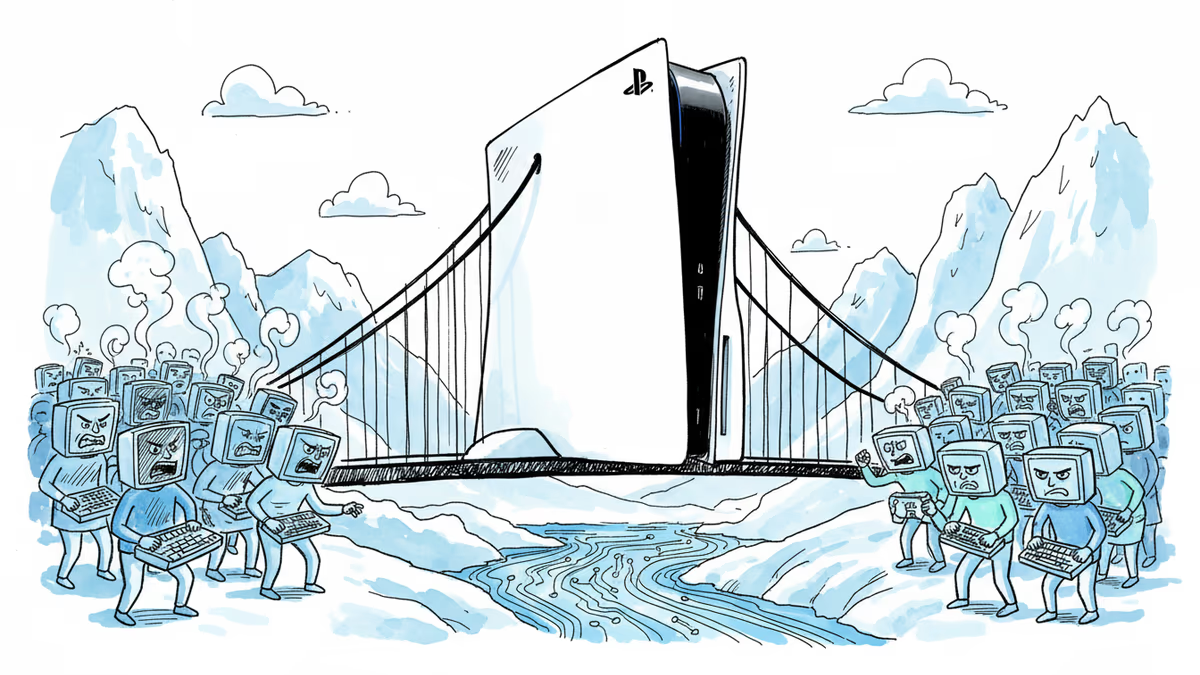
Sony cancels PC releases for future single-player games to protect PS5 sales and counter Microsoft's next Xbox strategy. A deep dive into the console wars' latest battleground.
Sony is pulling its major single-player PlayStation games from PC. After six years of multiplatform expansion, the reversal raises hard questions about exclusivity, hardware sales, and who really controls gaming's future.
Sony halted orders for most of its CFexpress and SD card lineup on March 27, 2026 — the same day it raised PS5 prices. What does this mean for photographers, consumers, and Sony's broader strategy?
Sony's PlayStation Store has been quietly A/B testing personalized game prices across 150+ titles in 68 regions. Is dynamic pricing coming to gaming — and what does that mean for players?
Sony cancels PC releases for future single-player games to protect PS5 sales and counter Microsoft's next Xbox strategy. A deep dive into the console wars' latest battleground.
Thoughts
Share your thoughts on this article
Sign in to join the conversation