
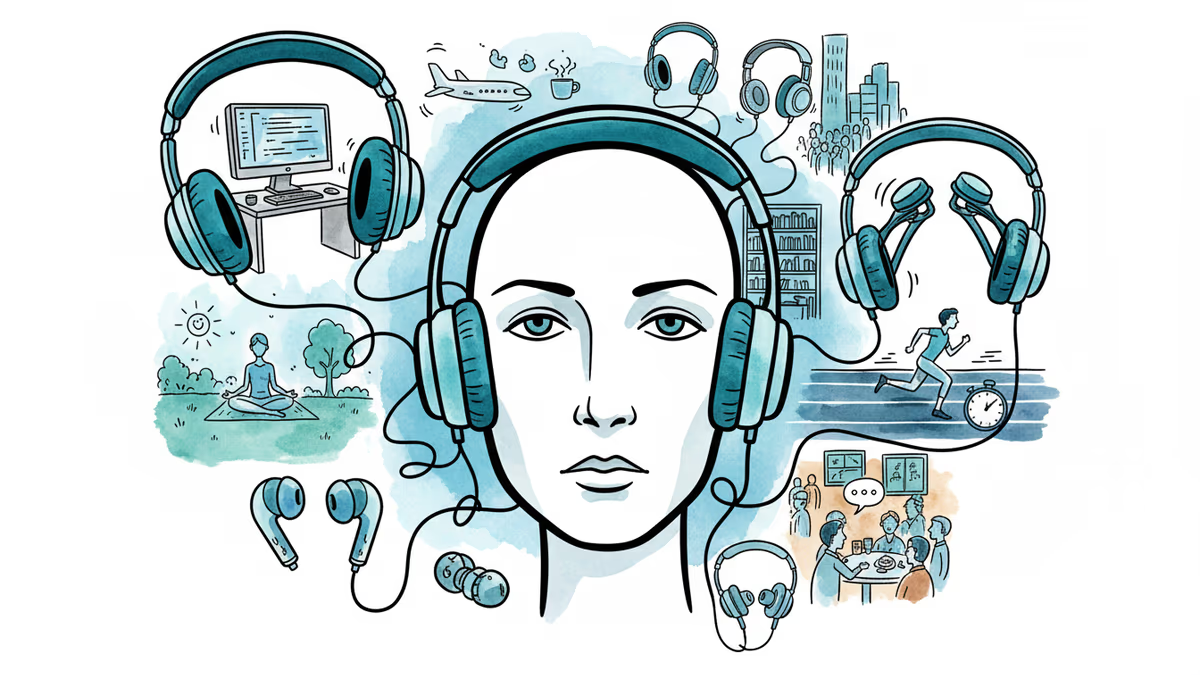
Why Audio Experts Now Say You Need Multiple Headphones
The one-size-fits-all headphone era is over. From workout buds to noise-canceling cans, the audio market has fractured into specialized categories—and consumers are buying in.
Seven Types of Headphones? Audio Expert Says Yes
A WIRED audio reviewer just recommended seven different categories of headphones for different life situations. Noise-canceling earbuds for commuting, over-ears for travel, open-ear clips for cycling, dedicated workout pairs, wired options for creators, and premium audiophile models.
Ten years ago, the advice was simple: "Find one great pair and stick with it." Now? The message is radically different.
The Lifestyle Fragmentation Behind the Trend
Our daily audio needs have splintered. Working from home demands focus-enhancing noise cancellation. Commuting requires portable noise isolation. Exercising needs situational awareness. Each scenario, the expert argues, has an optimal audio solution.
The breakout star? Open earbuds—a category that barely existed five years ago. Products like the Soundcore AeroClip ($150) let you hear music without blocking environmental sounds. Perfect for cyclists who need traffic awareness or dog walkers who want to stay alert.
Consumer Behavior: Multi-Device or Multi-Purchase?

This trend reflects a broader shift in consumer electronics. We've moved from "one device does everything" to "specialized tools for specific tasks." Think smartphone cameras versus dedicated action cams, or smartwatches versus fitness trackers.
But there's resistance. Many consumers still prefer the simplicity of AirPods Pro ($249) that adapt to different environments through software. Why buy seven pairs when one can switch between transparency and noise-canceling modes?
The Economics of Audio Segmentation
The math is compelling for manufacturers. Instead of selling one $300 premium pair per customer, they can potentially sell multiple $50-150 specialized pairs. Budget brands like Soundcore and Nothing are capitalizing on this, offering category-specific models at accessible price points.
For consumers, the calculation is trickier. A full "headphone wardrobe" could cost $500-1000. But buying specialized tools often means better performance per dollar in each use case.
The Wired Renaissance
Perhaps most surprising is the resurgence of wired headphones among younger consumers. Gen Z is driving demand for classics like the Shure SE-112 ($69) and Sennheiser HD6XX, prioritizing audio quality over wireless convenience.
This isn't just nostalgia—it's pragmatism. Content creators and musicians need the reliability and fidelity that wired connections provide. The "analog revival" extends beyond vinyl records to everyday audio gear.
Authors
Related Articles
Bose QuietComfort Ultra 2 drops to $399 with a $50 discount. Beyond the sale, this pricing move signals bigger shifts in the premium audio market.

This year's Valentine's gift trends show a shift toward shared experiences and intentional technology use, revealing deeper changes in how we approach relationships and consumption.

Poor audio quality makes you 8% less trustworthy in virtual meetings, Yale research reveals. How AI-powered audio technology is reshaping business communication rules.

Sony launches its first clip-style earbuds at $229.99. Can they differentiate in an increasingly crowded open-ear market?
Bose QuietComfort Ultra 2 drops to $399 with a $50 discount. Beyond the sale, this pricing move signals bigger shifts in the premium audio market.
This year's Valentine's gift trends show a shift toward shared experiences and intentional technology use, revealing deeper changes in how we approach relationships and consumption.
Poor audio quality makes you 8% less trustworthy in virtual meetings, Yale research reveals. How AI-powered audio technology is reshaping business communication rules.
Sony launches its first clip-style earbuds at $229.99. Can they differentiate in an increasingly crowded open-ear market?
Thoughts
Share your thoughts on this article
Sign in to join the conversation