

Valentine's Gifts Reveal How We Connect in 2026
This year's Valentine's gift trends show a shift toward shared experiences and intentional technology use, revealing deeper changes in how we approach relationships and consumption.
Forget roses and chocolates. This Valentine's Day, couples are gifting Lego sets, smart rings, and karaoke microphones. What started as a simple holiday about romantic gestures has evolved into something that reveals how we're reimagining connection in 2026.
When Gifts Become Experiences
The most telling trend isn't what people are buying—it's what they're doing with those purchases. Building Lego sets together as a date night. Sharing a massive paddleboard designed for multiple people. These aren't just gifts; they're investments in shared time.
This shift reflects a post-pandemic reality where couples learned to create meaningful experiences at home. But by 2026, we've moved beyond simply staying in. Now it's about intentionally crafting moments that matter, whether that's constructing a dried-flower centerpiece piece by piece or learning to navigate a waterway together on an oversized paddleboard.
The psychology here is fascinating. Traditional gifts say "I thought of you." These experience-based gifts say "I want to build something with you."
The Wellness Tech Romance
Perhaps nothing signals the evolution of modern relationships quite like the Oura Ring 4 appearing on Valentine's wish lists. At $349, it's not exactly impulse-purchase territory, yet couples are increasingly viewing fitness trackers as romantic gifts.
This represents a fundamental shift in how we think about health and partnership. Sharing sleep data, comparing activity levels, celebrating fitness milestones together—these have become new forms of intimacy. The ring itself becomes a symbol of commitment to mutual well-being, a promise to grow healthier together.
It's also worth noting what this says about privacy expectations. Gen Z and younger millennials are comfortable sharing biometric data with partners in ways that would have seemed intrusive just a decade ago.

The Paradox of Purposeful Tech
In an age where smartphones can do everything, why are people gifting single-purpose devices like Aura digital photo frames and Bonaok karaoke microphones?
The answer lies in what we might call "intentional technology use." These devices do one thing well, without the distractions and notifications that come with multipurpose gadgets. A digital photo frame displays memories without the temptation to scroll through social media. A dedicated karaoke microphone creates a specific kind of fun without the complexity of app navigation.
This trend suggests consumers aren't rejecting technology—they're demanding it serve clearer purposes in their lives. They want tech that enhances specific moments rather than consuming all moments.
What This Means for Retailers and Brands
For businesses, these trends signal a shift away from traditional Valentine's marketing. The flower industry, while still relevant, faces competition from companies like Lego, Oura, and Cozy Earth. Success increasingly depends on understanding that modern romance isn't just about grand gestures—it's about creating opportunities for ongoing connection.
The rise of "date kit" products—items that facilitate shared activities—represents a new category worth watching. Brands that can position their products as relationship builders rather than individual purchases may find unexpected success in the romance market.
The Investment Angle
From an investment perspective, this shift toward experience-based and wellness-focused gifts creates opportunities in sectors beyond traditional retail. Companies developing shared-use recreational products, wellness technology designed for couples, and platforms that facilitate collaborative activities could see increased demand.
The success of these unconventional Valentine's gifts also suggests consumers are willing to spend more on items that promise lasting value and repeated use, rather than consumable luxury items.
Authors
Related Articles
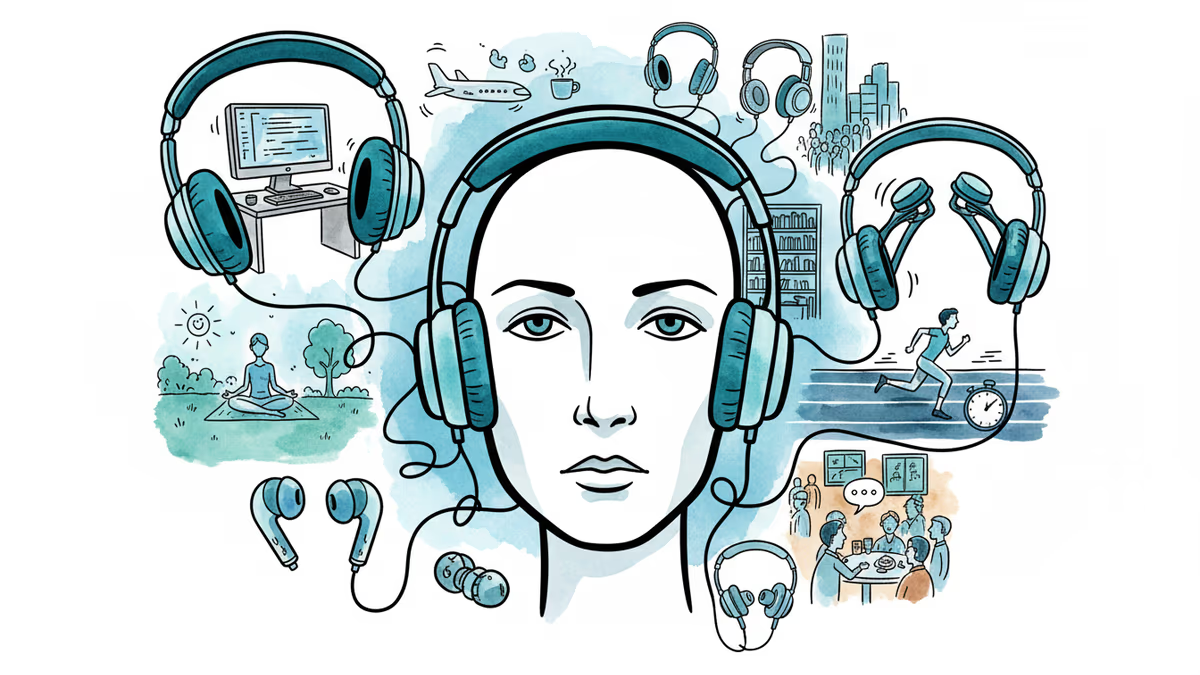
The one-size-fits-all headphone era is over. From workout buds to noise-canceling cans, the audio market has fractured into specialized categories—and consumers are buying in.

Five stories from late September, traced to where the paper trail stops: Korea's export record, Nvidia's Hugging Face 8-K, a US-China AI channel, the UN on AI, and rising births.

Huawei's CANN is open source under a license barring software for non-Ascend chips. Inside China's second CUDA, and the two links still outside it: pre-training compute and 5nm capacity.
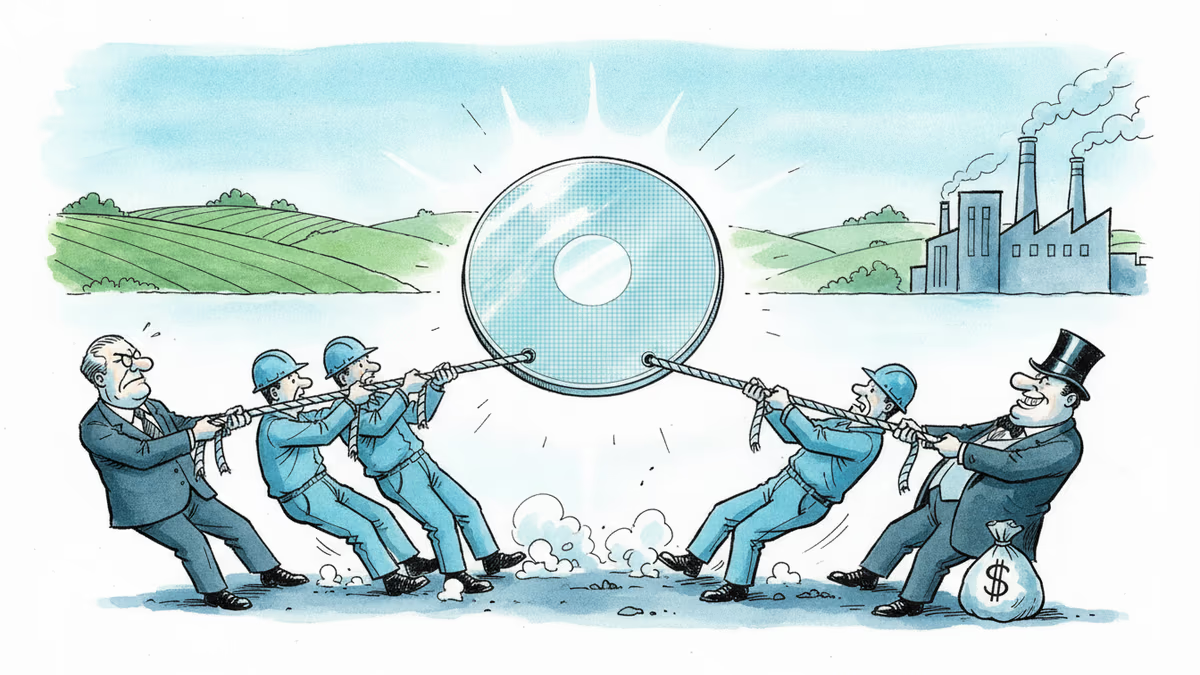
Samsung Electronics' union branch revealed that 84% of survey respondents oppose the government's roughly $290 billion (₩400 trillion) semiconductor megaproject in Gwangju. Government, management, the union and shareholders are all reading the same national project in sharply different ways.
The one-size-fits-all headphone era is over. From workout buds to noise-canceling cans, the audio market has fractured into specialized categories—and consumers are buying in.
Five stories from late September, traced to where the paper trail stops: Korea's export record, Nvidia's Hugging Face 8-K, a US-China AI channel, the UN on AI, and rising births.
Huawei's CANN is open source under a license barring software for non-Ascend chips. Inside China's second CUDA, and the two links still outside it: pre-training compute and 5nm capacity.
Samsung Electronics' union branch revealed that 84% of survey respondents oppose the government's roughly $290 billion (₩400 trillion) semiconductor megaproject in Gwangju. Government, management, the union and shareholders are all reading the same national project in sharply different ways.
Thoughts
Share your thoughts on this article
Sign in to join the conversation