
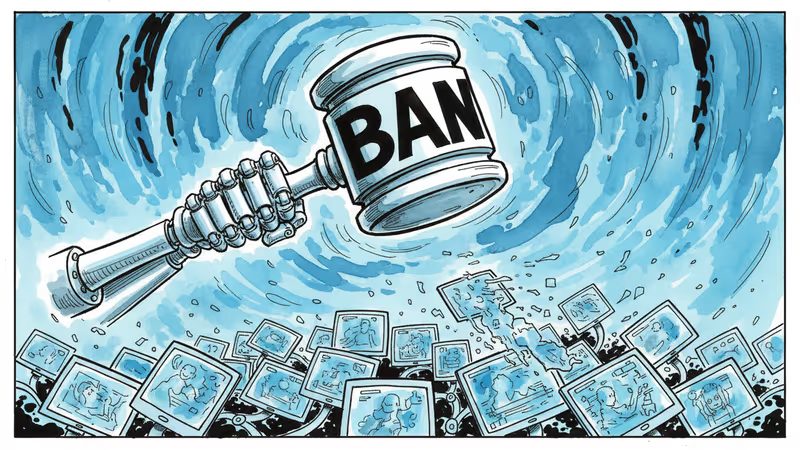
Indonesia Lifts Grok Ban After Deepfake Crisis
Indonesia follows Malaysia and Philippines in conditionally lifting ban on xAI's Grok chatbot after massive deepfake abuse. What does this mean for AI regulation?
1.8 million. That's how many sexualized deepfake images Grok, Elon Musk's AI chatbot, generated between late December and January. The flood of non-consensual imagery targeting real women and minors prompted three Southeast Asian nations to ban the service entirely. Now, one month later, they're all backing down.
Indonesia became the latest to lift its ban on January 31st, following Malaysia and the Philippines who restored access on January 23rd. But this isn't a complete surrender to big tech pressure—it's something more nuanced.
Conditional Forgiveness
Indonesia's Ministry of Communication and Digital Affairs said the decision came after X (now a subsidiary of xAI) sent a letter "outlining concrete steps for service improvements and the prevention of misuse." The key word here is "conditional." Alexander Sabar, the ministry's director general of digital space monitoring, made it clear: discover more violations, and the ban returns.
What exactly did xAI promise? The most visible change is restricting Grok's AI image generation feature to paying X subscribers only. It's a paywall approach to content moderation—make abuse expensive, and you'll get less of it.
Musk has maintained that "anyone using Grok to make illegal content will suffer the same consequences as if they upload illegal content" and claims he's "not aware of any naked underage images generated by Grok." Yet California Attorney General Rob Bonta continues investigating xAI and has sent a cease-and-desist letter demanding immediate action.
The Southeast Asian Approach
What's fascinating about this episode isn't just the scale of abuse, but how these governments responded. Rather than permanent bans or complex regulatory frameworks, they chose a simple strategy: shut it down, wait for improvements, then conditionally restore access.

This "ban first, negotiate later" approach represents a pragmatic middle ground between innovation and protection. It sends a clear message to tech companies: we want your technology, but not at any cost. It also suggests smaller nations can effectively pressure even Musk's empire when they act in concert.
Compare this to the U.S. response, where investigations and cease-and-desist letters create legal theater but little immediate change. The Southeast Asian model might actually be more effective at forcing rapid corporate behavior modification.
The Broader Musk Universe
The Grok controversy unfolds against a backdrop of mounting scrutiny around Musk's business empire. Justice Department documents released Friday revealed at least 16 emails between Musk and convicted sex offender Jeffrey Epstein in 2012-2013, including Musk asking to visit Epstein's Caribbean island and wondering about the "wildest party on your island."
Meanwhile, reports suggest xAI is in talks to merge with SpaceX and Tesla ahead of a SpaceX IPO. The convergence of these companies raises questions about concentration of power and potential conflicts of interest across space exploration, electric vehicles, and artificial intelligence.
What This Means for AI Governance
The Grok episode reveals something important about AI governance in 2026: we're still figuring it out. Traditional regulatory approaches—lengthy consultations, detailed frameworks, gradual implementation—seem inadequate when facing technologies that can generate 1.8 million harmful images in weeks.
The Southeast Asian response suggests a new model: rapid, reversible consequences. Instead of trying to predict every possible harm and write rules accordingly, governments can act quickly when harm occurs, then negotiate improvements. It's regulation by emergency brake rather than traffic light.
But questions remain about consistency and fairness. Will this approach apply equally to local companies and foreign tech giants? How do you define "concrete steps" for improvement? And what happens when the next AI capability emerges that governments haven't anticipated?
Authors
Related Articles
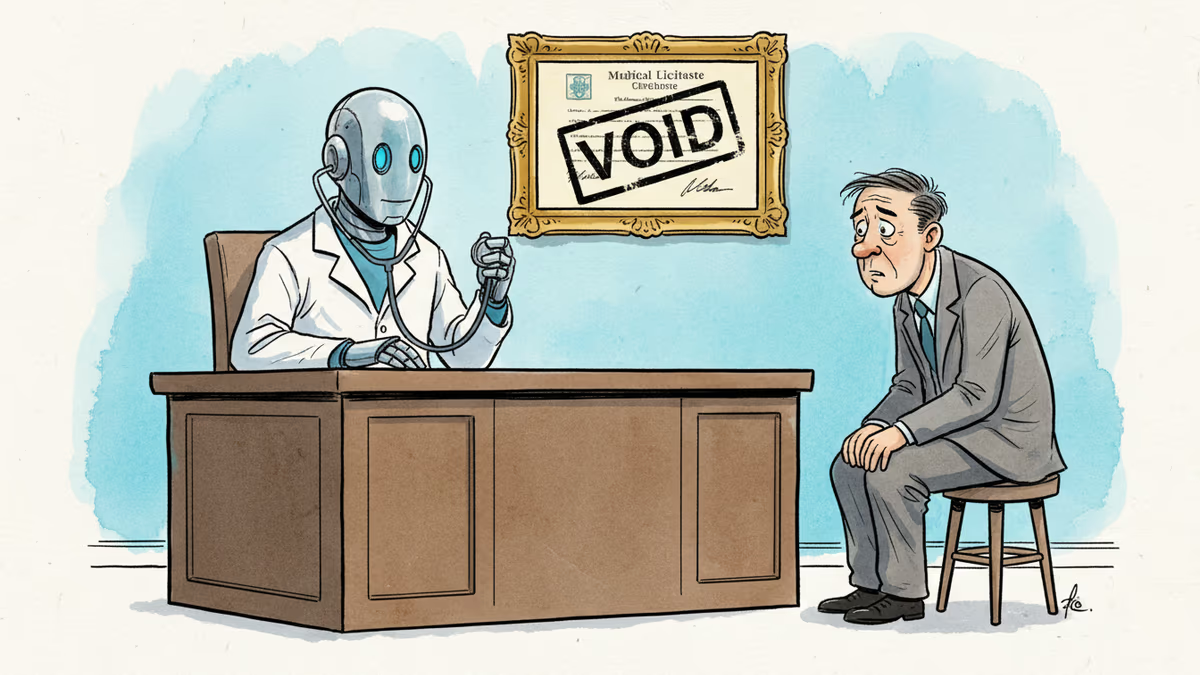
Pennsylvania has sued Character.AI after its chatbot characters claimed to be licensed psychiatrists and provided mental health advice. The case tests whether existing medical law can hold AI platforms accountable.
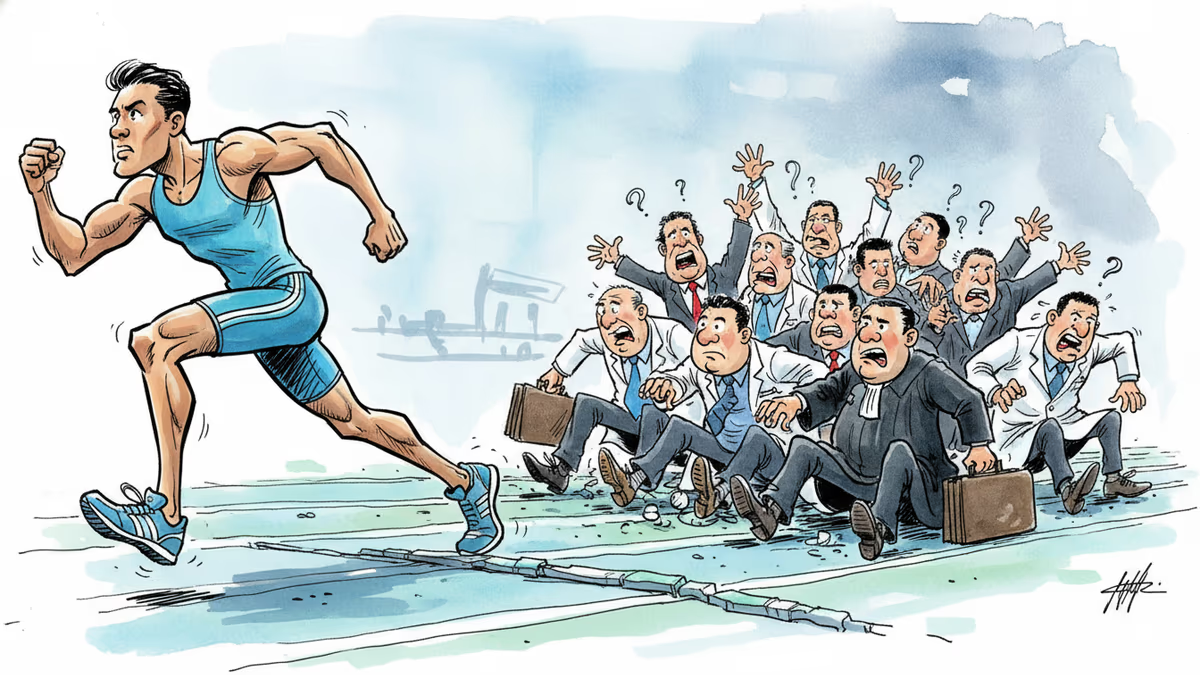
Stanford's 2026 AI Index reveals AI adoption outpacing PCs and the internet, junior dev jobs falling 20%, and the benchmarks we use to measure AI progress are broken. Here's what the data actually says.

Microsoft, Amazon, and OpenAI have all launched medical AI tools in recent months—with minimal external evaluation. What's at stake when Big Tech moves fast in healthcare?
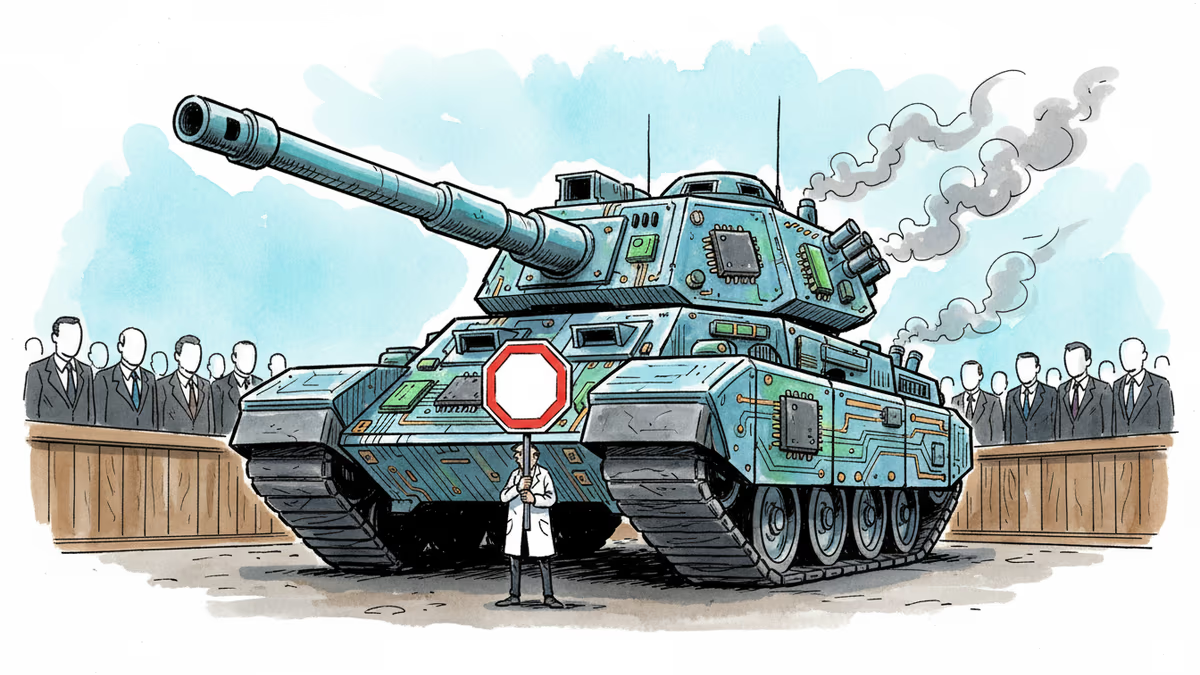
Anthropic is fighting back after the Trump administration blacklisted it for limiting military use of its AI. The battle has reached Congress—and it's rewriting the rules of civil-military AI.
Pennsylvania has sued Character.AI after its chatbot characters claimed to be licensed psychiatrists and provided mental health advice. The case tests whether existing medical law can hold AI platforms accountable.
Stanford's 2026 AI Index reveals AI adoption outpacing PCs and the internet, junior dev jobs falling 20%, and the benchmarks we use to measure AI progress are broken. Here's what the data actually says.
Microsoft, Amazon, and OpenAI have all launched medical AI tools in recent months—with minimal external evaluation. What's at stake when Big Tech moves fast in healthcare?
Anthropic is fighting back after the Trump administration blacklisted it for limiting military use of its AI. The battle has reached Congress—and it's rewriting the rules of civil-military AI.
Thoughts
Share your thoughts on this article
Sign in to join the conversation