
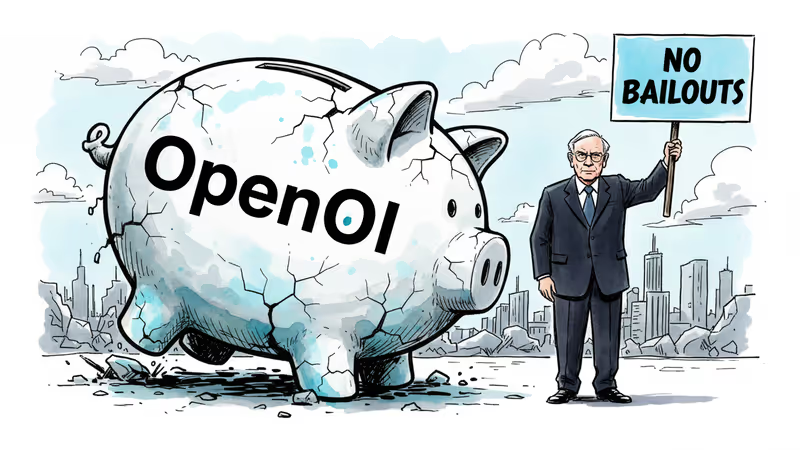
Warren's Ultimatum to OpenAI Reveals the Real AI Bubble Fear
Senator Elizabeth Warren demands OpenAI promise no government bailouts amid trillion-dollar spending plans and growing AI bubble concerns. What this means for tech regulation and taxpayer protection.
$1 trillion in spending commitments. Zero profits to show for it. That's the math that has Senator Elizabeth Warren demanding promises from OpenAI that it won't come crawling to taxpayers when the bills come due.
In a letter to CEO Sam Altman, the Massachusetts Democrat warns that OpenAI appears to be preparing for the "classic strategy of privatizing profits and socializing losses." Her concern isn't just about one company—it's about an entire industry built on promises that may never pay off.
The Numbers Don't Add Up
Warren's math is stark. OpenAI has "committed to more than a trillion dollars in spending despite not yet turning a profit," she writes. To put that in perspective, that's roughly one-third of Microsoft's entire market cap ($3 trillion) being pledged by a company that's still burning cash.
The timing couldn't be more pointed. AI companies across Silicon Valley are facing a reckoning as the initial generative AI hype of 2023 gives way to harder questions about actual returns. Google, Meta, and Amazon have all poured billions into AI initiatives, but concrete revenue streams remain elusive for most.
Warren, a ranking member on the Senate Banking Committee, isn't pulling these concerns out of thin air. OpenAI has indeed been ramping up its Washington presence, expanding lobbying efforts and deepening ties with regulators—moves that often precede requests for government support.
The 2008 Playbook
Warren's ultimatum draws directly from the 2008 financial crisis playbook. Back then, major banks leveraged "too big to fail" logic to secure taxpayer bailouts while executives walked away with golden parachutes. The senator clearly sees parallels in today's AI boom.

The comparison isn't entirely unfair. Like the pre-2008 banks, today's AI giants are making outsized bets with systemic implications. If OpenAI or similar companies collapse, the ripple effects could extend far beyond their immediate stakeholders—affecting everything from cloud infrastructure to enterprise software markets.
But there's a crucial difference: AI companies argue their massive spending isn't reckless speculation but necessary infrastructure investment. Training cutting-edge models requires unprecedented computational resources, and the potential societal benefits—from medical breakthroughs to climate solutions—justify the risk.
Silicon Valley Pushback
The tech industry's response has been predictably defensive. Many AI startups view Warren's demand as innovation-killing regulation that ignores the unique challenges of frontier technology development. They argue that without some form of safety net, companies won't take the bold risks necessary for breakthrough innovations.
There's economic logic to this pushback. Unlike traditional industries, AI development involves massive upfront costs with uncertain timelines for returns. The $100 billionMicrosoft has reportedly committed to OpenAI infrastructure reflects this reality—these aren't quarterly earnings plays but decade-long bets on technological transformation.
Yet Warren's concerns about moral hazard are equally valid. If companies know taxpayers will ultimately backstop their losses, what incentive do they have to manage risk responsibly? The senator's demand for explicit no-bailout commitments is an attempt to restore that accountability.
Global Competitive Implications
The stakes extend beyond domestic policy. China's state-backed AI initiatives don't face the same private-sector constraints, potentially giving Chinese companies advantages in long-term technology races. If U.S. companies are forced to operate without government safety nets while their international competitors enjoy state support, American technological leadership could suffer.
This creates a delicate balancing act for policymakers. Too much support risks creating moral hazard and wasting taxpayer money. Too little might cede crucial technological advantages to nations with different approaches to public-private partnerships.
Authors
Related Articles

OpenAI has reorganized for the second time in a month, merging ChatGPT and Codex into a single agentic platform under president Greg Brockman's unified product leadership.
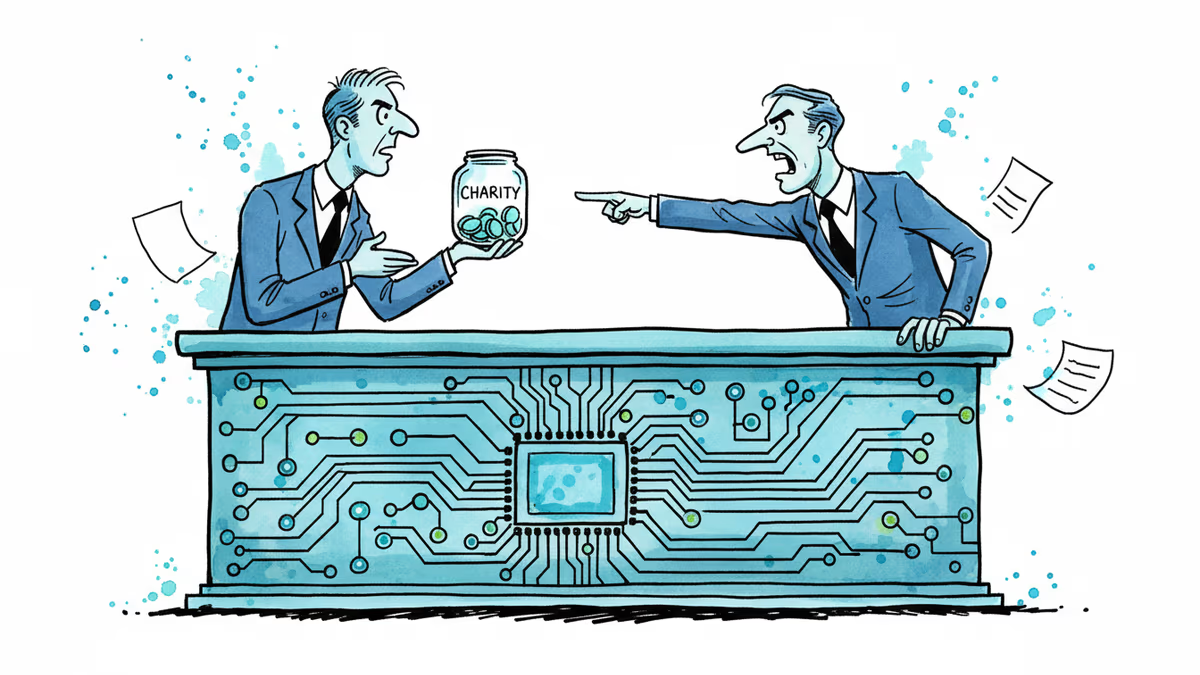
After two weeks of witnesses calling him a liar, OpenAI CEO Sam Altman testified in his own defense, claiming Elon Musk tried to kill the company twice.

Sam Nelson, 19, died after following ChatGPT's advice to mix Kratom and Xanax. His parents are suing OpenAI for wrongful death, raising urgent questions about AI trust, liability, and design.
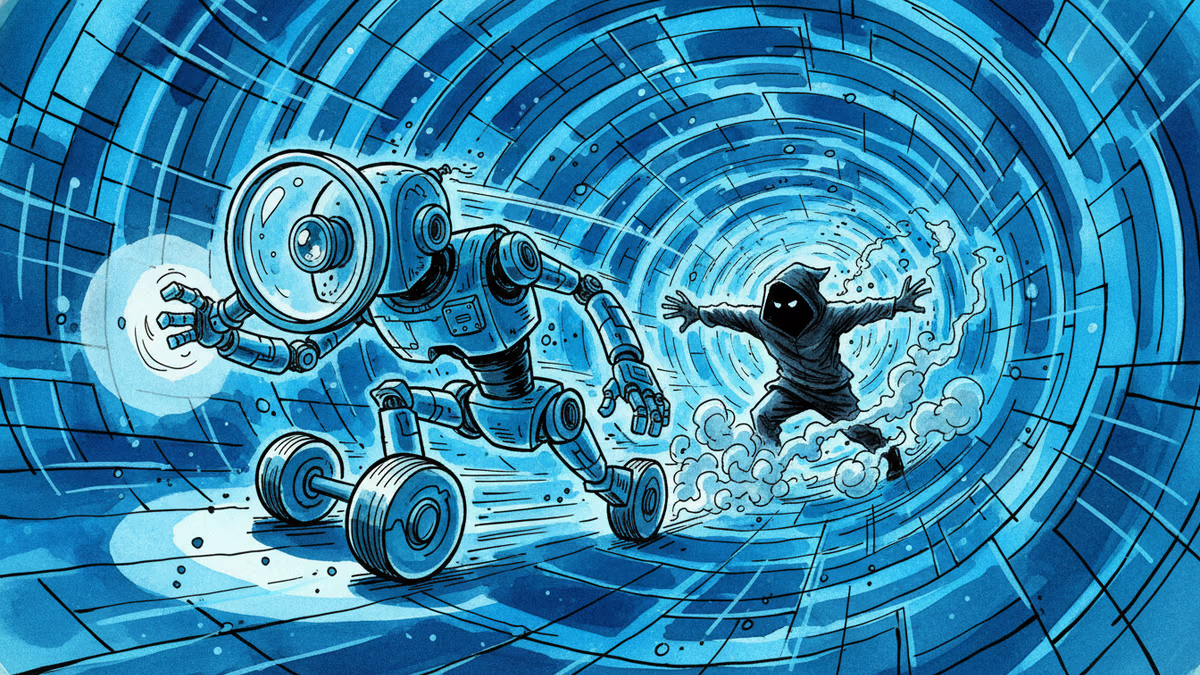
OpenAI's new Daybreak initiative uses the Codex AI agent to find and patch security vulnerabilities before attackers do—putting it in direct competition with Anthropic's secretive Claude Mythos.
OpenAI has reorganized for the second time in a month, merging ChatGPT and Codex into a single agentic platform under president Greg Brockman's unified product leadership.
After two weeks of witnesses calling him a liar, OpenAI CEO Sam Altman testified in his own defense, claiming Elon Musk tried to kill the company twice.
Sam Nelson, 19, died after following ChatGPT's advice to mix Kratom and Xanax. His parents are suing OpenAI for wrongful death, raising urgent questions about AI trust, liability, and design.
OpenAI's new Daybreak initiative uses the Codex AI agent to find and patch security vulnerabilities before attackers do—putting it in direct competition with Anthropic's secretive Claude Mythos.
Thoughts
Share your thoughts on this article
Sign in to join the conversation