
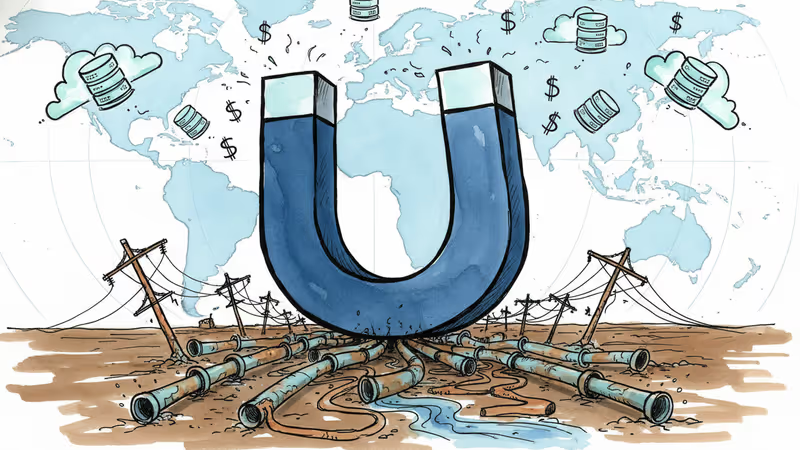
India Offers Foreign Cloud Giants Zero Taxes Until 2047
India proposes tax-free cloud services until 2047 for foreign providers using Indian data centers to serve overseas customers. Google, Microsoft, Amazon announce massive investments despite power and water challenges.
Imagine running your cloud business without paying taxes for the next 23 years. That's exactly what India is offering foreign cloud providers in a bold bid to become the world's AI infrastructure hub.
The Zero-Tax Gambit
India's Finance Minister Nirmala Sitharaman dropped a bombshell in Sunday's annual budget: foreign cloud companies can operate tax-free through 2047 on revenues from services sold outside India, provided they run those workloads from Indian data centers.
The fine print matters. Services sold to Indian customers must be routed through locally incorporated resellers and taxed normally. But everything else? Zero taxes for more than two decades. Indian data center operators also get a 15% cost-plus safe harbor rate for services to related foreign entities.
This isn't just about tax policy—it's about positioning India as the third pillar of global AI infrastructure, alongside the U.S. and China, as artificial intelligence workloads explode worldwide.
Big Tech's Indian Gold Rush
The timing isn't coincidental. Global cloud giants are already pouring money into India at unprecedented rates. Google announced a $15 billion investment in October to build AI hubs and expand data center infrastructure—its largest commitment in the country to date, following a $10 billion pledge in 2020.
Microsoft followed in December with plans to invest $17.5 billion by 2029 to expand its AI and cloud footprint. Amazon went even bigger, saying it would invest an additional $35 billion by 2030, bringing its total planned commitment to about $75 billion.
Domestic players are scaling up too. Digital Connexion, backed by Reliance Industries, Brookfield Asset Management, and Digital Realty Trust, announced an $11 billion investment by 2030 to develop a 1-gigawatt AI-focused data center campus. Adani Group plans to invest up to $5 billion alongside Google.
The Infrastructure Reality Check
But India's AI ambitions face harsh realities. Patchy power availability, high electricity costs, and water scarcity pose major constraints for energy-intensive AI workloads. These challenges could slow construction and raise operating costs significantly.

"The announcements signal that data centers are being treated as a strategic business sector rather than just back-end infrastructure," said Rohit Kumar, founding partner of New Delhi-based The Quantum Hub. However, he noted that execution challenges around power availability, land access, and state-level clearances remain significant hurdles.
Sagar Vishnoi from Future Shift Labs projects India's data center power capacity will exceed 2 gigawatts by 2026, up from just over 1 gigawatt currently, and could expand more than fivefold to exceed 8 gigawatts by 2030 with capital investments exceeding $30 billion.
The Semiconductor Subplot
India's budget also reveals broader ambitions beyond cloud computing. The government launched a second phase of the India Semiconductor Mission, focusing on equipment and materials production, developing domestic chip intellectual property, and strengthening supply chains.
The allocation for the Electronics Components Manufacturing Scheme jumped to ₹400 billion (around $4.36 billion) from ₹229.19 billion, after attracting investment commitments at more than double its original target. This scheme reimburses costs for companies manufacturing key components like printed circuit boards, camera modules, and connectors.
The budget also proposed a five-year tax exemption for foreign companies supplying equipment to electronics manufacturers in bonded zones—a move likely to benefit companies like Apple, which relies heavily on contract manufacturing in India.
The Geopolitical Chess Move
India's strategy extends beyond economics into geopolitics. By offering a 23-year tax holiday, India is making a "strategic bet on global Big Tech," as Vishnoi puts it, even as the country could develop its own technology champions over the next two decades.
The move comes as global supply chains shift away from China and companies seek alternatives for AI infrastructure. India offers a large pool of engineering talent, growing domestic demand, and now, unprecedented tax incentives.
But there's a catch for smaller players. Routing services to Indian users through reseller entities could leave domestic companies competing for thin margins rather than receiving comparable upstream incentives.
The Critical Minerals Angle
Recognizing vulnerabilities in critical supply chains, India also announced plans to establish rare-earth corridors in mineral-rich states like Odisha, Kerala, Andhra Pradesh, and Tamil Nadu. This builds on incentive programs to boost domestic production of rare-earth magnets as access to Chinese supplies becomes more constrained.
The government also removed the ₹1 million value cap on courier exports to boost cross-border e-commerce, potentially benefiting small manufacturers and startups selling overseas through online platforms.
Authors
Related Articles
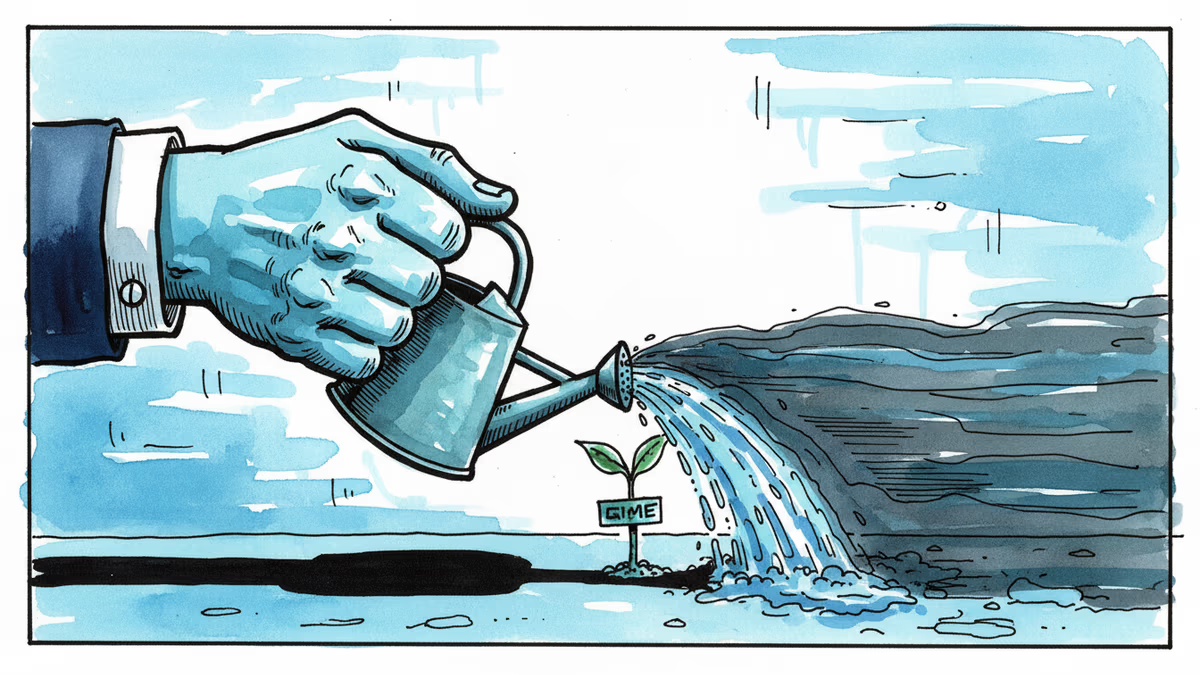
Google is committing up to $40 billion to Anthropic, a direct AI competitor. The deal reveals how the real AI arms race isn't about models — it's about who controls the infrastructure beneath them.
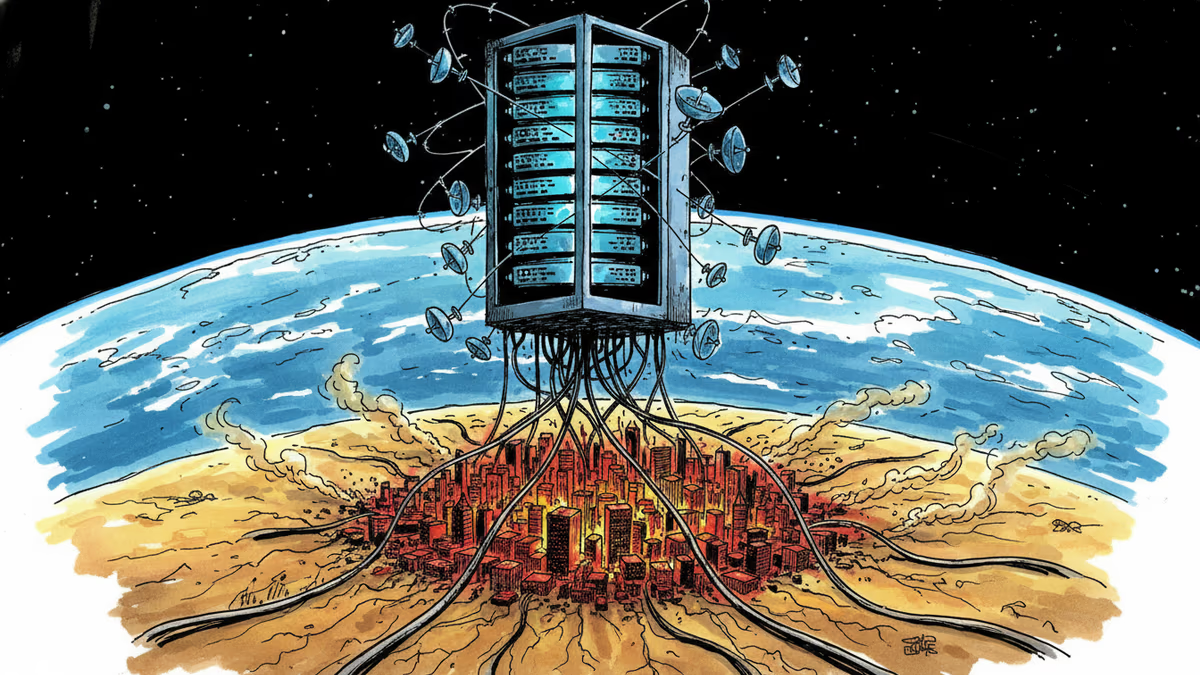
SpaceX wants to launch a million orbital data centers to power AI without draining Earth. The vision is compelling. The physics, economics, and debris math are not.
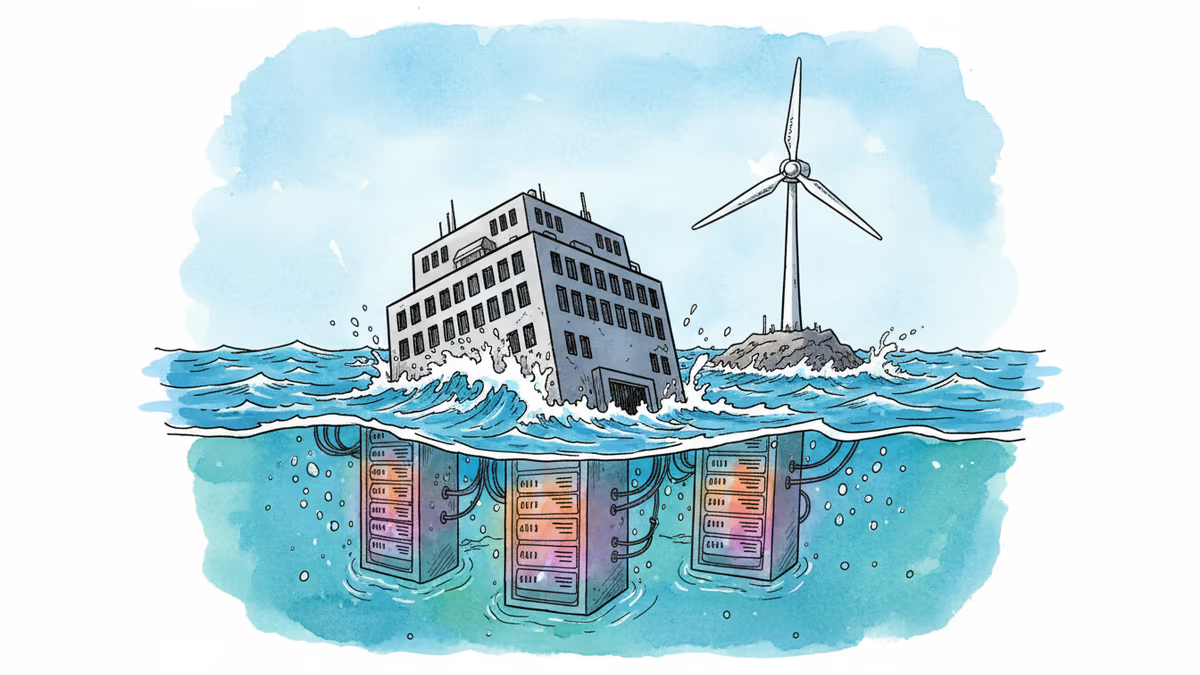
A Norwegian startup plans to submerge data centers offshore, powered by wind turbines. Could this solve AI's massive energy appetite, or create new problems? We examine multiple perspectives.

Amazon, Google, and Meta plan $700 billion in AI infrastructure spending for 2026. Wall Street is nervous, but tech CEOs double down. Who's right?
Google is committing up to $40 billion to Anthropic, a direct AI competitor. The deal reveals how the real AI arms race isn't about models — it's about who controls the infrastructure beneath them.
SpaceX wants to launch a million orbital data centers to power AI without draining Earth. The vision is compelling. The physics, economics, and debris math are not.
A Norwegian startup plans to submerge data centers offshore, powered by wind turbines. Could this solve AI's massive energy appetite, or create new problems? We examine multiple perspectives.
Amazon, Google, and Meta plan $700 billion in AI infrastructure spending for 2026. Wall Street is nervous, but tech CEOs double down. Who's right?
Thoughts
Share your thoughts on this article
Sign in to join the conversation