
ASML's Record Orders Signal AI Infrastructure Boom Is Far From Over
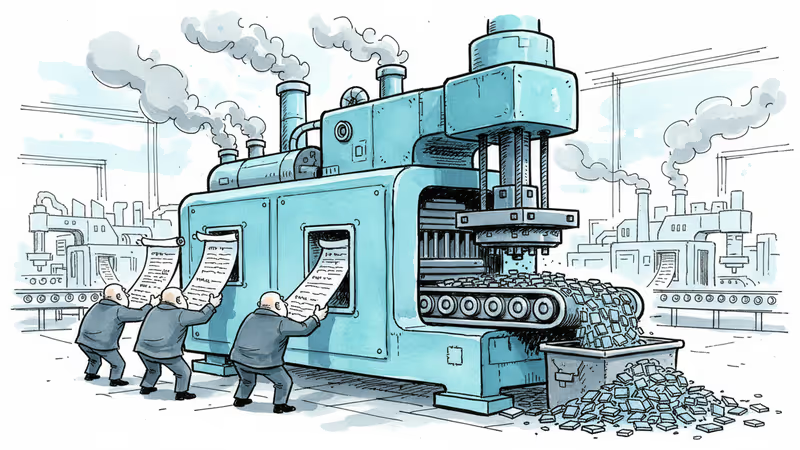
Dutch chip equipment maker ASML posted record quarterly bookings of €13 billion, suggesting semiconductor manufacturers expect sustained AI demand for years to come.
€13 billion in new orders. That's what ASML, the Dutch photolithography giant, booked last quarter—a company record and more than double the previous quarter's intake.
On the surface, it's just another earnings beat from a tech supplier. But dig deeper, and these order books tell a much bigger story about where the AI revolution is heading. ASML isn't just any supplier—it's the only company on earth that makes the EUV equipment needed to manufacture cutting-edge semiconductors.
The Ultimate AI Bellwether
When chip manufacturers like TSMC and Samsung place orders with ASML, they're not just buying equipment. They're making multi-billion dollar bets on what the semiconductor landscape will look like 2-3 years from now—the typical lead time for EUV delivery.
That's what makes ASML's quarterly results so revealing. While Nvidia's GPU sales tell us about today's AI demand, ASML's order book tells us what industry insiders really think about tomorrow's.
CEO Christophe Fouquet was explicit about the source of this surge: "Many of our customers have shared a notably more positive assessment of the medium-term market situation, primarily based on more robust expectations of the sustainability of AI-related demand."
Translation: The world's biggest chip manufacturers are betting that AI labs will actually need all those data centers they're building.

Beyond the Nvidia Narrative
This matters because it extends the AI investment thesis beyond the obvious players. Nvidia has captured headlines with its astronomical GPU sales, but ASML's surge suggests the infrastructure buildout runs much deeper than just training chips.
The equipment orders point to massive expansion in foundry capacity—the factories that will produce not just AI training chips, but also the inference chips, memory modules, and specialized processors that will power the next generation of AI applications. Companies don't spend billions on manufacturing equipment unless they're confident about multi-year demand cycles.
For investors tracking the AI boom, this represents a shift from speculative to structural. When semiconductor manufacturers commit to EUV equipment—which can cost €200-300 million per machine—they're signaling that AI isn't a passing trend but a fundamental shift in computing demand.
The Skeptic's Case
Of course, orders aren't revenue. ASML customers have historically canceled or delayed orders when market conditions shift. The €13 billion in bookings represents commitments that won't be fulfilled for years, leaving plenty of time for the AI narrative to change.
The bigger question is whether all this infrastructure investment will generate returns. Data center operators are spending trillions on AI capacity, but many AI applications still struggle to turn a profit. If the current AI services fail to justify their massive computational costs, some of these semiconductor orders could evaporate.
There's also geopolitical risk. ASML's EUV technology sits at the center of U.S.-China tech tensions, and export restrictions could disrupt order patterns regardless of underlying demand.
Authors
Related Articles
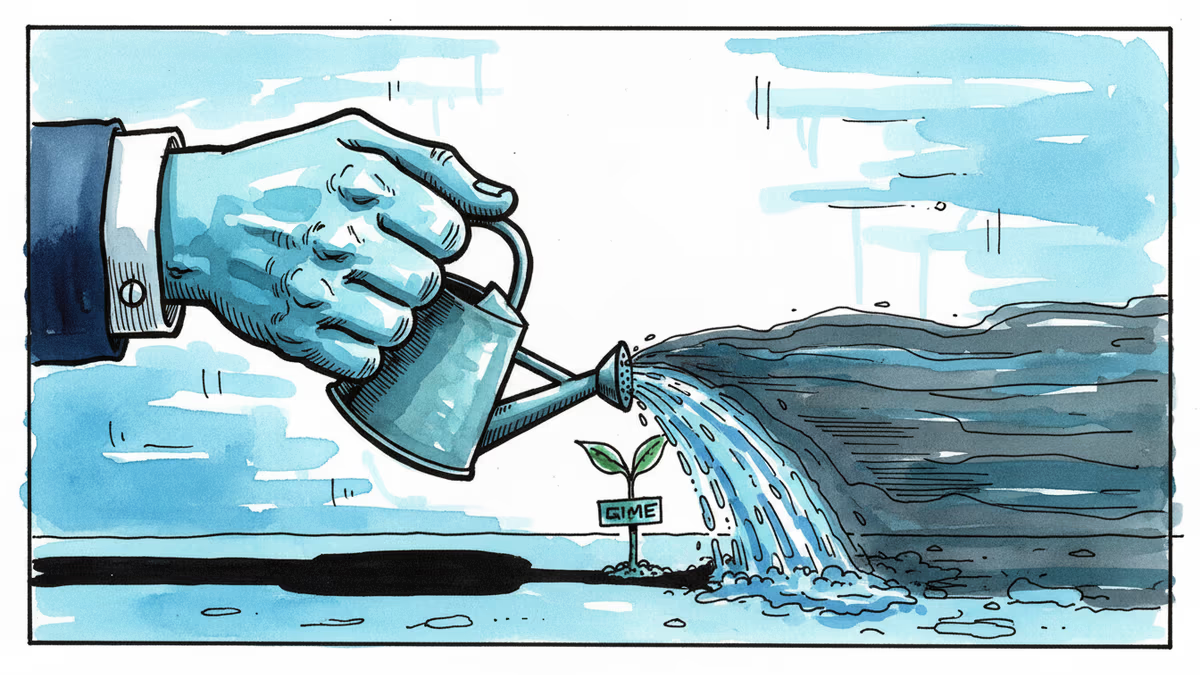
Google is committing up to $40 billion to Anthropic, a direct AI competitor. The deal reveals how the real AI arms race isn't about models — it's about who controls the infrastructure beneath them.
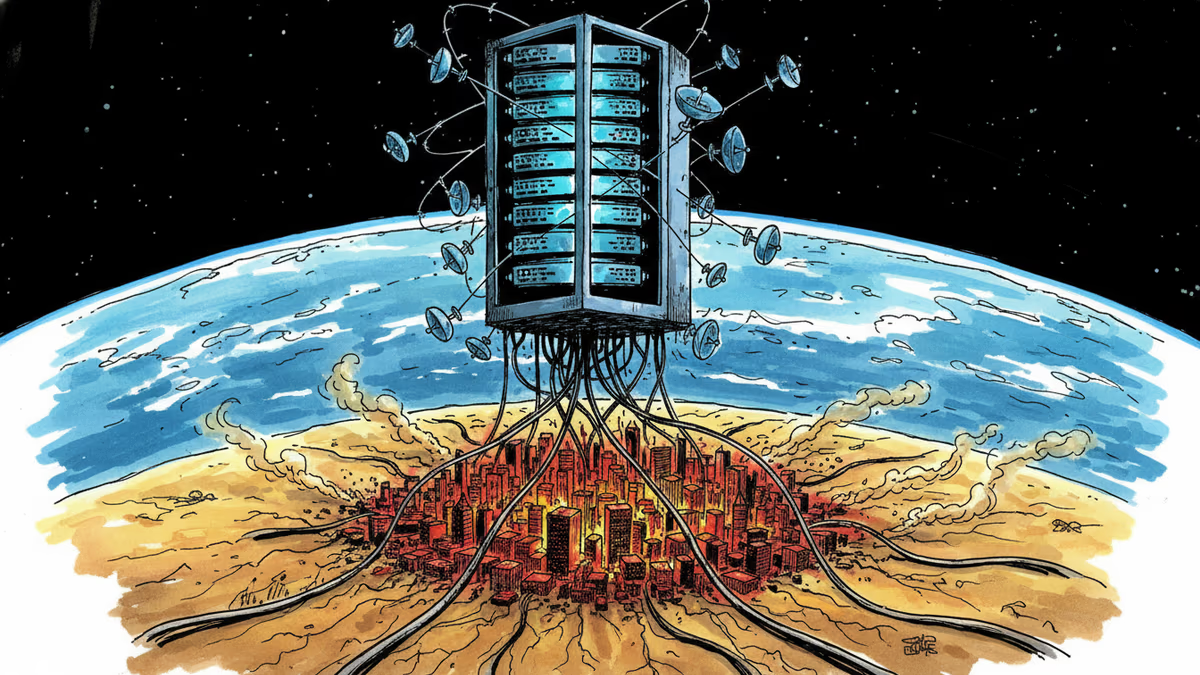
SpaceX wants to launch a million orbital data centers to power AI without draining Earth. The vision is compelling. The physics, economics, and debris math are not.
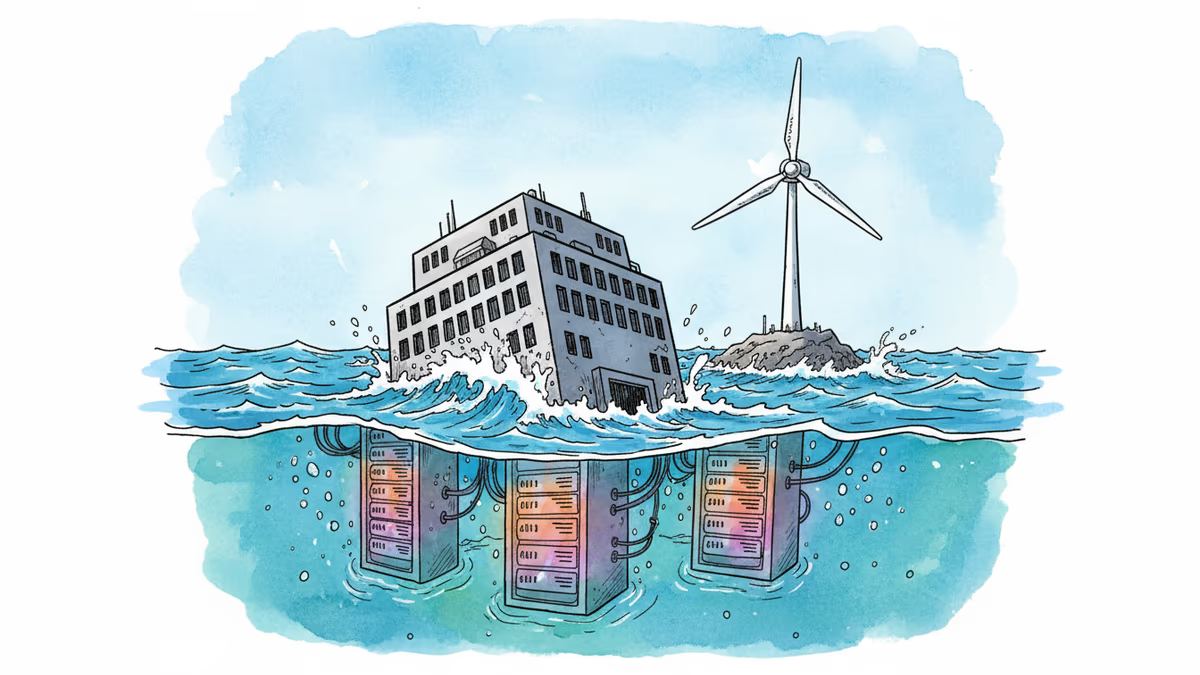
A Norwegian startup plans to submerge data centers offshore, powered by wind turbines. Could this solve AI's massive energy appetite, or create new problems? We examine multiple perspectives.

Amazon, Google, and Meta plan $700 billion in AI infrastructure spending for 2026. Wall Street is nervous, but tech CEOs double down. Who's right?
Google is committing up to $40 billion to Anthropic, a direct AI competitor. The deal reveals how the real AI arms race isn't about models — it's about who controls the infrastructure beneath them.
SpaceX wants to launch a million orbital data centers to power AI without draining Earth. The vision is compelling. The physics, economics, and debris math are not.
A Norwegian startup plans to submerge data centers offshore, powered by wind turbines. Could this solve AI's massive energy appetite, or create new problems? We examine multiple perspectives.
Amazon, Google, and Meta plan $700 billion in AI infrastructure spending for 2026. Wall Street is nervous, but tech CEOs double down. Who's right?
Thoughts
Share your thoughts on this article
Sign in to join the conversation