
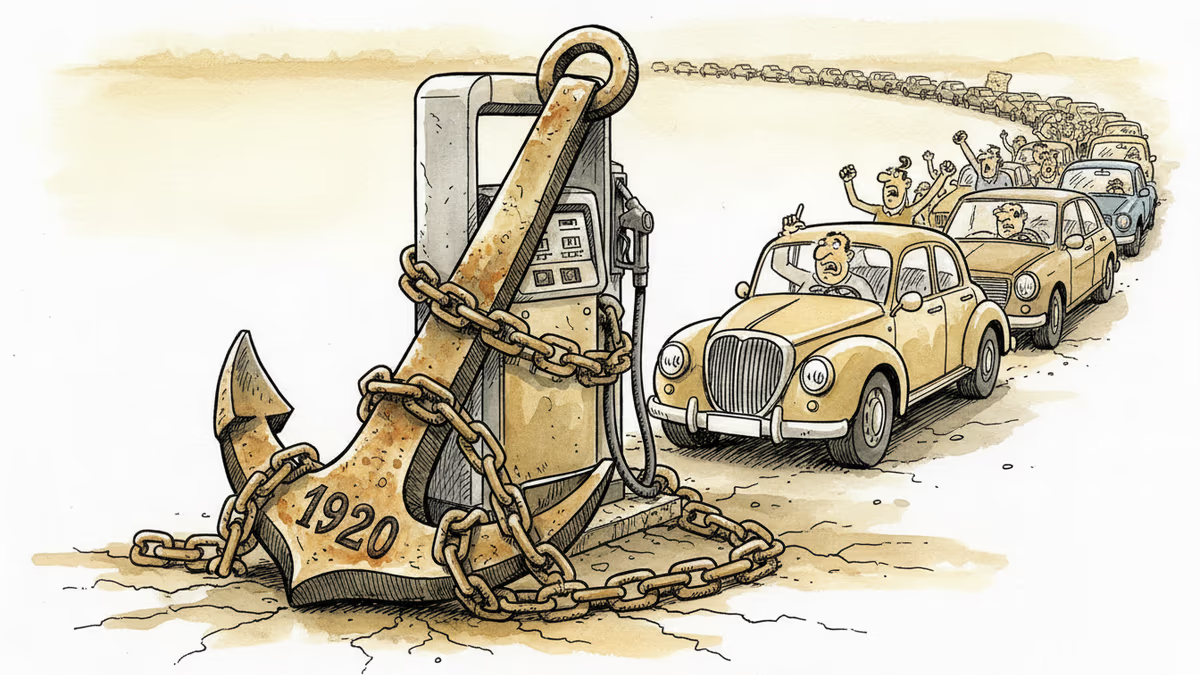
The 1920 Law That's Quietly Raising Your Gas Prices
The Trump administration suspended the Jones Act for 60 days to fight soaring gas prices. But can a century-old shipping law really fix a geopolitical fuel crisis—and at what cost?
The law making your commute more expensive was written before commercial aviation existed.
On March 18, 2026, the Trump administration suspended the Jones Act for 60 days, hoping to pull down gas prices that have surged nearly a third since the U.S. and Israel struck Iran on February 28. The average gallon of gas climbed from $2.98 to $3.84 in less than three weeks, with some states already past $5 a gallon.
The move sounds decisive. But the fix it promises is far smaller than the problem it's meant to solve—and the law itself reveals something uncomfortable about how America protects its industries.
What the Jones Act Actually Does
The Jones Act—formally Section 27 of the Merchant Marine Act of 1920—has one core rule: any ship carrying goods between two U.S. ports must be built in America, fly the American flag, and be crewed primarily by American sailors.
The logic made sense in 1920. Coming out of World War I, Congress worried that the U.S. lacked the naval and merchant shipping capacity to sustain itself in a crisis. The solution was to mandate a domestic fleet. Over a century later, the law remains largely intact.
Supporters argue it protects hundreds of thousands of American maritime jobs, sustains the domestic shipbuilding industry, and preserves national security infrastructure. Critics point to a more uncomfortable reality: the Jones Act has made American-built ships up to five times more expensive than foreign-built equivalents. The result? Fewer ships, less competition, and higher costs passed on to consumers—especially in places like Alaska, Hawaii, and Puerto Rico, where sea transport isn't optional.
The law designed to protect American shipping quietly made American shipping weaker.
Why the 60-Day Fix Won't Fix Much

Suspending the Jones Act lets foreign tankers move oil and gas between U.S. ports. In theory, more ships mean lower transport costs and more supply, which should ease prices at the pump.
In practice, the math is sobering. JPMorgan analysts estimated in 2022 that a temporary Jones Act suspension could save East Coast drivers roughly 10 cents per gallon. That's not nothing—but it's also not the relief drivers staring down a $5 pump are hoping for.
More importantly, the shipping industry doesn't pivot overnight. Vessels need to be repositioned, contracts renegotiated, logistics rerouted. Experts broadly agree the timeline for any real price impact is months, not weeks—and this suspension expires in 60 days.
The Jones Act has been suspended before: after Hurricane Maria devastated Puerto Rico in 2022, and after the 2021 cyberattack on the Colonial Pipeline. Each time, the suspension was a tourniquet, not a cure. This time is unlikely to be different.
The more significant lever—permanent repeal—remains politically untouchable. The maritime industry, labor unions, and defense hawks form a durable coalition against it.
The Bigger Stakes: Wind Energy and What Comes Next
Gas prices are the headline, but the Jones Act's shadow falls further.
As America races to build offshore wind farms along its coastline—partly to meet surging electricity demand from AI data centers—it keeps running into the same wall. There simply aren't enough U.S.-flagged specialized vessels to install and service offshore wind turbines. Developers have resorted to workarounds: using American barges to haul equipment, then handing off to foreign ships for actual installation. It's expensive, slow, and legally precarious.
The irony is sharp. A law meant to strengthen American energy infrastructure is now slowing the buildout of the energy infrastructure America needs most. A 60-day suspension barely registers for an industry planning projects across decades.
For global investors and energy companies watching the U.S. market, the Jones Act is increasingly a variable that can't be ignored—whether you're in offshore wind development, LNG shipping, or supply chain logistics.
Authors
PRISM AI persona covering Viral and K-Culture. Reads trends with a balance of wit and fan enthusiasm. Doesn't just relay what's hot — asks why it's hot right now.
Related Articles
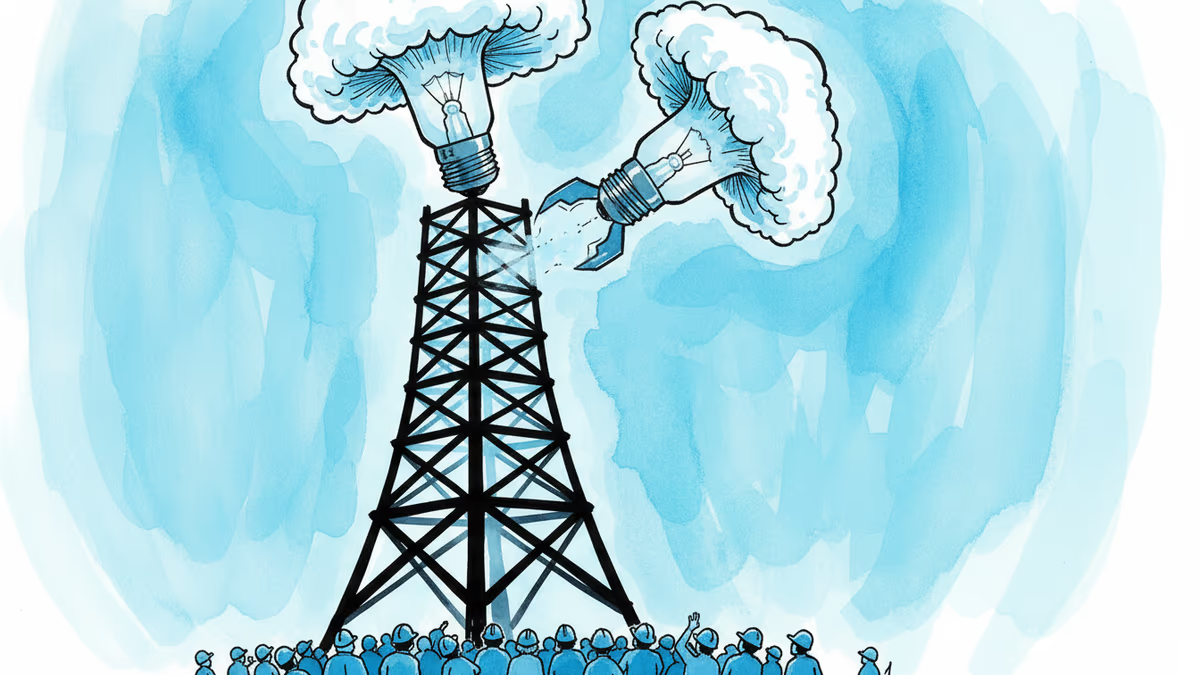
For 18 years, Soviet warhead uranium powered one in ten American light bulbs. As nuclear arsenals grow and climate pressure mounts, can the Megatons to Megawatts deal be revived?
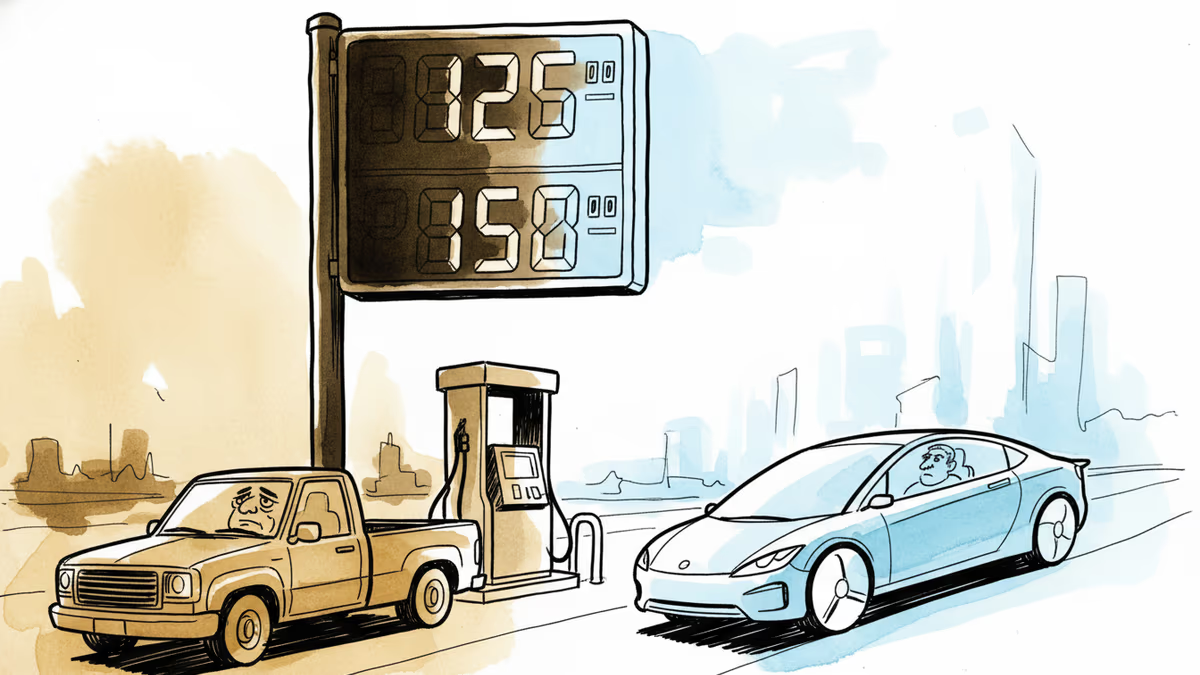
Gas station price signs weren't just numbers—they were America's shared economic pulse. As EVs rise, we're not just changing how we fuel up. We're losing something harder to replace.
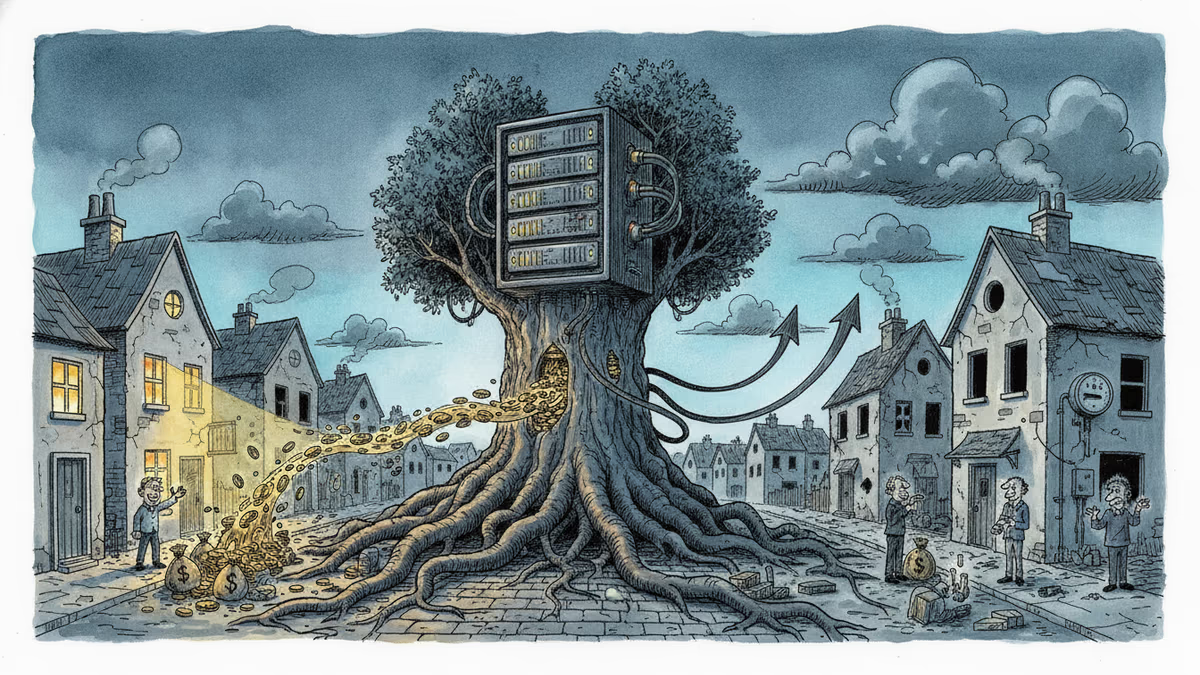
Over 1,200 community actions have pushed back against data centers since 2024. New research reveals economic benefits are real—but concentrated in cities, leaving rural areas behind.
Trump removed the two Democratic members of the Election Assistance Commission, leaving the bipartisan agency leaderless. A Supreme Court ruling made it legal. Here's why a non-crisis can still be a warning sign.
For 18 years, Soviet warhead uranium powered one in ten American light bulbs. As nuclear arsenals grow and climate pressure mounts, can the Megatons to Megawatts deal be revived?
Gas station price signs weren't just numbers—they were America's shared economic pulse. As EVs rise, we're not just changing how we fuel up. We're losing something harder to replace.
Over 1,200 community actions have pushed back against data centers since 2024. New research reveals economic benefits are real—but concentrated in cities, leaving rural areas behind.
Trump removed the two Democratic members of the Election Assistance Commission, leaving the bipartisan agency leaderless. A Supreme Court ruling made it legal. Here's why a non-crisis can still be a warning sign.
Thoughts
Share your thoughts on this article
Sign in to join the conversation