
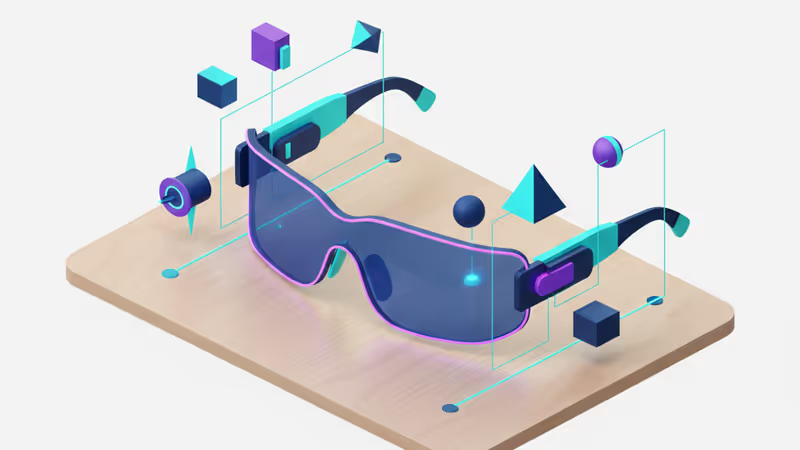
Smartphones Are Fading: The Smart Glasses Revolution From Meta to Apple
Explore the best smart glasses of 2025 and 2026, featuring Ray-Ban Meta, Xreal, and Apple's upcoming AI wearables.
Your smartphone might not be in your pocket in a decade. Meta CEO Mark Zuckerberg claims wearables will replace mobile phones, and the technology is finally catching up to that vision. Smart glasses are no longer just futuristic gadgets; they've become practical tools for communication, navigation, and immersive entertainment.
The Everyday Leaders: Meta and Oakley
The Ray-Ban Meta (Gen 2) is currently the gold standard for daily wear. It's got a 12-megapixel camera and 3K Ultra HD video capture packed into a frame that looks like standard eyewear. At $379, it offers real-time AI features and an 8-hour battery life. For athletes, the Oakley Meta Vanguard provides a rugged alternative with an IP67 rating, designed to be worn comfortably under helmets.
Virtual Cinemas in Your Eyes

If you're looking for a massive screen on the go, the display-centric models are winning. The Viture Luma Pro creates a 152-inch virtual display using Sony’s micro-OLED panels at 120Hz. Meanwhile, the Xreal One Pro ($649) offers a 171-inch screen with 3DoF head tracking, keeping your virtual workspace pinned in space. For budget-conscious buyers, the RayNeo Air 3s provides a 201-inch experience for just $219 on sale.
2026: The Year of the Big Tech Clash
The market is set to explode in 2026. Google and Xreal are collaborating on 'Project Aura,' while Snap plans to launch a lightweight version of its AR glasses. Apple is also shifting its focus away from high-end headsets to develop AI smart glasses that can directly compete with Meta's offerings.
Authors
Related Articles
Xreal's Project Aura debuted at Google I/O with OLED displays, hand tracking, and an IPO on the horizon. The industry has burned billions for a decade. So why does it feel like something has actually shifted?
A law firm marketing itself on AI-powered legal success submitted fake citations in a federal appeal. Now its lawyers face sanctions — and the broader AI legal industry faces a credibility crisis.
After 15 years of fragmented mobile messaging, Apple and Google are rolling out end-to-end encrypted RCS messaging between iPhones and Android devices. Here's what changed, why it took so long, and what it means for your privacy.
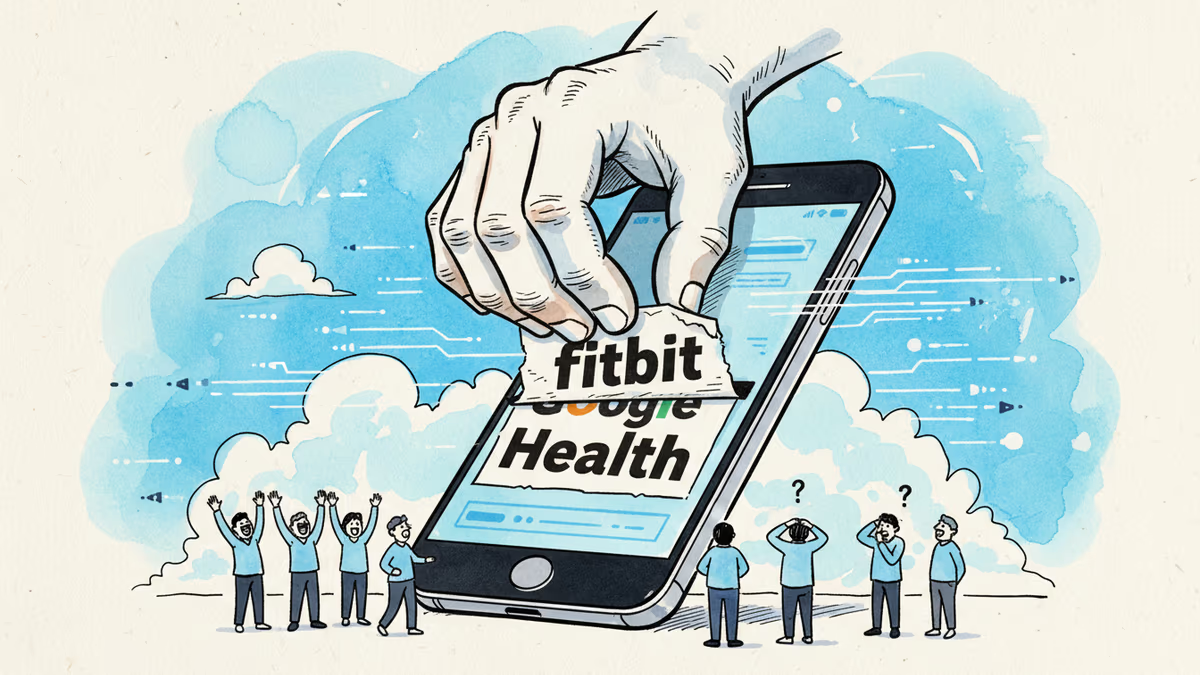
Google is rebranding the Fitbit app as Google Health on May 19, launching an AI Health Coach powered by Gemini. What does this mean for your data, your doctor, and Apple?
Xreal's Project Aura debuted at Google I/O with OLED displays, hand tracking, and an IPO on the horizon. The industry has burned billions for a decade. So why does it feel like something has actually shifted?
A law firm marketing itself on AI-powered legal success submitted fake citations in a federal appeal. Now its lawyers face sanctions — and the broader AI legal industry faces a credibility crisis.
After 15 years of fragmented mobile messaging, Apple and Google are rolling out end-to-end encrypted RCS messaging between iPhones and Android devices. Here's what changed, why it took so long, and what it means for your privacy.
Google is rebranding the Fitbit app as Google Health on May 19, launching an AI Health Coach powered by Gemini. What does this mean for your data, your doctor, and Apple?
Thoughts
Share your thoughts on this article
Sign in to join the conversation