
The $1.15B Startup Turning Flying Into a Smartphone Swipe
Skyryse raises $300M to reach unicorn status with aviation automation that replaces dozens of flight controls with touchscreen simplicity. What does this mean for the future of flying?
Learning to fly a helicopter typically requires 200+ hours of training. Skyryse claims they can cut that to 10 hours. With a touchscreen.
From Garage Startup to $1.15B Unicorn
Skyryse, the El Segundo-based aviation automation startup, just raised $300 million in Series C funding, catapulting its valuation to $1.15 billion and into unicorn territory. The round, led by Autopilot Ventures with participation from Fidelity, Qatar Investment Authority, and others, brings the company's total funding to over $605 million since its 2016 founding.
The timing isn't coincidental. Skyryse is nearing the end of a lengthy FAA certification process for its flight control system, positioning itself to capitalize on a market hungry for aviation innovation.
Stripping Away Complexity
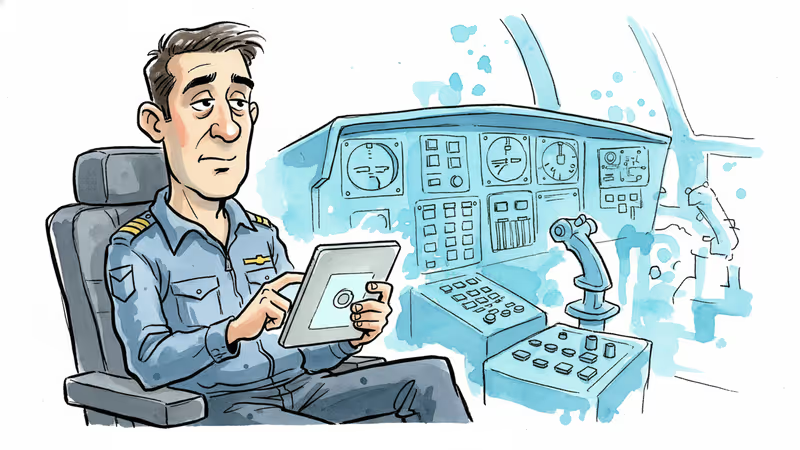
The company's SkyOS operating system does something radical: it eliminates dozens of mechanical flight controls—gauges, switches, and complex instruments—replacing them with touchscreen interfaces and automated flight computers.
This isn't full autonomy. A pilot is still required. But SkyOS automates the trickiest aspects of flying: takeoff, landing, hovering, and even emergency engine-out landings. What once required years of muscle memory now happens with a finger swipe.
Skyryse started with helicopters, arguably the most unstable aircraft to operate. Their initial system, Skyryse One, has already been integrated into U.S. military Black Hawk helicopters and contracted for use by companies like United Rotorcraft, Air Methods, and Mitsubishi Corporation.
The Broader Aviation Automation Race

This funding surge reflects a broader shift in aviation. While the automotive industry races toward autonomous vehicles, aviation is pursuing a parallel path of pilot-assisted automation. The difference? Stakes are higher, regulations stricter, and public trust harder to earn.
Skyryse's approach is particularly clever. Rather than promising full autonomy—which regulators and the public remain skeptical about—they're enhancing human pilots while dramatically reducing training requirements and operational complexity.
The FAA granted final design approval for Skyryse's flight control computers last year. The company now needs to complete formal flight testing and verification for full certification—a process that could unlock massive commercial opportunities.
Market Implications and Competitive Dynamics
For aerospace engineers and aviation professionals, Skyryse's success signals a fundamental shift in how we think about flight systems. Traditional aerospace giants like Boeing, Lockheed Martin, and Airbus have focused on incremental improvements to existing systems. Skyryse is essentially rebuilding the interface between human and machine.
This creates both opportunities and threats. Established players have deep regulatory relationships and proven safety records, but they also carry legacy system baggage. Startups like Skyryse can build from scratch, potentially leapfrogging decades of accumulated complexity.
For investors, the aviation automation space represents a massive addressable market. Emergency medical services, law enforcement, military operations, and private aviation all face pilot shortages and rising training costs. Skyryse's solution could democratize access to aviation capabilities.
The Human Factor Question
Perhaps the most interesting aspect of Skyryse's approach is how it reframes the role of human expertise. Rather than replacing pilots, it's augmenting their capabilities while lowering the barrier to entry.
This raises fascinating questions about skill preservation. If complex flying becomes as simple as using a smartphone, what happens to the deep technical knowledge that experienced pilots possess? Do we risk creating a generation of operators who can use the system but can't troubleshoot when it fails?
The company's unicorn status suggests investors believe convenience will win. But the real test will be whether simplified systems can maintain the safety standards that decades of complex training have achieved.
Authors
Related Articles

Samsung Electronics' union branch revealed that 84% of survey respondents oppose the government's roughly $290 billion (₩400 trillion) semiconductor megaproject in Gwangju. Government, management, the union and shareholders are all reading the same national project in sharply different ways.
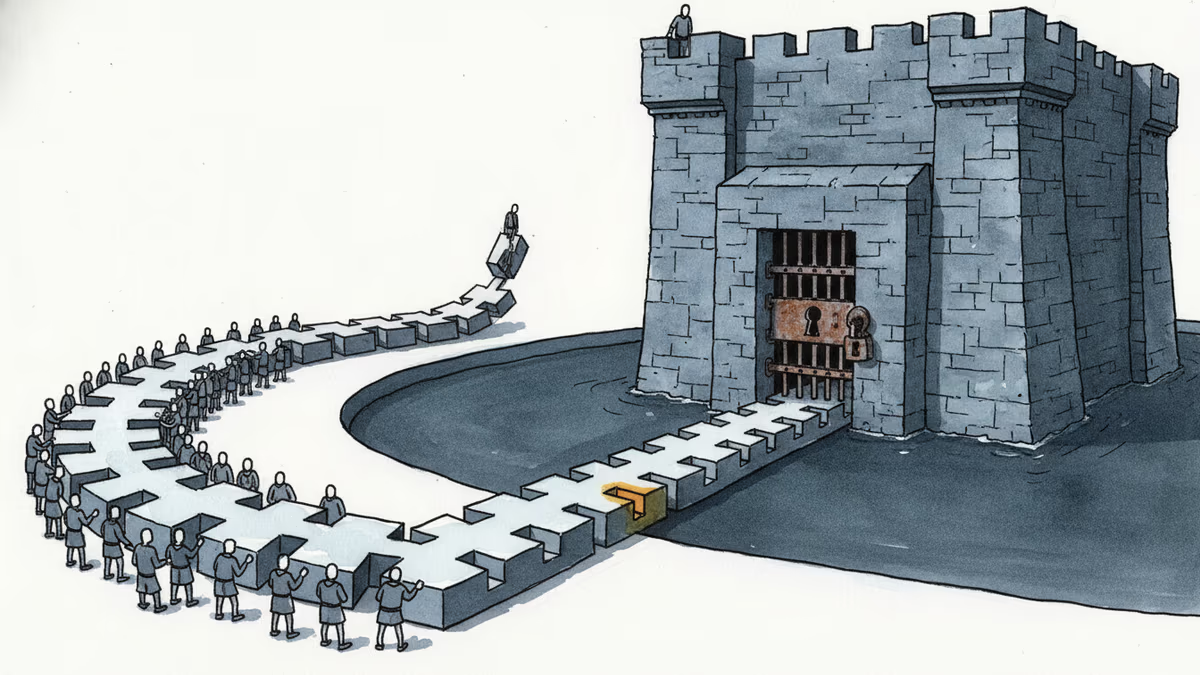
Nvidia shipped roughly a billion RISC-V cores in 2024, then announced it would run CUDA on the open standard. We break down how royalty-free instruction sets and open software stacks are trying to route around CUDA's lock-in. Part 2 of the Semiconductor Sovereignty series.
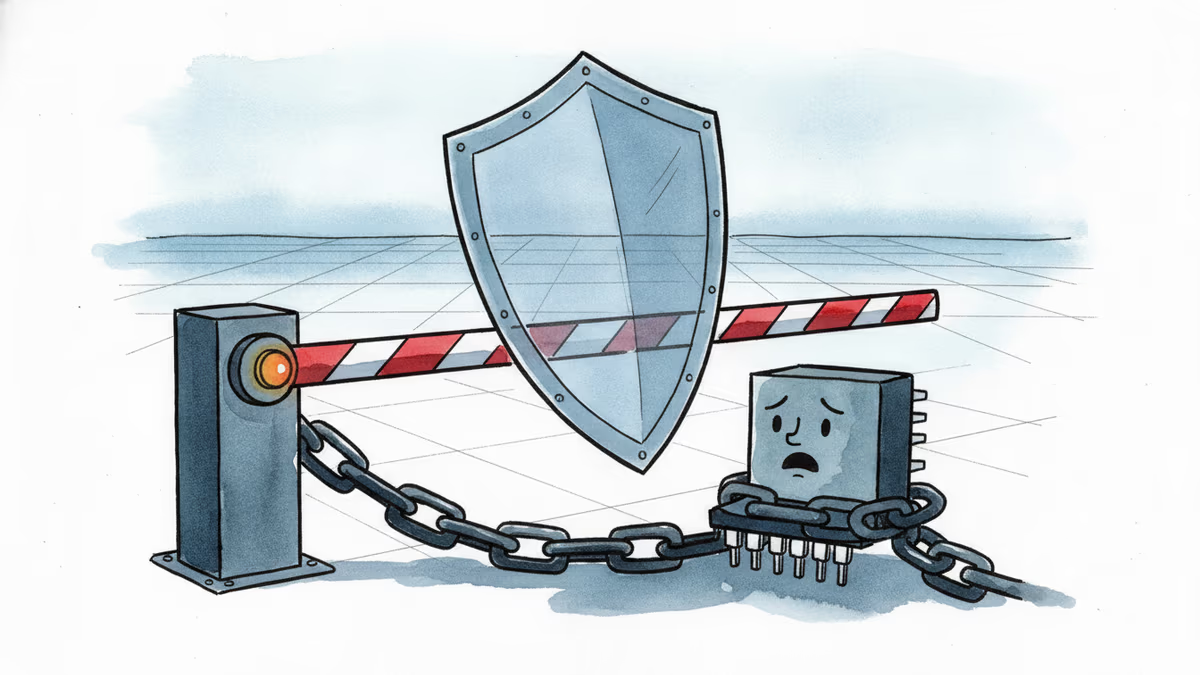
US AI-chip export controls split into three layers in the first half of 2026 — January easing, a May crackdown on circumvention, and a pending bill. Nvidia erased China from its guidance and still posted a record $81.6 billion quarter. A look at the export policy that both shields and cages it.

AMD's MI325X matches or beats Nvidia on memory and bandwidth — yet Nvidia's 86-92% share holds. The real moat is CUDA, 20 years in the making. Part 1 of 4.
Samsung Electronics' union branch revealed that 84% of survey respondents oppose the government's roughly $290 billion (₩400 trillion) semiconductor megaproject in Gwangju. Government, management, the union and shareholders are all reading the same national project in sharply different ways.
Nvidia shipped roughly a billion RISC-V cores in 2024, then announced it would run CUDA on the open standard. We break down how royalty-free instruction sets and open software stacks are trying to route around CUDA's lock-in. Part 2 of the Semiconductor Sovereignty series.
US AI-chip export controls split into three layers in the first half of 2026 — January easing, a May crackdown on circumvention, and a pending bill. Nvidia erased China from its guidance and still posted a record $81.6 billion quarter. A look at the export policy that both shields and cages it.
AMD's MI325X matches or beats Nvidia on memory and bandwidth — yet Nvidia's 86-92% share holds. The real moat is CUDA, 20 years in the making. Part 1 of 4.
Thoughts
Share your thoughts on this article
Sign in to join the conversation