
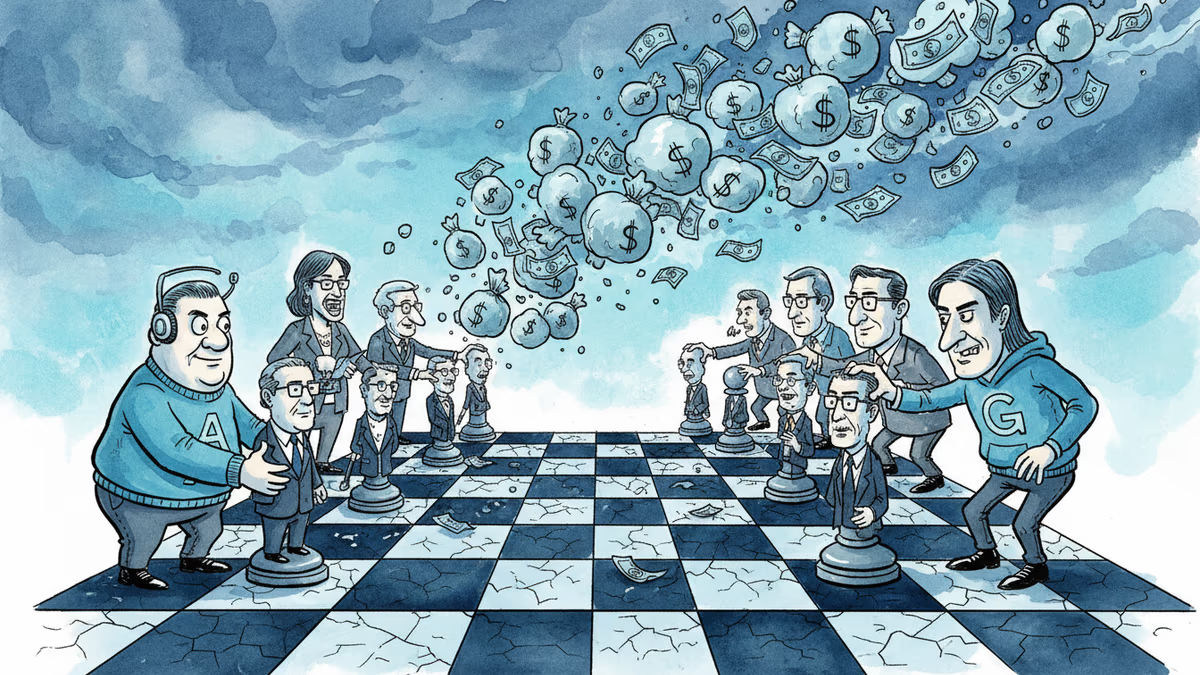
When Silicon Valley's Kingmakers Turn Against Their Creation
Tech billionaires who once backed Ro Khanna are now funding his challenger over wealth tax support, setting up 2026's most expensive primary battle. A deeper look at the money-politics nexus in America's wealthiest district.
$4.4 Trillion Just Made Some Very Powerful Enemies
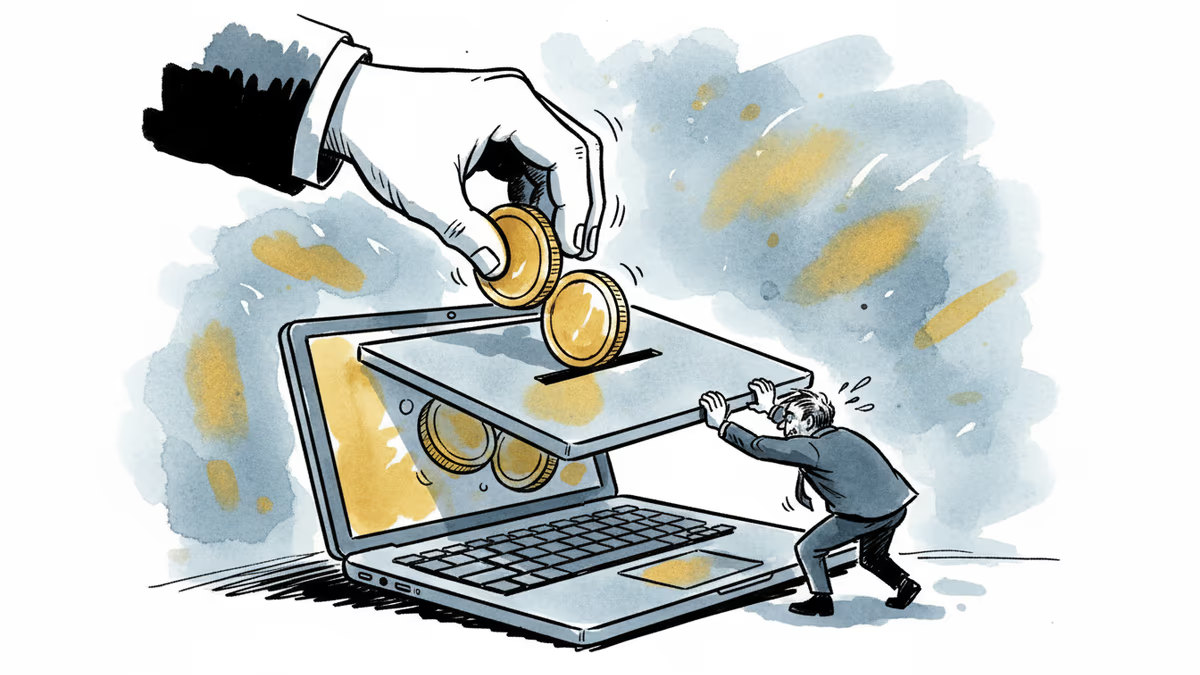
For 10 years, Silicon Valley's elite nurtured a rising political star. Then, with a single tweet supporting a wealth tax last December, Representative Ro Khanna transformed his biggest supporters into his most determined opponents.
Now they've found their weapon: Ethan Agarwal, a 40-year-old McKinsey alum turned tech entrepreneur with zero political experience but $40+ million in potential backing. Y Combinator CEO Garry Tan, DoorDash co-founder Stanley Tang, and a growing roster of tech heavyweights are lining up behind him.
The irony is delicious. When Khanna first ran for this same seat in 2014, he was the tech-backed outsider challenging an establishment Democrat. Marc Andreessen, Sheryl Sandberg, and Eric Schmidt funded his insurgent campaign. Critics called him "an owned man."
A decade later, that exact charge will be leveled at the person trying to unseat him.
The $1 Billion Line in the Sand
What triggered this political divorce? Khanna's co-sponsorship with Bernie Sanders of legislation imposing a 5% annual wealth tax on Americans worth $1 billion or more. Their offices estimate it would raise $4.4 trillion over a decade.
For Silicon Valley's billionaire class, this wasn't just policy disagreement—it was betrayal. They'd invested in Khanna as their voice in Washington, only to watch him embrace what they see as punitive taxation of success.
Agarwal offers a different approach: tax loans backed by stock holdings, raise California's 13.4% capital gains rate, and impose higher property taxes on investment properties. These ideas have been circulating in wealthy circles for years, notably championed by VC Chamath Palihapitiya.

The 4,000 Trades Problem
Agarwal's most potent attack centers on Khanna's stock trading record. He claims Khanna made 4,000 trades last year while publicly supporting congressional trading bans—"more than any Democratic congressman in history."
Khanna's defense reveals the complexity of modern political finance. He insists he personally owns no individual stocks; all trades belong to his wife's pre-marital assets held in an independently managed trust. Under Office of Government Ethics rules, this eliminates conflicts of interest.
But will voters accept such technical distinctions? The optics are brutal: a congressman co-sponsoring trading bans while his household executes 4,000 transactions.
National Security vs. Regulation
Their AI policy differences illuminate broader philosophical divides. Agarwal frames everything through national security: "If we don't build the most powerful models, China will beat us." He's open to FDA-style oversight but only if designed to "strengthen America's national security, not for political purposes."
This reflects Silicon Valley orthodoxy: innovation trumps regulation, especially when framed as competition with China. It's a worldview that sees government intervention as inherently suspicious unless it serves geopolitical advantage.
The Ground Game vs. The Air War
Agarwal promises a grassroots campaign despite his elite backing: "I'm going to Chinese and Hindi educational schools, to cultural events. Holi is coming up; Chinese New Year, Purim is on Tuesday."
But can authentic retail politics coexist with $40+ million in tech money? The 17th district is America's wealthiest congressional district, yet 5,000 children live below the poverty line. Voters will decide whether they want representation that reflects their diverse community or their wealthy neighbors' tax preferences.
Authors
Related Articles
Indian venture capital has quietly displaced Silicon Valley in its own backyard. Only one American VC made India's top 10 investor list last year. Here's why that matters beyond India.
After two weeks of witnesses calling him a liar, OpenAI CEO Sam Altman testified in his own defense, claiming Elon Musk tried to kill the company twice.
OpenAI CEO Sam Altman's San Francisco residence was attacked twice in three days — first a Molotov cocktail, then a shooting. What does this say about tech power, public anger, and the real-world risks facing AI leaders?
In CA-17, tech founder Ethan Agarwal is challenging five-term incumbent Ro Khanna — backed by billionaires opposed to a wealth tax. It's already getting dirty.
Indian venture capital has quietly displaced Silicon Valley in its own backyard. Only one American VC made India's top 10 investor list last year. Here's why that matters beyond India.
After two weeks of witnesses calling him a liar, OpenAI CEO Sam Altman testified in his own defense, claiming Elon Musk tried to kill the company twice.
OpenAI CEO Sam Altman's San Francisco residence was attacked twice in three days — first a Molotov cocktail, then a shooting. What does this say about tech power, public anger, and the real-world risks facing AI leaders?
In CA-17, tech founder Ethan Agarwal is challenging five-term incumbent Ro Khanna — backed by billionaires opposed to a wealth tax. It's already getting dirty.
Thoughts
Share your thoughts on this article
Sign in to join the conversation