

Moxie Marlinspike's Confer AI Assistant: A New Era of Privacy
Signal creator Moxie Marlinspike launches Confer, an open-source AI assistant featuring TEE and end-to-end encryption for total user privacy.
The man who redefined private messaging is now taking on AI chatbots. Moxie Marlinspike, the pseudonymous creator of Signal, has unveiled Confer, an open-source AI assistant designed to keep user data strictly between the user and the machine. It's a bold move that aims to solve the 'black box' problem of AI privacy, where users currently have to trust big tech companies with their most intimate data.
Inside the Confer AI Assistant Privacy Engine
According to Wired, Confer utilizes a Trusted Execution Environment (TEE) to ensure that even server administrators can't peek at your prompts or the AI's responses. By running its entire stack—including the Large Language Models (LLM) and back-end components—on open-source software, users gain the ability to cryptographically verify the integrity of the system. Conversations are encrypted using keys that stay on the user's device, making the data unreadable to hackers or law enforcement.

Verification Over Trust
While most AI platforms operate behind closed doors, Confer is fully transparent. Every part of its architecture is open for audit, setting a new benchmark for zero-trust AI architecture. Currently, the pricing is unannounced, and the project represents a significant shift from the data-hungry models of current AI giants.
Authors
Related Articles
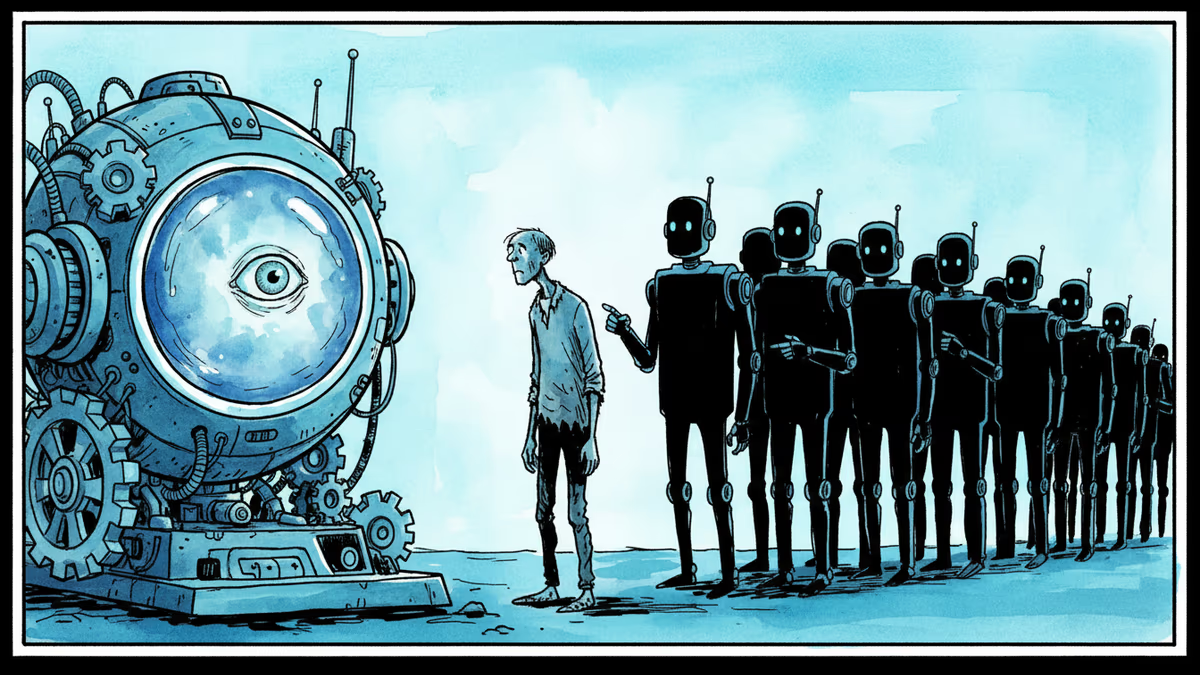
Tinder now rewards users who scan their irises at a World orb with free in-app boosts. As AI agents flood dating apps, 'being human' is becoming a verified status — and a business model.
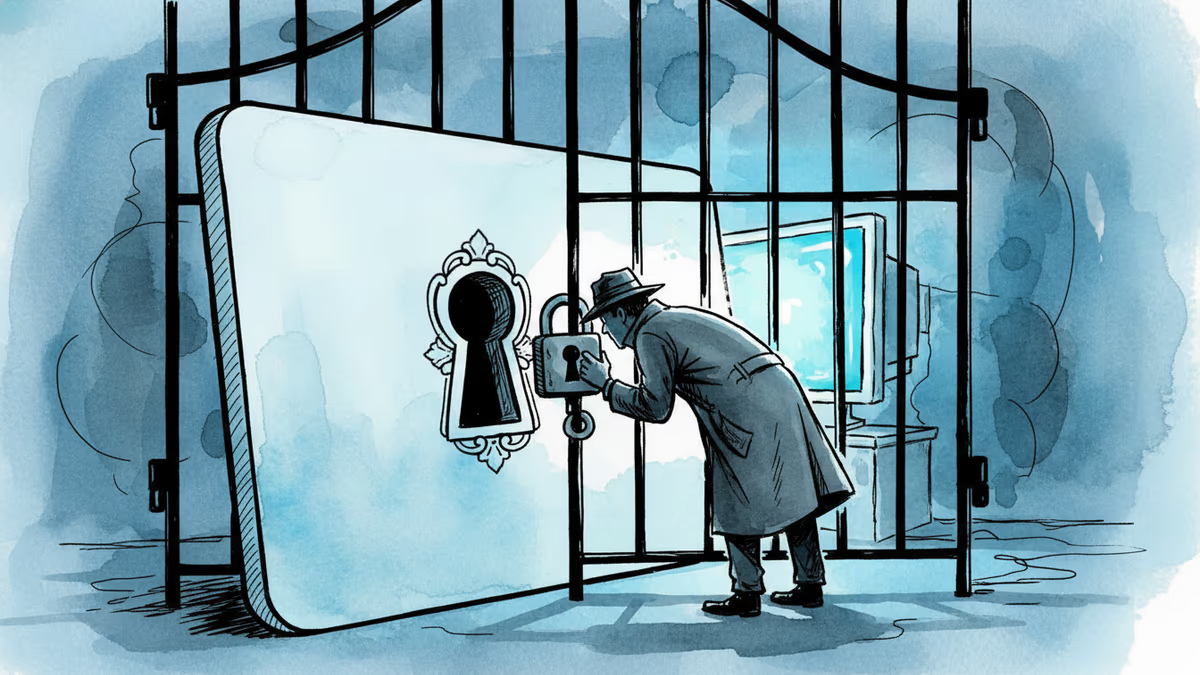
Wisconsin Governor Tony Evers vetoed an age verification bill for adult sites, citing privacy concerns. With 25+ states going the other way, the debate cuts to the heart of online freedom vs. child protection.

CBP admits buying location data from ad industry while Meta contractors watch users in bathrooms through smart glasses. The digital privacy boundary is crumbling.
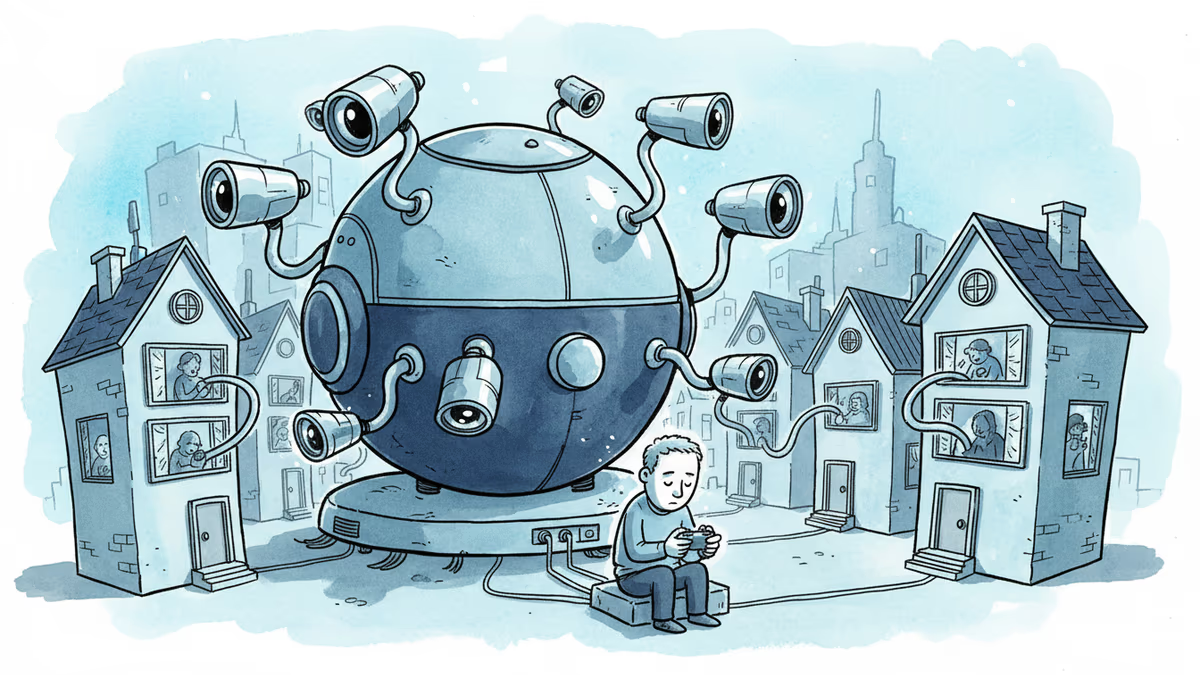
A security researcher discovered he could access 7,000 DJI robot vacuums and peek into strangers' homes. This Valentine's Day revelation exposes the hidden privacy risks of our smart home obsession.
Tinder now rewards users who scan their irises at a World orb with free in-app boosts. As AI agents flood dating apps, 'being human' is becoming a verified status — and a business model.
Wisconsin Governor Tony Evers vetoed an age verification bill for adult sites, citing privacy concerns. With 25+ states going the other way, the debate cuts to the heart of online freedom vs. child protection.
CBP admits buying location data from ad industry while Meta contractors watch users in bathrooms through smart glasses. The digital privacy boundary is crumbling.
A security researcher discovered he could access 7,000 DJI robot vacuums and peek into strangers' homes. This Valentine's Day revelation exposes the hidden privacy risks of our smart home obsession.
Thoughts
Share your thoughts on this article
Sign in to join the conversation