
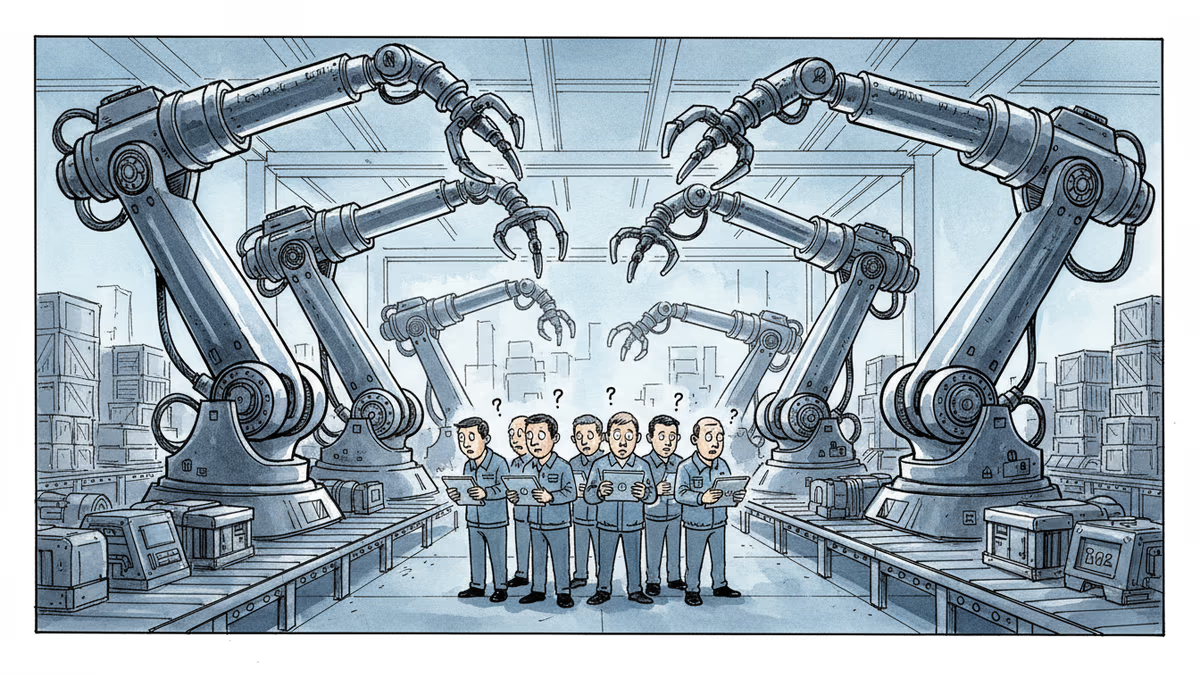
Siemens CEO Envisions AI-Powered Factories, But Where Are the Jobs?
Siemens CEO Roland Busch outlines a vision for fully automated manufacturing powered by AI agents and digital twins. But in a world where machines make decisions, what happens to human workers?
320,000 Employees, But Fewer Jobs Ahead?
Roland Busch, CEO of industrial giant Siemens, has a vision that sounds both utopian and unsettling. In a recent interview, he painted a picture of fully automated factories where AI agents make production decisions, robots handle manufacturing, and humans... well, that part gets murky.
Siemens is everywhere, even when you don't see it. Every third manufacturing line globally runs on Siemens controls. Walk a block in New York, and you'll pass buildings automated by Siemens technology. Nearly 50% of the world's electrons flow through Siemens distribution systems. With 320,000 employees across the globe, it's a company that quite literally powers modern civilization.
But Busch's vision for the future involves far fewer human hands.
From Atoms to Bits: The Next Automation Wave
Traditionally, Siemens automated the physical world—robots welding car parts, conveyor belts moving products, machines stamping components. Now, Busch says, they're moving "from automating atoms to automating bits." AI won't just control the factory floor; it'll decide what to produce, when to produce it, and how much.
"We're building an industrial operating system where AI agents act like trained supervisors," Busch explained. When a red warning light blinks, an AI agent analyzes historical data, diagnoses the problem, and guides human workers through repairs using AR glasses. The system creates comprehensive digital twins of entire production lines, simulating changes before implementing them in the real world.
But there's a catch: current AI accuracy hovers around 60-70% for industrial applications. "Industrial AI applications don't accept hallucination," Busch noted. Siemens trains models on proprietary industrial data to push accuracy above 95%—good enough for deployment, but still requiring human oversight.
The Fundamental Question: Who Buys the Cars?

Busch's vision raises an uncomfortable economic question. If factories become fully automated, producing cars with minimal human labor, who has the money to buy those cars? When pressed on this point, Busch offered the standard response: automation drives economic growth, GDP per capita increases, and workers shift to other sectors.
"Germany would collapse without hundreds of thousands of immigrants working in service jobs, including hospitals," he argued. "There are many jobs you cannot replace." His advice to students? "If math and physics aren't your thing, consider plumbing or electrical work—those are the last jobs to be replaced."
It's a pragmatic answer, but it sidesteps the broader question of economic distribution in an age of AI-driven productivity.
Global Scale Meets Rising Walls
Siemens has been global since its founding 175 years ago. Founder Werner von Siemens sent one brother to London and another to Russia because Germany alone was too small for the company's technology to scale. That global DNA now faces its biggest test as trade barriers rise worldwide.
Busch acknowledges the challenge but remains optimistic about Siemens' resilience. The company sources 85%+ locally in both the US and China, reducing tariff exposure. "We're forking technologies," he said—training AI models on Chinese LLMs for China and American systems for the US market.
Still, the broader trend troubles him. "We cannot solve feeding 10 billion people, addressing climate change, and managing aging societies if we box ourselves too small," Busch argued. "Scale matters."
The Data Alliance Strategy
To build effective industrial AI, Siemens needs vast amounts of manufacturing data. The company has decades of design data from controls, trains, and switches, plus operational data from thousands of machines. But it's still not enough.
Busch revealed that Siemens has formed an alliance with nine top German machine builders—including Trumpf and DMG Mori—to share data for AI training. "They know their individual data isn't very useful because it's too little," he explained. "But when you create these data alliances, it works."
It's a fascinating approach: competitors collaborating on the foundational technology while competing on applications. But it requires trust—something that may be harder to maintain as geopolitical tensions rise.
Authors
Related Articles
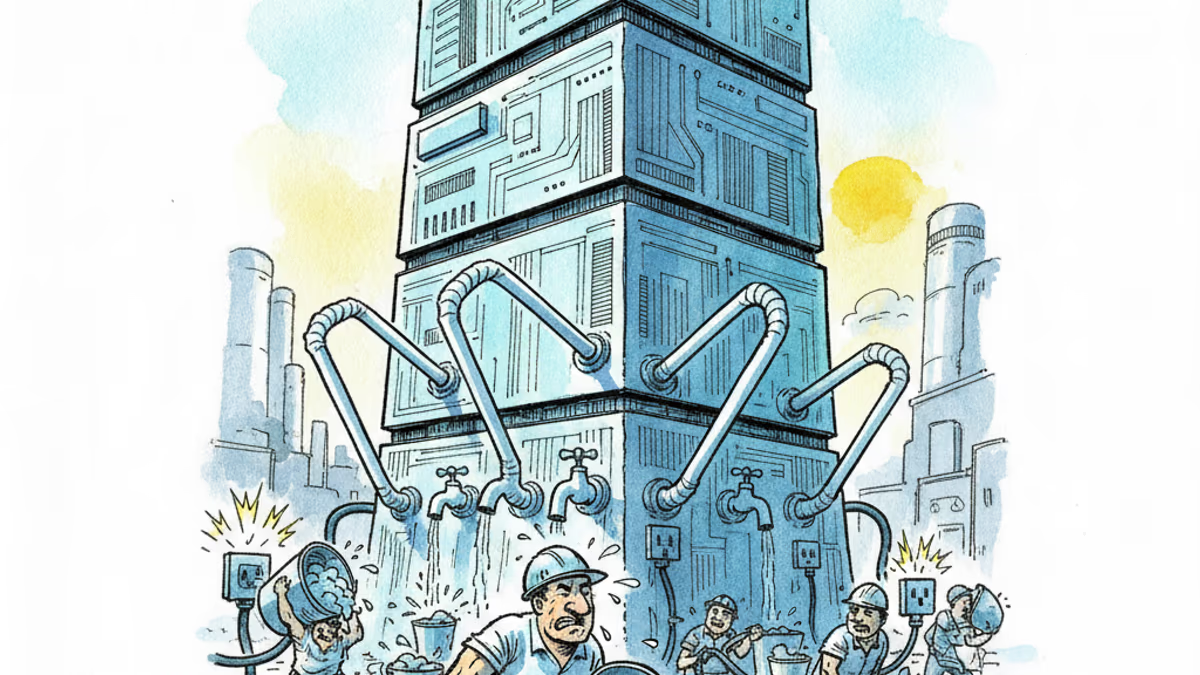
Samsung and SK unveiled a chip and AI investment package worth thousands of trillions of won on June 29. The headline number swings wildly by outlet, but the real contest isn't capital — it's water and power.

Viral videos show 2026 graduates jeering executives who praise AI at commencement ceremonies. It's not just rudeness — it's a signal about who pays for technological optimism.
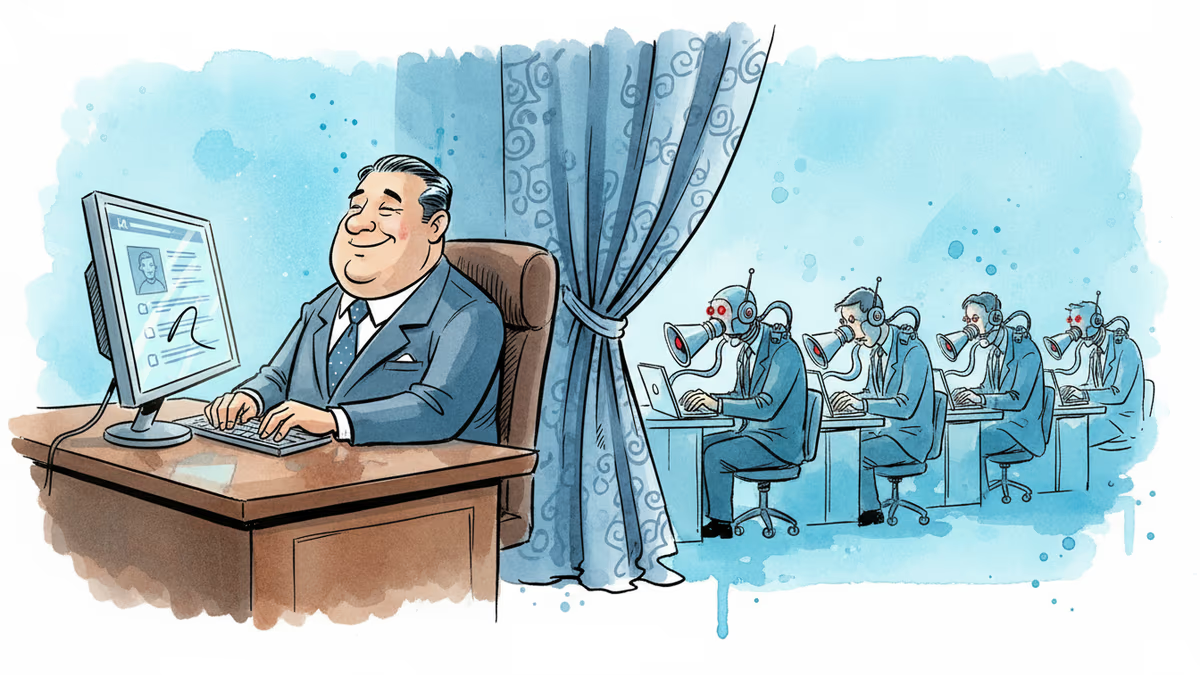
Filipino virtual assistants using AI to ghost-manage LinkedIn profiles for executives is now a structured industry. 30 comments a day, fake engagement rings, and a platform struggling to tell real from fabricated.
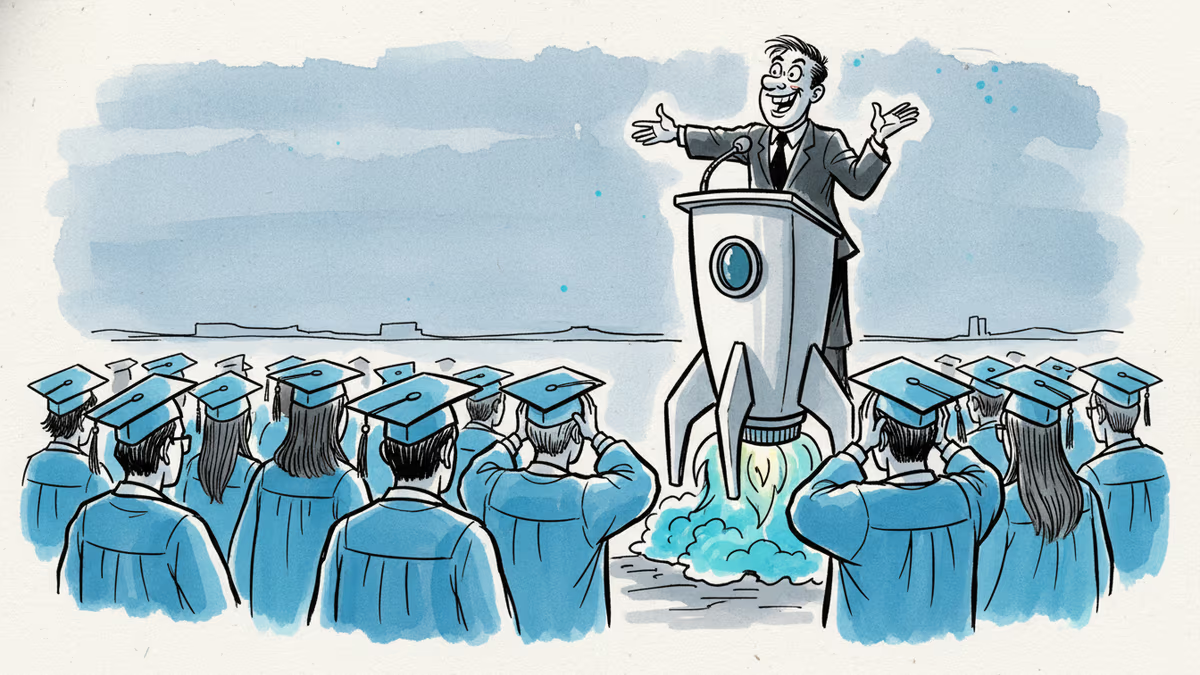
Two commencement speakers learned the hard way that AI enthusiasm doesn't land well with today's graduates. The backlash reveals a widening gap between tech optimism and Gen Z's economic reality.
Samsung and SK unveiled a chip and AI investment package worth thousands of trillions of won on June 29. The headline number swings wildly by outlet, but the real contest isn't capital — it's water and power.
Viral videos show 2026 graduates jeering executives who praise AI at commencement ceremonies. It's not just rudeness — it's a signal about who pays for technological optimism.
Filipino virtual assistants using AI to ghost-manage LinkedIn profiles for executives is now a structured industry. 30 comments a day, fake engagement rings, and a platform struggling to tell real from fabricated.
Two commencement speakers learned the hard way that AI enthusiasm doesn't land well with today's graduates. The backlash reveals a widening gap between tech optimism and Gen Z's economic reality.
Thoughts
Share your thoughts on this article
Sign in to join the conversation