
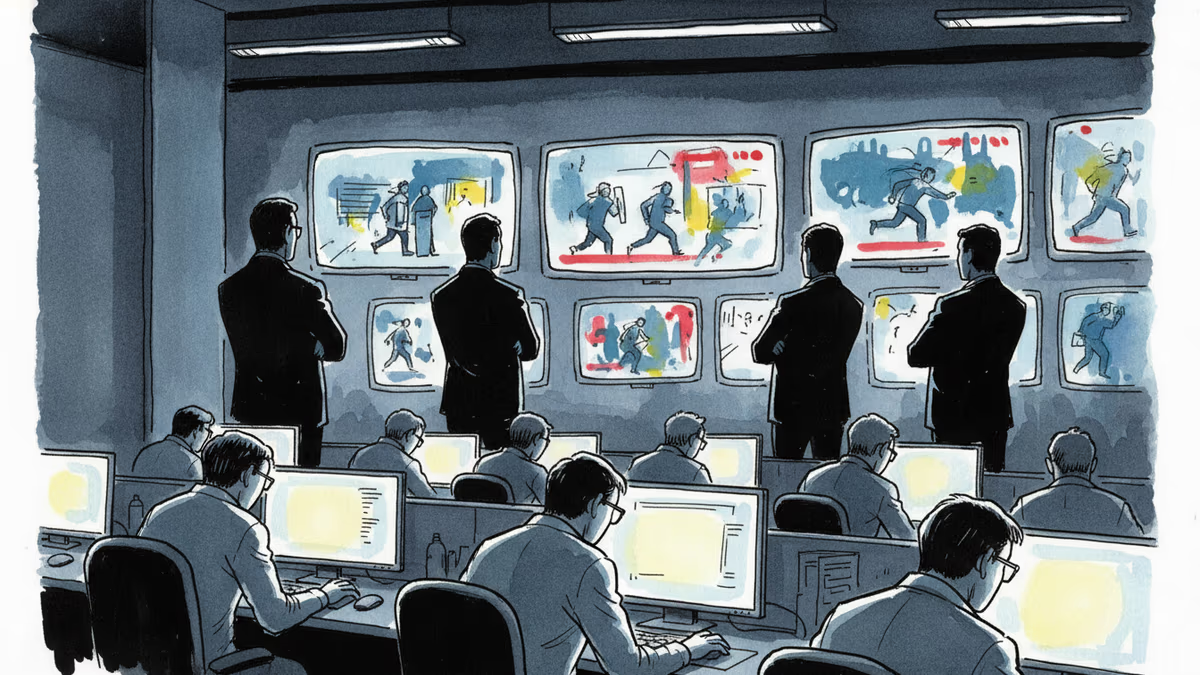
Silicon Valley's Calculated Silence Breeds Worker Fear
As Trump's immigration crackdown intensifies, tech CEOs remain strategically silent while employees describe a culture of fear and uncertainty about their companies' commitment to protecting them.
30% of Silicon Valley's workforce lives in fear. Their bosses say nothing.
Keep your head down. Compartmentalize. Don't make trouble. That's the message tech workers are hearing loud and clear from their CEOs' strategic silence amid Trump administration's immigration crackdown. While federal agents conduct violent raids across the country - killing Renee Nicole Good a month ago and Alex Pretti two weeks back - the majority of tech leaders have remained conspicuously quiet.
But behind the corporate silence, a different story is unfolding in cubicles and Slack channels across the Valley.
The New Rules of Survival
Workers from multiple companies describe an atmosphere of calculated caution. "The company's silence feels like a directive to stay quiet ourselves," says a Google employee who requested anonymity. "It's like we're all walking on eggshells."
This isn't just about political neutrality. Over 30% of Silicon Valley's workforce consists of immigrants or visa holders. For them, the current crackdown isn't abstract policy - it's an existential threat.
A Meta employee describes the daily anxiety: "I worry every morning about which colleagues won't show up. There's this underlying fear that the company won't actually protect us when it matters."
2017 vs 2024: The Cost of Speaking Up Has Changed

The contrast with Trump's first term is stark. In 2017, when the Muslim ban was announced, tech CEOs rushed to issue statements. Tim Cook, Sundar Pichai, and Satya Nadella didn't just speak out - they went to court.
Today's silence is different. It's calculated.
The political landscape has shifted dramatically. With Elon Musk deeply embedded in Trump's inner circle and other tech moguls actively courting the administration, opposing voices risk not just political backlash but real business consequences. Government contracts worth billions are at stake.
The Stakeholder Dilemma: Employees vs Shareholders
Companies face competing pressures. Employees demand moral leadership and protection. Shareholders want political risk minimized and focus on business fundamentals.
Amazon exemplifies this tension. While internal employee concerns mount, the company has prioritized expanding government contracts. AWS government revenue jumped 35% year-over-year. Speaking out against immigration policy could jeopardize those relationships.
But there's another calculation at play. Apple has remained notably quiet despite having significant manufacturing dependencies on global supply chains and immigrant talent. The company seems to be betting that economic interests will ultimately prevail over political rhetoric.
The Innovation Paradox
Here's what makes Silicon Valley's silence particularly complex: the industry's competitive advantage has always been rooted in diversity and global talent. Over 40% of Fortune 500 companies were founded by immigrants or their children. Many of today's tech giants - from Google to Tesla - were built by immigrant founders or rely heavily on H-1B workers.
When that talent pool feels threatened and unsupported, what happens to innovation? Some companies are quietly implementing "protection protocols" - legal support, relocation assistance, even emergency funds for affected employees. But they're not talking about it publicly.
Authors
Related Articles
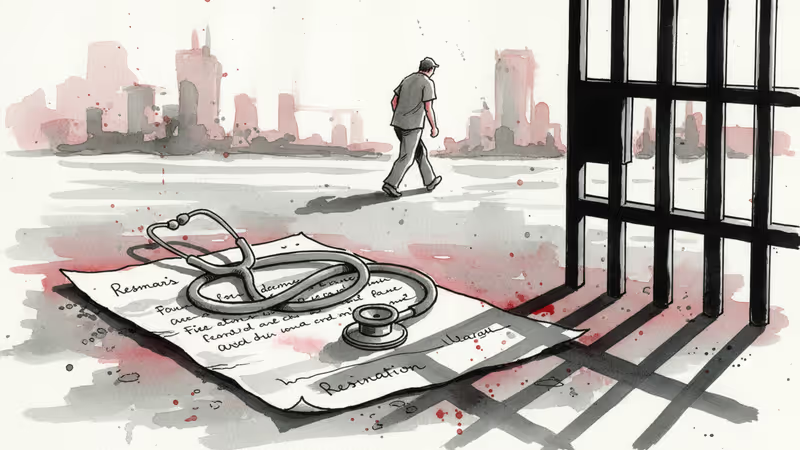
Trump administration's use of Guantánamo Bay for immigrant detention forces US Public Health Service officers to choose between conscience and career, with some resigning rather than participate.
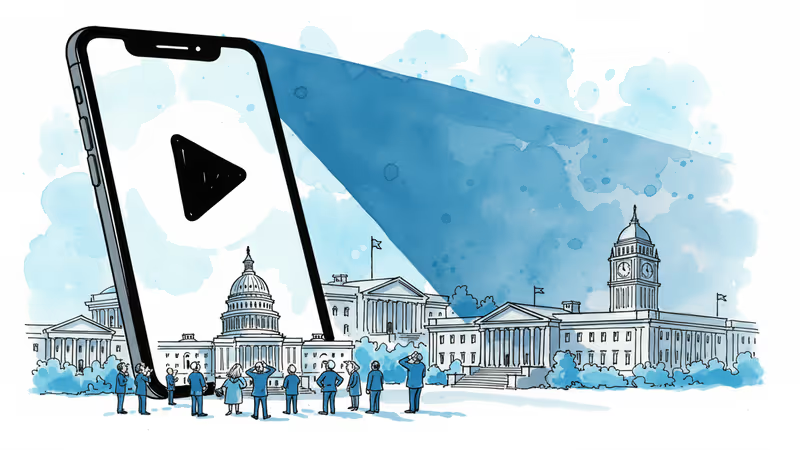
A 23-year-old right-wing YouTuber's viral video led to federal immigration raids and frozen childcare funding. The case reveals social media's growing influence on government policy.
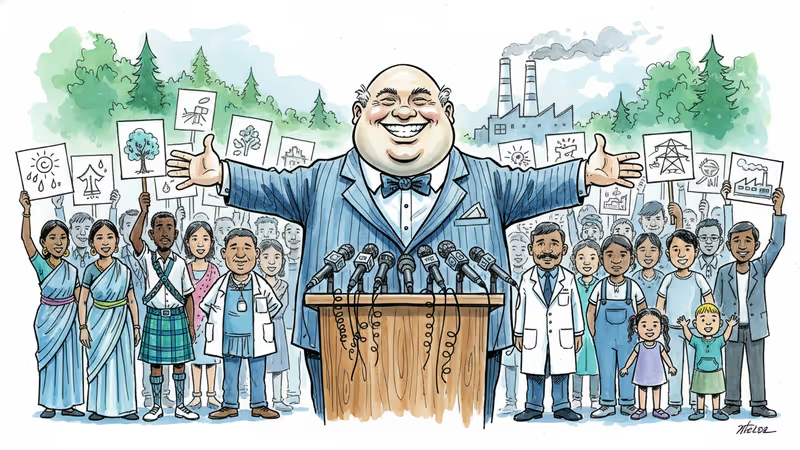
From Apple to social media platforms, companies face growing pressure to take stands on social issues. But when does corporate activism help or hurt business?

ICE deploys cell-site simulators, facial recognition, and spyware to track immigrants, raising concerns about mass surveillance of all Americans.
Trump administration's use of Guantánamo Bay for immigrant detention forces US Public Health Service officers to choose between conscience and career, with some resigning rather than participate.
A 23-year-old right-wing YouTuber's viral video led to federal immigration raids and frozen childcare funding. The case reveals social media's growing influence on government policy.
From Apple to social media platforms, companies face growing pressure to take stands on social issues. But when does corporate activism help or hurt business?
ICE deploys cell-site simulators, facial recognition, and spyware to track immigrants, raising concerns about mass surveillance of all Americans.
Thoughts
Share your thoughts on this article
Sign in to join the conversation