

Trump's Mass Deportation Machine: How Your Phone Became a Tracking Device
ICE deploys cell-site simulators, facial recognition, and spyware to track immigrants, raising concerns about mass surveillance of all Americans.
350,000 people deported in Trump's first year back in office. But behind this staggering number lies something even more unsettling: a sprawling surveillance apparatus that's tracking not just undocumented immigrants, but potentially every American with a smartphone.
Immigration and Customs Enforcement (ICE) has weaponized cutting-edge surveillance technology to power Trump's mass deportation campaign. As agents raid homes, workplaces, and public spaces, they're deploying tools that capture the personal data of countless innocent bystanders—raising fundamental questions about privacy and constitutional rights in America.
Your Phone Tower Might Be Fake
One of ICE's most controversial tools is the cell-site simulator—a device that masquerades as a cell phone tower to trick nearby phones into connecting. Once connected, authorities can potentially intercept calls, texts, and internet traffic from every phone in the area.
In the past two years, ICE has signed contracts worth more than $1.5 million with TechOps Specialty Vehicles, which builds customized surveillance vans. A single contract from May 2025 was worth over $800,000 just for "Cell Site Simulator vehicles."
The problem? These devices are designed to hoover up data from all nearby phones, not just those of suspected immigrants. By design, they violate the privacy of innocent Americans whose only crime was being in the wrong place at the wrong time.
Even more troubling, authorities sometimes deploy these devices without obtaining warrants. In 2019, a Baltimore court case revealed that prosecutors were instructed to drop cases rather than disclose their use of cell-site simulators—prioritizing secrecy over justice.
The Facial Recognition Dragnet
Clearview AI, the notorious facial recognition company that scraped billions of photos from the internet, has secured a $3.75 million contract with ICE. The company promises to identify "any face" by searching through its massive database of images collected without consent.
ICE also uses an app called Mobile Fortify, which allows federal agents to identify people on the street by scanning their faces against 200 million driver's license photos. This means that simply having a driver's license makes you searchable in the government's facial recognition system.
This isn't just about catching criminals—it's about creating a society where anonymity in public spaces becomes impossible.

Israeli Spyware Gets a Second Chance
Perhaps most concerning is ICE's$2 million contract with Israeli spyware maker Paragon Solutions. The Biden administration had frozen this contract due to concerns about commercial spyware use, but Trump lifted the "stop work order" just last week.
Paragon recently cut ties with Italian intelligence agencies after being implicated in spying on journalists and immigration activists. Now, this same company is poised to work with U.S. immigration enforcement.
The timing raises uncomfortable questions: If Paragon's tools were deemed too problematic for Italy, why are they acceptable for America?
Your Location Data for Sale
ICE has spent $5 million on an "all-in-one" surveillance tool from Penlink that processes billions of daily location signals from hundreds of millions of mobile devices. This data comes from the apps on your phone—weather apps, games, social media platforms—that sell your location to advertising companies.
Through a complex chain of data brokers, this information ends up in government hands without any warrant required. Authorities simply purchase what would otherwise require a court order.
Meanwhile, automated license plate readers from companies like Flock Safety track drivers across the country through more than 40,000 scanners nationwide, creating a comprehensive map of American movement.
Constitutional Lines Blur
The surveillance tools are just one part of a broader erosion of legal norms. The Department of Homeland Security has begun forcibly entering homes without judicial warrants—a practice legal experts say violates Fourth Amendment protections against unreasonable searches and seizures.
What begins as immigration enforcement becomes a blueprint for broader government overreach. The infrastructure built to track undocumented immigrants can easily be repurposed to monitor political dissidents, journalists, or any group deemed problematic by future administrations.
The Surveillance State Next Door
This isn't happening in some distant authoritarian regime—it's happening in American neighborhoods, using American technology, with American tax dollars. The same tools that promise to make us safer are creating an unprecedented surveillance apparatus that touches every aspect of digital life.
Local law enforcement agencies, through partnerships with companies like Flock Safety, provide ICE with backdoor access to surveillance networks that span entire metropolitan areas. Your morning commute, your grocery store visits, your children's school pickup—all potentially logged and searchable by federal agents.
Authors
Related Articles
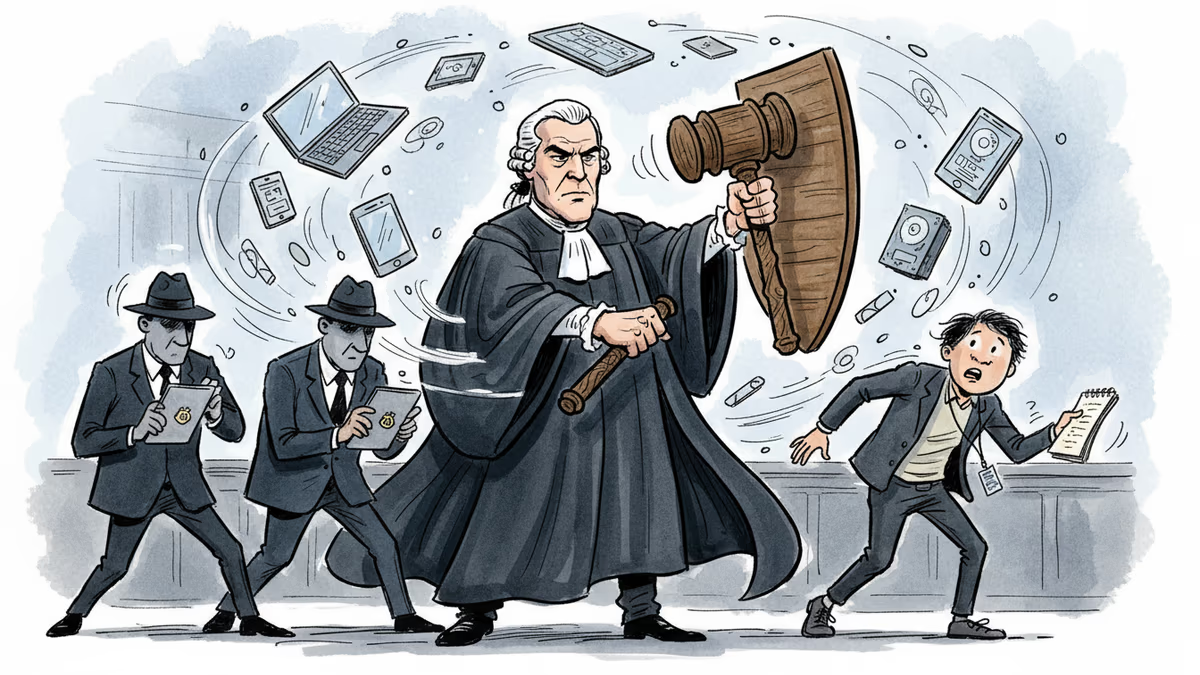
Federal court takes control of Washington Post reporter's seized devices after DOJ omitted key journalist protections from warrant. A new precedent for press freedom vs national security.
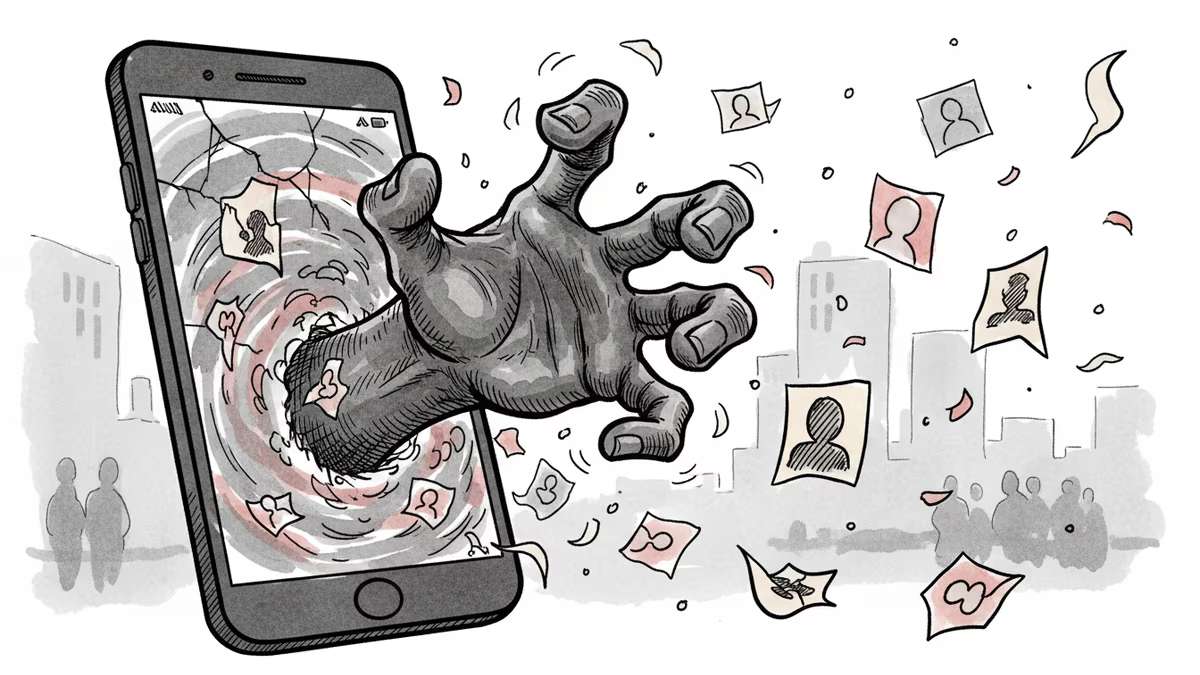
DHS sent hundreds of subpoenas to Google, Meta, Reddit to unmask anti-ICE accounts. No judge approval needed. Your anonymous criticism might not be so anonymous.
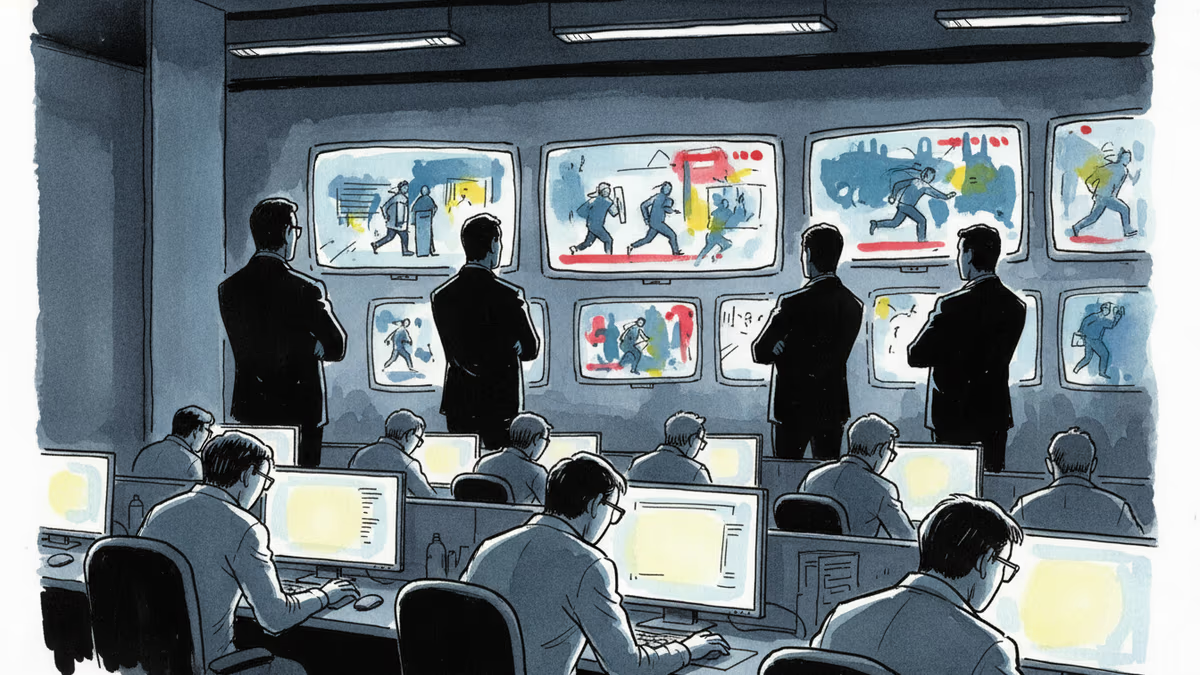
As Trump's immigration crackdown intensifies, tech CEOs remain strategically silent while employees describe a culture of fear and uncertainty about their companies' commitment to protecting them.
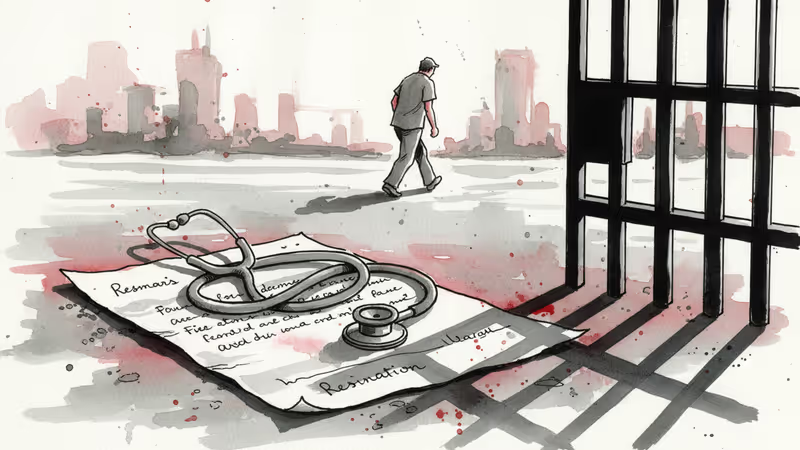
Trump administration's use of Guantánamo Bay for immigrant detention forces US Public Health Service officers to choose between conscience and career, with some resigning rather than participate.
Federal court takes control of Washington Post reporter's seized devices after DOJ omitted key journalist protections from warrant. A new precedent for press freedom vs national security.
DHS sent hundreds of subpoenas to Google, Meta, Reddit to unmask anti-ICE accounts. No judge approval needed. Your anonymous criticism might not be so anonymous.
As Trump's immigration crackdown intensifies, tech CEOs remain strategically silent while employees describe a culture of fear and uncertainty about their companies' commitment to protecting them.
Trump administration's use of Guantánamo Bay for immigrant detention forces US Public Health Service officers to choose between conscience and career, with some resigning rather than participate.
Thoughts
Share your thoughts on this article
Sign in to join the conversation