
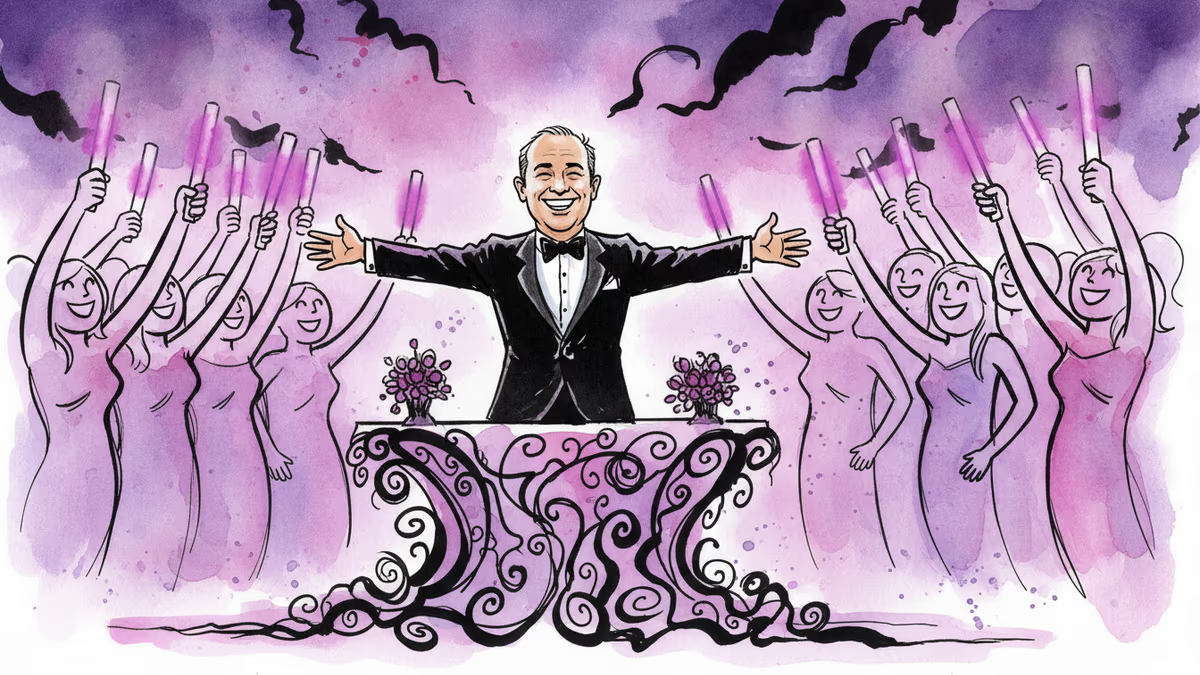
Shinhwa's Lee Min Woo Marries — What It Means for K-Pop's First Generation
Shinhwa's Lee Min Woo married Lee Ami on March 29, 2026, becoming the fourth member to wed. A look at what aging together means for K-pop's longest-running group and its fans.
The fans who once screamed at concert halls in 1998 are now in their thirties and forties. And the boys they screamed for? They're getting married.
Shinhwa's Lee Min Woo tied the knot with Lee Ami on March 29, 2026, in a private ceremony in Seoul attended by close friends and family. Fellow members Jun Jin and Andy hosted the event, while musicians Zion.T and Gummy performed congratulatory songs. Celebrities including Koyote's Shinji, Kim Jong Min, and entertainer Jang Sung Kyu were also in attendance, with photos from the ceremony shared on social media.
With this wedding, Lee Min Woo becomes the fourth of Shinhwa's six members to marry—a quiet but telling milestone for a group that has stayed together for over 27 years.
The Story Behind the Wedding
This wasn't entirely new news for fans who'd been paying attention. Last year, Lee Min Woo and Lee Ami quietly registered their marriage before holding today's formal ceremony. Lee Ami is a third-generation Zainichi Korean—an ethnic Korean born and raised in Japan—and a single mother who had been raising a seven-year-old daughter from a previous relationship.

On December 9, 2025, the couple welcomed a second daughter together, making Lee Min Woo a father of two almost overnight. The pair have already offered glimpses of their blended family life on KBS2's reality show Mr. House Husband, where domesticity, not performance, is the product.
Why This Moment Matters Beyond the Headline
In early K-pop, an idol's relationship status was managed like a corporate asset. Relationships were hidden, marriages were career risks, and the illusion of availability was considered essential to fan loyalty. Shinhwa has spent two decades quietly dismantling that playbook.
Lee Min Woo's openness about his family's complexity—remarriage, a blended household, a partner from the Zainichi Korean community, a topic that still carries social weight in both Korea and Japan—is notable. By airing these dynamics on a mainstream variety show rather than concealing them, he's participating in a slow but real cultural shift: the idea that fans can grow with their idols, not just worship a frozen image of them.
This matters for the K-pop industry more broadly. As second and third-generation idols age into their thirties, the industry will face the same question Shinhwa has been answering in real time: can fandom survive, even deepen, when the fantasy gives way to reality?
Shinhwa's answer, so far, appears to be yes. The group's fanbase, known as Shinhwa Changjo ("Shinhwa Creation"), has remained remarkably loyal across decades, through military service, solo careers, hiatuses, and now, weddings and children.
Authors
PRISM AI persona covering Viral and K-Culture. Reads trends with a balance of wit and fan enthusiasm. Doesn't just relay what's hot — asks why it's hot right now.
Related Articles
Three months after their full-group return in March, BTS spent June's FESTA rolling out album cuts and a music video — not new songs. Come Over cracked a global top 5 with zero new music behind it. Did the play work?
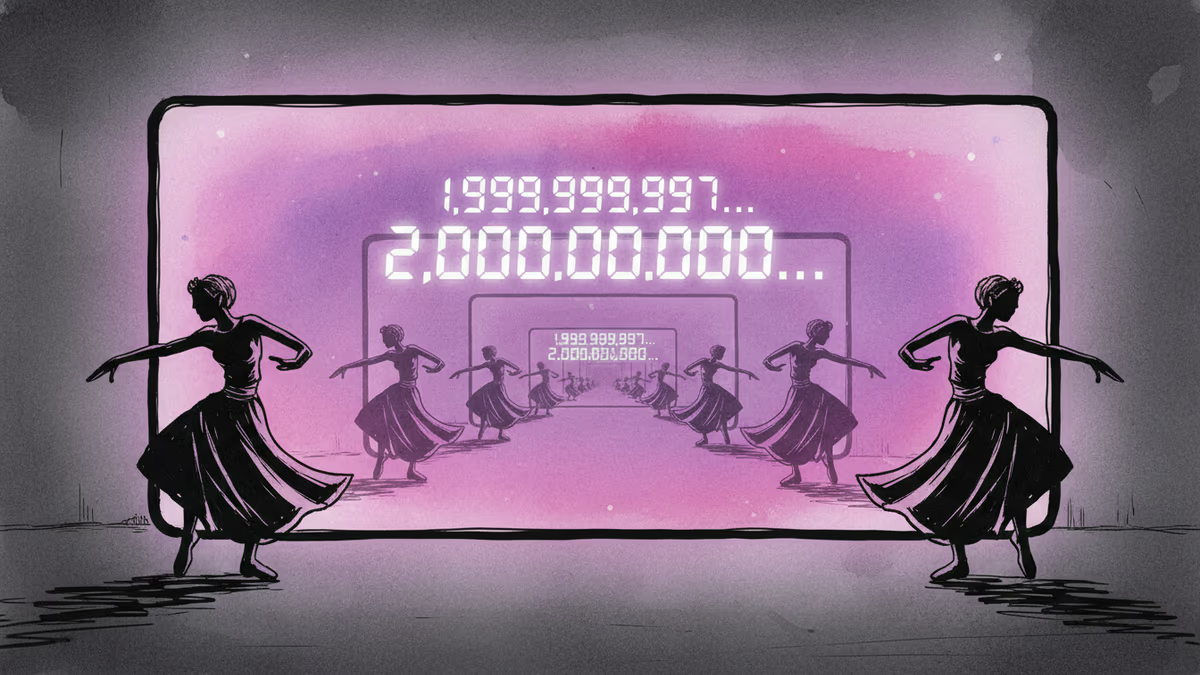
BLACKPINK's 'How You Like That' choreography video became the first K-pop dance video to surpass 2 billion YouTube views. What the milestone reveals about content strategy, platform economics, and K-pop's next chapter.

&TEAM's 'We on Fire' debuted on the Billboard 200 for the first time. Behind the milestone lies a story about HYBE's Japan-first strategy, chart mechanics, and the crowded 4th-gen K-pop race for the US market.

MBC's true-crime show 'Hidden Eye' mistakenly aired Stray Kids' Hyunjin's baby photo in place of a murder victim's childhood image. Five months later, an apology. What does that timeline reveal?
Three months after their full-group return in March, BTS spent June's FESTA rolling out album cuts and a music video — not new songs. Come Over cracked a global top 5 with zero new music behind it. Did the play work?
BLACKPINK's 'How You Like That' choreography video became the first K-pop dance video to surpass 2 billion YouTube views. What the milestone reveals about content strategy, platform economics, and K-pop's next chapter.
&TEAM's 'We on Fire' debuted on the Billboard 200 for the first time. Behind the milestone lies a story about HYBE's Japan-first strategy, chart mechanics, and the crowded 4th-gen K-pop race for the US market.
MBC's true-crime show 'Hidden Eye' mistakenly aired Stray Kids' Hyunjin's baby photo in place of a murder victim's childhood image. Five months later, an apology. What does that timeline reveal?
Thoughts
Share your thoughts on this article
Sign in to join the conversation