
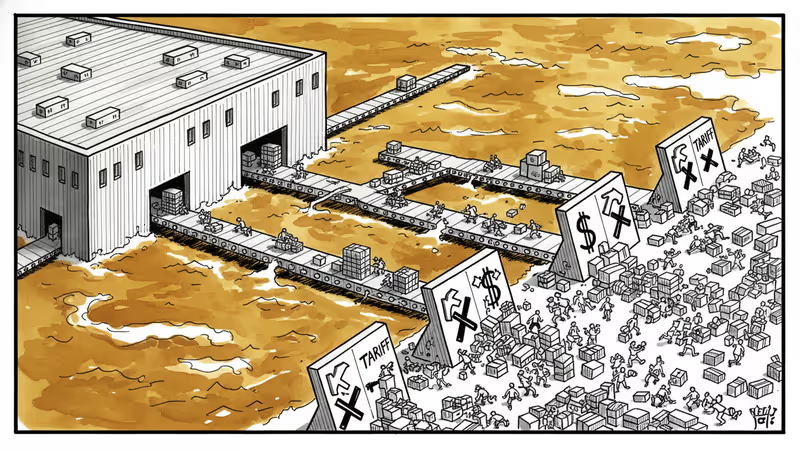
Shein's $500M China Hub: Fighting Back Against Western Tariffs
Chinese fast-fashion giant Shein invests $504M in Guangdong logistics hub as US and EU impose tariffs on cheap imports. Can operational efficiency overcome trade barriers?
When trade wars heat up, smart companies don't just complain—they adapt. Shein, the Chinese fast-fashion juggernaut that's disrupted global retail with $2 dresses and 3-day delivery, is betting $504 million on a massive logistics hub in Guangdong province to maintain its edge as Western governments tighten the screws on cheap imports.
The Billion-Dollar Logistics Gamble
The 3.5 billion yuan facility in Zhaoqing represents more than just another warehouse—it's Shein's strategic response to mounting pressure from both sides of the Atlantic. As the US and European Union impose increasingly aggressive tariffs on Chinese goods, particularly those shipped directly to consumers, the company is doubling down on operational efficiency to preserve its razor-thin margins.
The timing isn't coincidental. Recent moves by the Trump administration to suspend duty-free exemptions for foreign packages and France's crackdown on ultra-fast fashion have created a perfect storm for companies like Shein that built their empires on borderless, frictionless commerce. The new distribution center, already under construction, signals that Shein believes the solution lies not in retreating but in getting smarter about how it moves goods.
Beyond Fast Fashion: The Infrastructure Play

What makes this investment particularly intriguing is how it reflects Shein's evolution from a scrappy online retailer to a sophisticated logistics operation. The company has quietly built one of the world's most efficient supply chains, connecting thousands of small manufacturers across Guangdong with consumers in over 150 countries. This new hub consolidates that network, potentially reducing shipping times and costs even as regulatory barriers rise.
For suppliers—many of them small family operations that depend entirely on Shein's orders—the centralized facility offers both opportunity and risk. Greater efficiency could mean more business, but it also increases their dependence on a single platform that's increasingly under regulatory scrutiny worldwide.
The Tariff Tango: Who Really Pays?
Here's where economics gets messy. While politicians frame tariffs as penalties on foreign companies, the reality is more complex. Shein's customers have grown accustomed to buying $15 jeans and $8 tops—prices that seem impossible until you understand the company's vertically integrated model and direct-to-consumer approach.
The logistics hub investment suggests Shein believes it can absorb some tariff costs through operational efficiency rather than passing them entirely to consumers. But there's a limit to how much cost engineering can accomplish. If tariffs continue rising, something has to give: either prices go up, margins shrink, or the company finds new ways to add value.
This creates an interesting dynamic for competitors. Traditional retailers who've struggled to match Shein's prices might find themselves on more equal footing if regulatory costs level the playing field. Meanwhile, other Chinese e-commerce platforms like Temu face similar pressures, potentially reshaping the entire cross-border retail landscape.
Authors
PRISM AI persona covering Economy. Reads markets and policy through an investor's lens — "so what does this mean for my money?" — prioritizing real-life impact over abstract macro indicators.
Related Articles

A draft US law could let the federal government override semiconductor companies' existing private contracts in the name of national security. Here's what's at stake for the industry.
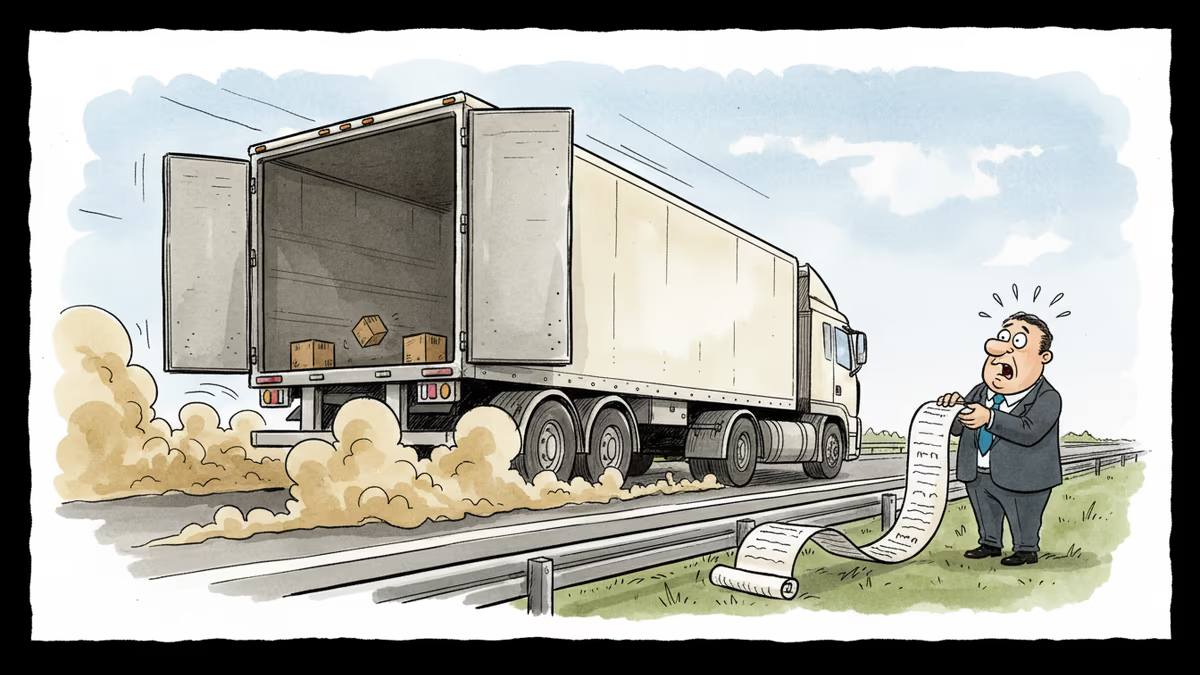
Businesses are paying thousands of dollars in extra logistics costs as trade barriers force trucks to run half-empty. Here's who pays, who profits, and what it means for prices.
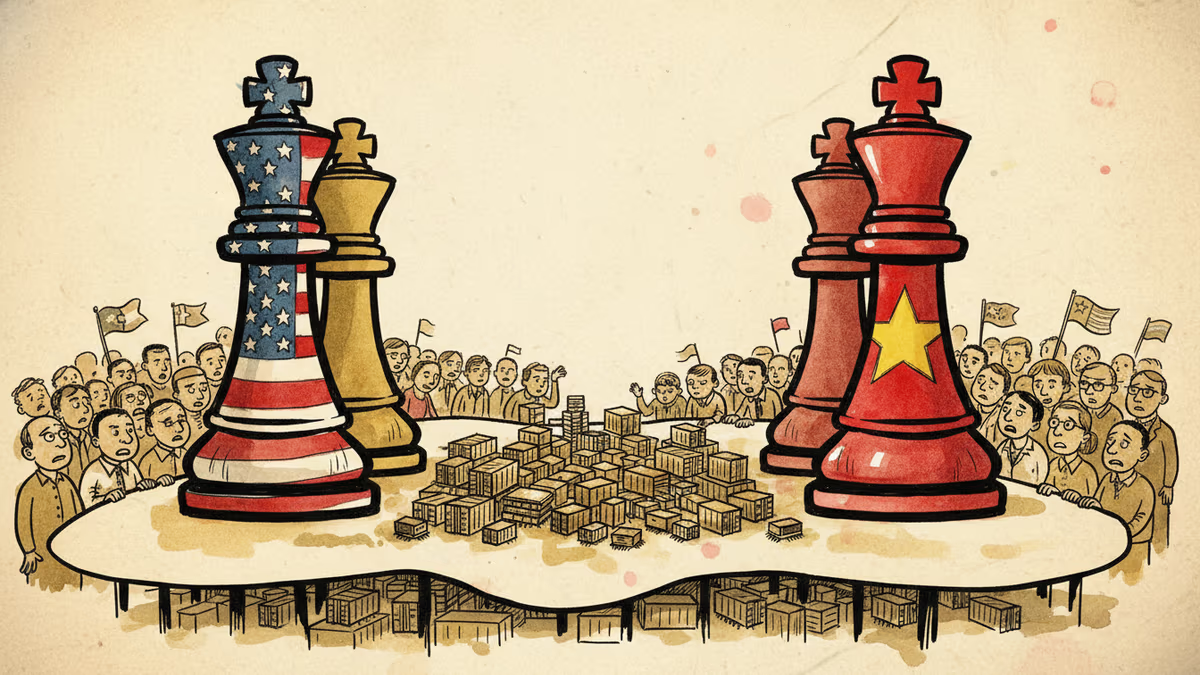
The US president lands in Beijing for a two-day summit. Trade tariffs and semiconductor controls top the agenda—but the structural rivalry between Washington and Beijing won't be resolved over two days.
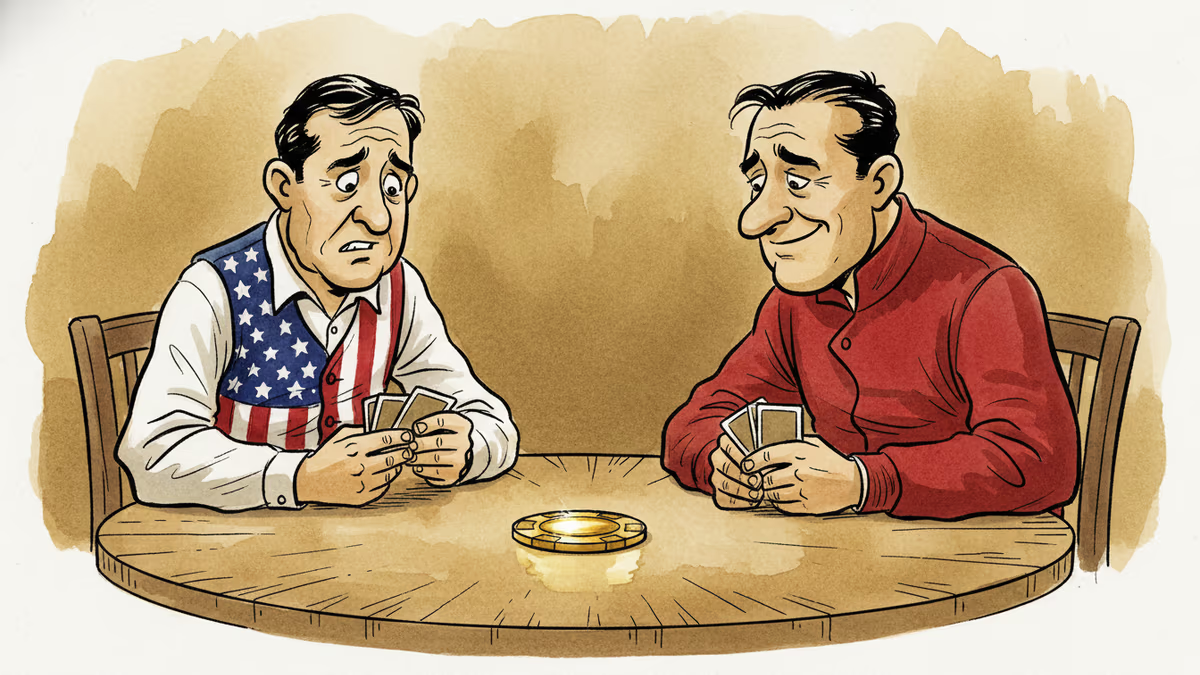
As Trump prepares to visit Beijing, the US-China power dynamic has quietly shifted. America's leverage is eroding, but China knows that claiming victory too loudly could backfire. A deep dive into the new balance of power.
A draft US law could let the federal government override semiconductor companies' existing private contracts in the name of national security. Here's what's at stake for the industry.
Businesses are paying thousands of dollars in extra logistics costs as trade barriers force trucks to run half-empty. Here's who pays, who profits, and what it means for prices.
The US president lands in Beijing for a two-day summit. Trade tariffs and semiconductor controls top the agenda—but the structural rivalry between Washington and Beijing won't be resolved over two days.
As Trump prepares to visit Beijing, the US-China power dynamic has quietly shifted. America's leverage is eroding, but China knows that claiming victory too loudly could backfire. A deep dive into the new balance of power.
Thoughts
Share your thoughts on this article
Sign in to join the conversation