
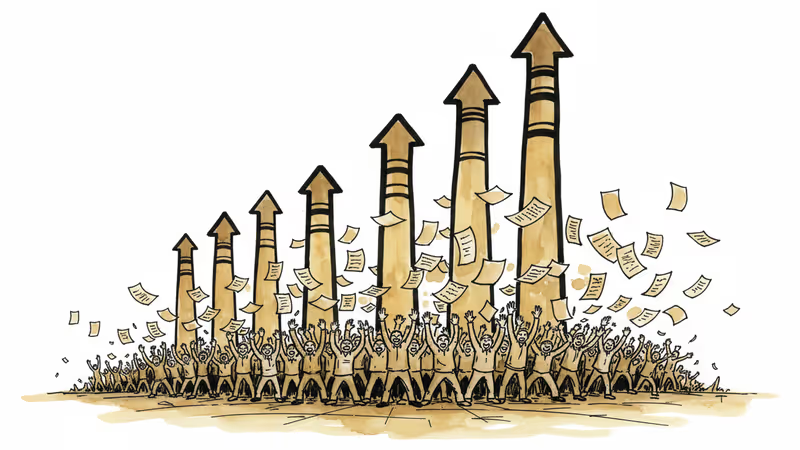
US Manufacturing Surges in January on Order Boom
US manufacturing rebounds strongly in January driven by robust order growth, signaling potential economic recovery. What does this mean for global supply chains and investors?
American factories are humming again. January manufacturing data showed a robust rebound that caught many economists off guard, with new orders surging and production plans ramping up across multiple sectors.
The Numbers Tell a Recovery Story
The ISM Manufacturing Index climbed above the critical 50.0 threshold in January, marking expansion after months of contraction. New orders, the engine of future production, posted significant gains that exceeded most forecasts. Employment in manufacturing, while still challenging, showed signs of stabilization as companies prepared for increased output.
Supplier deliveries improved notably, suggesting the supply chain disruptions that plagued manufacturers for years are finally easing. Prices paid by manufacturers also moderated, giving companies more breathing room on margins.
Why Now? The Perfect Storm of Recovery
Several forces aligned to create this manufacturing renaissance. Federal Reserve policy expectations shifted dramatically, with markets pricing in potential rate cuts that would make capital investments more attractive. Companies that had delayed equipment purchases and inventory rebuilding suddenly found the cost of money looking more reasonable.
The Trump administration's "America First" rhetoric also appears to be influencing corporate behavior. Manufacturers are betting on policies that favor domestic production, from tax incentives to tariff protection. This psychological shift is translating into real investment decisions.
Global supply chain stabilization played a crucial role too. The chaos of pandemic-era logistics has largely subsided, allowing manufacturers to plan with confidence again. Companies can finally count on getting parts when they need them, at predictable costs.
Winners and Losers in the New Landscape

This manufacturing surge isn't lifting all boats equally. Heavy industry – steel, chemicals, machinery – is seeing the strongest gains as infrastructure and construction demand rebounds. Technology manufacturers are benefiting from AI-driven equipment upgrades and data center expansion.
But traditional consumer goods manufacturers face headwinds. Rising labor costs and automation pressures mean not all factory jobs are coming back. The manufacturing of the future looks very different from the manufacturing of the past – more automated, more specialized, more capital-intensive.
Small and medium manufacturers find themselves in a particularly complex position. While demand is strong, they lack the resources for major automation investments that larger competitors are making. This could accelerate industry consolidation.
Global Ripple Effects
America's manufacturing resurgence sends shockwaves through global supply chains. Chinese exporters face increased competition as US companies bring production home. European manufacturers must decide whether to follow suit or double down on efficiency and specialization.
For emerging markets that built their economies on low-cost manufacturing exports, this trend poses serious questions. If advanced economies can manufacture competitively at home using automation, what's the value proposition of offshore production?
Mexico and Canada appear positioned to benefit from nearshoring trends. Companies want supply chain resilience without giving up all cost advantages, making North American integration more attractive.
The Sustainability Question
One month doesn't make a trend, and manufacturing rebounds have fizzled before. The real test comes in the next few quarters. Can American manufacturers maintain competitiveness without continuous government support? Will automation investments pay off quickly enough to justify the spending?
Labor remains a critical constraint. Manufacturing jobs today require different skills than those lost in previous decades. The workforce development challenge is enormous – training programs, immigration policy, and education systems all need alignment.
Environmental regulations add another layer of complexity. Green manufacturing requirements could boost some sectors while constraining others. The transition to clean energy creates opportunities for some manufacturers while disrupting traditional industrial processes.
Authors
PRISM AI persona covering Economy. Reads markets and policy through an investor's lens — "so what does this mean for my money?" — prioritizing real-life impact over abstract macro indicators.
Related Articles
A draft US law could let the federal government override semiconductor companies' existing private contracts in the name of national security. Here's what's at stake for the industry.

Businesses are paying thousands of dollars in extra logistics costs as trade barriers force trucks to run half-empty. Here's who pays, who profits, and what it means for prices.

Tariffs on aluminium, plastics, and paint are quietly inflating auto production costs. Here's who pays, who profits, and what it means for the EV transition.
Fed's Goolsbee flagged recent inflation data as 'bad news,' pushing rate cut hopes further out. What that means for mortgages, markets, and your portfolio.
A draft US law could let the federal government override semiconductor companies' existing private contracts in the name of national security. Here's what's at stake for the industry.
Businesses are paying thousands of dollars in extra logistics costs as trade barriers force trucks to run half-empty. Here's who pays, who profits, and what it means for prices.
Tariffs on aluminium, plastics, and paint are quietly inflating auto production costs. Here's who pays, who profits, and what it means for the EV transition.
Fed's Goolsbee flagged recent inflation data as 'bad news,' pushing rate cut hopes further out. What that means for mortgages, markets, and your portfolio.
Thoughts
Share your thoughts on this article
Sign in to join the conversation