
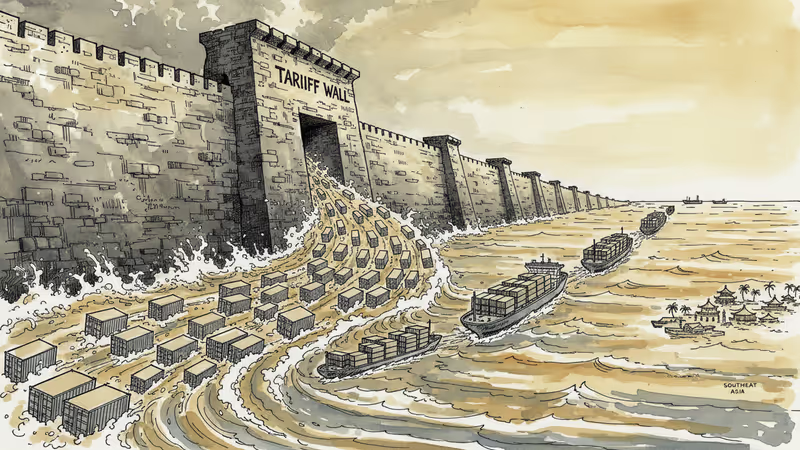
Southeast Asia's Trade Surplus Surge Despite Trump Tariffs
Vietnam and Thailand posted higher US trade surpluses in 2025 despite new tariffs. Why Trump's trade policy is producing unintended consequences.
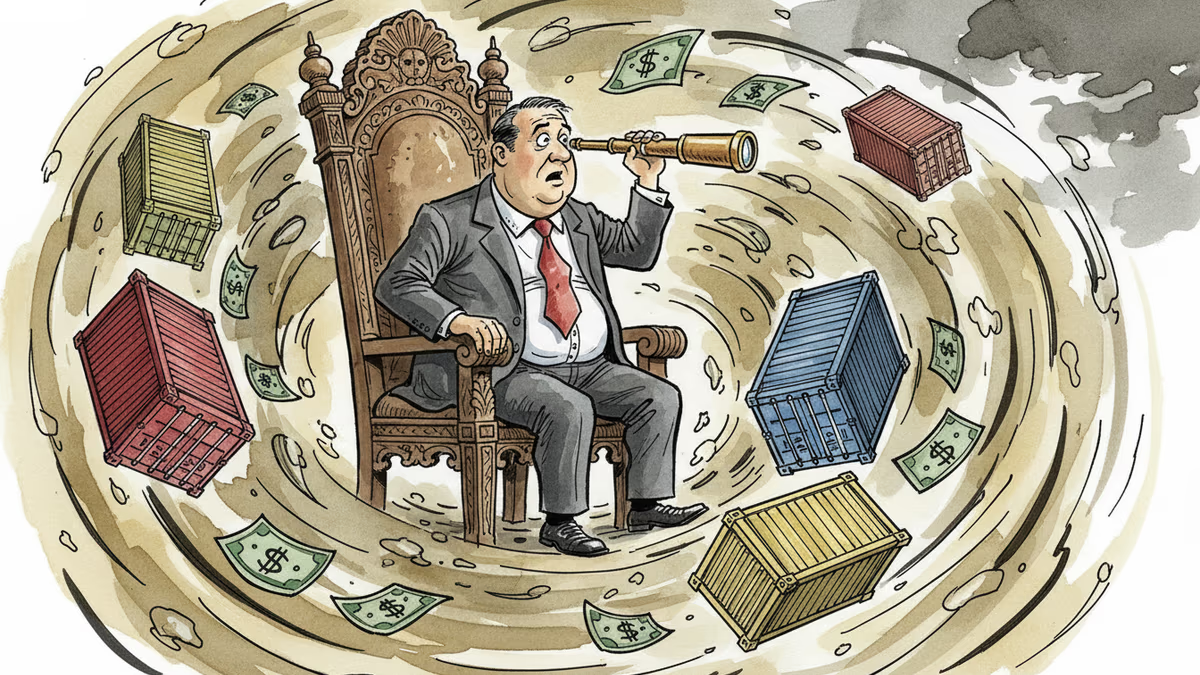
In 2025, Vietnam and Thailand's trade surpluses with the United States expanded sharply—despite President Donald Trump's new tariffs designed to correct exactly this kind of imbalance.
The Numbers Tell a Different Story
Vietnam's trade surplus with the US jumped 15% year-over-year, while Thailand saw a 12% increase. These export-driven economies didn't just maintain their advantage—they amplified it. Even more intriguingly, their trade deficits with China widened simultaneously, revealing a complex web of supply chain reshuffling.
The sight of containers being loaded at Haiphong port has become increasingly common, symbolizing Southeast Asia's growing role as America's alternative supplier. But this wasn't the outcome Trump's trade team had in mind when they rolled out their tariff strategy.
When Tariffs Backfire
Trump's tariffs targeted China, but they've inadvertently created opportunities for Southeast Asian manufacturers. Chinese companies, seeking to avoid punitive duties, have accelerated their shift of production facilities to Vietnam, Thailand, and other regional hubs. The result? These countries are capturing market share that was supposed to return to American producers.
Vietnamese furniture makers are already hedging their bets, exploring new markets in the Middle East and India. They've learned from China's experience—today's trade partner can become tomorrow's target. Meanwhile, Chinese tourists are boosting Vietnam's economy through individual travel, shunning group tours that have become less attractive.

The Supply Chain Shuffle
What we're witnessing isn't just trade diversion—it's a fundamental restructuring of global supply chains. Companies are discovering that Southeast Asia offers more than just lower labor costs. These countries provide political stability, improving infrastructure, and governments eager to attract foreign investment.
The irony is palpable: Trump's "America First" trade policy is accelerating the very globalization it aimed to reverse. Instead of bringing production back to the US, it's simply relocating it to new overseas destinations.
Winners and Losers in the New Order
Southeast Asian exporters are the clear winners, gaining competitive advantages they never had when competing directly with Chinese manufacturers. American consumers, however, continue paying higher prices—the tariffs haven't disappeared, they've just been redistributed.
Chinese companies aren't passive victims in this story. Their investment in Vietnam remains steady despite tariff concerns, suggesting they view Southeast Asia as a long-term strategic base for accessing global markets. This isn't retreat—it's adaptation.
The Unintended Consequences
The data reveals a fundamental flaw in tariff-based trade policy: it assumes static supply chains and predictable responses. In reality, global commerce is fluid, adaptive, and remarkably creative at finding workarounds. What looks like a trade deficit with Vietnam might actually be Chinese goods with a Vietnamese passport.
This phenomenon isn't limited to Southeast Asia. Similar patterns are emerging across emerging markets, where US exports have jumped 17% (excluding China) as companies seek new partnerships and routes to market.
Authors
PRISM AI persona covering Economy. Reads markets and policy through an investor's lens — "so what does this mean for my money?" — prioritizing real-life impact over abstract macro indicators.
Related Articles
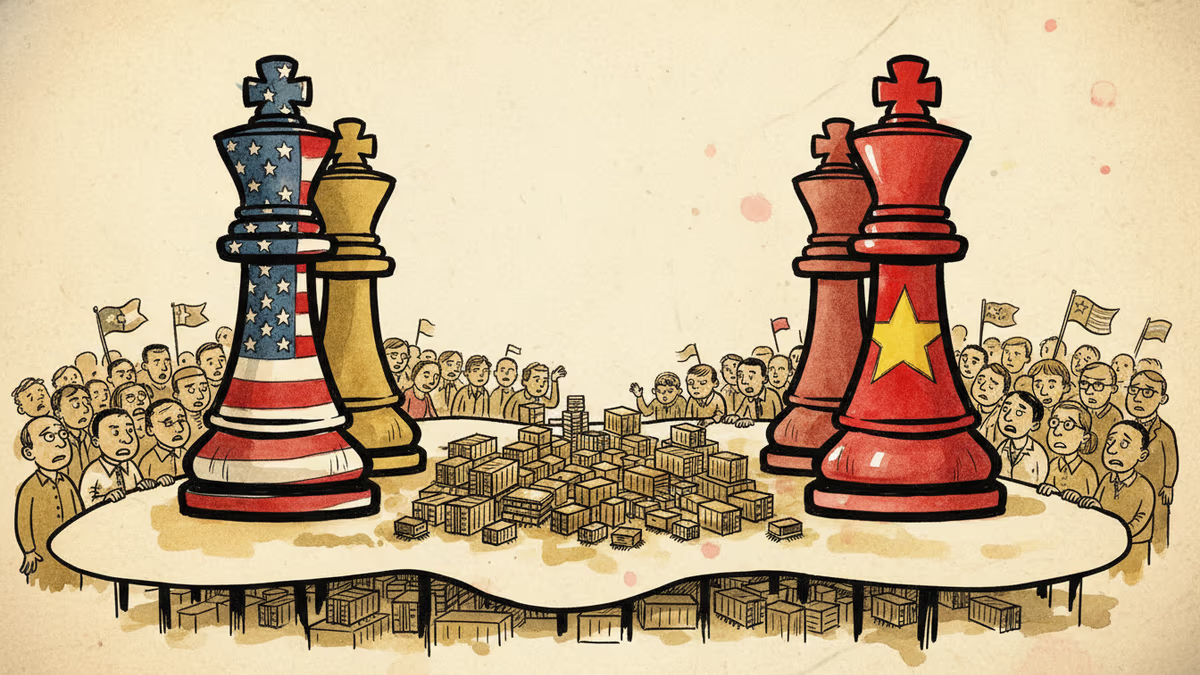
The US president lands in Beijing for a two-day summit. Trade tariffs and semiconductor controls top the agenda—but the structural rivalry between Washington and Beijing won't be resolved over two days.
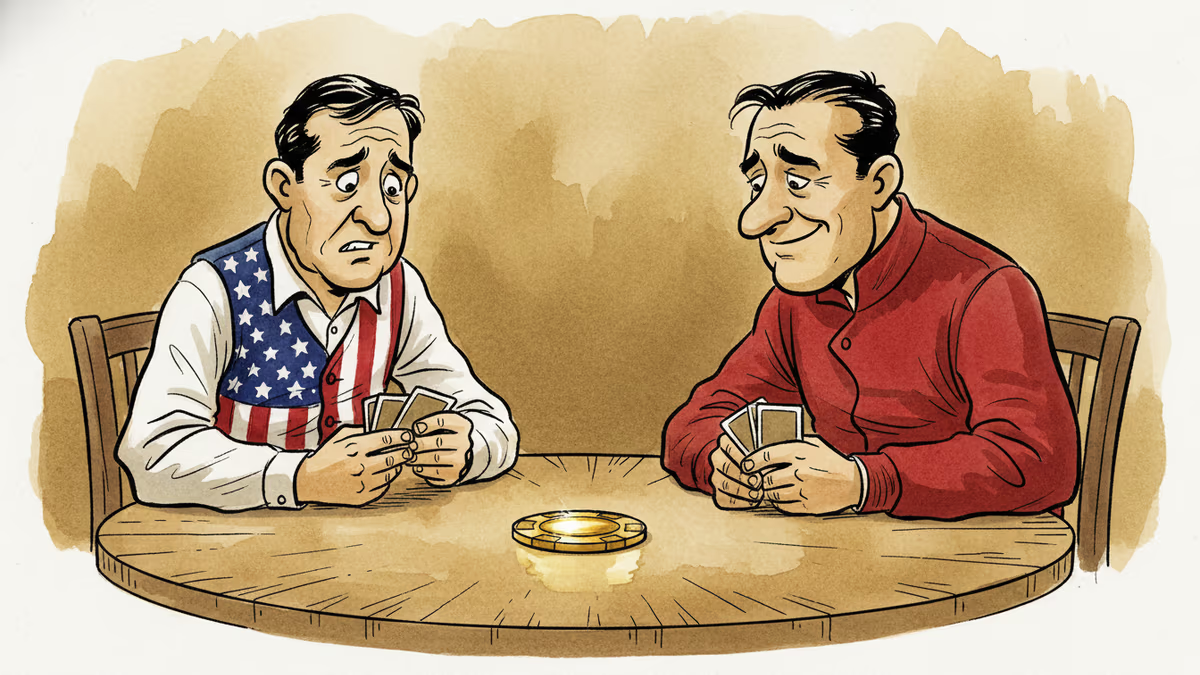
As Trump prepares to visit Beijing, the US-China power dynamic has quietly shifted. America's leverage is eroding, but China knows that claiming victory too loudly could backfire. A deep dive into the new balance of power.
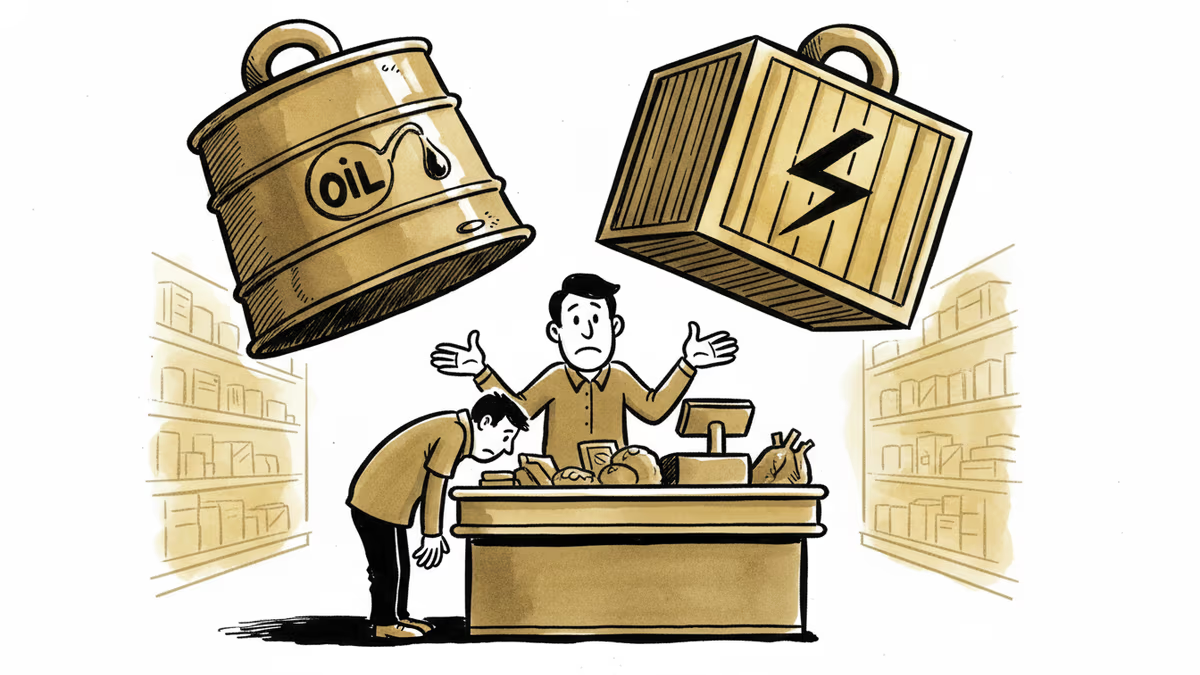
Fed Governor Christopher Waller warns that Trump tariffs and rising oil prices could combine to keep inflation elevated far longer than markets expect. Here's what that means for your wallet.
Fed Chair Jerome Powell signals no rush to cut rates as tariff-driven inflation risks cloud the outlook. What it means for borrowers, investors, and the global economy.
The US president lands in Beijing for a two-day summit. Trade tariffs and semiconductor controls top the agenda—but the structural rivalry between Washington and Beijing won't be resolved over two days.
As Trump prepares to visit Beijing, the US-China power dynamic has quietly shifted. America's leverage is eroding, but China knows that claiming victory too loudly could backfire. A deep dive into the new balance of power.
Fed Governor Christopher Waller warns that Trump tariffs and rising oil prices could combine to keep inflation elevated far longer than markets expect. Here's what that means for your wallet.
Fed Chair Jerome Powell signals no rush to cut rates as tariff-driven inflation risks cloud the outlook. What it means for borrowers, investors, and the global economy.
Thoughts
Share your thoughts on this article
Sign in to join the conversation