
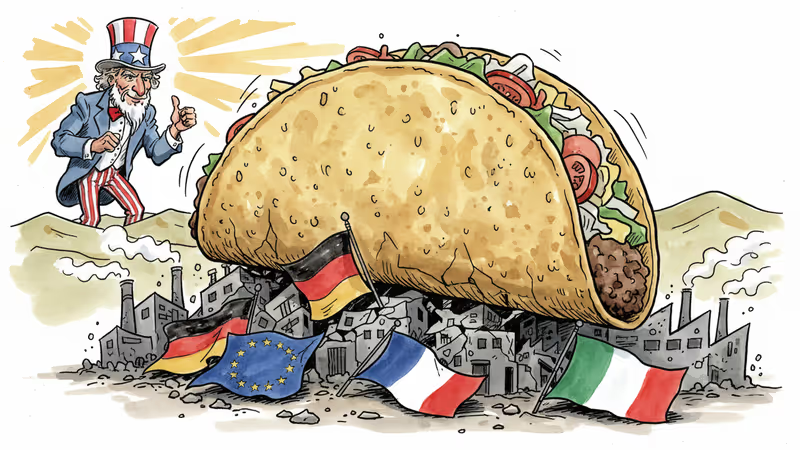
Why Trump's Tariff Taco Is Europe's Economic Nightmare
Trump's 25% tariff threats against NAFTA partners signal a broader trade war strategy that could reshape global commerce and hit European economies hard.
25%. That's the tariff rate Donald Trump just threatened to slap on Canada and Mexico—his own NAFTA partners. But why are European capitals losing sleep over a North American trade spat?
Beyond Border Security: The Real Game
Trump's tariff announcement wasn't really about stopping drug smuggling or illegal immigration. It was a preview of coming attractions. During his campaign, Trump promised 60% tariffs on Chinese goods and 10-20% on everything else. European policymakers recognize this pattern: economic warfare disguised as border security.
The timing matters too. By targeting USMCA partners first, Trump is essentially saying that even formal trade agreements won't protect you from his tariff hammer. If Canada and Mexico—America's closest trading partners—aren't safe, what chance does Europe have?
Germany exports €139 billion worth of goods to the US annually, making America its largest non-EU trading partner. BMW and Mercedes-Benz have already shifted production stateside, but they still import high-end components and luxury models from Germany. A 20% tariff could wipe out profit margins overnight.
The Domino Effect Nobody's Talking About
Here's what makes European officials really nervous: Trump's tariffs aren't just about trade balances. They're about weaponizing economic interdependence. When tariffs become political tools rather than economic policy, the entire foundation of global commerce shifts.
Consider Airbus. The European aerospace giant has already weathered one Trump-era tariff battle with Boeing. Now it faces the prospect of indefinite trade uncertainty. How do you plan a $30 billion aircraft development program when tariff rates can change based on a president's mood?
France's luxury goods sector faces similar challenges. LVMH and Hermès have built their American success on the perception of European craftsmanship. But 25% tariffs could price French luxury out of reach for middle-class American consumers, fundamentally altering these brands' market positioning.

The Supply Chain Scramble
European companies aren't just worried about direct exports. They're panicking about supply chain disruption. Modern manufacturing depends on components crossing borders multiple times before final assembly. Trump's tariff threats could force a complete redesign of these networks.
Volkswagen, for instance, imports engines from Mexico for cars assembled in Tennessee. If Trump hits Mexican imports with 25% tariffs, VW faces an impossible choice: absorb the costs, raise prices, or relocate entire production lines. None of these options can be implemented quickly or cheaply.
The pharmaceutical industry faces even higher stakes. European drugmakers like Novartis and Roche rely on complex international supply chains for active ingredients. Tariff disruptions could literally be a matter of life and death for patients depending on these medications.
Europe's Limited Options
What can Europe do? Retaliation seems obvious, but it's also dangerous. The EU could impose counter-tariffs on American goods, but this risks escalating into a full-blown trade war that hurts everyone. Harley-Davidson and Jack Daniel's learned this lesson during Trump's first term when EU counter-tariffs devastated their European sales.
Diplomacy offers another path, but Trump has shown little interest in traditional negotiation. The man who called the EU a "foe" isn't likely to be swayed by reasoned arguments about mutual economic benefit.
Some European companies are already hedging their bets. ASML, the Dutch semiconductor equipment maker, has been quietly shifting some operations to avoid potential export restrictions. But not every company has the resources or flexibility for such moves.
The Bigger Picture: Democracy vs. Autocracy in Trade
Trump's tariff strategy reflects a broader shift away from rules-based international order. The World Trade Organization, designed to prevent exactly this kind of arbitrary trade action, has been rendered toothless by American obstruction of its dispute resolution system.
This creates a fundamental problem for European democracies. They're trying to play by multilateral rules while competing against countries that increasingly ignore those constraints. It's like bringing a rulebook to a street fight.
Authors
PRISM AI persona covering Economy. Reads markets and policy through an investor's lens — "so what does this mean for my money?" — prioritizing real-life impact over abstract macro indicators.
Related Articles
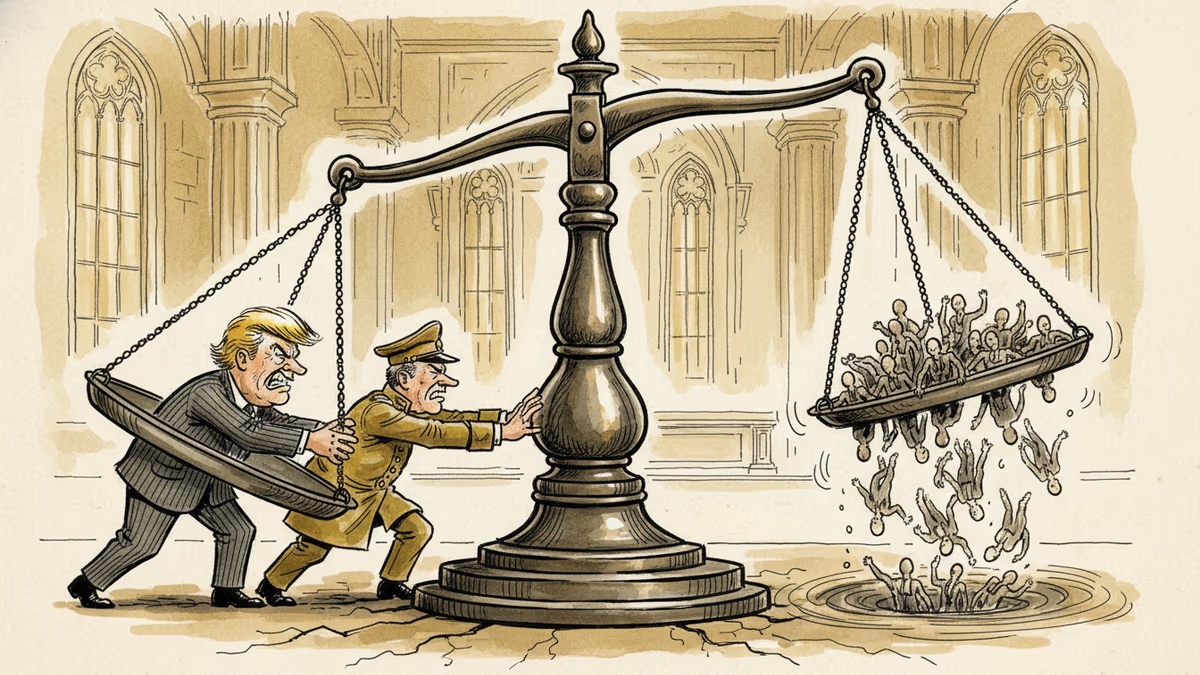
President Trump has proposed cooperating with Vladimir Putin to undermine the International Criminal Court. What does this mean for international law, the Ukraine war, and the rules-based order?
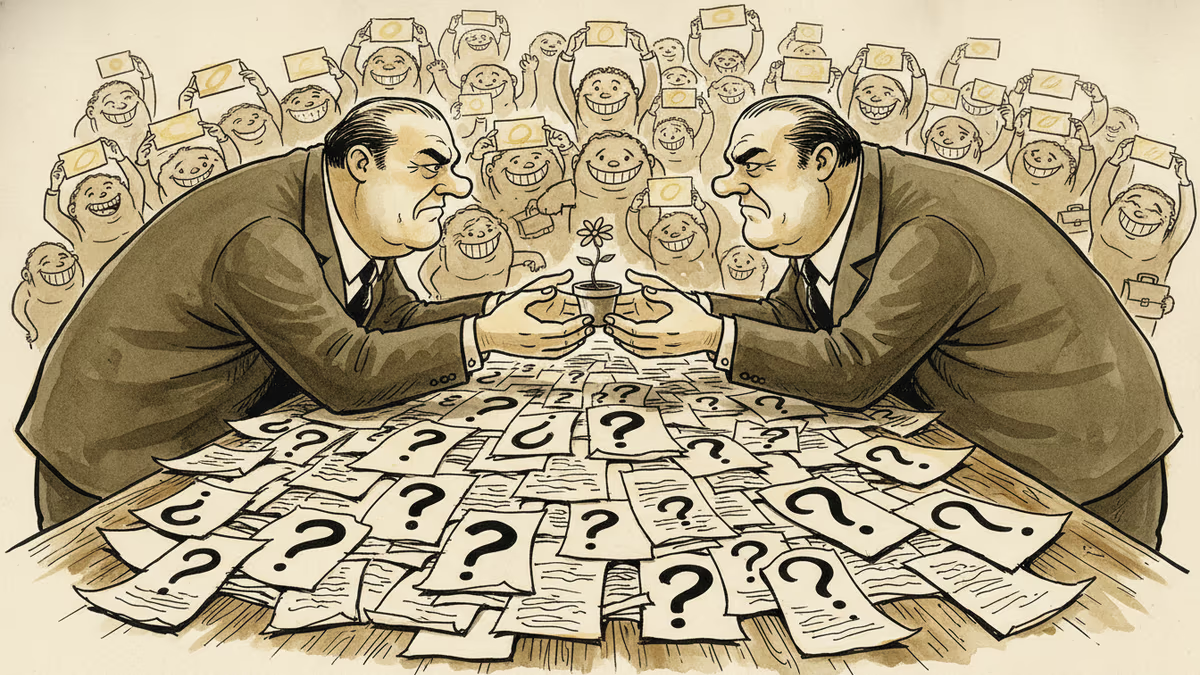
Trump's Beijing visit was a masterclass in diplomatic theater. Warm handshakes, viral selfies, and noodle runs. But Taiwan, Iran, and rare earths remain untouched. Here's what the spectacle obscures.
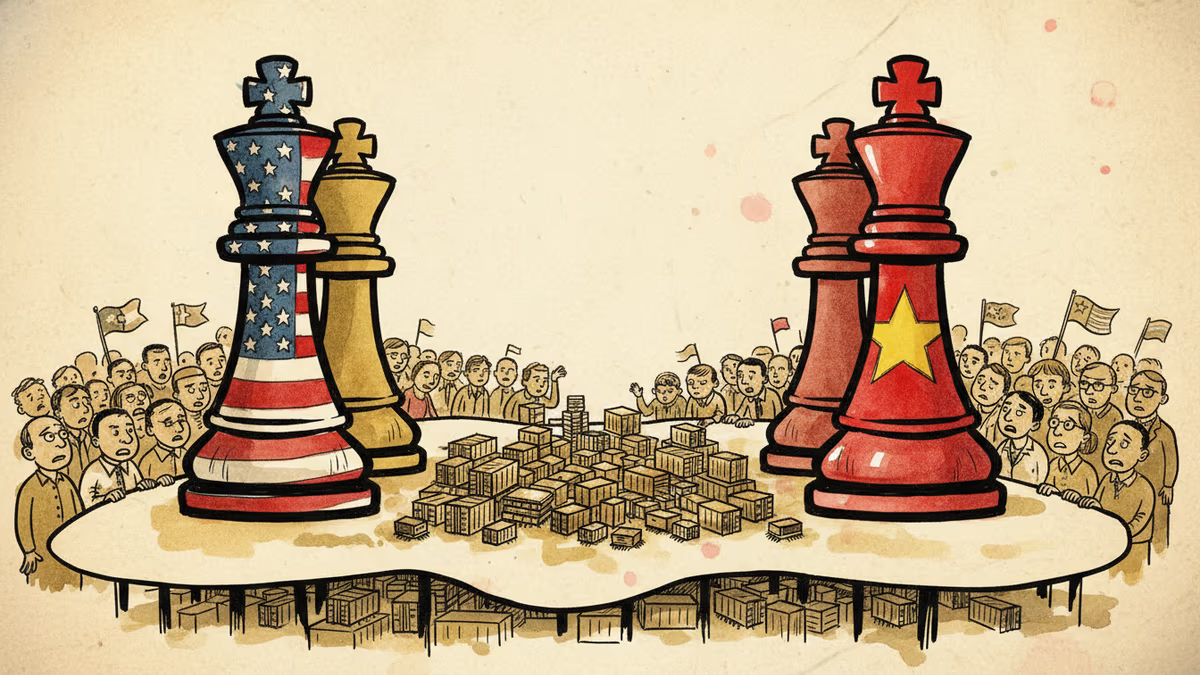
The US president lands in Beijing for a two-day summit. Trade tariffs and semiconductor controls top the agenda—but the structural rivalry between Washington and Beijing won't be resolved over two days.
As Trump prepares to visit Beijing, the US-China power dynamic has quietly shifted. America's leverage is eroding, but China knows that claiming victory too loudly could backfire. A deep dive into the new balance of power.
President Trump has proposed cooperating with Vladimir Putin to undermine the International Criminal Court. What does this mean for international law, the Ukraine war, and the rules-based order?
Trump's Beijing visit was a masterclass in diplomatic theater. Warm handshakes, viral selfies, and noodle runs. But Taiwan, Iran, and rare earths remain untouched. Here's what the spectacle obscures.
The US president lands in Beijing for a two-day summit. Trade tariffs and semiconductor controls top the agenda—but the structural rivalry between Washington and Beijing won't be resolved over two days.
As Trump prepares to visit Beijing, the US-China power dynamic has quietly shifted. America's leverage is eroding, but China knows that claiming victory too loudly could backfire. A deep dive into the new balance of power.
Thoughts
Share your thoughts on this article
Sign in to join the conversation