
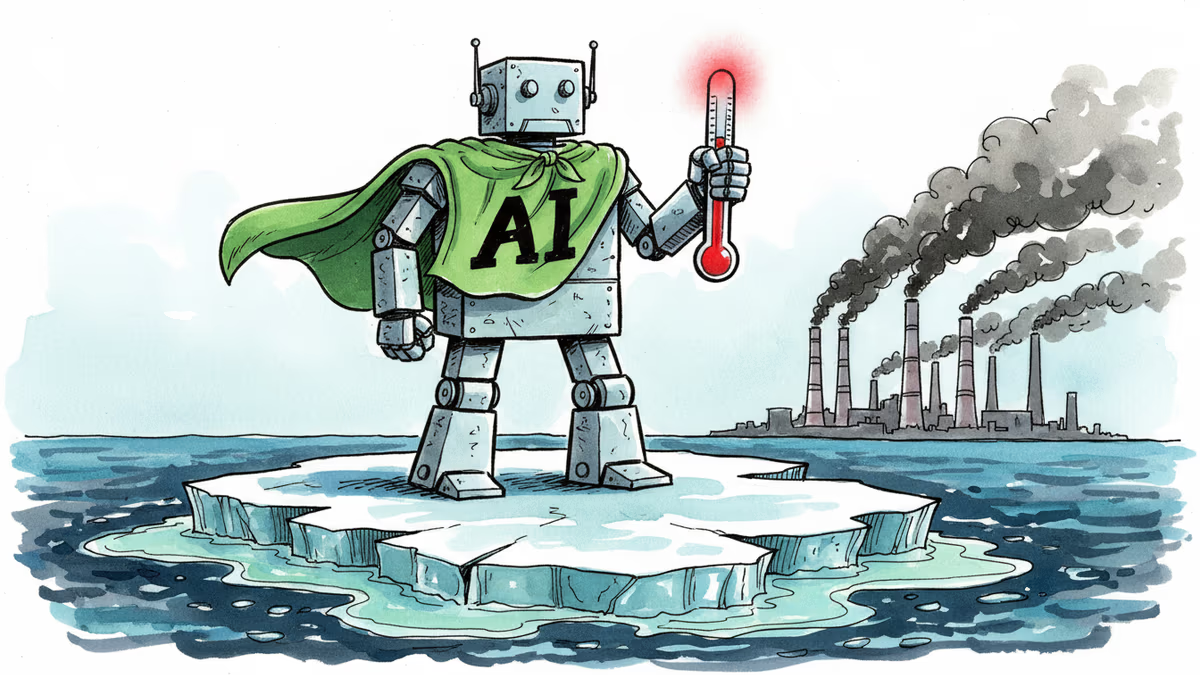
The Shaky Science Behind Big Tech's AI Climate Promises
Google claimed AI could cut global emissions by 5-10%, but the source? A consulting firm's 'client experience.' How solid are tech giants' green AI promises?
The 5-10% Promise That Wasn't
When Google announced that AI could slash global greenhouse gas emissions by 5-10% by 2030, energy researcher Ketan Joshi was stunned. That's equivalent to wiping out the European Union's entire carbon footprint. "There's very few things that can do that," he thought—so he decided to trace the claim's origins.
What he found was shocking. Google's bold assertion traced back to a BCG consulting report from 2021, which based its massive emissions projections on nothing more than the firm's "experience with clients." Joshi called it "flimsy" evidence. The kicker? This analysis predated ChatGPT by a full year—before the energy-intensive AI infrastructure race even began.
When Promises Meet Reality
A few months after touting the 5-10% figure, Google quietly admitted in its 2023 sustainability report that AI development was actually driving up its corporate emissions significantly. Yet the company continues pushing those same BCG numbers to European policymakers, using them to shape AI policy across one of the world's largest markets.
"One of the most powerful tech companies in the world using this metric to make policy recommendations to one of the biggest regions in the world—I thought that was remarkable," says Joshi.
His new report, released Monday, reveals an even broader pattern. Analyzing over 150 claims about AI's climate benefits, he found only 25% were backed by academic research. More than one-third cited no public evidence whatsoever.
The AI Shell Game
Here's where it gets tricky: What exactly do tech companies mean when they say "AI will save the planet"? The AI actually helping with climate issues—flood prediction algorithms, grid efficiency tools, species discovery models—consists largely of traditional machine learning techniques that use relatively little energy.

But the AI driving today's massive data center buildout? That's ChatGPT, Claude, and Google Gemini—energy-hungry generative models that require enormous computing power to train and operate.
"My problem with claims being made by big tech companies around AI and climate change is not that they're not fully quantified, but that they're relying on hypothetical AI that does not exist now," says David Rolnick, chair of Climate Change AI.
The Mismatch Problem
Tech giants routinely tout examples of AI helping detect floods or optimize energy usage—then use these examples to justify building massive language models for consumer chatbots. It's like advertising a Ferrari by showing videos of fuel-efficient hybrid cars.
"The narrative that we need big AI models—and quasi-infinite amounts of energy—tries to sell us the idea that this is the only kind of AI we need," says AI sustainability researcher Sasha Luccioni. Her research, also published Monday, shows that smaller, more efficient models often perform just as well as the energy-guzzling giants.
The Transparency Test
In the US alone, the AI buildout has meant coal plants staying open and hundreds of gigawatts of new gas power coming online, with nearly 100 gigawatts dedicated solely to data centers. Yet we're still working with back-of-the-napkin estimates of how much energy AI actually consumes.
Google only released estimates of its AI prompts' energy use last year. Other companies lag even further behind, or don't release key environmental data about their models at all.
Joshi's solution is straightforward: "If tech companies are worried that people are overstating the climate impacts of generative AI, then there should be nothing stopping them from saying, 'Well, okay, our energy growth this year was six terawatt-hours, and two of them were for generative AI.'"
The Investor's Dilemma
For investors and policymakers, this creates a challenging landscape. Companies like Microsoft, Amazon, and Meta are all making massive infrastructure investments based partly on AI's supposed climate benefits. But if those benefits are largely theoretical while the energy costs are very real, how should capital be allocated?
The risk isn't just financial—it's planetary. If we're betting on hypothetical future AI solutions while building energy-intensive infrastructure today, we might be making the climate problem worse in the short term for uncertain long-term gains.
Authors
Related Articles
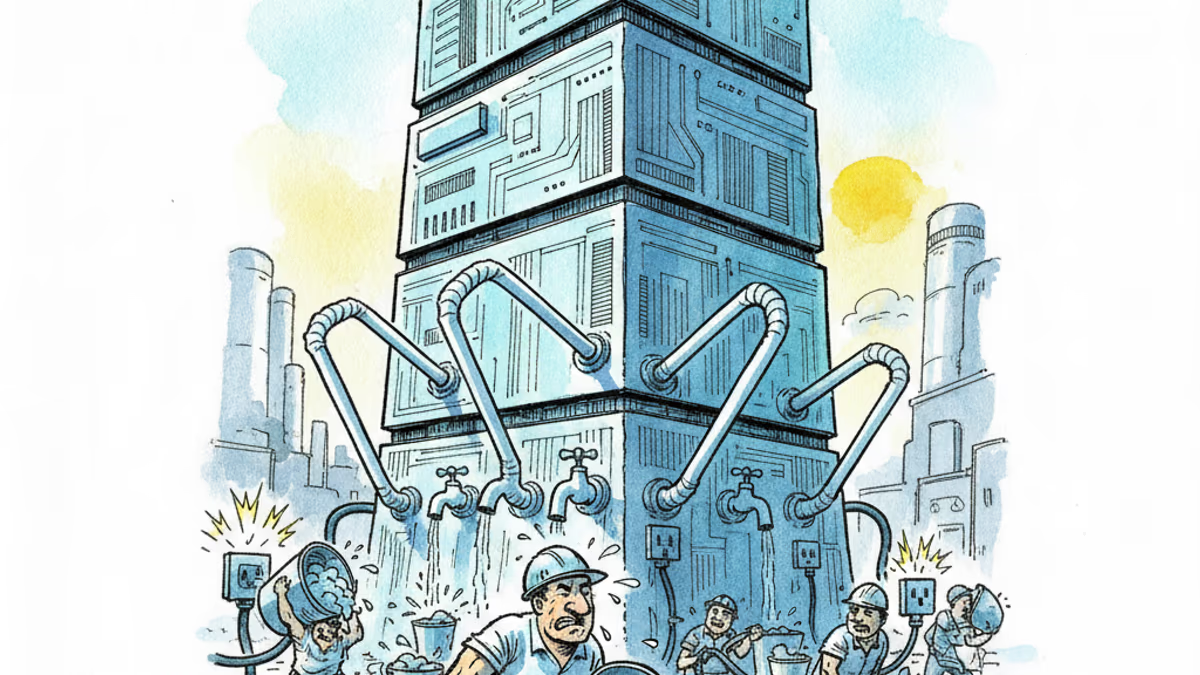
Samsung and SK unveiled a chip and AI investment package worth thousands of trillions of won on June 29. The headline number swings wildly by outlet, but the real contest isn't capital — it's water and power.
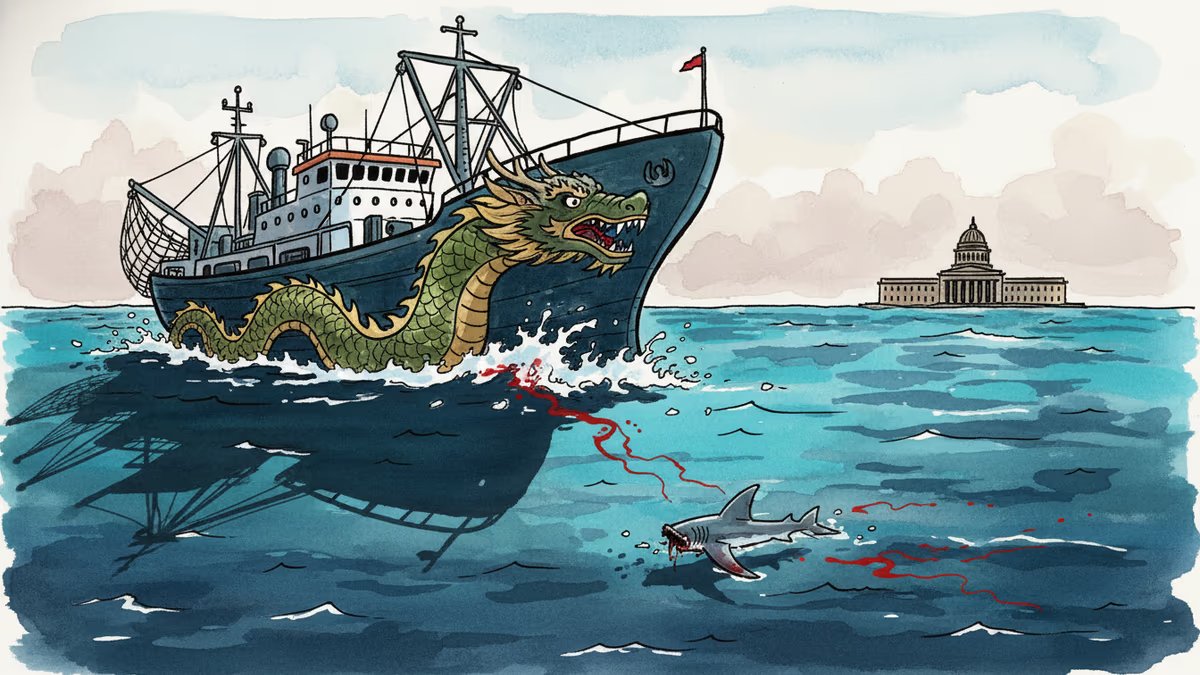
A U.S. nonprofit has petitioned the federal government to sanction China over shark finning. If upheld, it could trigger a ban on all Chinese seafood imports worth $1.5 billion annually.

Viral videos show 2026 graduates jeering executives who praise AI at commencement ceremonies. It's not just rudeness — it's a signal about who pays for technological optimism.

Google's Gmail Live lets you ask your inbox questions out loud. Announced at I/O 2026, it's AI's pitch to skeptics — and a reminder of how much Google already knows about you.
Samsung and SK unveiled a chip and AI investment package worth thousands of trillions of won on June 29. The headline number swings wildly by outlet, but the real contest isn't capital — it's water and power.
A U.S. nonprofit has petitioned the federal government to sanction China over shark finning. If upheld, it could trigger a ban on all Chinese seafood imports worth $1.5 billion annually.
Viral videos show 2026 graduates jeering executives who praise AI at commencement ceremonies. It's not just rudeness — it's a signal about who pays for technological optimism.
Google's Gmail Live lets you ask your inbox questions out loud. Announced at I/O 2026, it's AI's pitch to skeptics — and a reminder of how much Google already knows about you.
Thoughts
Share your thoughts on this article
Sign in to join the conversation