

Sequoia's 'Spiky' Partner Problem Is a Litmus Test For Its New Leadership
Sequoia partner Shaun Maguire's false accusation is more than a PR crisis. It's a test for new leadership and exposes a strategic schism in venture capital.
The Lede: Beyond the Tweetstorm
A partner at Sequoia Capital, one of the most powerful venture firms on the planet, recklessly spread dangerous misinformation, falsely accusing a student of a mass shooting. This isn't just another tech-bro controversy; it's a critical moment of truth for Sequoia's new leadership. For founders and investors, this episode is a stark case study in the escalating battle between personal brand, firm reputation, and the very culture of venture capital. The real question isn't about one partner's posts, but whether Sequoia is deliberately cultivating a controversial, 'spiky' culture to win in an increasingly polarized tech landscape.
Why It Matters: The Ripple Effects of a 'Spiky' Strategy
The immediate fallout from Shaun Maguire's actions is a brand crisis. However, the second-order effects are far more significant and pose a direct challenge to new managing partners Alfred Lin and Pat Grady:
- Talent and Culture Fracture: The reported departure of COO Sumaiya Balbale over Sequoia's prior inaction on Maguire's anti-Muslim comments reveals a deep internal rift. Tolerating this behavior signals to employees, potential hires, and the broader market what the firm values. It makes attracting and retaining diverse senior talent exponentially harder.
- Deal Flow Alienation: While a 'spiky' profile might attract certain founders, it repels countless others. Founders are increasingly choosing investors based on values alignment. Sequoia risks being shut out of deals with diverse teams or those building inclusive products who see the firm's silence as tacit endorsement.
- Limited Partner (LP) Scrutiny: LPs—the pension funds, endowments, and sovereign wealth funds that fuel VC—are under increasing pressure to adhere to ESG and ethical standards. A partner's public pattern of spreading misinformation and inflammatory rhetoric creates a significant reputational risk that LPs cannot easily ignore.

The Analysis: The 'Botha Doctrine' and Sequoia's Identity Crisis
This incident throws Sequoia's internal philosophy into sharp relief. Former leader Roelof Botha's defense of Maguire wasn't an apology; it was a declaration of strategy. By labeling Maguire a "spiky" personality who appeals to a "specific profile" of founder, Botha articulated what we can call the 'Botha Doctrine': the idea that embracing controversial, aggressive partners is a competitive advantage for winning deals with iconoclastic (and often similarly controversial) founders, such as Elon Musk, in whose companies Maguire is deeply embedded.
This doctrine represents a fundamental shift. Historically, top-tier VCs cultivated an aura of quiet competence and institutional stability. Now, firms are grappling with a new playbook, heavily influenced by the likes of Andreessen Horowitz, where a loud, contrarian, and often politically-charged media presence is central to the brand. Sequoia, a legacy brand, appears to be caught in a tug-of-war. Is it the venerable institution of old, or is it adopting the brawler tactics of its competitors to stay relevant in sectors like defense tech and hard-tech AI, where Maguire specializes?
Botha's admission that this approach "comes with trade-offs" was a massive understatement. The trade-off is the firm's soul. The new leadership of Lin and Grady now inherits this doctrine and must decide if the access Maguire provides to the Musk ecosystem is worth the collateral damage to the firm's global brand and internal cohesion.
PRISM's Take: Inaction Is a Decision
The defense of "free speech" is a red herring. The core issue is a conscious strategic choice. For Sequoia's new leadership, silence is not a neutral position; it is a decision. By failing to act decisively, Lin and Grady are de facto endorsing the 'Botha Doctrine' and signaling that the financial upside of a 'spiky' partner outweighs the profound cultural and reputational costs.
This is more than a test of PR management. It is a defining moment that will shape Sequoia's identity for the next decade. It forces LPs, founders, and the tech community to ask a difficult question: What does the Sequoia Capital brand actually stand for in 2024 and beyond? Right now, the answer is dangerously unclear.
Authors
Related Articles
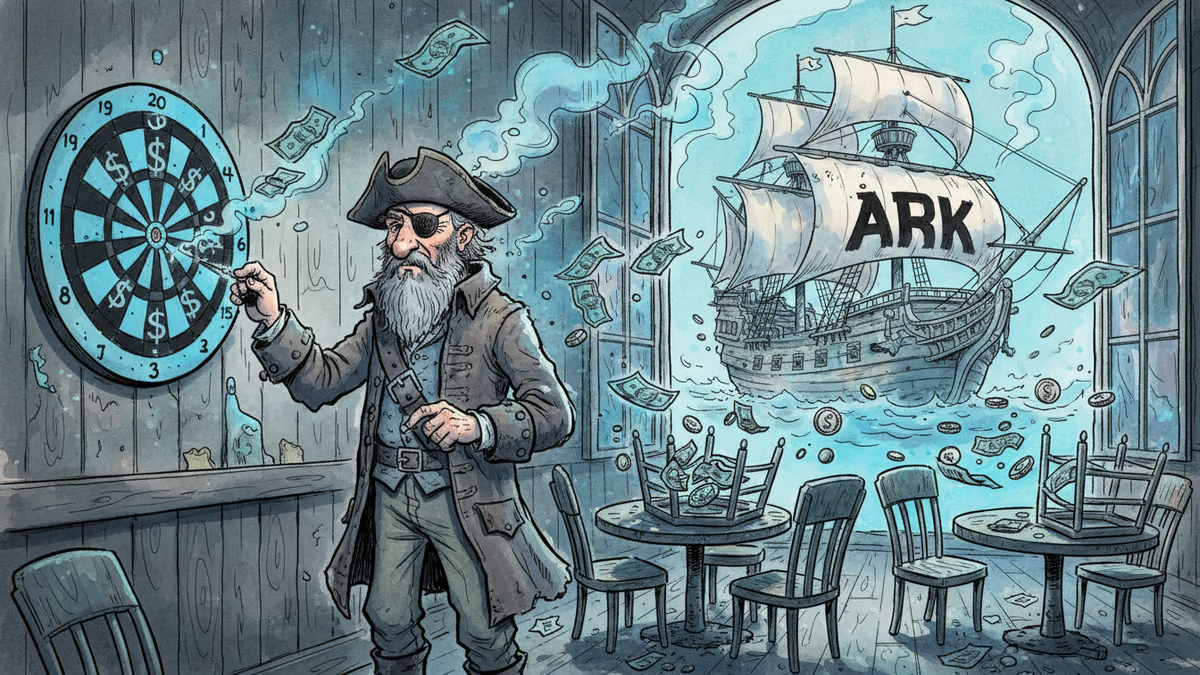
Lucra Sports CEO Dylan Robbins landed Cathie Wood's ARK Invest as a Series B lead without building AI. The story behind his unconventional fundraising playbook.
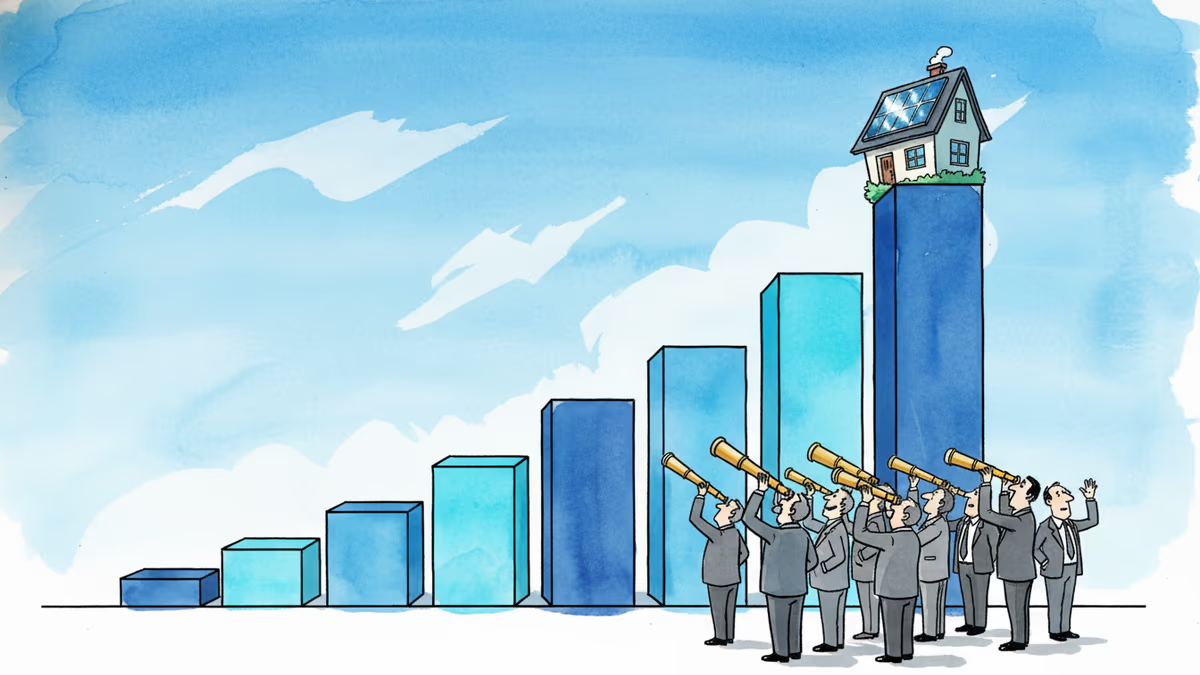
SolarSquare is raising $55-60M at a $450-500M valuation, more than doubling its worth in 18 months. Here's what's driving investor conviction in India's residential solar market.
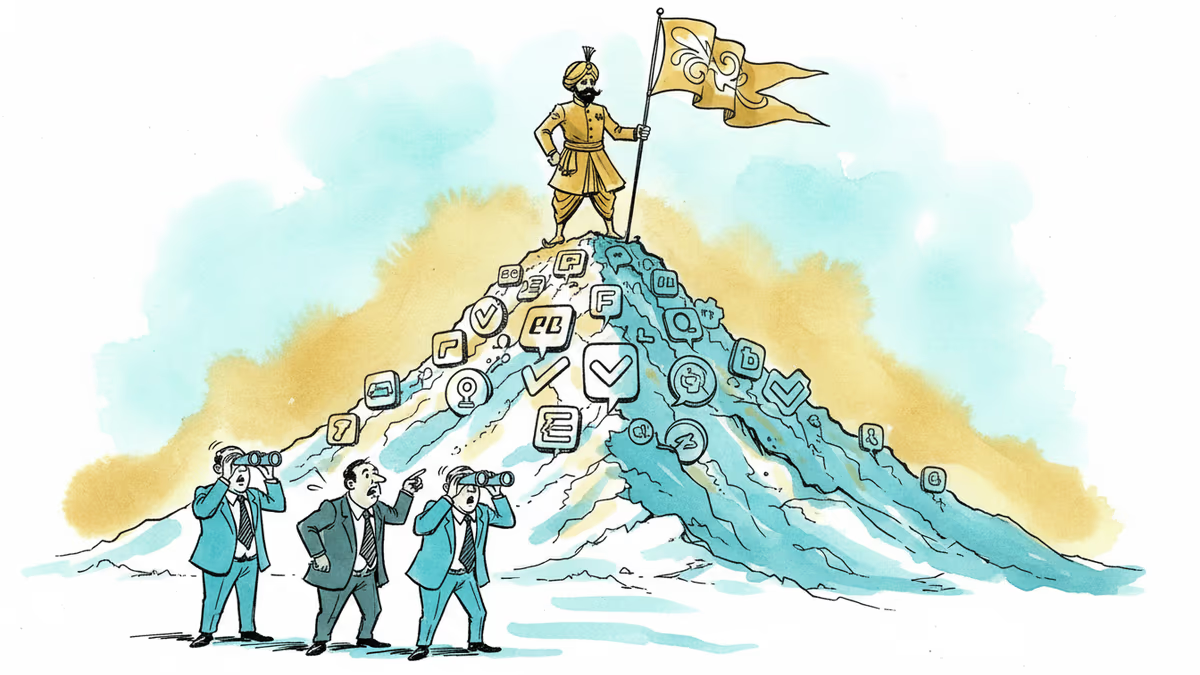
Indian venture capital has quietly displaced Silicon Valley in its own backyard. Only one American VC made India's top 10 investor list last year. Here's why that matters beyond India.
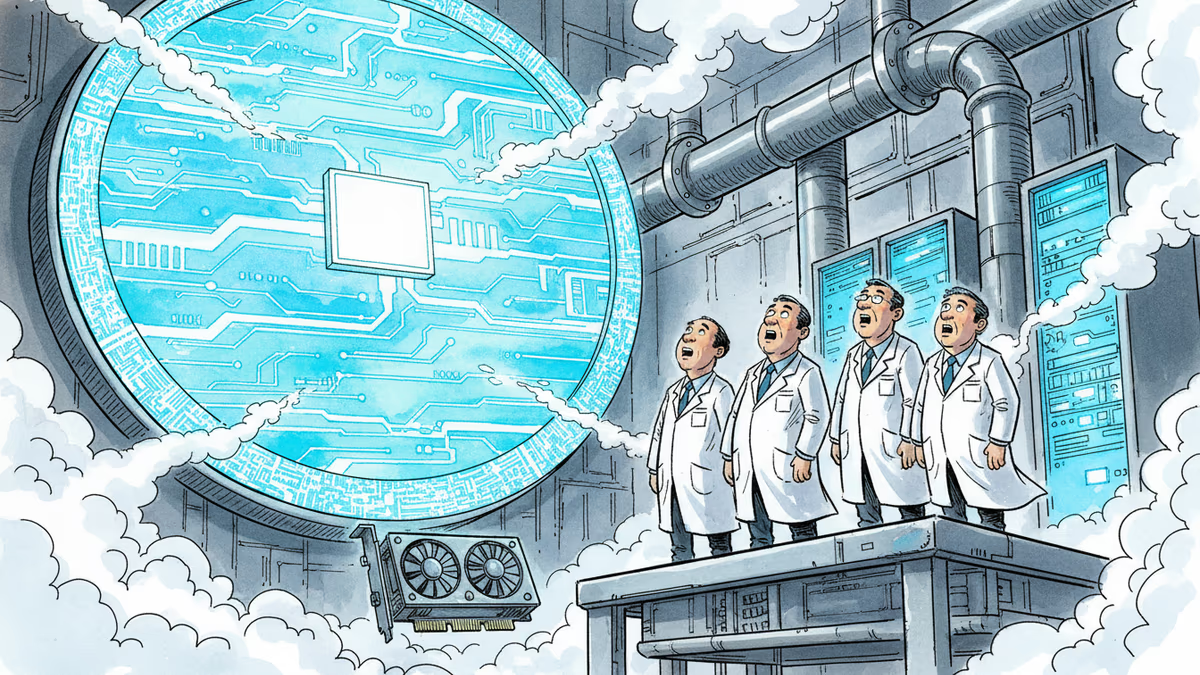
Cerebras Systems IPO yields a $5.3 billion return for Benchmark. Explore the 8.5-year journey from a reluctant first meeting to challenging Nvidia's AI dominance.
Lucra Sports CEO Dylan Robbins landed Cathie Wood's ARK Invest as a Series B lead without building AI. The story behind his unconventional fundraising playbook.
SolarSquare is raising $55-60M at a $450-500M valuation, more than doubling its worth in 18 months. Here's what's driving investor conviction in India's residential solar market.
Indian venture capital has quietly displaced Silicon Valley in its own backyard. Only one American VC made India's top 10 investor list last year. Here's why that matters beyond India.
Cerebras Systems IPO yields a $5.3 billion return for Benchmark. Explore the 8.5-year journey from a reluctant first meeting to challenging Nvidia's AI dominance.
Thoughts
Share your thoughts on this article
Sign in to join the conversation