
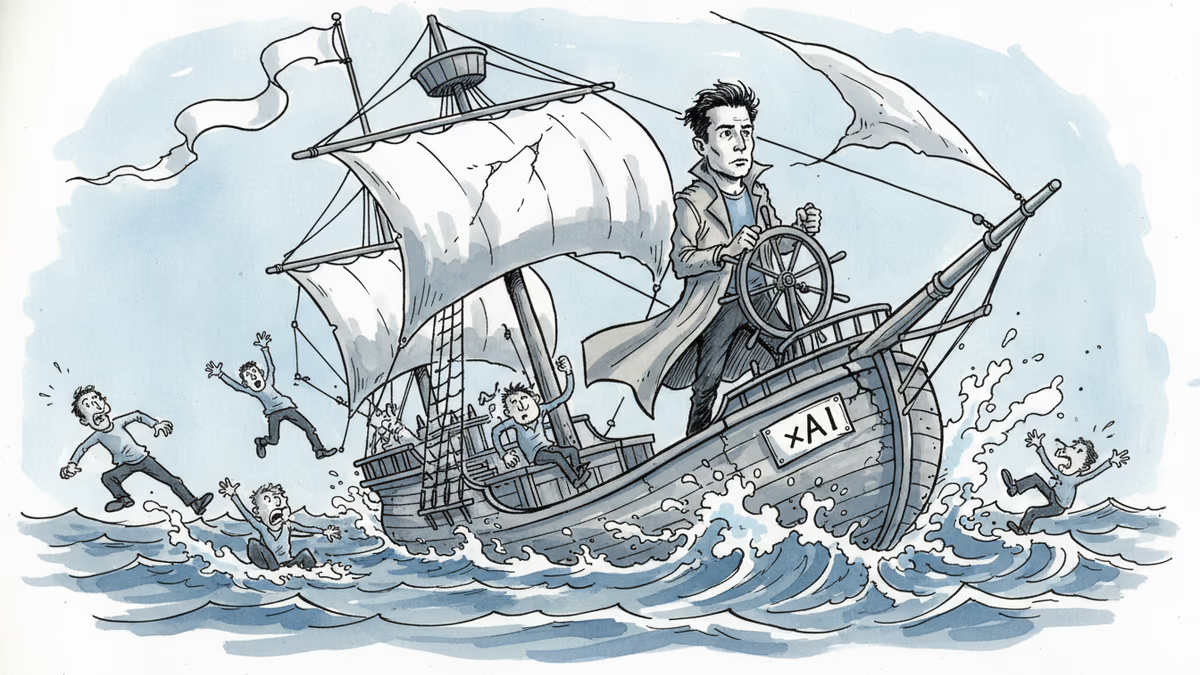
Half of xAI's Founders Just Walked Out in One Week
Nine engineers including two co-founders left xAI in seven days. Is Musk's AI empire showing cracks?
When Half Your Founding Team Says Goodbye
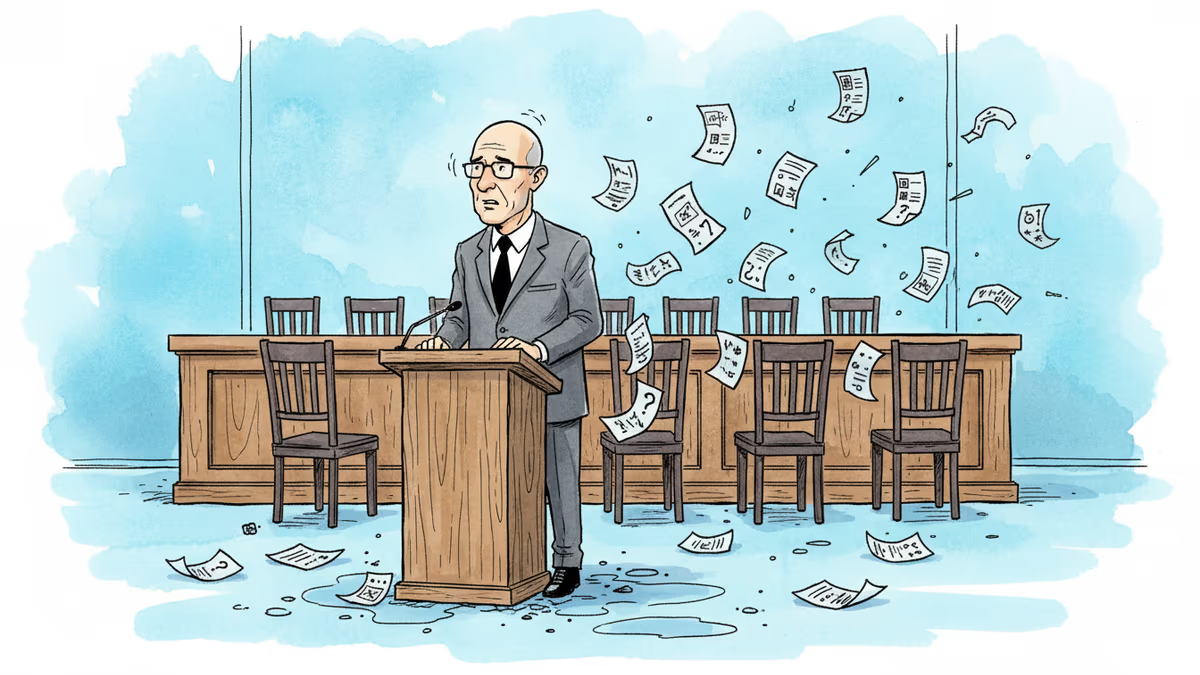
Nine engineers, including two co-founders, publicly announced their departure from xAI in the past week. That's more than half of the original founding team—gone. While startup churn is normal, co-founder exodus isn't.
Their farewell messages share a telling pattern: "small teams can move mountains," "era of full possibilities," "starting something new." The subtext? They believe they can build faster elsewhere.
Yuhai (Tony) Wu, co-founder and reasoning lead, put it bluntly: "It's time for my next chapter. A small team armed with AIs can move mountains and redefine what's possible." Translation: xAI isn't small anymore, and that's the problem.
Perfect Storm, Worst Timing
The timing couldn't be worse for Musk's AI ambitions. xAI is preparing for an IPO later this year and was just legally acquired by SpaceX last week. Meanwhile, the company faces regulatory scrutiny after Grok created nonconsensual explicit deepfakes that spread across X.
Then there's Musk's personal baggage. Justice Department files revealed his extended conversations with convicted sex trafficker Jeffrey Epstein, including discussions about visiting Epstein's island in 2012 and 2013—years after Epstein's 2008 conviction for procuring a child for prostitution.

The Talent Wars Heat Up
For competitors like OpenAI, Anthropic, and Google, this is Christmas morning. Top-tier AI talent doesn't just walk away from billion-dollar companies without reason. Three departing engineers are already starting "something new" with other former xAI colleagues.
Valid Kazemi, who left weeks ago, was particularly blunt: "All AI labs are building the exact same thing, and it's boring." That's not just criticism—it's a market signal. The most creative minds in AI are looking for differentiation, not incremental improvements.
The ripple effects extend beyond Silicon Valley. With 1,000+ employees, xAI won't collapse overnight. But in frontier AI, where talent scarcity defines competitive advantage, institutional stability matters as much as computing power.
The Musk Factor
This raises uncomfortable questions about Musk's management style in AI. His approach worked for Tesla and SpaceX—industries where hardware constraints and regulatory approval create natural development cycles. But AI research operates differently. It requires sustained focus, collaborative iteration, and often, patience.
Shayan Salehian, who worked on product infrastructure, praised Musk's "obsessive attention to detail" and "maniacal urgency" while announcing his departure. That's diplomatic corporate speak for: great boss, wrong fit.
Authors
Related Articles
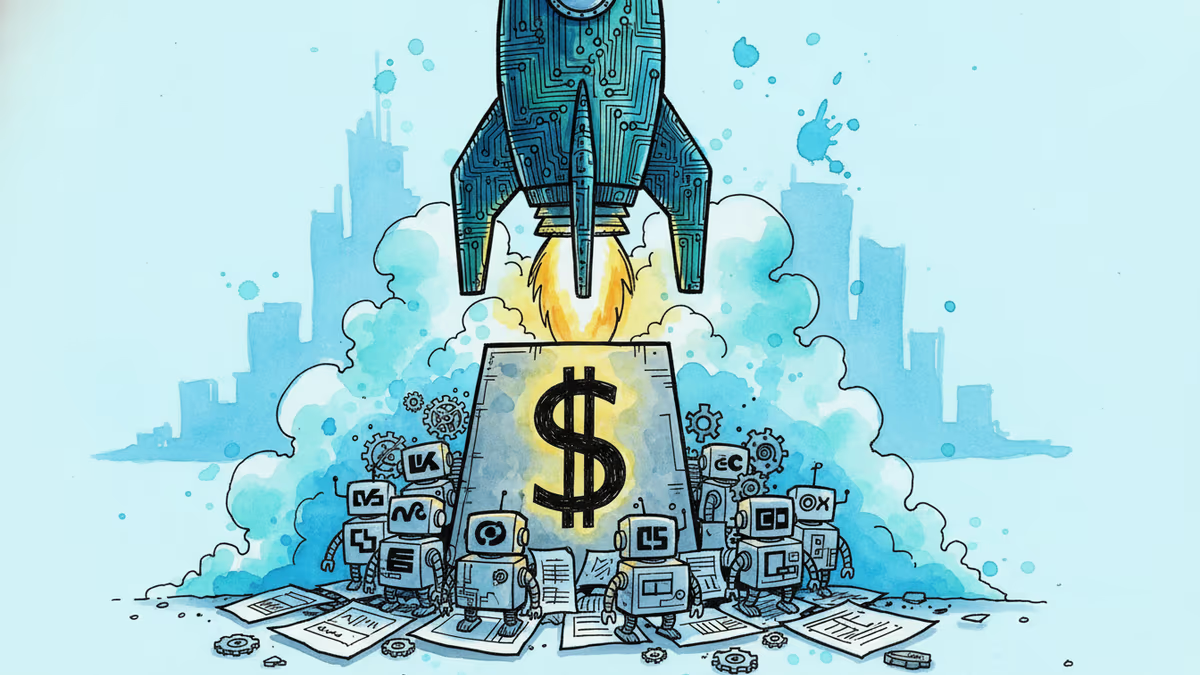
SpaceX's IPO filing puts AI at the center, claiming a $26.5 trillion market opportunity. But can Grok compete with OpenAI and Anthropic for enterprise customers?
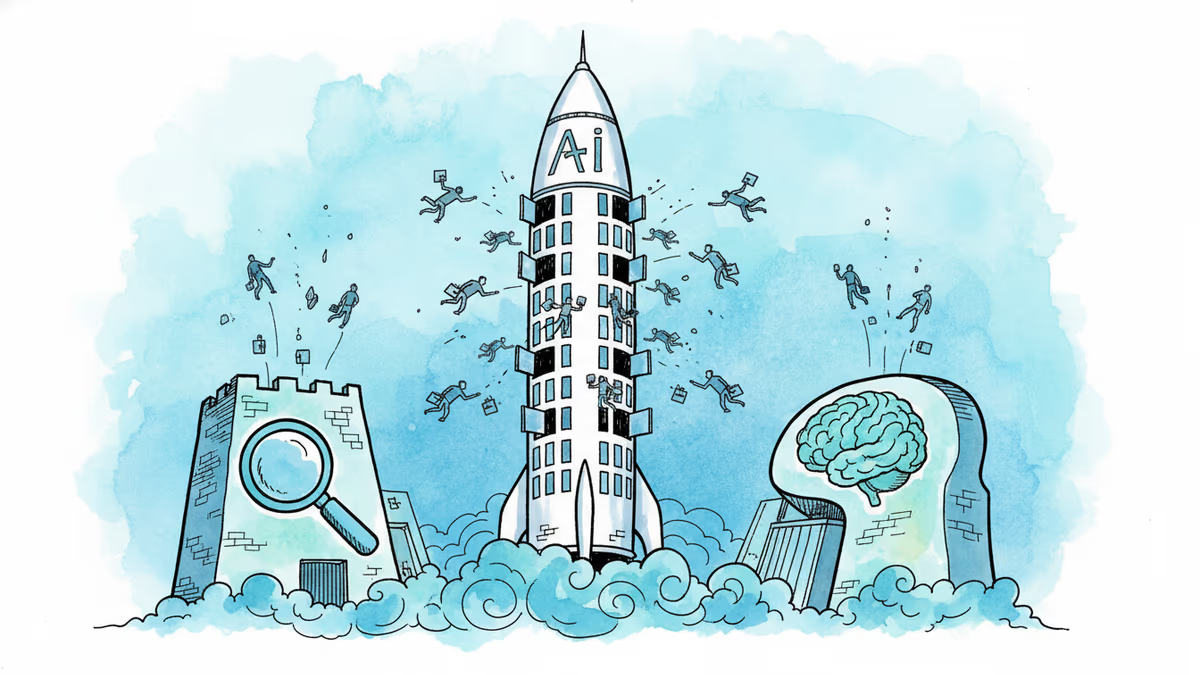
Over 50 researchers and engineers have left SpaceXAI since February's merger. With the pre-training team nearly gutted, questions mount about whether Musk's AI ambitions can survive his management style.
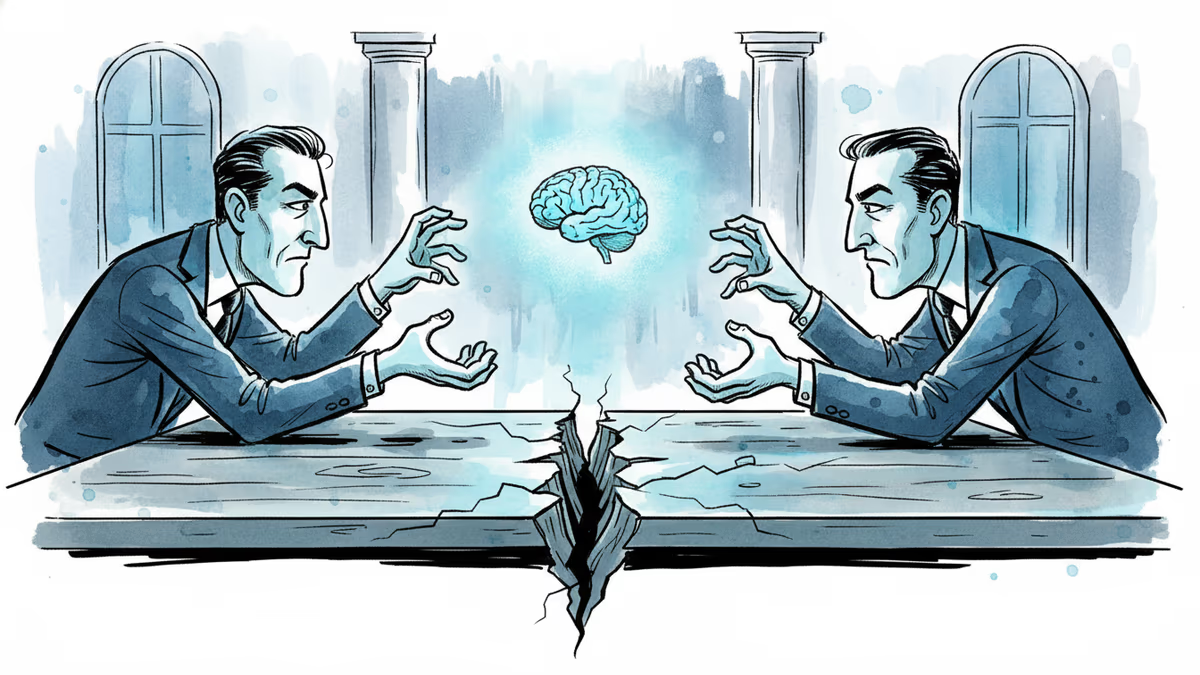
Week two of Musk v. Altman revealed a 2017 power struggle over AGI control, a stormed-out Tesla painting, and a diary entry asking 'what will take me to $1B?
The Musk vs. Altman OpenAI trial opened with a jury selection crisis. Prospective jurors called Musk a 'world-class jerk' on official court forms. What does that tell us?
SpaceX's IPO filing puts AI at the center, claiming a $26.5 trillion market opportunity. But can Grok compete with OpenAI and Anthropic for enterprise customers?
Over 50 researchers and engineers have left SpaceXAI since February's merger. With the pre-training team nearly gutted, questions mount about whether Musk's AI ambitions can survive his management style.
Week two of Musk v. Altman revealed a 2017 power struggle over AGI control, a stormed-out Tesla painting, and a diary entry asking 'what will take me to $1B?
The Musk vs. Altman OpenAI trial opened with a jury selection crisis. Prospective jurors called Musk a 'world-class jerk' on official court forms. What does that tell us?
Thoughts
Share your thoughts on this article
Sign in to join the conversation