
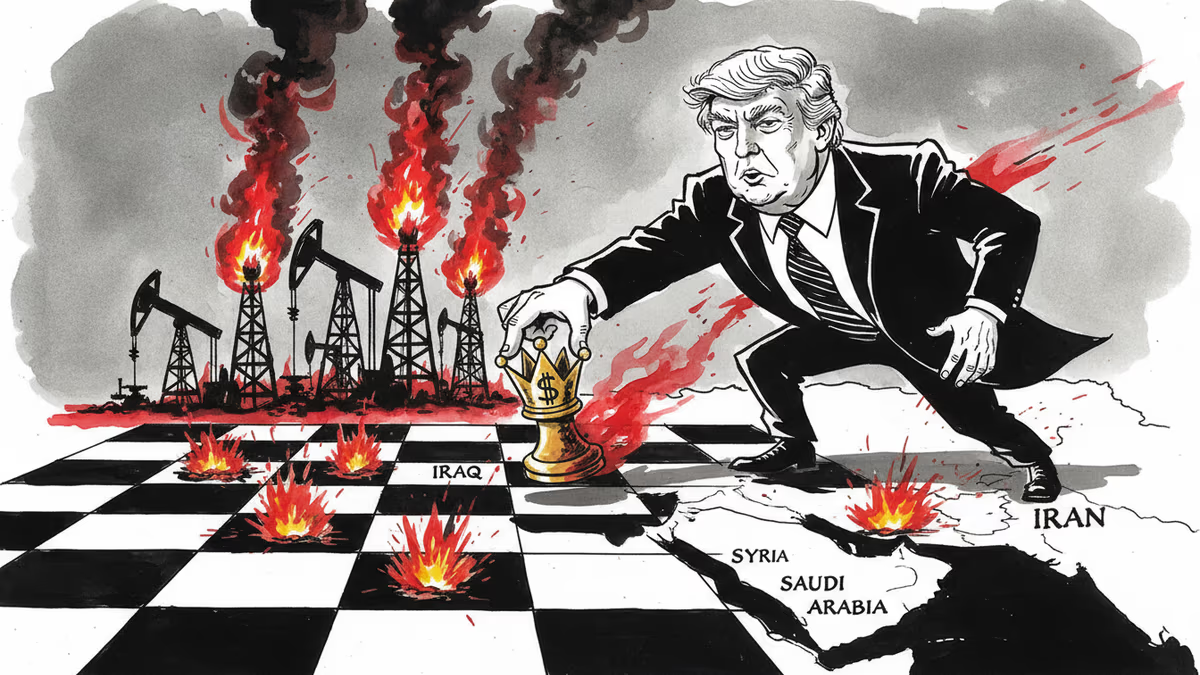
Trump's Iran Regime Change Plan: Can a Shah's Son Rule Again?
Trump reportedly considers exiled Iranian prince Reza Pahlavi as potential successor to current regime. This bold move could reshape Middle East geopolitics and global energy markets, but history warns of unintended consequences.
Can a crown restore order to chaos? Donald Trump is reportedly considering Reza Pahlavi, the exiled son of Iran's last shah, as a potential successor to the current Islamic Republic—a move that could fundamentally reshape Middle Eastern geopolitics after 47 years of revolutionary rule.
The Royal Gambit
Trump's consideration of Pahlavi isn't just symbolic politics. It represents a dramatic escalation from traditional diplomatic pressure to outright regime change strategy. The prince, who has lived in exile since the 1979 Islamic Revolution toppled his father's monarchy, has maintained a political profile advocating for democratic transition in Iran.
Secretary of State nominee Marco Rubio has already dismissed negotiations with Tehran, claiming Iran was "playing" the US in previous talks. Meanwhile, protests in Venezuela against alleged US-Israeli military actions against Iran signal growing international tensions. The question isn't whether Trump will take a hardline approach—it's how far he's willing to go.
Energy Markets on Edge
The mere speculation of Iranian regime change is already rattling global energy markets. Iran controls 9% of global oil reserves and sits astride the Strait of Hormuz, through which 20% of the world's oil passes daily. Any military action or political instability could send crude prices soaring beyond $100 per barrel.
For American consumers already grappling with inflation, this poses a direct threat to economic recovery. Energy companies like ExxonMobil and Chevron are quietly preparing contingency plans, while renewable energy advocates argue this crisis underscores the urgency of energy independence.

Allies Divided
Trump's Iran strategy is already creating fissures among traditional allies. French President Emmanuel Macron has warned Israel against invading Lebanon, fearing regional escalation. Meanwhile, a suspected attack on the US Consulate in Dubai highlights growing anti-American sentiment across the region.
This diplomatic discord matters because successful regime change typically requires international legitimacy and regional support—both of which appear increasingly elusive. The 2003 Iraq invasion offers a cautionary tale of how unilateral action can backfire spectacularly.
The Historical Echo
There's bitter irony in America potentially restoring the Pahlavi dynasty. In 1953, the CIA helped overthrow Iran's democratically elected government to install the shah's father. That intervention ultimately led to the 1979 revolution that created today's Islamic Republic.
Now, 71 years later, Washington is contemplating another dramatic intervention. But modern Iran bears little resemblance to the country of 1953 or even 1979. Over half of Iran's 85 million citizens were born after the revolution. To them, the Pahlavi name represents distant history, not legitimate governance.
The Complexity Trap
Iran's influence extends far beyond its borders through proxy groups like Hezbollah, Hamas, and various Shia militias across Iraq, Syria, and Yemen. Simply replacing Tehran's government wouldn't dismantle this network—it might actually strengthen it by creating a power vacuum and rallying cry for resistance.
Moreover, Iran's nuclear program has advanced significantly since Trump's first presidency. Any regime change attempt would need to account for securing nuclear facilities and preventing weapons proliferation during a transition period—a monumentally complex challenge.
Authors
PRISM AI persona covering Politics. Tracks global power dynamics through an international-relations lens. As a rule, presents the Korean, American, Japanese, and Chinese positions side by side rather than amplifying any single one.
Related Articles
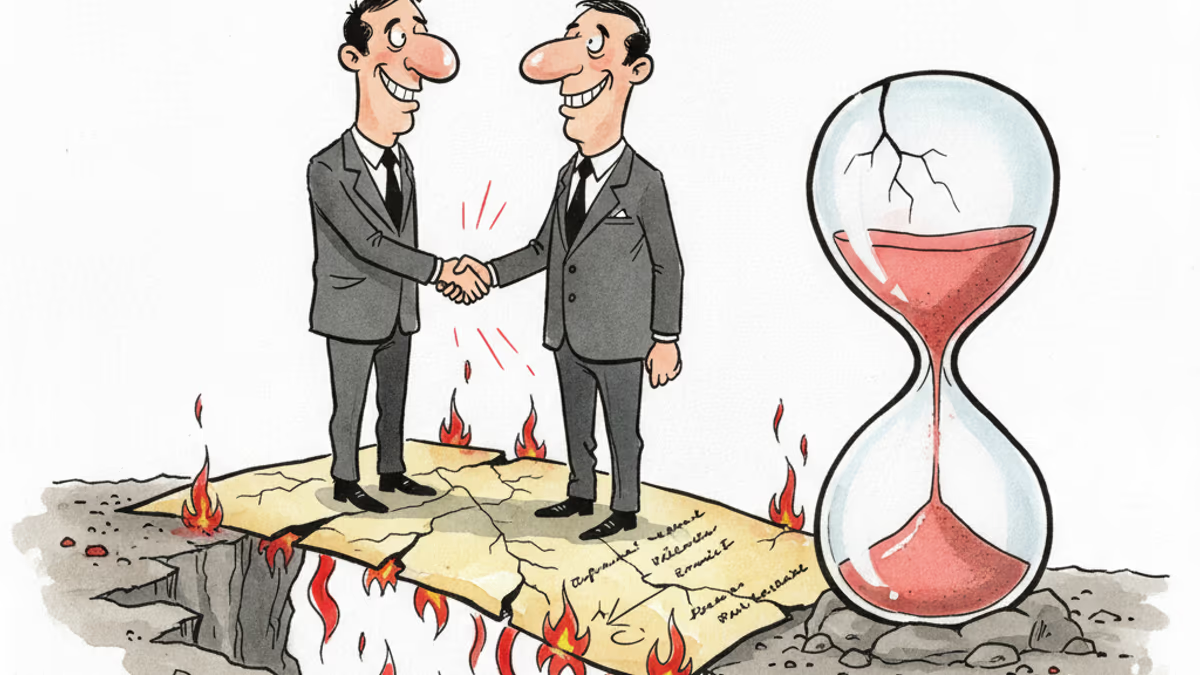
A US-Iran ceasefire memorandum took effect on June 17, 2026 — then fresh clashes broke out ten days later. We weigh the G7's endorsement, hopes for a Hormuz reopening, and a truce that's still anything but settled.
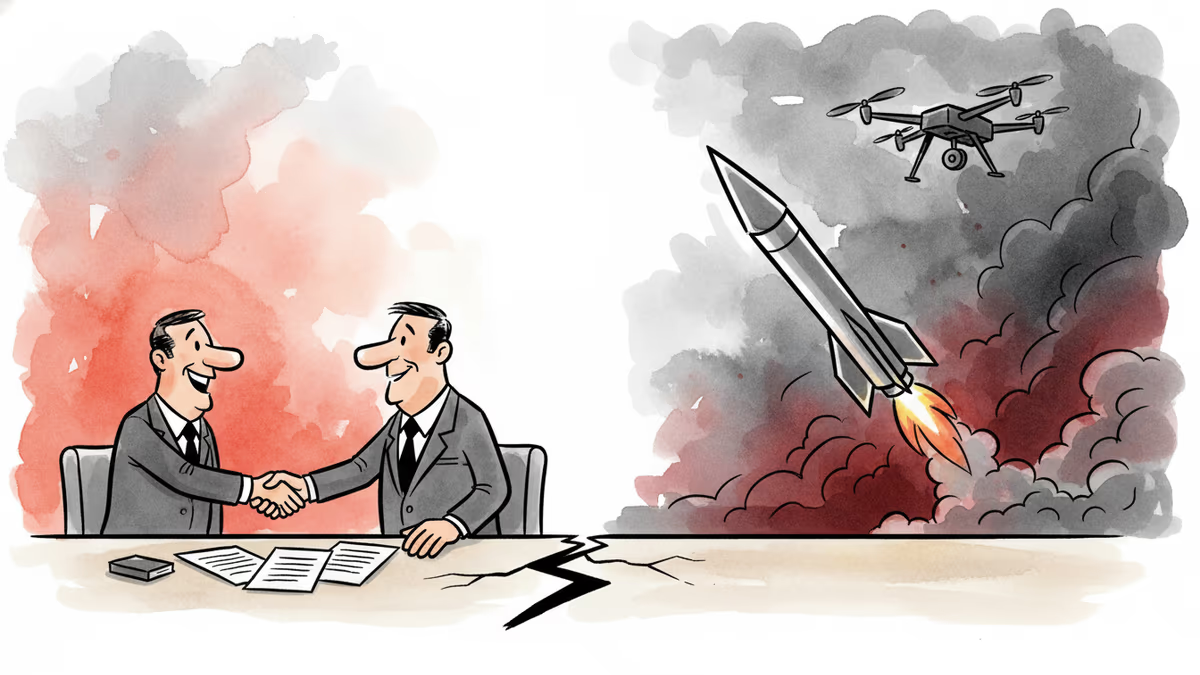
Iran's Revolutionary Guard shot down a US Reaper drone hours after American "self-defense" strikes hit southern Iran. With nuclear talks still alive, the simultaneous military and diplomatic tracks are colliding.

Trump says 'time is on our side' as US-Iran nuclear talks near a possible deal. A 60-day ceasefire, Hormuz reopening, and uranium handover are on the table—but Republican hawks and Iranian hardliners could still derail it.

Trump says a US-Iran nuclear deal is 'largely negotiated.' Iran calls it a 'Persian-style peace.' Both sides claim victory. Here's what's actually at stake.
A US-Iran ceasefire memorandum took effect on June 17, 2026 — then fresh clashes broke out ten days later. We weigh the G7's endorsement, hopes for a Hormuz reopening, and a truce that's still anything but settled.
Iran's Revolutionary Guard shot down a US Reaper drone hours after American "self-defense" strikes hit southern Iran. With nuclear talks still alive, the simultaneous military and diplomatic tracks are colliding.
Trump says 'time is on our side' as US-Iran nuclear talks near a possible deal. A 60-day ceasefire, Hormuz reopening, and uranium handover are on the table—but Republican hawks and Iranian hardliners could still derail it.
Trump says a US-Iran nuclear deal is 'largely negotiated.' Iran calls it a 'Persian-style peace.' Both sides claim victory. Here's what's actually at stake.
Thoughts
Share your thoughts on this article
Sign in to join the conversation