
Congress Funds Everything Except Homeland Security in Immigration Standoff
Senate passes budget for all federal agencies except DHS, giving it a two-week extension while negotiating new ICE restrictions. A new form of targeted political pressure.
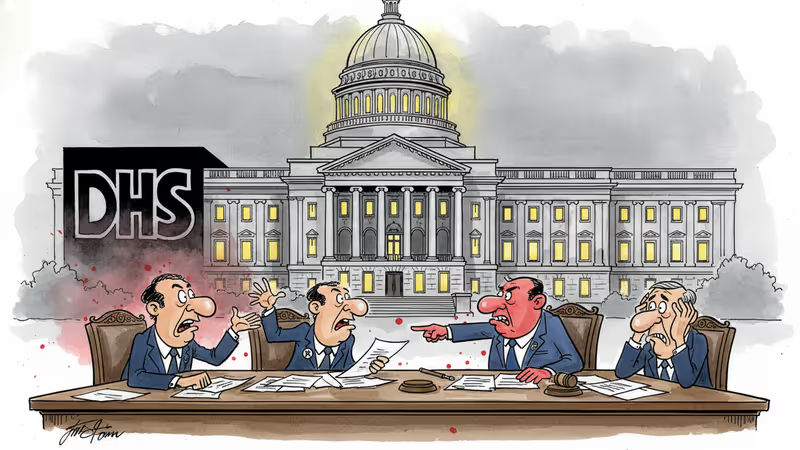
Congress just pulled off something unusual: they funded the entire federal government except for one agency. The Department of Homeland Security got a two-week lifeline while lawmakers hash out new restrictions on Immigration and Customs Enforcement (ICE). The Senate's 71-29 vote Friday night wasn't just about budgets—it was about wielding shutdown threats as surgical political instruments.
Why Single Out Homeland Security
Senate Democrats, led by Chuck Schumer, made their priorities crystal clear. They want "guardrails" around ICE operations—essentially putting limits on how aggressively the agency can conduct immigration enforcement. This isn't about whether to fund DHS, but about what conditions come with that funding.
The strategy worked because Democrats maintained enough leverage in the Senate to force negotiations. While Republicans control the House, Senate Democrats presented a united front and engaged in what sources described as "frenzied negotiations" with both their GOP counterparts and the White House.
But the clock is ticking. DHS operates without funding over the weekend, waiting for the House to reconvene Monday. If no deal emerges in two weeks, the department faces a shutdown—affecting everything from cybersecurity to border operations.
The New Politics of Selective Pressure

This represents an evolution in how Congress uses funding as leverage. Instead of threatening a government-wide shutdown—which typically backfires politically—lawmakers are now targeting specific agencies to maximize pressure while minimizing public disruption.
The immigration debate remains one of America's most polarizing issues, with Democrats pushing for humanitarian reforms and Republicans demanding stricter border control. By isolating DHS funding, Democrats found a way to force this conversation without shutting down popular services like national parks or Social Security.
This tactical shift matters beyond this specific dispute. If successful, expect more "surgical shutdowns" targeting individual departments to extract policy concessions. It's a more precise political weapon than the blunt instrument of full government closures.
Broader Implications for Governance
The move signals how deeply immigration policy has penetrated budget negotiations. What should be routine government funding has become a vehicle for broader policy battles. This reflects the increasing difficulty of passing standalone immigration legislation in a polarized Congress.
For businesses and individuals who interact with DHS—from airports to cybersecurity firms—this creates operational uncertainty. Even a brief shutdown can disrupt contracts, delay security clearances, and interrupt critical infrastructure protection.
The international implications are also significant. DHS coordinates with foreign partners on counterterrorism and cybersecurity. Extended funding uncertainty could affect these relationships and America's ability to respond to security threats.
Authors
Related Articles
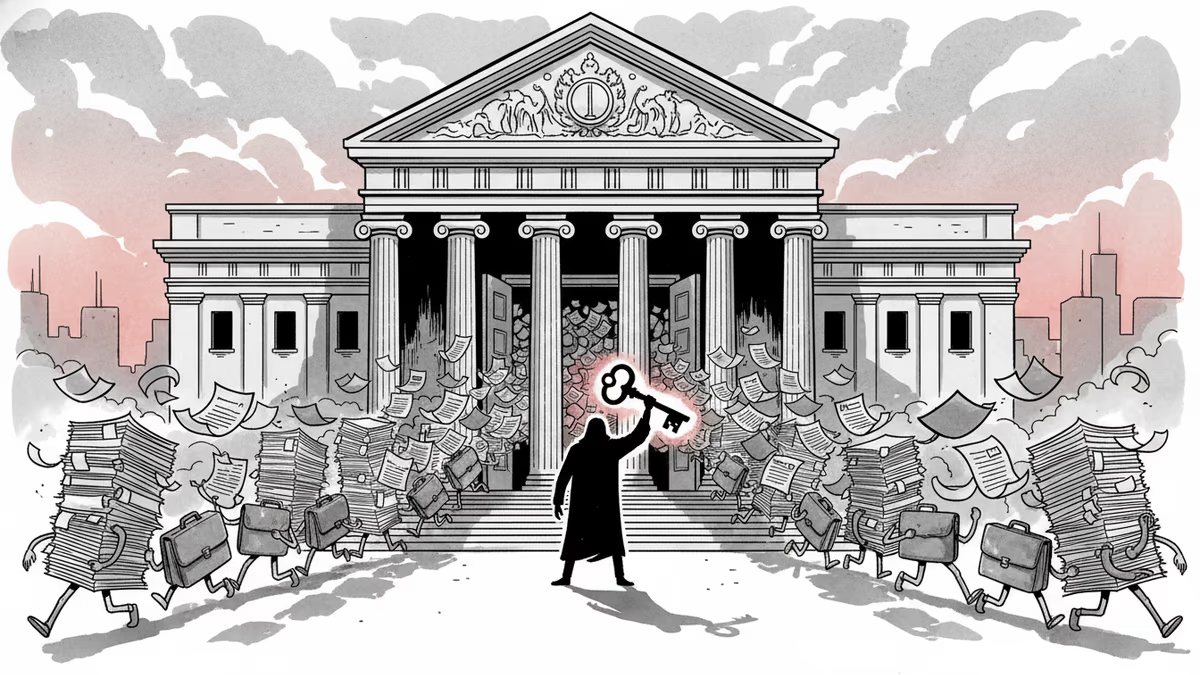
The Trump administration has gutted the DOJ's Voting Section, pushing out two dozen experienced lawyers and replacing them with loyalists. With 2026 midterms approaching, what does this mean for American democracy?
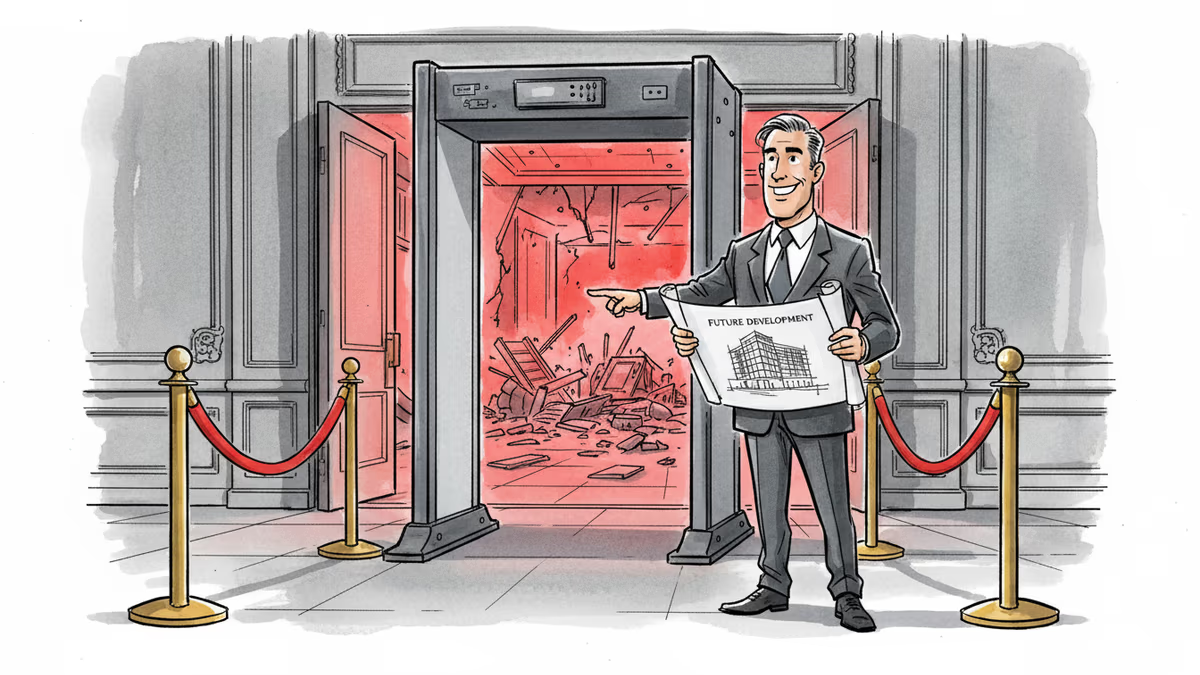
A gunman attacked a Secret Service checkpoint at the White House Correspondents' Dinner. Trump's first public reaction wasn't about security. It was about his $400M ballroom project.
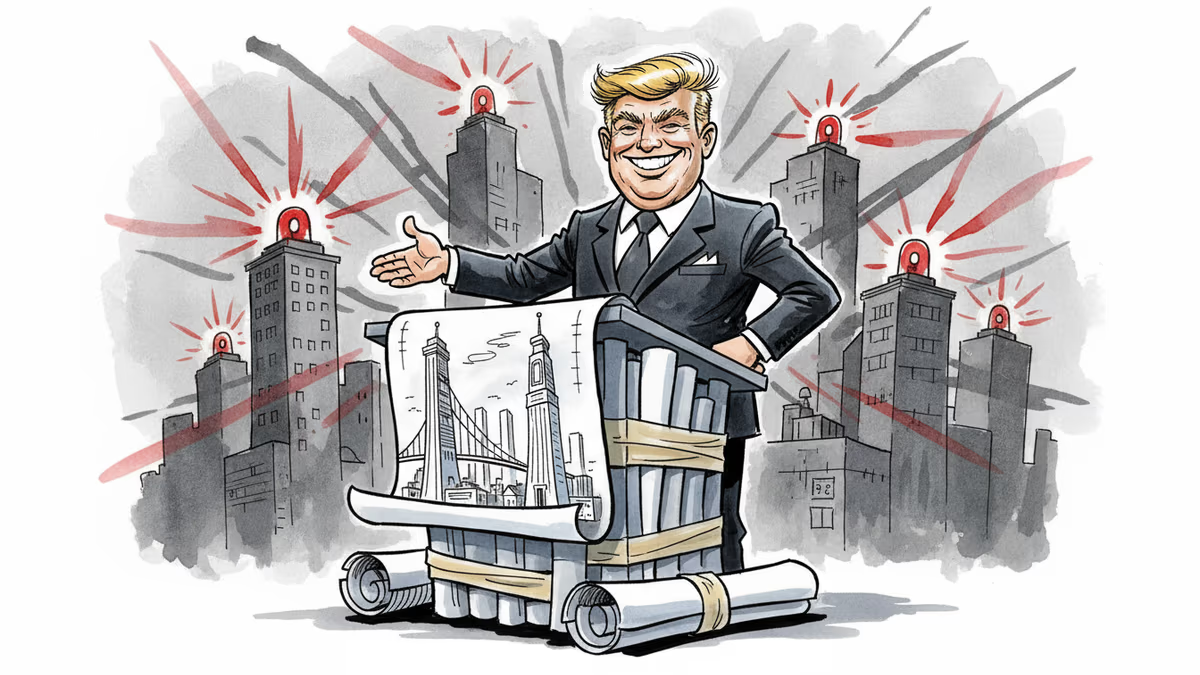
Hours after an armed suspect attempted to breach the White House Correspondents Dinner, Trump used the security scare to publicly defend his White House ballroom project. What does that tell us?
Dr. Erica Schwartz, a pro-vaccine physician with an unimpeachable public health résumé, is Trump's third CDC director nominee—a quiet but pointed rebuke of RFK Jr.'s agenda.
The Trump administration has gutted the DOJ's Voting Section, pushing out two dozen experienced lawyers and replacing them with loyalists. With 2026 midterms approaching, what does this mean for American democracy?
A gunman attacked a Secret Service checkpoint at the White House Correspondents' Dinner. Trump's first public reaction wasn't about security. It was about his $400M ballroom project.
Hours after an armed suspect attempted to breach the White House Correspondents Dinner, Trump used the security scare to publicly defend his White House ballroom project. What does that tell us?
Dr. Erica Schwartz, a pro-vaccine physician with an unimpeachable public health résumé, is Trump's third CDC director nominee—a quiet but pointed rebuke of RFK Jr.'s agenda.
Thoughts
Share your thoughts on this article
Sign in to join the conversation