

ICE Operation Metro Surge 2026: $50 Million Midwest Detention Network Exposed
ICE is planning a $50M regional detention expansion in the Midwest. Learn about ICE Operation Metro Surge 2026 and the controversial Appleton prison project.
A massive detention expansion is shaking the American Midwest. Internal documents reveal that ICE is planning to spend between $20 million and $50 million to secure long-term detention and transportation capacity across Minnesota and four neighboring states. This strategic move aims to establish a privately run transfer hub capable of moving detainees anywhere within a 400-mile radius.
ICE Operation Metro Surge 2026: A Regional Expansion
The project, part of the broader 'Operation Metro Surge,' extends the agency's reach beyond Minnesota into North Dakota, South Dakota, Iowa, and Nebraska. According to records reviewed by WIRED, the network will allow for the transfer of up to 1,000 people at any time. Federal authorities have deployed thousands of armed agents into the Twin Cities, leading to what local officials and civil rights groups describe as an 'unprecedented deployment.'

The surge hasn't been without conflict. Reports indicate fatal use of force and mass detentions that have swept up US citizens. In response, more than 1,000 protests have erupted nationwide under the 'ICE Out for Good' banner. While a federal judge recently restricted the use of force against peaceful observers, the Trump administration is currently appealing the ruling.
The Appleton Mega-Facility Conflict
At the heart of this expansion is the Prairie Correctional Facility in Appleton, Minnesota. Owned by CoreCivic, the 1,600-bed prison has been shuttered since 2010. ICE expects to award a contract by early 2026. While local supporters hope for job creation, opponents warn that reopening the prison will normalize long-distance transfers and bind the rural community to mass-detention policies.
Authors
Related Articles

Months of reporting point to a power vacuum inside the Department of Homeland Security. What happens when the agency guarding America's borders loses its own chain of command?
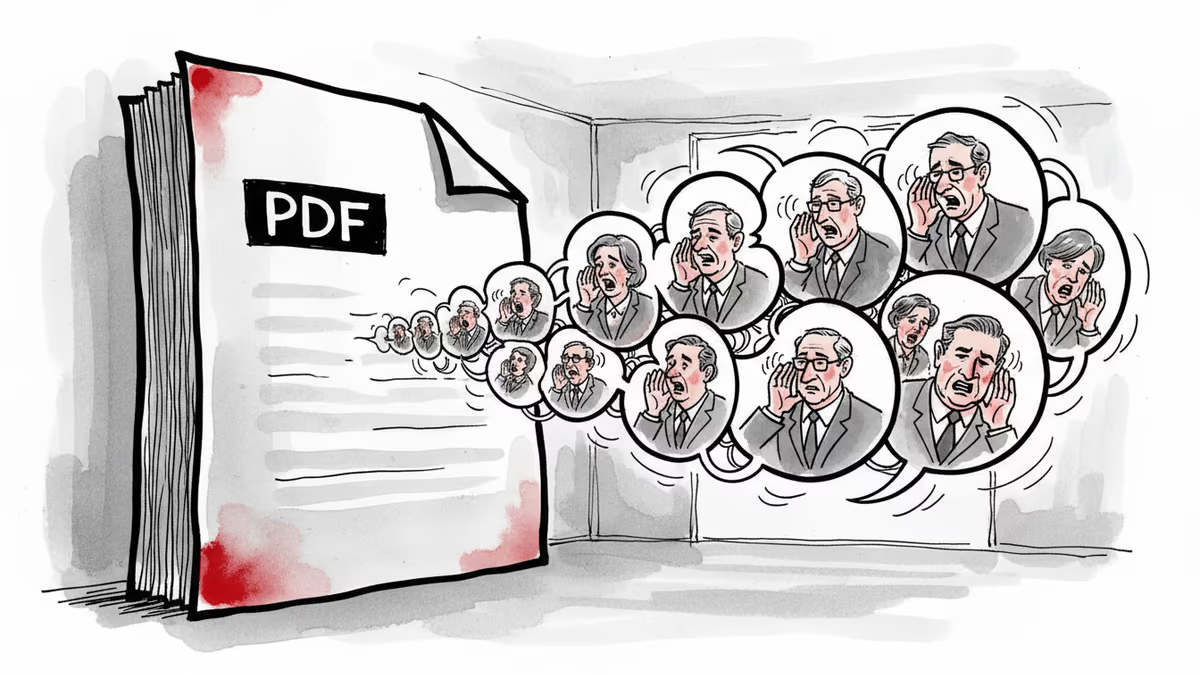
A DHS document about mega detention centers sent to New Hampshire's governor contained embedded comments and metadata exposing staff identities and internal discussions.

A leaked forum reveals deep divisions among Homeland Security agents over Trump's immigration crackdown, with officers questioning tactics and organizational priorities.

ICE and CBP agents patrol Minneapolis streets as daily life continues. The normalization of surveillance reveals how democracy erodes in plain sight.
Months of reporting point to a power vacuum inside the Department of Homeland Security. What happens when the agency guarding America's borders loses its own chain of command?
A DHS document about mega detention centers sent to New Hampshire's governor contained embedded comments and metadata exposing staff identities and internal discussions.
A leaked forum reveals deep divisions among Homeland Security agents over Trump's immigration crackdown, with officers questioning tactics and organizational priorities.
ICE and CBP agents patrol Minneapolis streets as daily life continues. The normalization of surveillance reveals how democracy erodes in plain sight.
Thoughts
Share your thoughts on this article
Sign in to join the conversation