
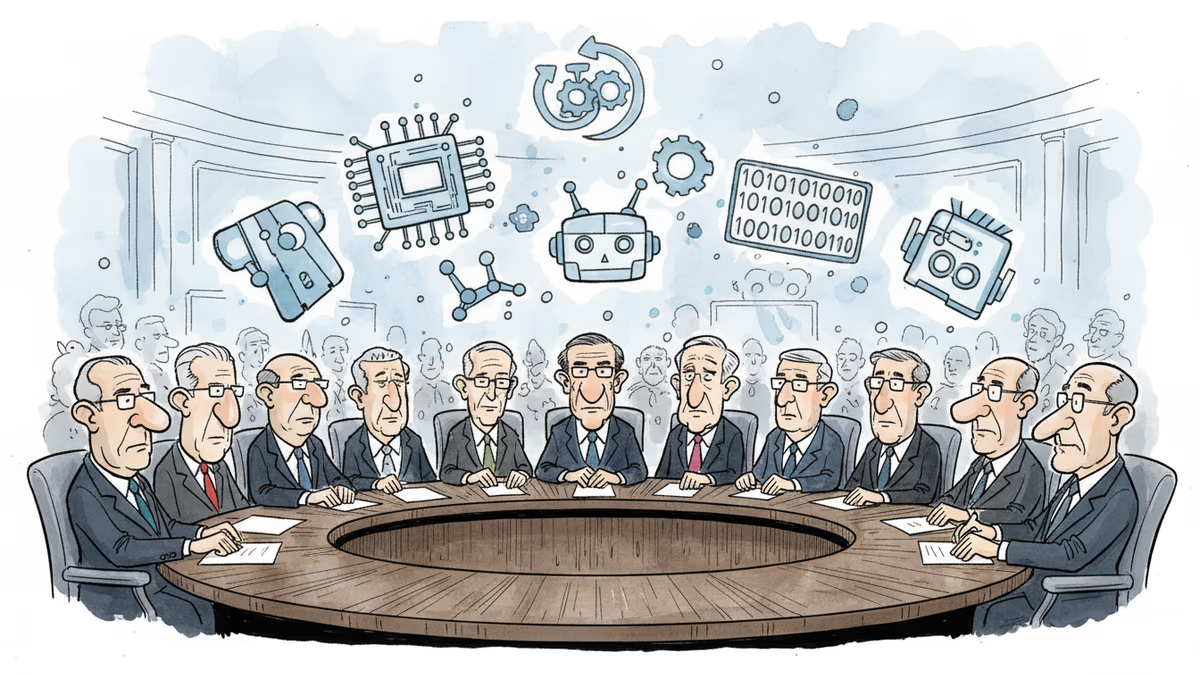
Secret AI Summit Brings Together Political Enemies
90 political leaders from across the spectrum secretly met in New Orleans to discuss AI's impact on politics. What brought sworn enemies to the same table?
When 90 Political Enemies Share the Same Room
Early January, New Orleans Marriott. An unlikely scene unfolded behind closed doors. Steve Bannon sat near Randi Weingarten. Progressive power brokers who'd drafted Bernie Sanders found themselves breathing the same air as MAGA talking heads. Church leaders rubbed shoulders with labor union representatives.
What could possibly bring such polar opposites together? Artificial intelligence – and the shared fear of what it might do to politics as we know it.
The Future of Life Institute had orchestrated this secret gathering, so confidential that attendees didn't know who else would be there until they walked through the door.
The Great Political Equalizer
The organizers' biggest worry wasn't ideological disagreement – it was whether participants would "kill each other," as one source put it. Instead, something unexpected happened: they found common ground.
AI, it turns out, doesn't respect political boundaries. The threats it poses – and the opportunities it creates – cut across traditional left-right divisions in ways that surprised even seasoned political operators.
Job displacement worries both union leaders and conservative populists. Information manipulation through deepfakes concerns anyone who values electoral integrity. Big Tech concentration troubles progressives worried about inequality and conservatives concerned about traditional power structures.

Beyond the Usual Suspects
This wasn't your typical Washington think tank roundtable. The guest list read like a political mad libs: Ralph Nader alongside conservative academics, community organizers next to former Trump advisers.
The diversity wasn't accidental. AI's political impact won't be contained within existing partisan silos. When algorithms can generate convincing political content, when deepfakes can impersonate candidates, when AI can micro-target voters with unprecedented precision – traditional political categories start to break down.
The 2024 Test Case
With the 2024 election approaching, this gathering feels prophetic. We're already seeing AI-generated robocalls, synthetic media in political ads, and chatbots designed to influence voter sentiment.
But the real question isn't just how AI will be used in politics – it's how AI will reshape politics itself. Will voters trust human candidates over AI-generated ones? How do you fact-check a world where any video could be synthetic? What happens when AI can craft the "perfect" political message for each individual voter?
The Regulatory Scramble
Washington is playing catch-up. While tech companies race ahead with AI development, policymakers are still figuring out basic questions: Should AI-generated political content be labeled? How do you verify the authenticity of campaign communications? Who's liable when an AI system spreads misinformation?
The bipartisan nature of the New Orleans gathering suggests these aren't partisan issues – they're existential ones for democracy itself.
Authors
Related Articles
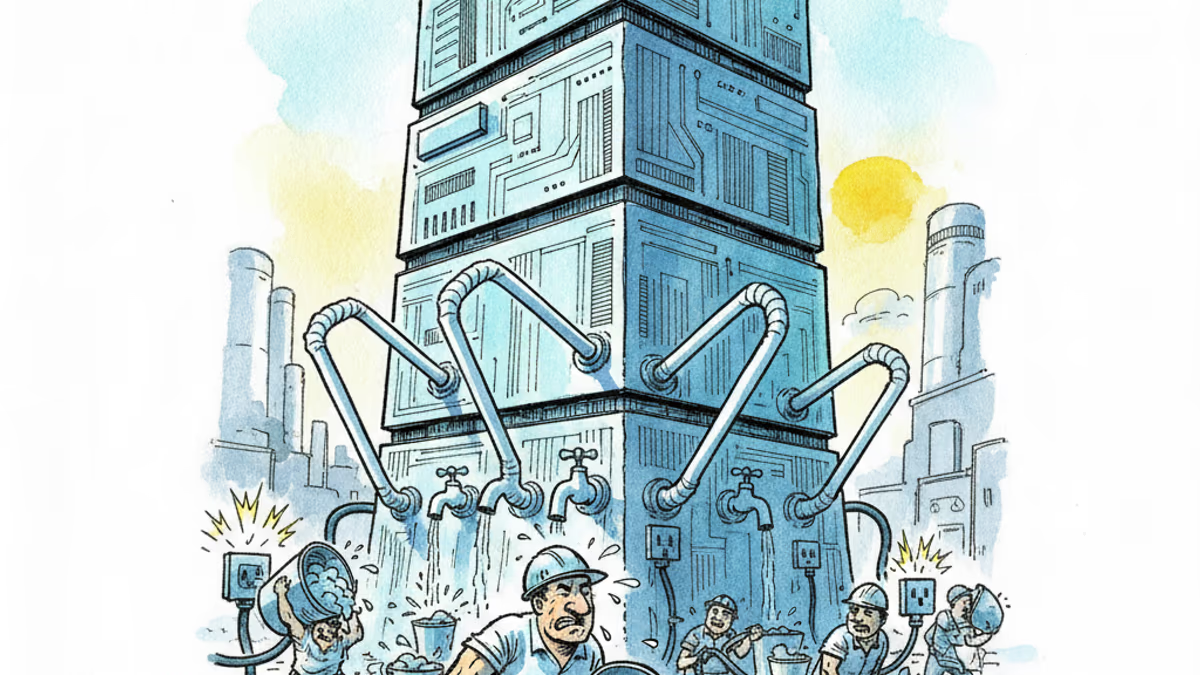
Samsung and SK unveiled a chip and AI investment package worth thousands of trillions of won on June 29. The headline number swings wildly by outlet, but the real contest isn't capital — it's water and power.
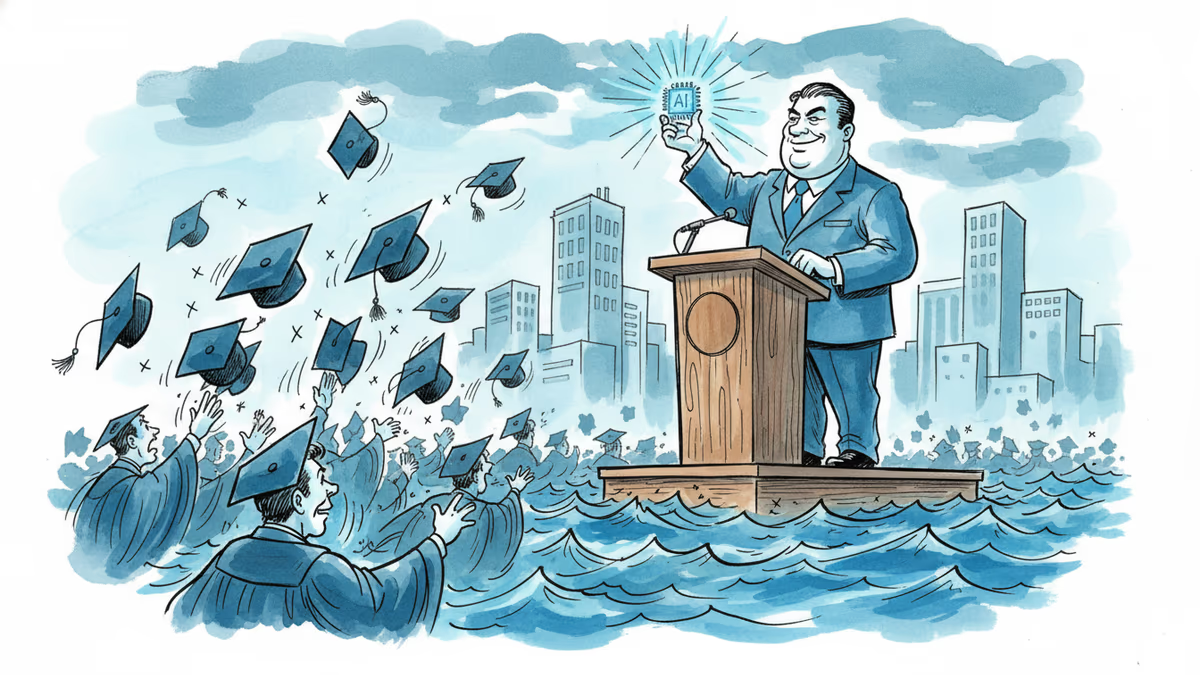
Viral videos show 2026 graduates jeering executives who praise AI at commencement ceremonies. It's not just rudeness — it's a signal about who pays for technological optimism.
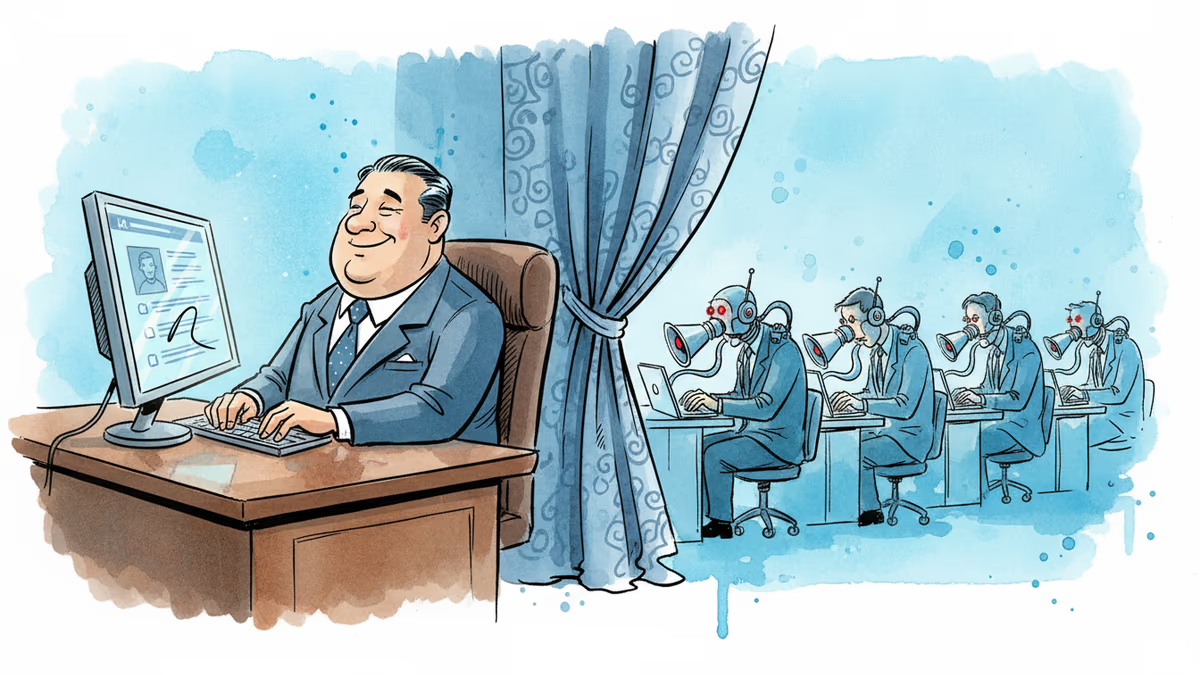
Filipino virtual assistants using AI to ghost-manage LinkedIn profiles for executives is now a structured industry. 30 comments a day, fake engagement rings, and a platform struggling to tell real from fabricated.
Two commencement speakers learned the hard way that AI enthusiasm doesn't land well with today's graduates. The backlash reveals a widening gap between tech optimism and Gen Z's economic reality.
Samsung and SK unveiled a chip and AI investment package worth thousands of trillions of won on June 29. The headline number swings wildly by outlet, but the real contest isn't capital — it's water and power.
Viral videos show 2026 graduates jeering executives who praise AI at commencement ceremonies. It's not just rudeness — it's a signal about who pays for technological optimism.
Filipino virtual assistants using AI to ghost-manage LinkedIn profiles for executives is now a structured industry. 30 comments a day, fake engagement rings, and a platform struggling to tell real from fabricated.
Two commencement speakers learned the hard way that AI enthusiasm doesn't land well with today's graduates. The backlash reveals a widening gap between tech optimism and Gen Z's economic reality.
Thoughts
Share your thoughts on this article
Sign in to join the conversation