

The Sphere Heads East: Sphere Maryland National Harbor Development Announced
Sphere Entertainment announces plans for Sphere Maryland National Harbor, the second U.S. venue of its kind. Learn about the location, context, and future outlook.
The world's most immersive screen is heading to the East Coast. Sphere Entertainment has officially announced its intent to develop a second U.S. Sphere venue in Maryland, located just 15 minutes south of Washington, D.C.
Details on the Sphere Maryland National Harbor Site
The proposed venue will be situated in National Harbor within Prince George's County. According to reports from The Verge, this waterfront location along the Potomac River already serves as a major hub with convention centers, hotels, and retail spaces. While a definitive timeline hasn't been set, the company's move marks its second domestic venture following the groundbreaking success in Las Vegas.

Expanding the Immersive Empire
This announcement follows a series of aggressive expansion moves by the company. In October 2024, Sphere Entertainment revealed plans for its first international site in Abu Dhabi. The Maryland project represents a strategic play to capture the dense population and high-traffic tourism of the D.C. metropolitan area.
| Feature | Las Vegas Sphere | Maryland Sphere (Proposed) |
|---|---|---|
| Status | Operational | Intent to Develop |
| U.S. Order | First Venue | Second Venue |
| Key Location | The Strip | National Harbor (Potomac River) |
Authors
Related Articles
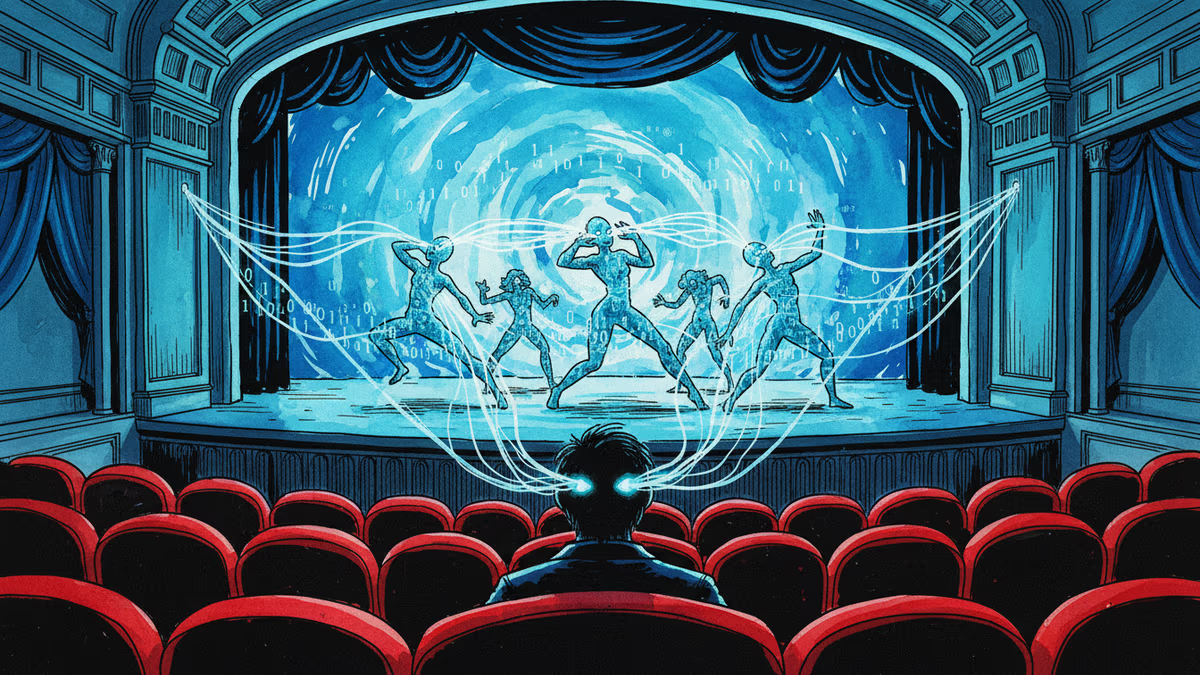
Ian McKellen and Golda Rosheuvel are brought back to life through AI to deliver personalized stories that know unsettling details about your life. The future of entertainment is getting personal.

Telly dual-screen TV shipping 2024 update. The startup's plan to give away 500,000 free TVs for data faces logistics and privacy hurdles.

Samsung Electronics' union branch revealed that 84% of survey respondents oppose the government's roughly $290 billion (₩400 trillion) semiconductor megaproject in Gwangju. Government, management, the union and shareholders are all reading the same national project in sharply different ways.

Nvidia shipped roughly a billion RISC-V cores in 2024, then announced it would run CUDA on the open standard. We break down how royalty-free instruction sets and open software stacks are trying to route around CUDA's lock-in. Part 2 of the Semiconductor Sovereignty series.
Ian McKellen and Golda Rosheuvel are brought back to life through AI to deliver personalized stories that know unsettling details about your life. The future of entertainment is getting personal.
Telly dual-screen TV shipping 2024 update. The startup's plan to give away 500,000 free TVs for data faces logistics and privacy hurdles.
Samsung Electronics' union branch revealed that 84% of survey respondents oppose the government's roughly $290 billion (₩400 trillion) semiconductor megaproject in Gwangju. Government, management, the union and shareholders are all reading the same national project in sharply different ways.
Nvidia shipped roughly a billion RISC-V cores in 2024, then announced it would run CUDA on the open standard. We break down how royalty-free instruction sets and open software stacks are trying to route around CUDA's lock-in. Part 2 of the Semiconductor Sovereignty series.
Thoughts
Share your thoughts on this article
Sign in to join the conversation