
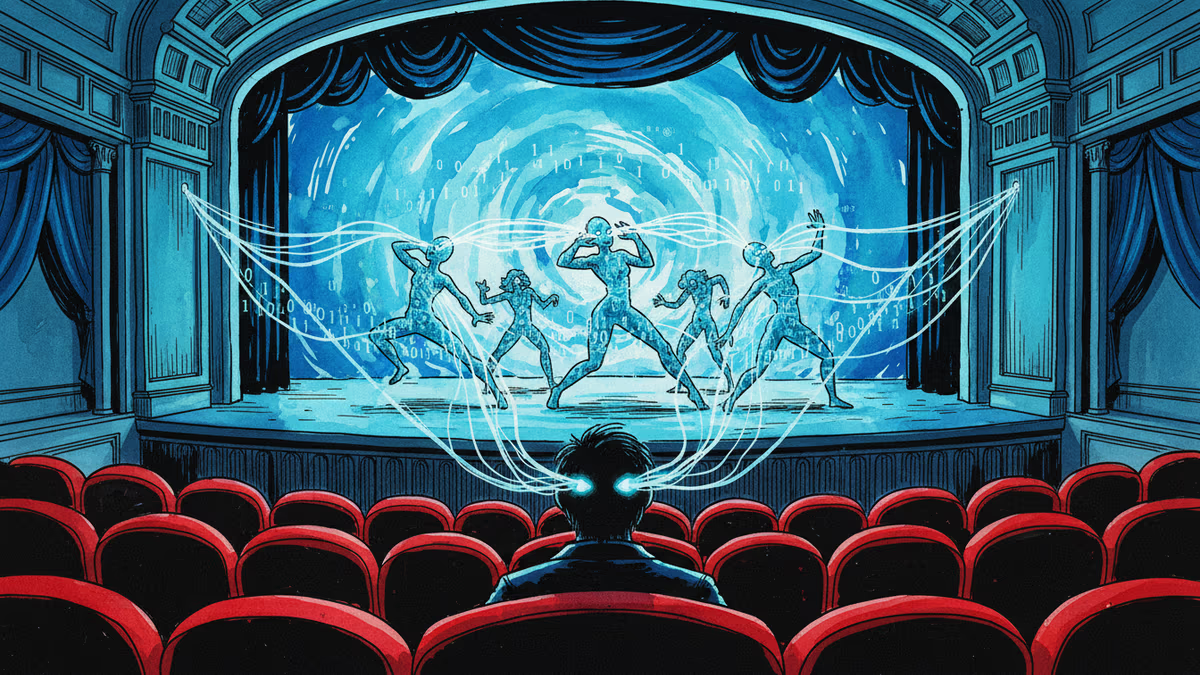
When AI Actors Lock Eyes and Tell Your Life Story
Ian McKellen and Golda Rosheuvel are brought back to life through AI to deliver personalized stories that know unsettling details about your life. The future of entertainment is getting personal.
The Moment AI Knew Too Much About Me
48 hours ago, I sat face-to-face with Sir Ian McKellen as he told me when I'd die. Not the actor himself, but an AI version so convincing that when he said "don't panic," I almost did. Some details about my life were wrong, but others were so accurate it felt like digital witchcraft.
Then Golda Rosheuvel appeared, telling the same story but with her own theatrical flair. This wasn't just watching a movie—this was AI creating a personalized narrative using my data, delivered by some of the world's most compelling actors.
Welcome to the future of entertainment, where the story isn't just about you—it knows you.
Beyond "Hello, [Your Name Here]"
This technology makes Netflix's recommendation algorithm look primitive. The AI doesn't just suggest what you might like—it weaves your social media activity, purchase history, location data, and behavioral patterns into a coherent narrative about your past, present, and future.
The unsettling part? The predictions often hit uncomfortably close to home. Machine learning has become sophisticated enough to identify patterns in human behavior that we don't even recognize ourselves. Users report a mix of fascination and mild horror at how well these systems "know" them.
Hollywood's New Frontier or Final Act?

For actors like McKellen and Rosheuvel, this represents uncharted territory. One performance session can create millions of personalized experiences. It's like having a private conversation with a beloved performer, scaled to infinity.
But the implications run deeper. If AI can replicate not just an actor's appearance but their mannerisms, speech patterns, and emotional range, what happens to the profession itself? The recent Hollywood strikes highlighted these very concerns—will we need human actors at all in a decade?
The Privacy Paradox
To create these intimate experiences, the AI needs intimate data. The more personal information it has, the more compelling the story becomes. But there's a Faustian bargain here: trading privacy for personalization.
Consumers seem willing to make this trade, at least initially. Early users describe the experience as "magical" and "deeply moving." But privacy advocates warn we're sleepwalking into a surveillance entertainment complex.
Investment and Industry Implications
This technology could reshape entire entertainment ecosystems. Traditional studios might find themselves competing with AI-generated content that's infinitely scalable and personally tailored. Streaming platforms are already investing heavily in personalization algorithms—this takes it to the next level.
For investors, the question isn't whether this technology will succeed, but which companies will dominate the space. The winners will likely be those who can combine sophisticated AI with compelling content libraries and robust data collection capabilities.
Perhaps the most profound shift isn't technological—it's philosophical. We're entering an era where our digital shadows might know us better than we know ourselves.
Authors
Related Articles
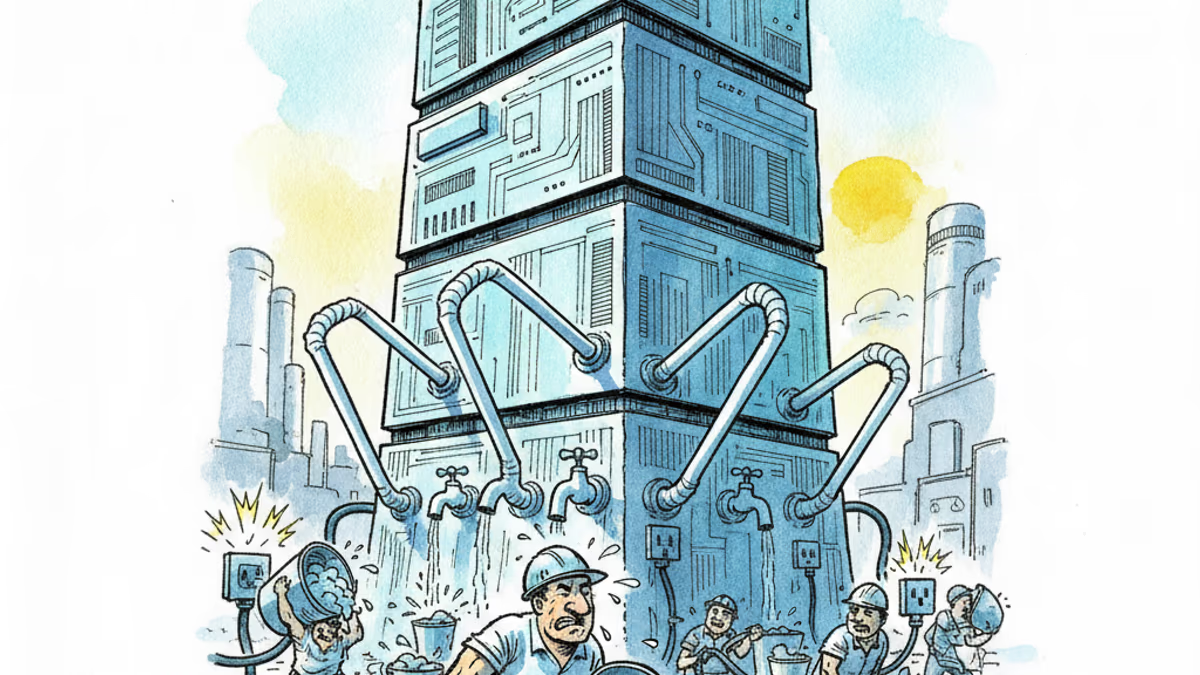
Samsung and SK unveiled a chip and AI investment package worth thousands of trillions of won on June 29. The headline number swings wildly by outlet, but the real contest isn't capital — it's water and power.
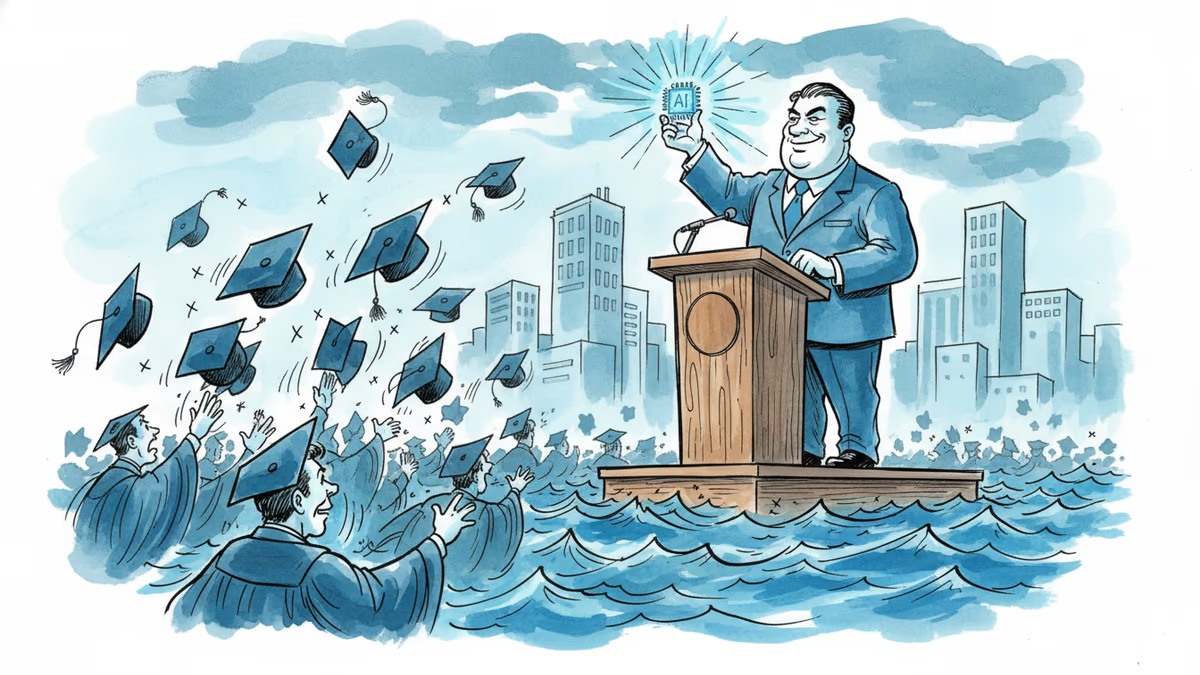
Viral videos show 2026 graduates jeering executives who praise AI at commencement ceremonies. It's not just rudeness — it's a signal about who pays for technological optimism.
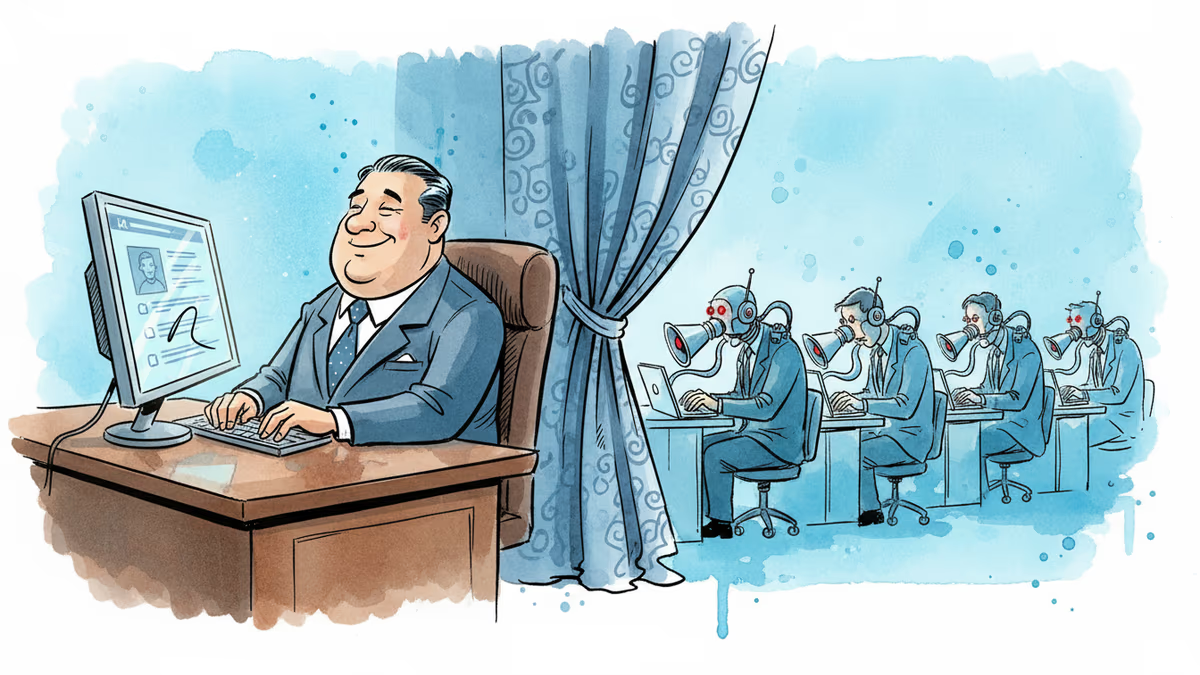
Filipino virtual assistants using AI to ghost-manage LinkedIn profiles for executives is now a structured industry. 30 comments a day, fake engagement rings, and a platform struggling to tell real from fabricated.
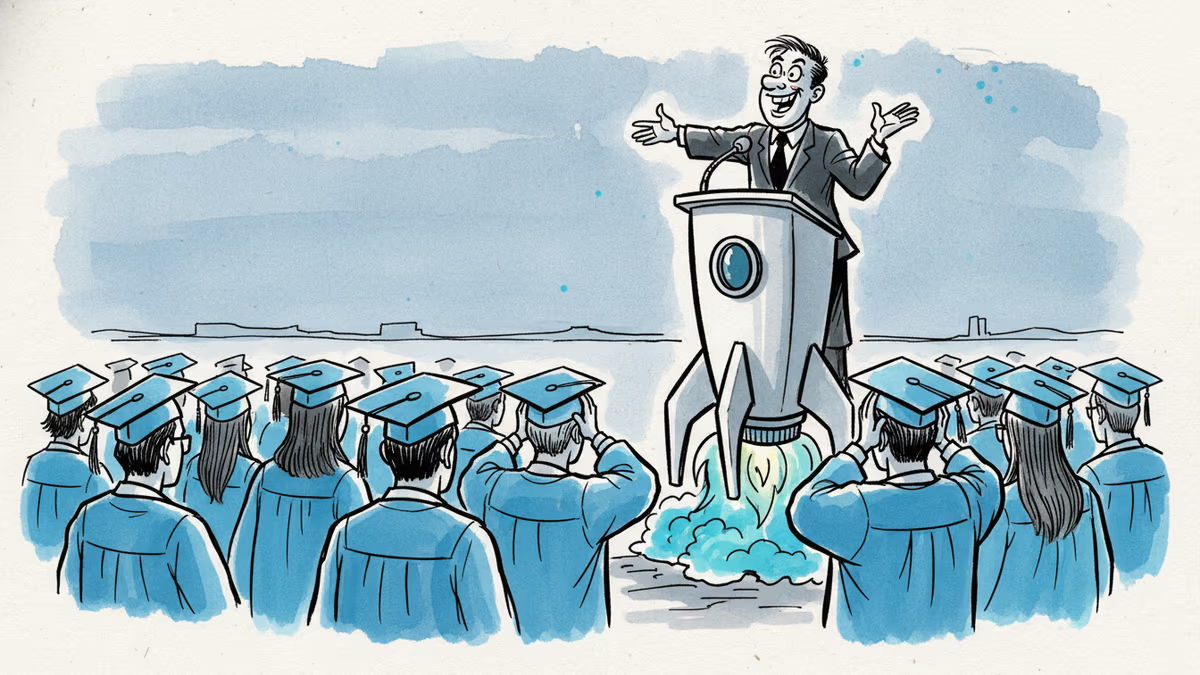
Two commencement speakers learned the hard way that AI enthusiasm doesn't land well with today's graduates. The backlash reveals a widening gap between tech optimism and Gen Z's economic reality.
Samsung and SK unveiled a chip and AI investment package worth thousands of trillions of won on June 29. The headline number swings wildly by outlet, but the real contest isn't capital — it's water and power.
Viral videos show 2026 graduates jeering executives who praise AI at commencement ceremonies. It's not just rudeness — it's a signal about who pays for technological optimism.
Filipino virtual assistants using AI to ghost-manage LinkedIn profiles for executives is now a structured industry. 30 comments a day, fake engagement rings, and a platform struggling to tell real from fabricated.
Two commencement speakers learned the hard way that AI enthusiasm doesn't land well with today's graduates. The backlash reveals a widening gap between tech optimism and Gen Z's economic reality.
Thoughts
Share your thoughts on this article
Sign in to join the conversation