
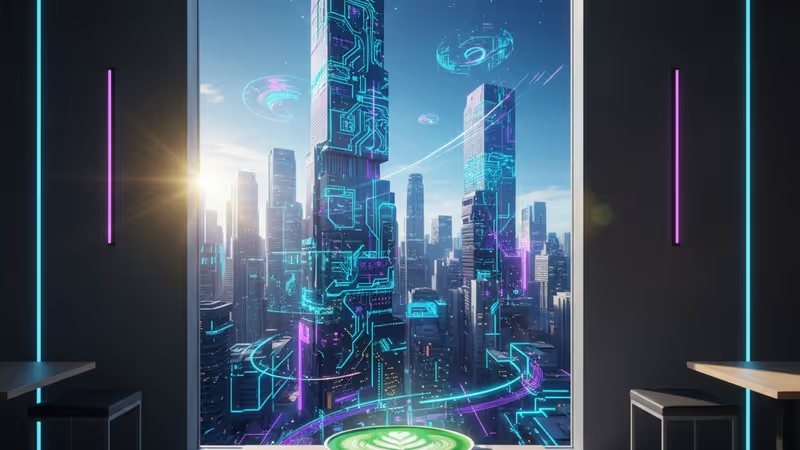
Savills Matcha Index 2026: Why Singapore and Beijing Are Tech Talent Magnets
The Savills Matcha Index 2026 ranks Singapore and Beijing among the world's top tech cities. Explore how cafe culture and wellness are redefining tech hubs.
Is your favorite cafe the secret to your city's tech success? Singapore and Beijing have emerged among the world’s most liveable cities for tech workers, according to Savills’ inaugural Matcha Index released on January 7, 2026.
Savills Matcha Index 2026: The New Metric for Tech Hubs
The report highlights how cafe culture has evolved into a vital pillar of social infrastructure. For the Gen Z and Millennial tech workforce, the matcha latte has replaced coffee as the go-to drink, prized for its slow-release energy and health benefits. This shift reflects a broader focus on wellness within global tech ecosystems, where burnout is a constant risk.

| City | Avg. Matcha Latte Cost (USD) |
|---|---|
| Beijing | $3.61 |
| Singapore | $5.43 |
| New York | $6.21 |
Connectivity Over Cost
Despite a higher price tag of $5.43 per drink, Singapore stays dominant due to its high density of quality cafes that foster creative collisions. Meanwhile, Beijing offers an unbeatable value proposition for young professionals seeking a high-vibe lifestyle on a budget. Savills notes that these spaces aren't just for drinking; they're where the next billion-dollar ideas are sparked.
Authors
Related Articles
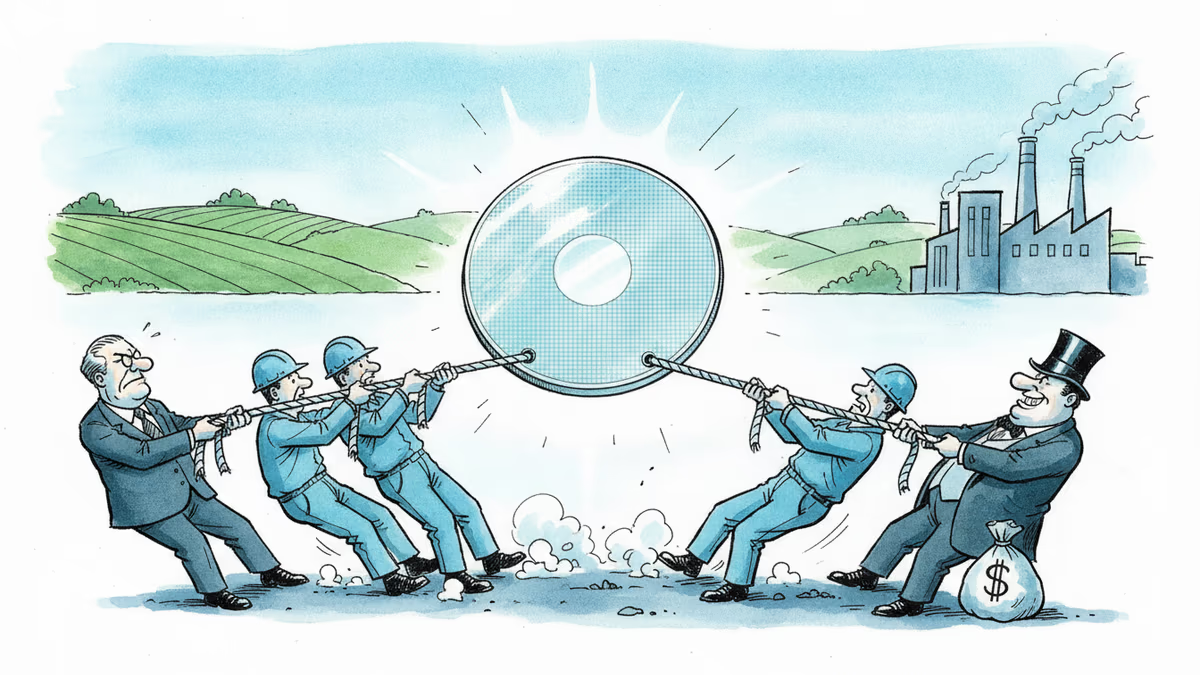
Samsung Electronics' union branch revealed that 84% of survey respondents oppose the government's roughly $290 billion (₩400 trillion) semiconductor megaproject in Gwangju. Government, management, the union and shareholders are all reading the same national project in sharply different ways.
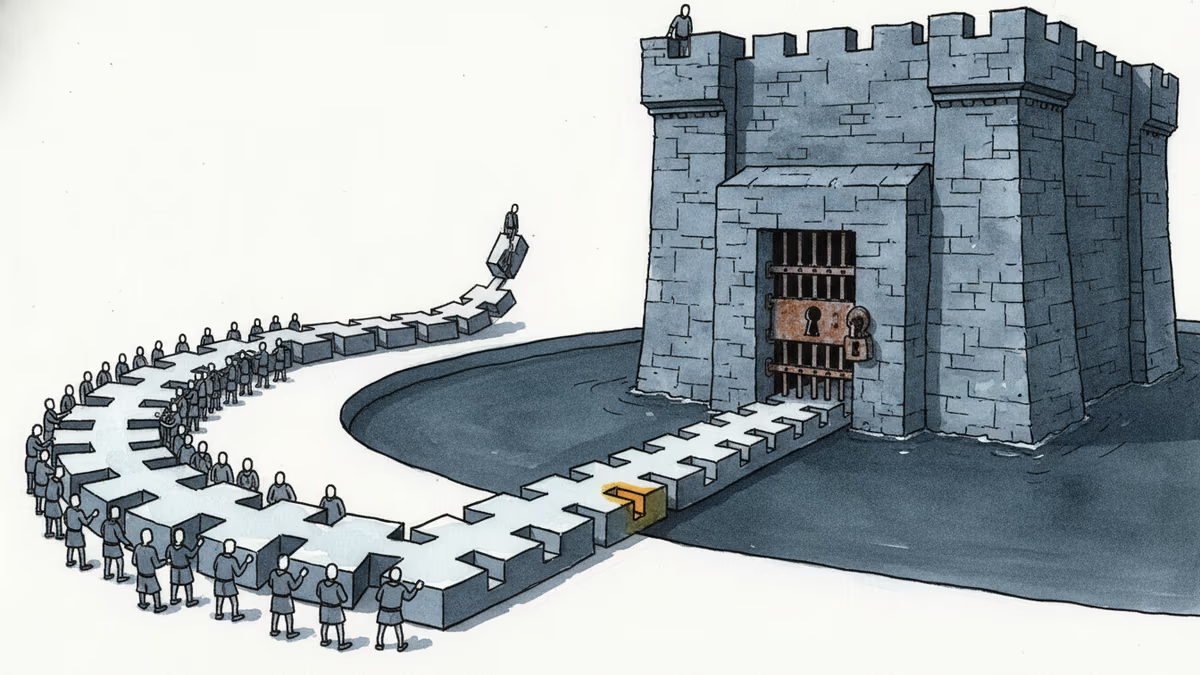
Nvidia shipped roughly a billion RISC-V cores in 2024, then announced it would run CUDA on the open standard. We break down how royalty-free instruction sets and open software stacks are trying to route around CUDA's lock-in. Part 2 of the Semiconductor Sovereignty series.
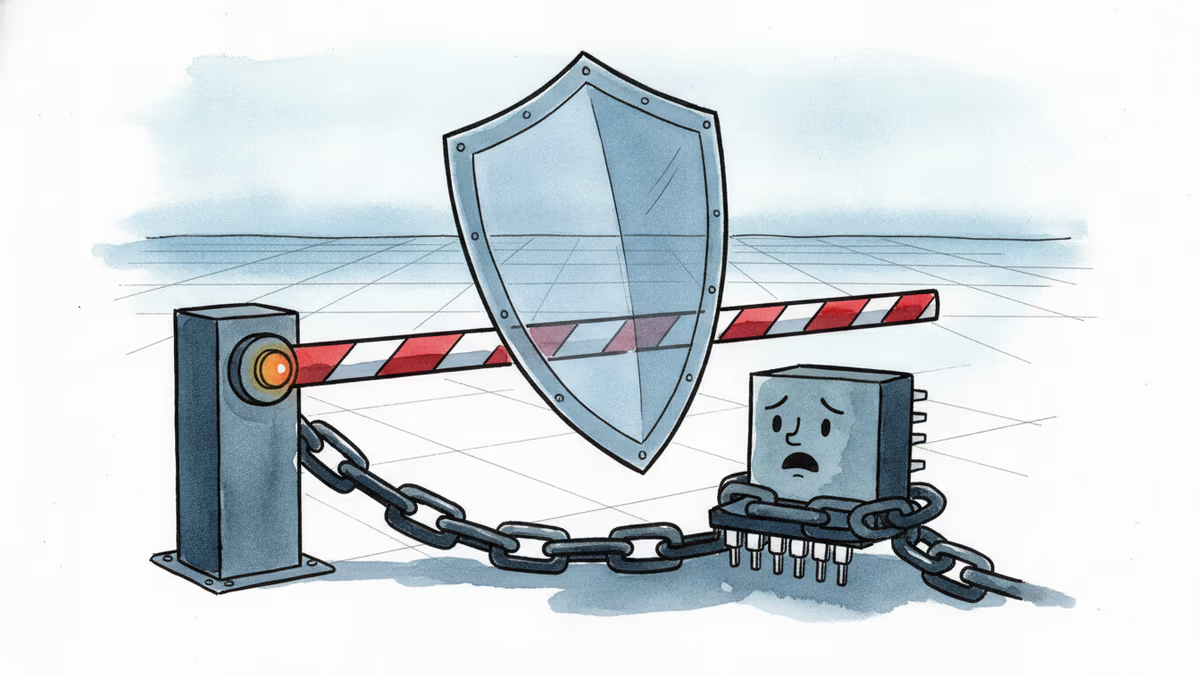
US AI-chip export controls split into three layers in the first half of 2026 — January easing, a May crackdown on circumvention, and a pending bill. Nvidia erased China from its guidance and still posted a record $81.6 billion quarter. A look at the export policy that both shields and cages it.
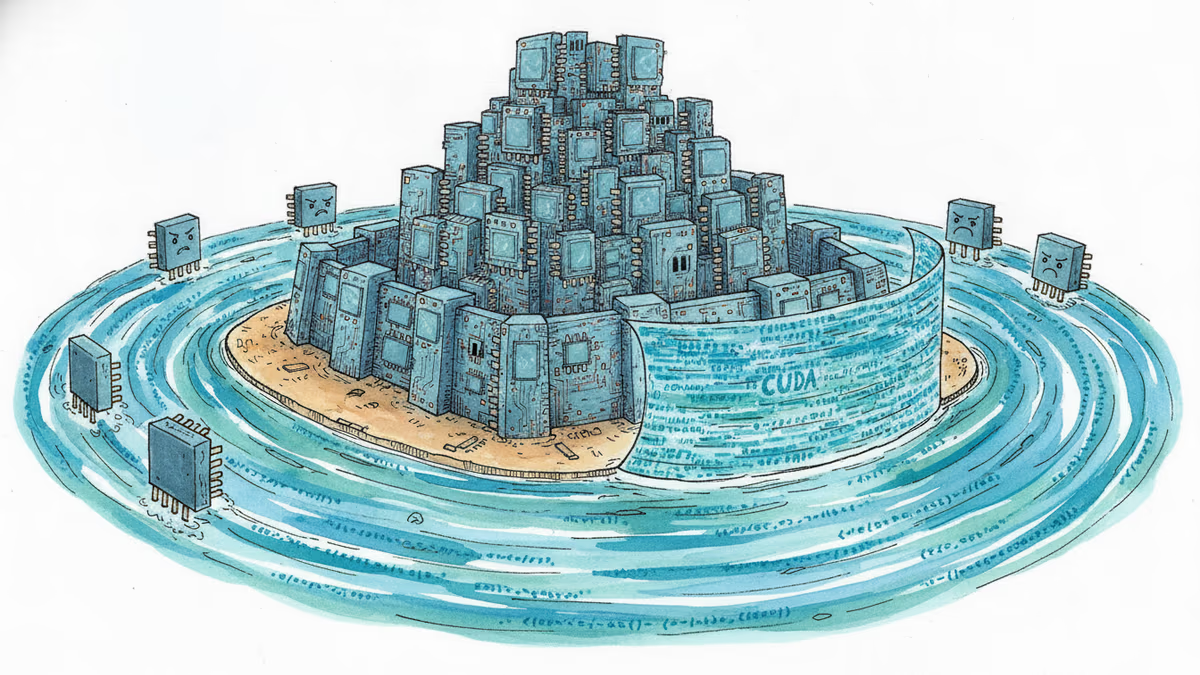
AMD's MI325X matches or beats Nvidia on memory and bandwidth — yet Nvidia's 86-92% share holds. The real moat is CUDA, 20 years in the making. Part 1 of 4.
Samsung Electronics' union branch revealed that 84% of survey respondents oppose the government's roughly $290 billion (₩400 trillion) semiconductor megaproject in Gwangju. Government, management, the union and shareholders are all reading the same national project in sharply different ways.
Nvidia shipped roughly a billion RISC-V cores in 2024, then announced it would run CUDA on the open standard. We break down how royalty-free instruction sets and open software stacks are trying to route around CUDA's lock-in. Part 2 of the Semiconductor Sovereignty series.
US AI-chip export controls split into three layers in the first half of 2026 — January easing, a May crackdown on circumvention, and a pending bill. Nvidia erased China from its guidance and still posted a record $81.6 billion quarter. A look at the export policy that both shields and cages it.
AMD's MI325X matches or beats Nvidia on memory and bandwidth — yet Nvidia's 86-92% share holds. The real moat is CUDA, 20 years in the making. Part 1 of 4.
Thoughts
Share your thoughts on this article
Sign in to join the conversation