

Samsung's Strategy Shift: Why the Galaxy S26 Matters More Than Specs
As Samsung prepares to unveil the Galaxy S26 series, the company is betting on consumer choice over vendor lock-in. Is this the future of smartphone competition?
February 25th: Samsung's Moment of Truth
7-year software support. Qi2 Ready compatibility. Global Snapdragon standardization. When you line up Samsung's recent moves, a clear pattern emerges: the company is betting everything on consumer choice.
The Galaxy Unpacked event in San Francisco will unveil the Galaxy S26 series, but this isn't just another spec bump. Samsung is making a fundamental shift in how it competes—and it's happening at exactly the right time.
The iPhone-Galaxy Duopoly Is Cracking
Sure, iPhone and Galaxy phones still dominate US market share. But the Android landscape has become a different beast entirely.
Google Pixel phones are gaining serious traction, Chinese brands are making global inroads, and consumers are increasingly prioritizing value over brand loyalty. The old "Team iPhone vs Team Android" tribalism is giving way to more nuanced decision-making.
Samsung's response? Instead of fighting harder for exclusivity, they're embracing openness. They actively encourage buying unlocked phones, recommend switching away from carrier bloatware, and even tacitly endorse using Google's Gboard over their own keyboard.
It's counterintuitive, but it might be genius.
Why 7-Year Support Changes Everything
When Samsung announced 7-year software support for the Galaxy S25 series, many dismissed it as Apple copying. But there's a deeper strategy at play.
Seven-year support isn't just about keeping your phone longer—it's about having the freedom to upgrade whenever you want. Frequent upgraders get better resale value, while long-term users get guaranteed security and features.

This fundamentally changes the upgrade calculus. Instead of feeling pressured to upgrade every 2-3 years before support ends, consumers can make decisions based on actual needs rather than artificial obsolescence.
The "Qi2 Ready" Compromise
Samsung's Qi2 Ready implementation reveals their strategic thinking. The Galaxy S26 series won't have built-in magnets like iPhones, but magnetic cases enable full Qi2 functionality.
Why this middle ground? It's about maximum compatibility. You can use iPhone MagSafe accessories with a case, but you're not locked into the magnetic ecosystem if you prefer traditional wireless charging.
This approach prioritizes consumer choice over technological purity—and it might be exactly what the market wants.
Snapdragon Everywhere: The End of Chipset Lottery
For years, Samsung's regional chipset differences created an awkward reality: identical phones with different performance depending on where you bought them. US customers got Qualcomm Snapdragon processors while other regions received Samsung's Exynos chips.
The performance gaps were real, and customers noticed. Online forums buzzed with complaints about "chipset lottery" and regional disparities in battery life and processing power.
Samsung's move toward global Snapdragon adoption eliminates this friction. Same phone, same performance, anywhere in the world. It's a small change that removes a major consumer pain point.
The Bigger Picture: Competing on Freedom
These individual moves—longer support, broader compatibility, consistent hardware—add up to something larger. Samsung is positioning itself as the "freedom" choice in a market increasingly defined by ecosystem lock-in.
While Apple doubles down on seamless integration within its walled garden, Samsung is betting that consumers want flexibility more than they want simplicity. Want to switch carriers? Easy. Prefer Google's apps? No problem. Need to use your phone internationally? It's unlocked by default.
This strategy makes particular sense as smartphones mature into commodity products. When hardware differences become marginal, the companies that win will be those that reduce friction rather than create it.
Authors
Related Articles
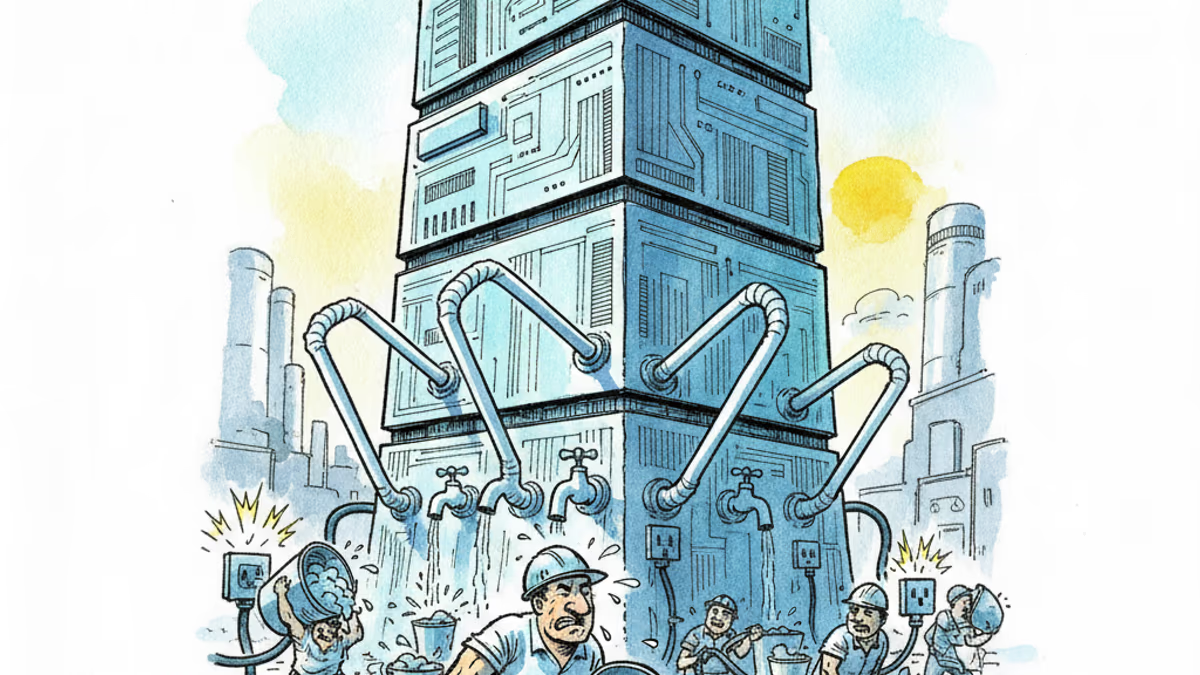
Samsung and SK unveiled a chip and AI investment package worth thousands of trillions of won on June 29. The headline number swings wildly by outlet, but the real contest isn't capital — it's water and power.
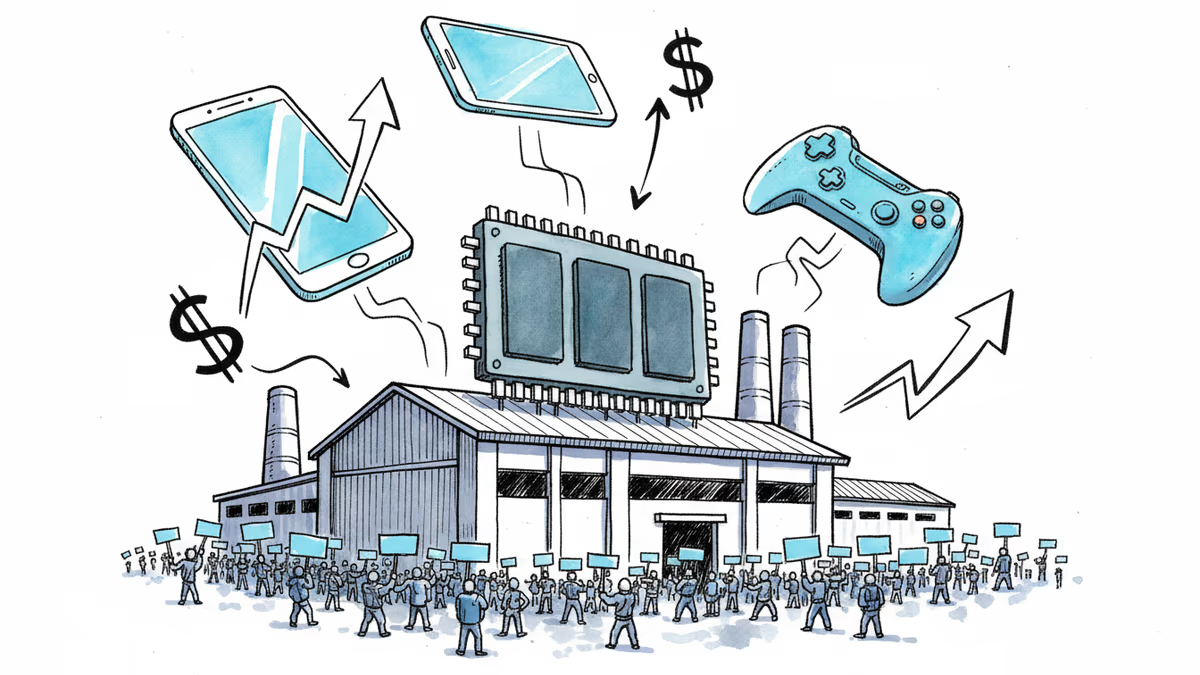
40,000 Samsung union workers rallied at its Pyeongtaek chip plant, threatening an 18-day strike over wages. With AI-driven RAM shortages already lifting consumer prices, the timing couldn't be worse.

Memory makers can't build fabs fast enough. By end of 2027, supply will cover just 60% of demand. Here's why the shortage could last until 2030—and what it means for AI, your devices, and the chip industry.

Samsung's Galaxy S26 now supports AirDrop through Quick Share, making cross-platform file sharing seamless. What does it mean when Android starts dismantling one of Apple's most beloved moats?
Samsung and SK unveiled a chip and AI investment package worth thousands of trillions of won on June 29. The headline number swings wildly by outlet, but the real contest isn't capital — it's water and power.
40,000 Samsung union workers rallied at its Pyeongtaek chip plant, threatening an 18-day strike over wages. With AI-driven RAM shortages already lifting consumer prices, the timing couldn't be worse.
Memory makers can't build fabs fast enough. By end of 2027, supply will cover just 60% of demand. Here's why the shortage could last until 2030—and what it means for AI, your devices, and the chip industry.
Samsung's Galaxy S26 now supports AirDrop through Quick Share, making cross-platform file sharing seamless. What does it mean when Android starts dismantling one of Apple's most beloved moats?
Thoughts
Share your thoughts on this article
Sign in to join the conversation