

Samsung's Galaxy S26 Gamble: Higher Prices, Fewer Innovations
Samsung's February 25 Galaxy S26 unveiling promises minimal upgrades but higher prices due to RAM shortages. Privacy screens and AI features lead the changes.
When $1,200 Buys You Less Innovation
Samsung will unveil its Galaxy S26 series on February 25 in San Francisco, but the tech world isn't exactly holding its breath. The reason? Industry insiders expect minimal upgrades paired with price increases—a combination that could test consumer loyalty.
The Galaxy S26, S26+, and S26 Ultra will likely feature Qualcomm's Snapdragon 8 Elite Gen 5, minor charging improvements, and modest camera hardware tweaks. That's it. No revolutionary features, no design overhaul, no breakthrough technology.
The Privacy Screen That Actually Matters
Yet Samsung isn't entirely standing still. The most intriguing addition is a built-in privacy screen that selectively blocks parts of the display from onlookers. Think of it as digital blinders for your banking app or personal messages.
This feature addresses a real pain point. How many times have you hesitated to check sensitive information on public transport or in open offices? It's a practical innovation that could genuinely improve daily smartphone use—assuming it works reliably.
Gemini-powered AI features will also get expanded, though these feel more like iterative improvements than game-changers. The AI assistant space is crowded, and Samsung's late entry means playing catch-up rather than leading.
The RAM Shortage Reality Check

Here's where things get uncomfortable for consumers: global RAM shortages are driving up manufacturing costs, and Samsung plans to pass these on through higher prices. This creates an awkward value proposition—pay more for roughly the same experience.
The company's confidence is telling. Samsung is already accepting $30 pre-order reservations, banking on brand loyalty to overcome the innovation gap. But will consumers bite?
Notably absent: the Galaxy S26 Edge. Samsung's ultra-slim experiment from May 2025 failed to resonate, and leaks suggest the sequel has been canceled. Sometimes the market speaks clearly.
Apple's Surprising Olive Branch
While Samsung treads water, Apple made waves with iOS 26.3. The update dramatically simplifies switching from iPhone to Android—photos, texts, notes, apps, even phone numbers transfer seamlessly by placing devices side by side.
This move signals Apple's growing confidence in its ecosystem's stickiness. By removing friction barriers, Apple essentially says: "Go ahead, try Android. You'll be back." It's a bold psychological play that could backfire or reinforce loyalty.
The update also introduces Limit Precise Location for enhanced privacy, though it's currently limited to devices with Apple's custom C1 or C1X modems and specific carriers like Boost Mobile.
Google's Mysterious Android 17 Delay
Meanwhile, Google abruptly postponed the Android 17 beta without explanation. The update promises better large-screen optimization and mandatory app resizing support—features that could benefit Samsung's tablet strategy.
More interesting: YouTube finally launched a native app for Apple Vision Pro after two years. Google's previous boycott of Apple's platform while developing Android XR suggests shifting competitive dynamics. Sometimes cooperation trumps competition.
Authors
Related Articles

Samsung and SK unveiled a chip and AI investment package worth thousands of trillions of won on June 29. The headline number swings wildly by outlet, but the real contest isn't capital — it's water and power.
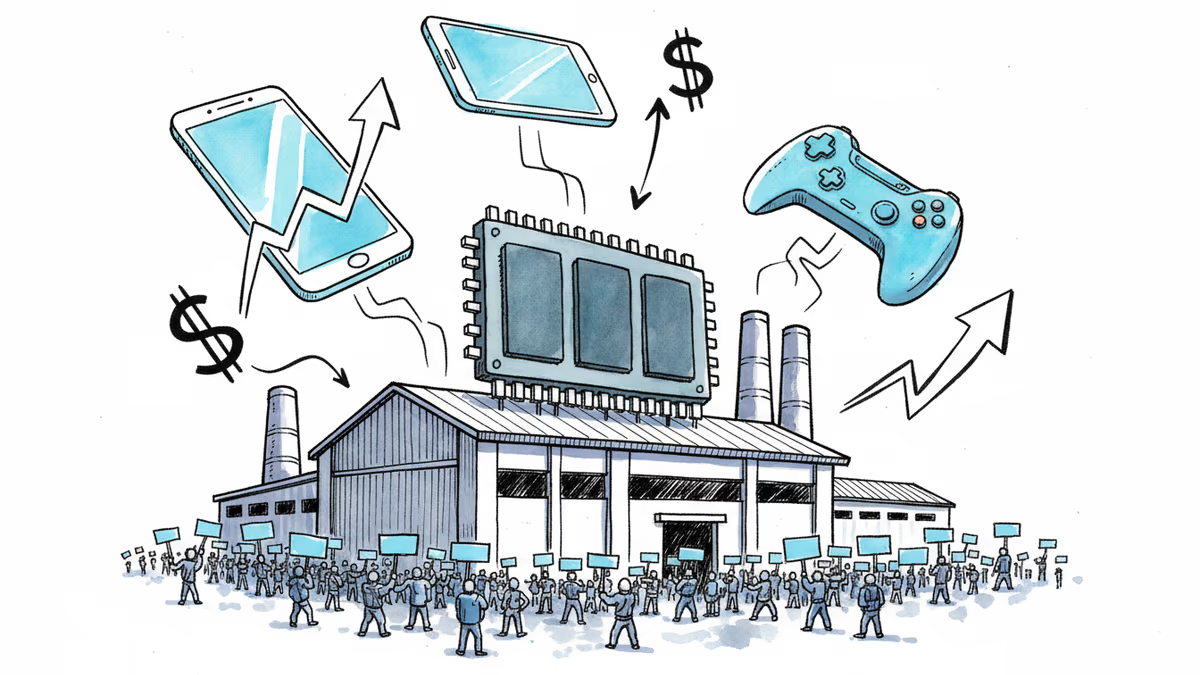
40,000 Samsung union workers rallied at its Pyeongtaek chip plant, threatening an 18-day strike over wages. With AI-driven RAM shortages already lifting consumer prices, the timing couldn't be worse.

Memory makers can't build fabs fast enough. By end of 2027, supply will cover just 60% of demand. Here's why the shortage could last until 2030—and what it means for AI, your devices, and the chip industry.

Samsung's Galaxy S26 now supports AirDrop through Quick Share, making cross-platform file sharing seamless. What does it mean when Android starts dismantling one of Apple's most beloved moats?
Samsung and SK unveiled a chip and AI investment package worth thousands of trillions of won on June 29. The headline number swings wildly by outlet, but the real contest isn't capital — it's water and power.
40,000 Samsung union workers rallied at its Pyeongtaek chip plant, threatening an 18-day strike over wages. With AI-driven RAM shortages already lifting consumer prices, the timing couldn't be worse.
Memory makers can't build fabs fast enough. By end of 2027, supply will cover just 60% of demand. Here's why the shortage could last until 2030—and what it means for AI, your devices, and the chip industry.
Samsung's Galaxy S26 now supports AirDrop through Quick Share, making cross-platform file sharing seamless. What does it mean when Android starts dismantling one of Apple's most beloved moats?
Thoughts
Share your thoughts on this article
Sign in to join the conversation