
A 1% Gap: Global Smartphone Market Share 2025 Shows Apple's Slim Lead
Apple takes the lead with 20% global smartphone market share in 2025, followed by Samsung at 19%. Discover how Galaxy S25 and A-series drove Samsung's 5% growth.
The battle for global dominance has never been tighter. While Apple managed to hold onto the top spot in the Global Smartphone Market Share 2025 rankings, Samsung Electronics isn't far behind. Data from Counterpoint Research reveals a razor-thin 1% margin between the two tech giants, as Samsung saw a 5% surge in shipments.
Global Smartphone Market Share 2025 Rankings
According to reports from Yonhap and industry trackers, Apple secured 20% of the market in 2025, growing by 2% points compared to the previous year. Samsung followed closely with 19%, bolstered by its aggressive strategy in both budget and premium segments.

- No. 1: Apple (20% share, up 2% points)
- No. 2: Samsung (19% share, up 1% point)
- No. 3: Xiaomi (18% share)
- No. 4: Vivo (8% share)
- No. 5: OPPO (8% share)
What Drove Samsung's 5% Growth?
The success wasn't just about one phone. While the budget-friendly Galaxy A series handled the heavy lifting in volume, the premium Galaxy Fold 7 and the flagship Galaxy S25 both outperformed their predecessors. Looking ahead to 2026, analysts expect both Samsung and Apple to maintain stability by leveraging their robust supply chains to offset rising production costs.
Authors
Related Articles

Samsung and SK unveiled a chip and AI investment package worth thousands of trillions of won on June 29. The headline number swings wildly by outlet, but the real contest isn't capital — it's water and power.
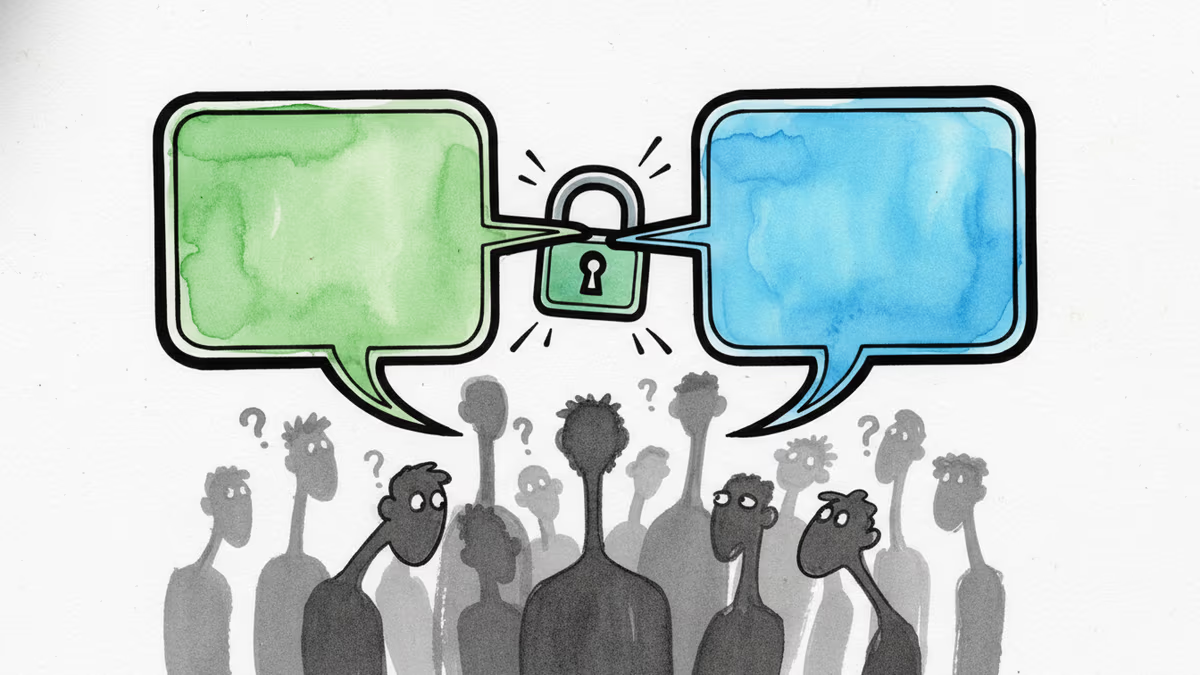
After 15 years of fragmented mobile messaging, Apple and Google are rolling out end-to-end encrypted RCS messaging between iPhones and Android devices. Here's what changed, why it took so long, and what it means for your privacy.
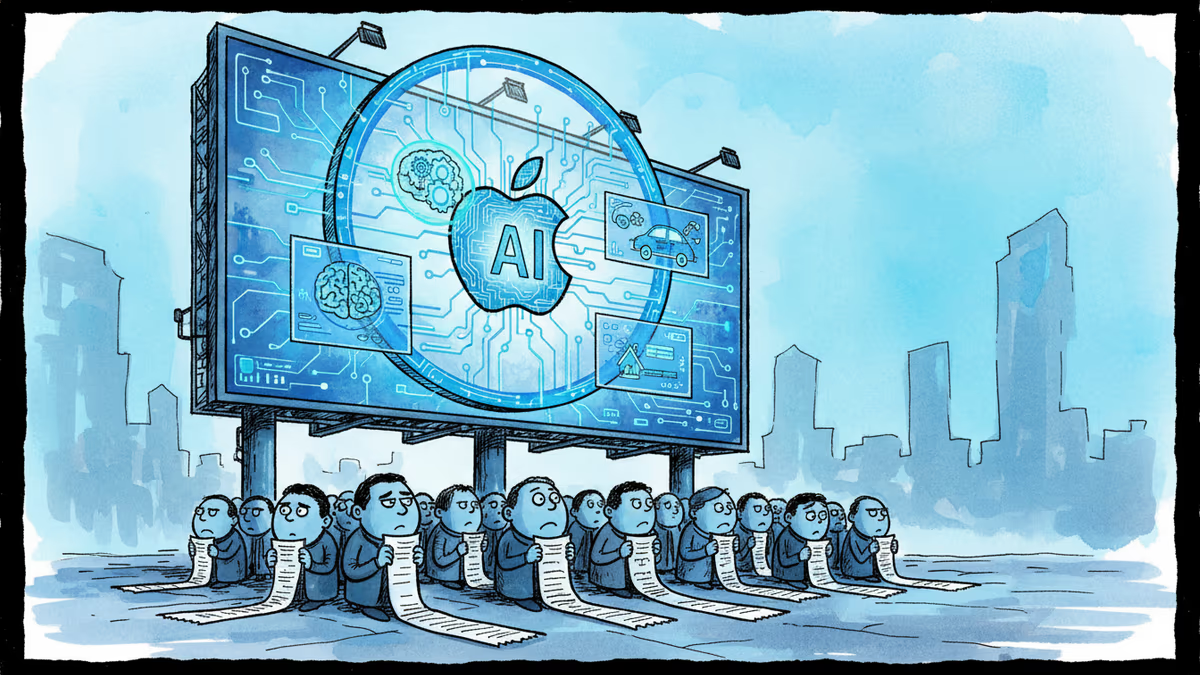
Apple agreed to pay $250 million to settle claims it misled iPhone 16 buyers about Apple Intelligence features. What this means for consumers, Big Tech marketing, and the AI industry.
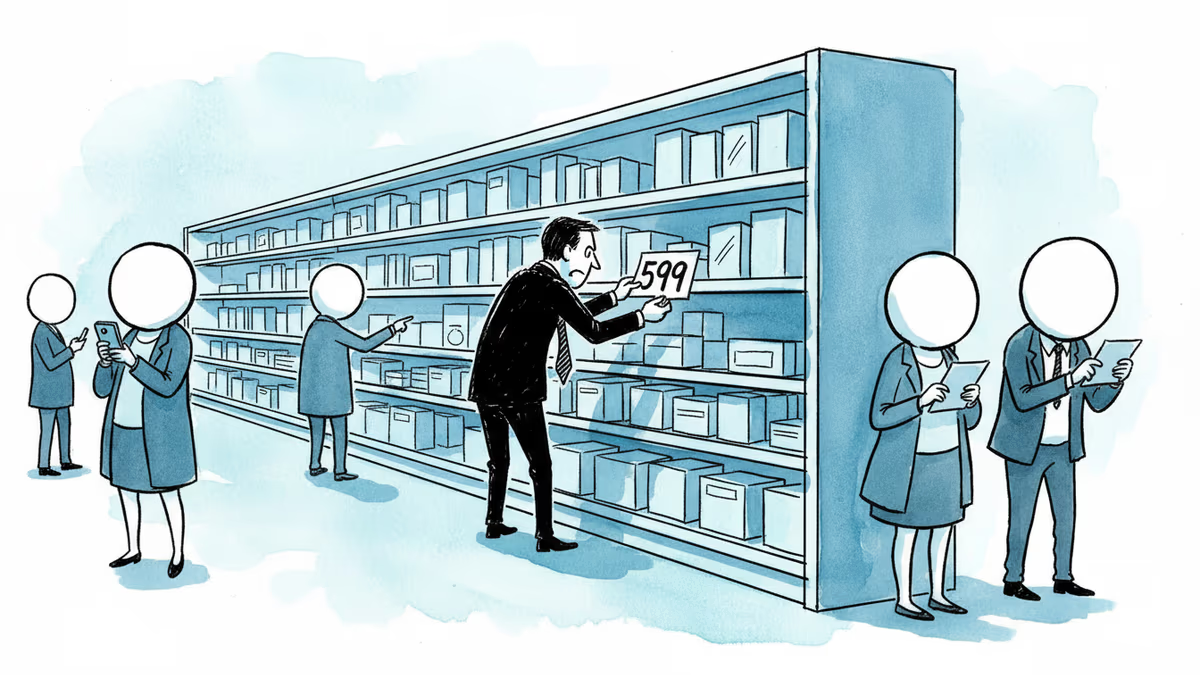
Apple quietly removed the entry-level $599 Mac Mini, raising the starting price to $799 — just one day after Tim Cook warned of chip supply constraints on the earnings call.
Samsung and SK unveiled a chip and AI investment package worth thousands of trillions of won on June 29. The headline number swings wildly by outlet, but the real contest isn't capital — it's water and power.
After 15 years of fragmented mobile messaging, Apple and Google are rolling out end-to-end encrypted RCS messaging between iPhones and Android devices. Here's what changed, why it took so long, and what it means for your privacy.
Apple agreed to pay $250 million to settle claims it misled iPhone 16 buyers about Apple Intelligence features. What this means for consumers, Big Tech marketing, and the AI industry.
Apple quietly removed the entry-level $599 Mac Mini, raising the starting price to $799 — just one day after Tim Cook warned of chip supply constraints on the earnings call.
Thoughts
Share your thoughts on this article
Sign in to join the conversation