
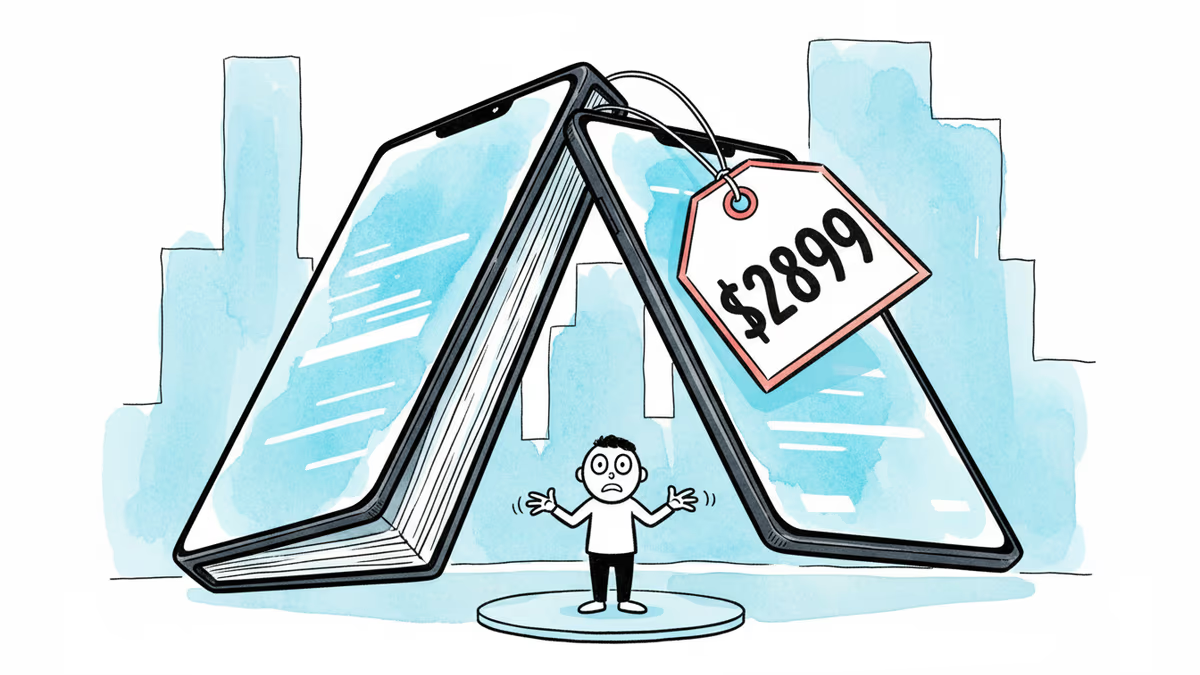
Samsung's $2,899 Gamble Folds in Under 3 Months
Samsung is discontinuing the Galaxy Z TriFold less than three months after its US launch. What does this rapid exit say about the foldable phone market's future?
It lasted roughly as long as a gym membership in January.
Samsung's first three-panel foldable phone, the Galaxy Z TriFold, is being discontinued less than three months after its US launch — before most people even knew it existed. According to Bloomberg, Samsung will wind down domestic Korean sales first, then clear out remaining US inventory without restocking. An unnamed Samsung spokesperson confirmed the plan.
What Actually Happened
Korean outlet Dong-A Ilbo reported on Monday that March 17th would mark the TriFold's final domestic restock in Korea. Samsung's website quietly stopped posting future restock updates earlier this month. In the US, the device is currently listed as "sold out" with no indication of more units coming.
The TriFold launched at $2,899 — a price that put it firmly in the territory of a decent used car down payment. The device featured a three-panel folding design that, when fully opened, expanded into something approaching a small tablet. It was Samsung's boldest bet yet on the idea that the future of smartphones is, literally, more folds.
That bet didn't pay off — at least not in the short term. The product never appeared to gain meaningful traction beyond early adopters and tech enthusiasts willing to spend nearly three times the price of a flagship iPhone.
Why This Matters Beyond One Product

This isn't just a story about a niche device failing to find its audience. It's a stress test for the entire foldable phone narrative.
Samsung has spent years positioning foldables as the next evolution of the smartphone. The Galaxy Z Fold and Z Flip lines were supposed to prove the concept; the TriFold was supposed to show where it could go. Instead, it's become the fastest high-profile exit in Samsung's recent hardware history.
The timing is notable. Huawei is already selling its own three-panel foldable, the Mate XT, in China. Google, OnePlus, and a wave of Chinese manufacturers are all expanding their foldable lineups aggressively. If Samsung steps back from the cutting edge of foldable innovation — even temporarily — it risks ceding ground it spent years building.
There's a counterargument, though. Pulling a product that isn't selling isn't a failure of vision; it's basic discipline. The technology and manufacturing insights Samsung gained from building the TriFold don't disappear with the product. They'll likely resurface in a future device at a price point that more people can actually consider.
Three Ways to Read This
For existing TriFold owners, the news raises immediate practical concerns: software support timelines, parts availability, and whether Samsung will stand behind a nearly $3,000 device that's being discontinued this quickly. Samsung has not announced any changes to its support commitments, but the silence is uncomfortable.
For investors, the direct impact on Samsung's bottom line is probably minimal — the TriFold was never a volume product. The larger question is what it signals about Samsung's foldable strategy heading into the second half of 2026. If the company is retreating from the high end of foldable experimentation, where does the next wave of differentiation come from?
For the broader market, this is a data point worth watching. The foldable phone category has been growing, but it remains a small fraction of overall smartphone sales. The TriFold's quiet exit suggests that the market's ceiling — at least at current price points — is lower than manufacturers would like to admit.
Authors
Related Articles

Samsung and SK unveiled a chip and AI investment package worth thousands of trillions of won on June 29. The headline number swings wildly by outlet, but the real contest isn't capital — it's water and power.
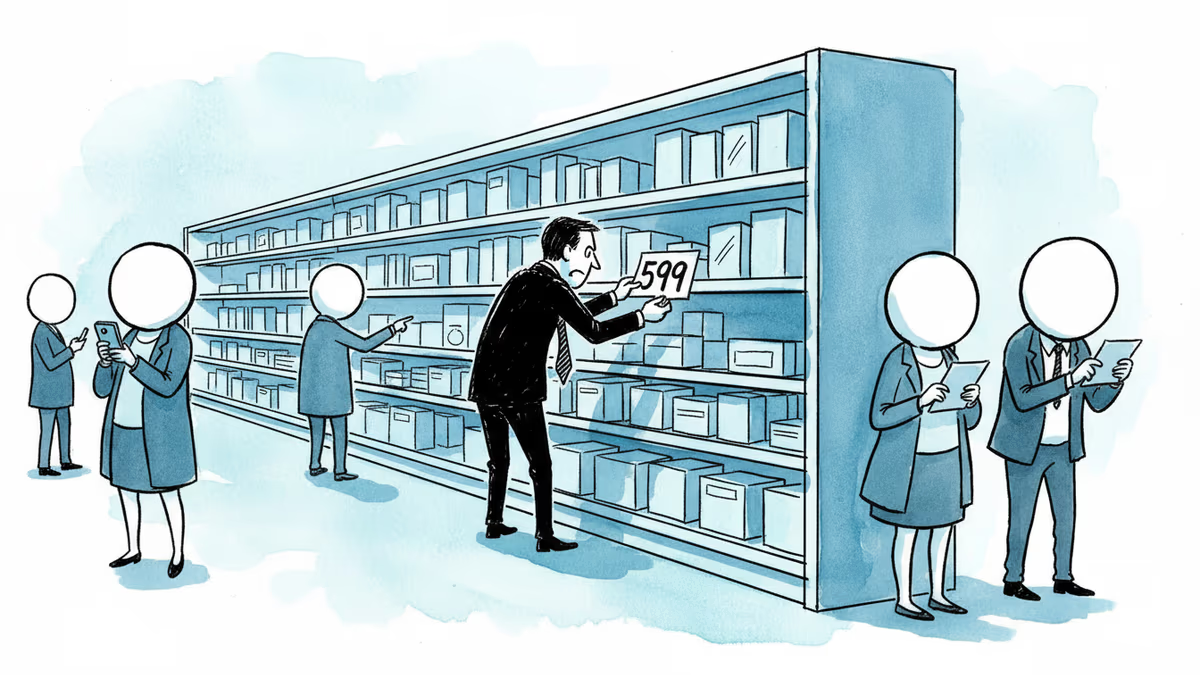
Apple quietly removed the entry-level $599 Mac Mini, raising the starting price to $799 — just one day after Tim Cook warned of chip supply constraints on the earnings call.

Expiring leases will flood the US used car market with over a million electric vehicles by 2028. Could this do what subsidies couldn't — make EVs genuinely affordable?
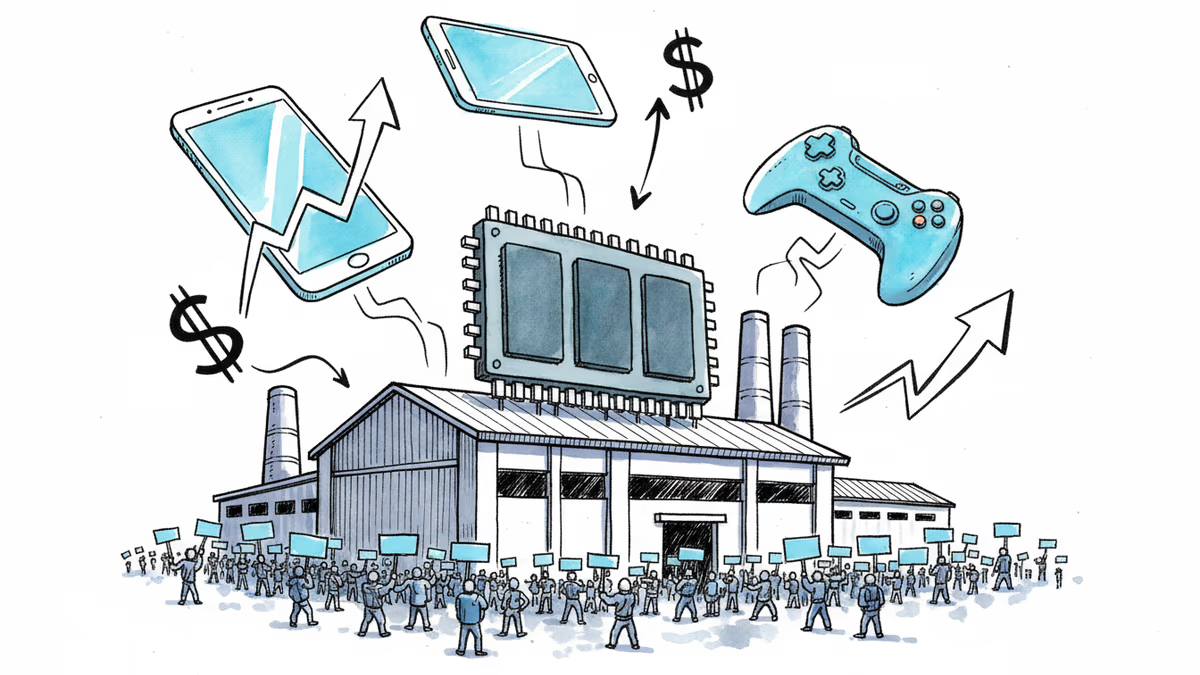
40,000 Samsung union workers rallied at its Pyeongtaek chip plant, threatening an 18-day strike over wages. With AI-driven RAM shortages already lifting consumer prices, the timing couldn't be worse.
Samsung and SK unveiled a chip and AI investment package worth thousands of trillions of won on June 29. The headline number swings wildly by outlet, but the real contest isn't capital — it's water and power.
Apple quietly removed the entry-level $599 Mac Mini, raising the starting price to $799 — just one day after Tim Cook warned of chip supply constraints on the earnings call.
Expiring leases will flood the US used car market with over a million electric vehicles by 2028. Could this do what subsidies couldn't — make EVs genuinely affordable?
40,000 Samsung union workers rallied at its Pyeongtaek chip plant, threatening an 18-day strike over wages. With AI-driven RAM shortages already lifting consumer prices, the timing couldn't be worse.
Thoughts
Share your thoughts on this article
Sign in to join the conversation