
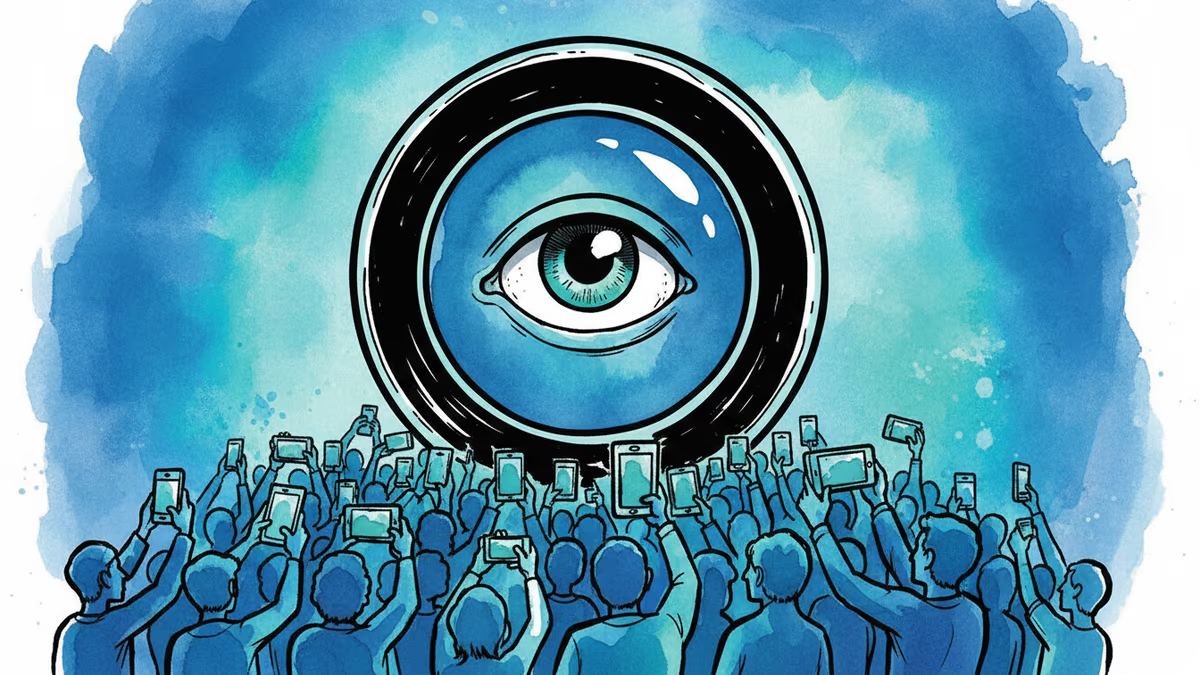
Why Samsung's S26 Camera Features Are 'Scarier' Than You Think
Samsung's Galaxy S26 brings impressive upgrades like Privacy Display, but tech experts are calling the new camera features 'something scarier.' Here's why that matters for every smartphone user.
48 Hours Later, Tech Experts Are Still Unsettled
Samsung's Galaxy S26 series launched with the expected fanfare. The Privacy Display on the S26 Ultra looks genuinely innovative. Most upgrades feel iterative but solid. Yet tech journalists at The Verge used an unusual word to describe the new camera features: "scarier."
Not "impressive." Not "groundbreaking." Scarier.
When seasoned tech reviewers who've seen every smartphone innovation choose that word, it's worth asking: what exactly makes a camera feature scary?
Beyond Megapixels: The Intelligence Revolution
This isn't about image quality anymore. The S26's camera improvements reportedly go far beyond traditional metrics like resolution or low-light performance. While Samsung hasn't detailed every feature, industry insiders suggest we're looking at AI capabilities that fundamentally change how smartphones "see" the world.
Think real-time biometric analysis, advanced behavioral pattern recognition, and seamless integration with cloud-based AI systems. The camera becomes less about capturing moments and more about understanding them—and you.
Apple and Google have been moving in this direction, but Samsung appears to have taken a significant leap forward.

The Privacy Display Paradox
Here's the irony: Samsung introduces a Privacy Display to prevent shoulder surfing, showing genuine concern for user privacy. Yet simultaneously, they're potentially expanding data collection through camera intelligence.
It's like installing a privacy fence while placing cameras throughout your backyard. The question isn't about Samsung's intentions—it's about the broader implications of this technological trajectory.
What This Means for Average Users
For most consumers, these features will debut as convenient party tricks. Your phone might:
- Analyze your health through facial scans
- Predict your mood based on micro-expressions
- Understand social dynamics in group photos
- Provide real-time behavioral insights
Each capability sounds helpful in isolation. Together, they represent an unprecedented level of personal surveillance—voluntary, convenient, and increasingly essential for the "full" smartphone experience.
The Bigger Picture: Surveillance Capitalism's New Frontier
We're witnessing the next evolution of what Harvard professor Shoshana Zuboff calls "surveillance capitalism." Social media companies pioneered behavioral data extraction through our posts and clicks. Now, smartphone cameras are positioned to harvest behavioral data through our physical presence and expressions.
The business model is clear: more personal data enables more targeted advertising, more accurate predictive algorithms, and ultimately, more revenue. The question is whether consumers understand this trade-off.
Authors
Related Articles

Samsung and SK unveiled a chip and AI investment package worth thousands of trillions of won on June 29. The headline number swings wildly by outlet, but the real contest isn't capital — it's water and power.
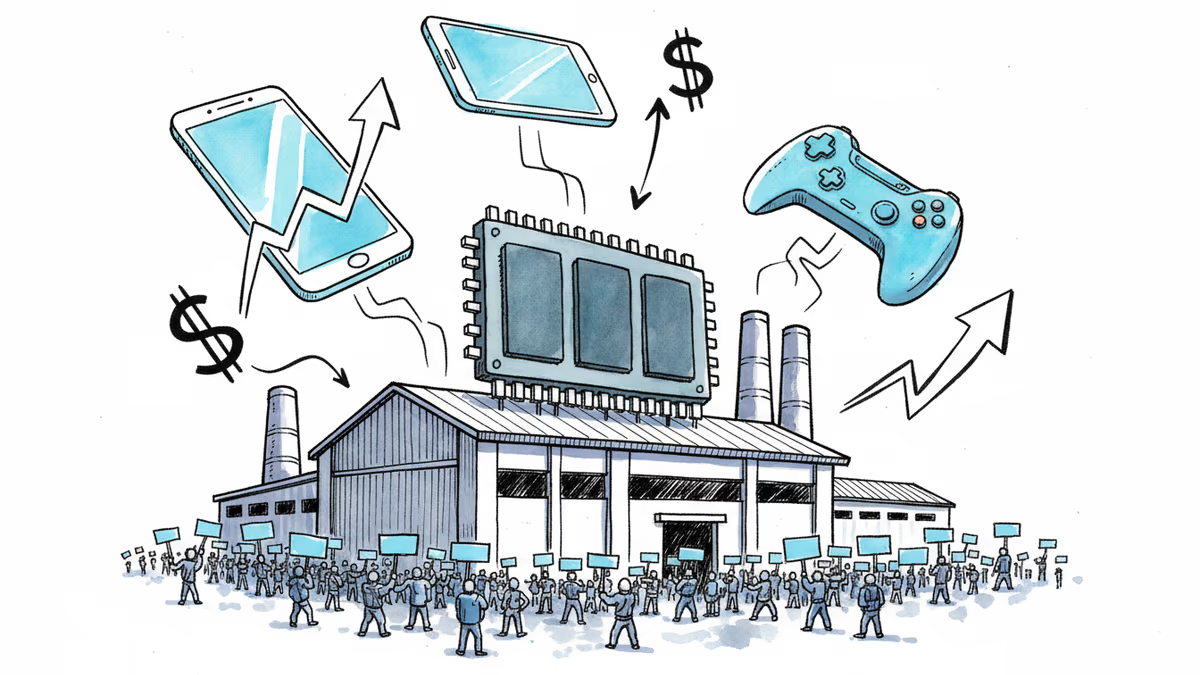
40,000 Samsung union workers rallied at its Pyeongtaek chip plant, threatening an 18-day strike over wages. With AI-driven RAM shortages already lifting consumer prices, the timing couldn't be worse.

Memory makers can't build fabs fast enough. By end of 2027, supply will cover just 60% of demand. Here's why the shortage could last until 2030—and what it means for AI, your devices, and the chip industry.
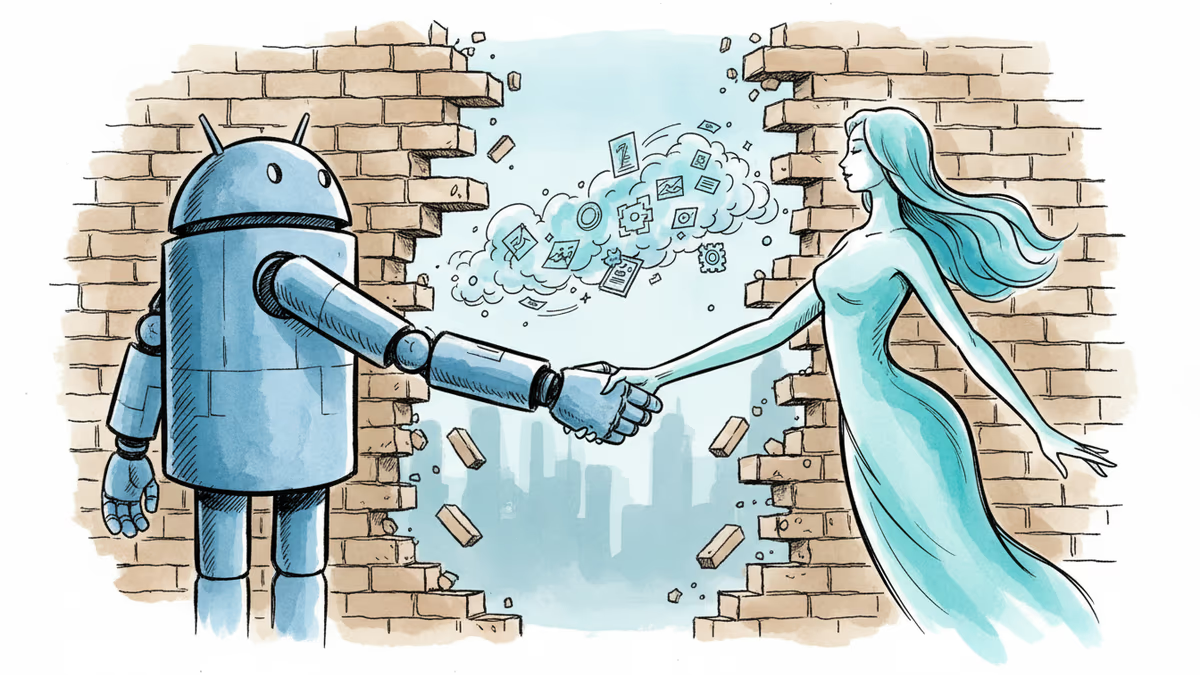
Samsung's Galaxy S26 now supports AirDrop through Quick Share, making cross-platform file sharing seamless. What does it mean when Android starts dismantling one of Apple's most beloved moats?
Samsung and SK unveiled a chip and AI investment package worth thousands of trillions of won on June 29. The headline number swings wildly by outlet, but the real contest isn't capital — it's water and power.
40,000 Samsung union workers rallied at its Pyeongtaek chip plant, threatening an 18-day strike over wages. With AI-driven RAM shortages already lifting consumer prices, the timing couldn't be worse.
Memory makers can't build fabs fast enough. By end of 2027, supply will cover just 60% of demand. Here's why the shortage could last until 2030—and what it means for AI, your devices, and the chip industry.
Samsung's Galaxy S26 now supports AirDrop through Quick Share, making cross-platform file sharing seamless. What does it mean when Android starts dismantling one of Apple's most beloved moats?
Thoughts
Share your thoughts on this article
Sign in to join the conversation