
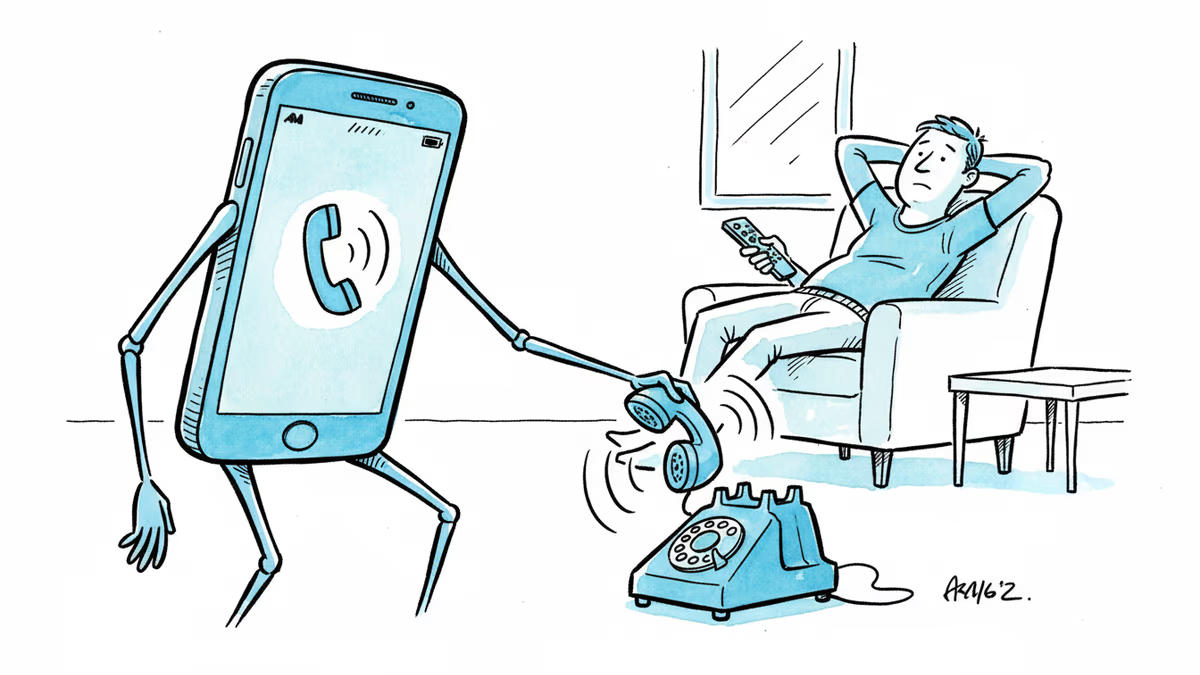
Your Phone Now Screens Your Calls
Samsung's Galaxy S26 series introduces AI that answers unknown calls, edits photos with text commands, and handles app tasks. But are we ready for phones that think for us?
When Your Phone Becomes Your Personal Assistant
Unknown number calling. Your phone answers, chats with the caller, determines if it's spam or legitimate, then decides whether you're worth interrupting. Welcome to the Galaxy S26 era, where your smartphone doesn't just connect calls—it curates them.
Samsung's latest trio—the S26, S26 Plus, and S26 Ultra—might look familiar on the surface. But underneath lies Qualcomm's Snapdragon 8 Elite Gen 5, powering AI features that fundamentally change how we interact with our devices. Starting at $899.99, these aren't just incremental upgrades. They're betting on a future where phones think before we do.
Type It, Change It
Forget complex photo editing apps. The S26's new AI photo tools let you modify images by simply typing what you want changed. "Make the sky purple," and it happens. "Remove that person in the background," done. It's democratizing photo editing in a way that would have seemed impossible just years ago.
But the real game-changer is the updated Google Gemini integration. The AI can now perform tasks across third-party apps like Uber and DoorDash without you lifting a finger. Say "order pizza," and Gemini navigates the app, selects options based on your preferences, and completes the transaction. No app-switching, no menu browsing, no friction.

The Convenience Paradox
Consumers are split on these AI advances. Early adopters love the seamless experience—who wouldn't want their phone to handle mundane tasks? But privacy advocates raise red flags about AI systems listening to calls and accessing multiple apps with such broad permissions.
The business implications are equally complex. If phones can order food, book rides, and make purchases autonomously, what happens to app engagement metrics that companies have built their strategies around? DoorDash might love the increased orders, but they lose direct customer interaction and data collection opportunities.
Market Reality Check
Samsung faces a crowded field. Apple's iPhone 16 series already introduced AI features, though with more conservative implementation. Google's Pixel phones have been AI-forward for years. The question isn't whether AI belongs in smartphones—that debate is over. It's whether Samsung's specific AI vision resonates with consumers willing to pay premium prices.
The $899.99 starting price puts the S26 in direct competition with flagship alternatives. In a market where upgrade cycles are lengthening and consumers are increasingly price-conscious, Samsung needs these AI features to feel essential, not experimental.
Authors
Related Articles
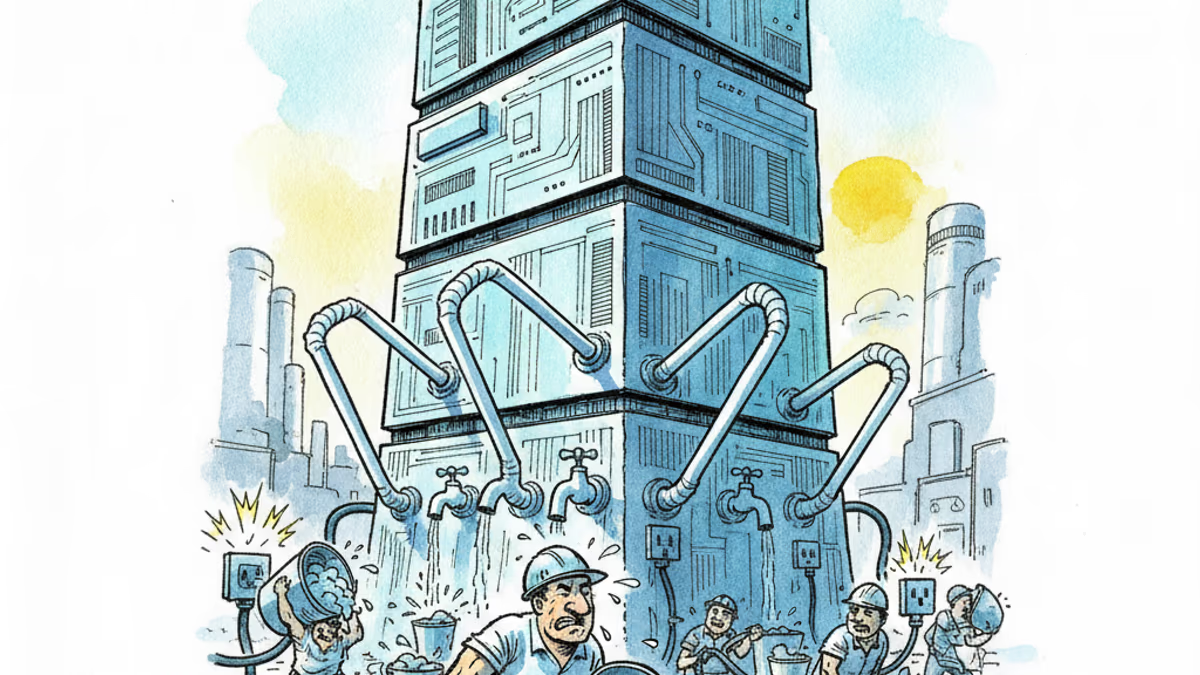
Samsung and SK unveiled a chip and AI investment package worth thousands of trillions of won on June 29. The headline number swings wildly by outlet, but the real contest isn't capital — it's water and power.
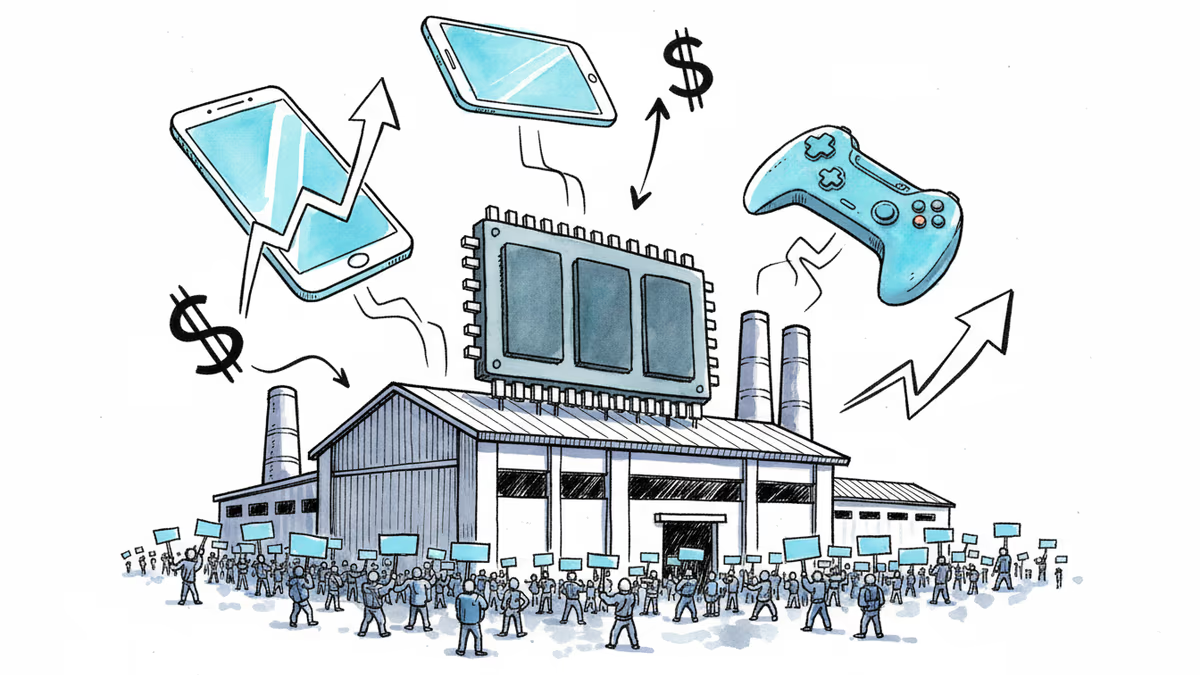
40,000 Samsung union workers rallied at its Pyeongtaek chip plant, threatening an 18-day strike over wages. With AI-driven RAM shortages already lifting consumer prices, the timing couldn't be worse.

Memory makers can't build fabs fast enough. By end of 2027, supply will cover just 60% of demand. Here's why the shortage could last until 2030—and what it means for AI, your devices, and the chip industry.
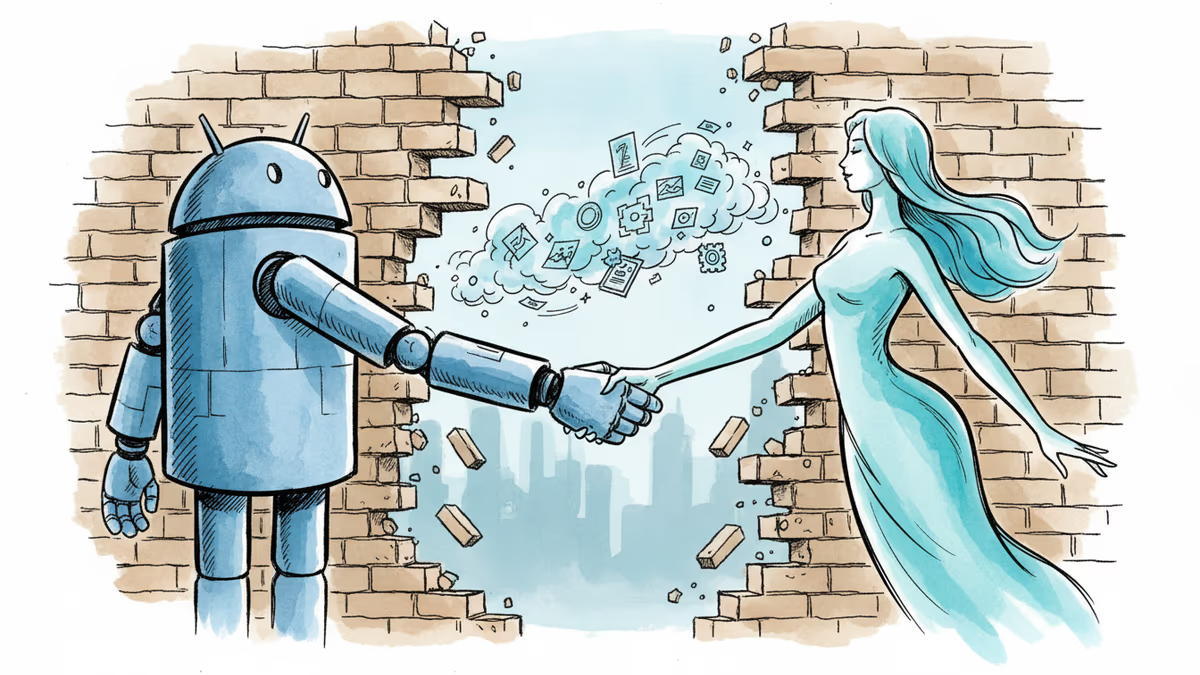
Samsung's Galaxy S26 now supports AirDrop through Quick Share, making cross-platform file sharing seamless. What does it mean when Android starts dismantling one of Apple's most beloved moats?
Samsung and SK unveiled a chip and AI investment package worth thousands of trillions of won on June 29. The headline number swings wildly by outlet, but the real contest isn't capital — it's water and power.
40,000 Samsung union workers rallied at its Pyeongtaek chip plant, threatening an 18-day strike over wages. With AI-driven RAM shortages already lifting consumer prices, the timing couldn't be worse.
Memory makers can't build fabs fast enough. By end of 2027, supply will cover just 60% of demand. Here's why the shortage could last until 2030—and what it means for AI, your devices, and the chip industry.
Samsung's Galaxy S26 now supports AirDrop through Quick Share, making cross-platform file sharing seamless. What does it mean when Android starts dismantling one of Apple's most beloved moats?
Thoughts
Share your thoughts on this article
Sign in to join the conversation