
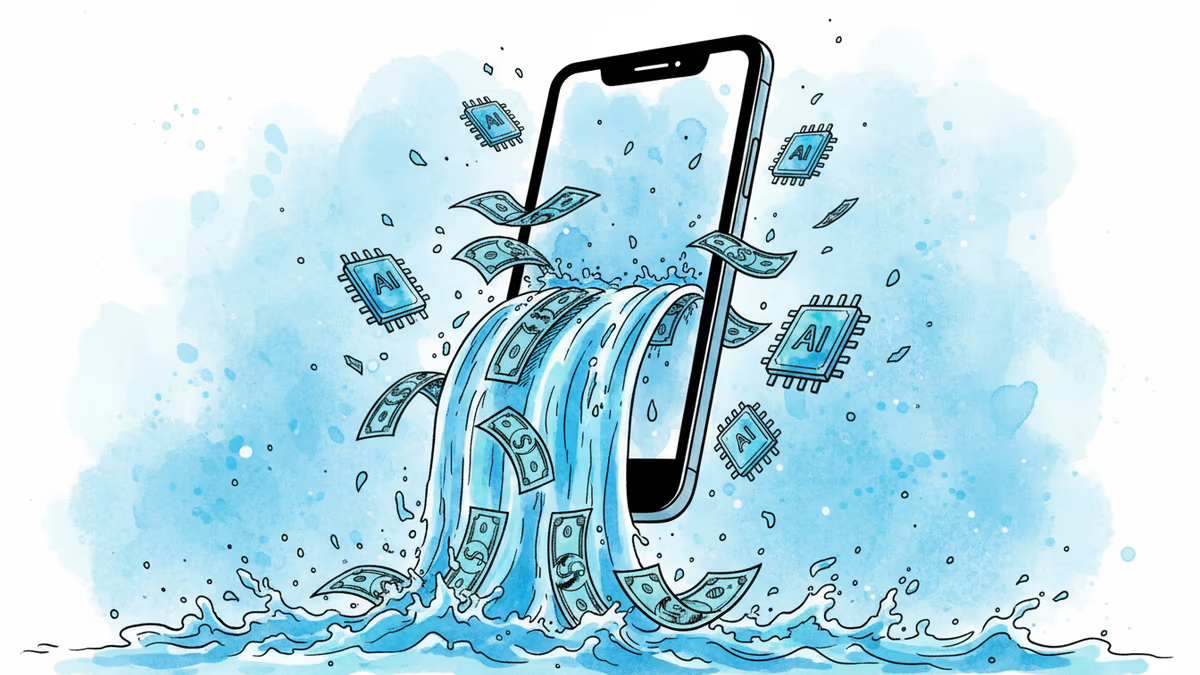
Samsung's $100 Price Hike Reveals AI Era's Hidden Costs
Samsung unveiled the Galaxy S26 series with minimal hardware changes but a $100 price increase. What this tells us about smartphone pricing in the AI age.
$100. That's how much more you'll pay for the Galaxy S26 and S26+ compared to last year's models. Not because of groundbreaking hardware changes—there barely are any. The Ultra still commands a jaw-dropping $1,300, unchanged from its predecessor.
At yesterday's Unpacked event, Samsung revealed what might be the most expensive case of déjà vu in smartphone history. The S26 series looks virtually identical to the S25 lineup. Camera rings got a subtle redesign, dimensions shifted by millimeters. The Ultra actually downgraded from titanium to aluminum—a cost-cutting move Apple also made with its latest iPhones.
"Agentic AI" as the New Selling Point
Samsung's betting everything on software, positioning the S26 series as the "first Agentic AI phones." The promise: faster, more private AI processing that transforms how we interact with our devices. But here's the question—does AI functionality justify a $100 premium when most AI features still rely on cloud processing?
The company is clearly trying to shift the conversation from hardware specs to AI capabilities. It's a bold strategy, but one that puts enormous pressure on software to deliver tangible value.
The Real Culprit: Component Economics
Behind Samsung's price hike lies an uncomfortable truth about AI-era economics. Building phones capable of sophisticated on-device AI requires more powerful processors, additional memory, and specialized chips. All of this costs money—money that gets passed to consumers.

Samsung's position as the "undisputed king of the Android ecosystem" also plays a role. With fewer competitors in the flagship space, the company has more pricing power than ever before.
Consumer Pushback vs. Enterprise Appetite
The $100 increase comes at a delicate time. Consumers are already stretching phone replacement cycles to 3+ years, and higher prices could accelerate this trend. Many users might opt for older models or mid-range alternatives.
But enterprise customers might see things differently. For businesses looking to integrate AI into workflows, the premium could be justified by productivity gains. The question is whether consumer sales can offset potential enterprise adoption.
Market Dynamics at Play
Samsung's pricing strategy reflects broader industry consolidation. With fewer companies making flagship Android phones, competitive pressure has decreased. This gives Samsung room to experiment with pricing—but also exposes the company to greater risk if consumers reject the value proposition.
The move also signals how smartphone companies plan to monetize AI development costs. R&D investments in AI capabilities need to be recouped somehow, and higher device prices appear to be the chosen method.
Authors
Related Articles
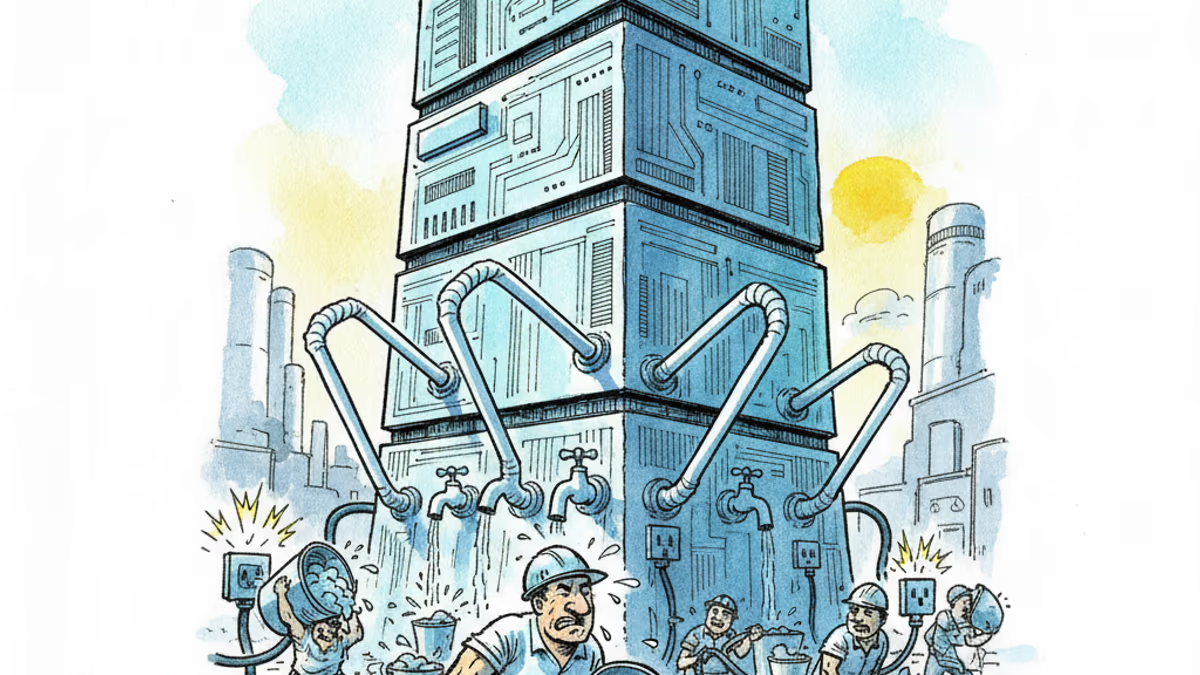
Samsung and SK unveiled a chip and AI investment package worth thousands of trillions of won on June 29. The headline number swings wildly by outlet, but the real contest isn't capital — it's water and power.
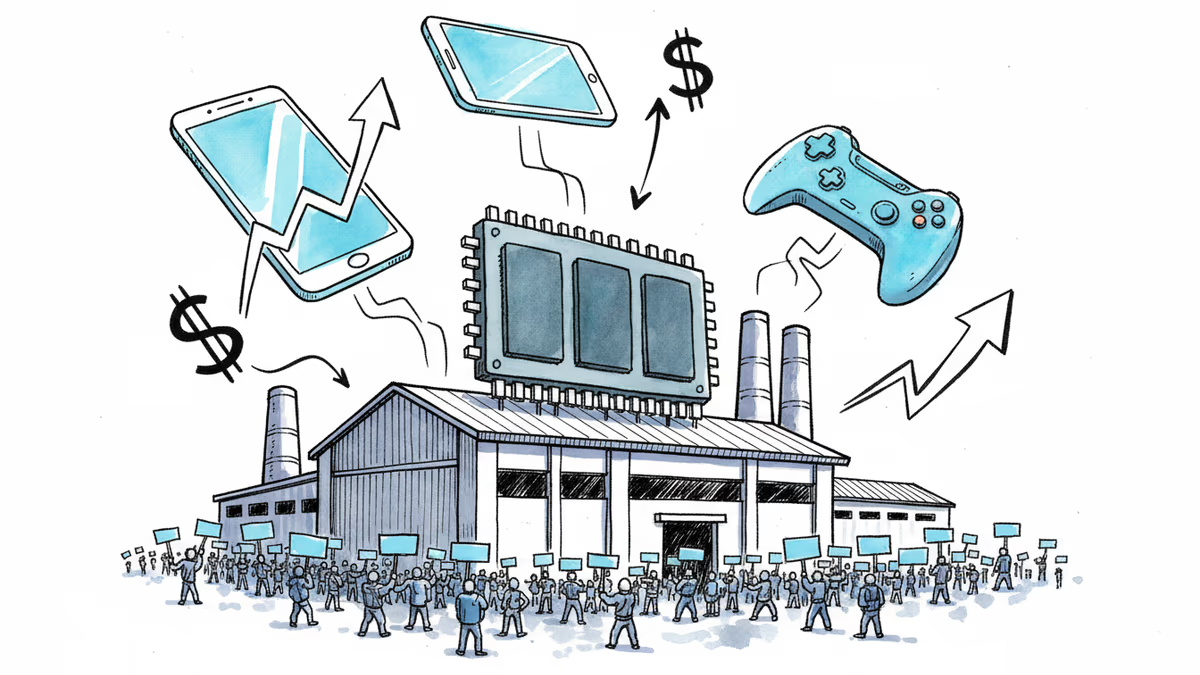
40,000 Samsung union workers rallied at its Pyeongtaek chip plant, threatening an 18-day strike over wages. With AI-driven RAM shortages already lifting consumer prices, the timing couldn't be worse.

Memory makers can't build fabs fast enough. By end of 2027, supply will cover just 60% of demand. Here's why the shortage could last until 2030—and what it means for AI, your devices, and the chip industry.
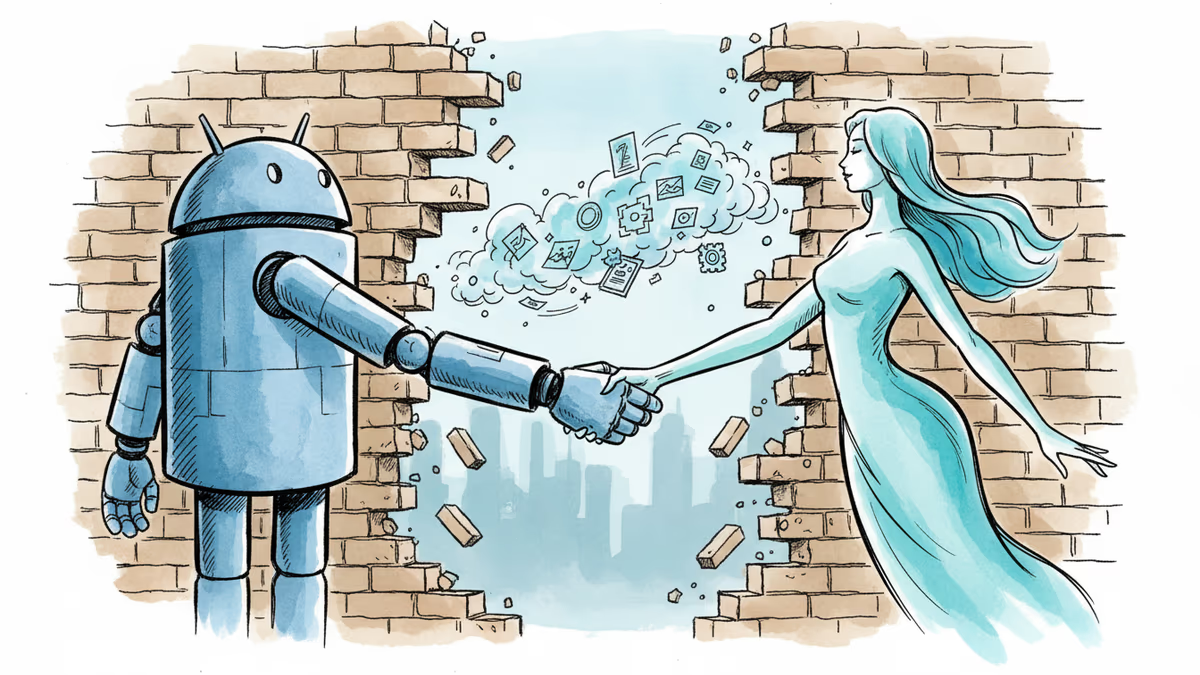
Samsung's Galaxy S26 now supports AirDrop through Quick Share, making cross-platform file sharing seamless. What does it mean when Android starts dismantling one of Apple's most beloved moats?
Samsung and SK unveiled a chip and AI investment package worth thousands of trillions of won on June 29. The headline number swings wildly by outlet, but the real contest isn't capital — it's water and power.
40,000 Samsung union workers rallied at its Pyeongtaek chip plant, threatening an 18-day strike over wages. With AI-driven RAM shortages already lifting consumer prices, the timing couldn't be worse.
Memory makers can't build fabs fast enough. By end of 2027, supply will cover just 60% of demand. Here's why the shortage could last until 2030—and what it means for AI, your devices, and the chip industry.
Samsung's Galaxy S26 now supports AirDrop through Quick Share, making cross-platform file sharing seamless. What does it mean when Android starts dismantling one of Apple's most beloved moats?
Thoughts
Share your thoughts on this article
Sign in to join the conversation