
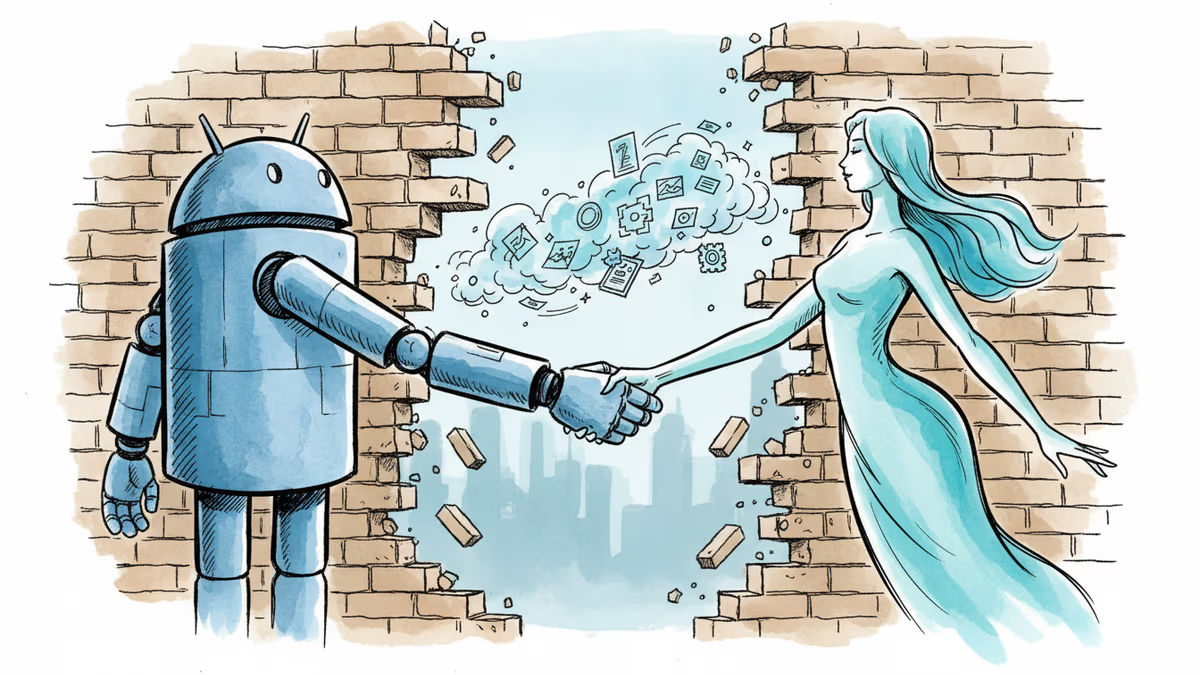
Samsung Just Opened a Door Apple Built for Itself
Samsung's Galaxy S26 now supports AirDrop through Quick Share, making cross-platform file sharing seamless. What does it mean when Android starts dismantling one of Apple's most beloved moats?
For years, "sorry, I'm on Android" was the quiet tax paid by every Galaxy user at a dinner table full of iPhones. That toll just got a little cheaper.
Samsung announced that its Quick Share feature on the Galaxy S26 series will now support Apple's AirDrop—letting Galaxy owners send files directly to iPhones over a fast wireless connection, no app, no account, no friction. The rollout begins in South Korea today, reaches the US later this week, and will expand to Europe, Southeast Asia, Japan, and Latin America in the coming weeks. More Galaxy devices will follow "at a later date."
With this move, Samsung becomes only the second Android manufacturer to support AirDrop interoperability.
The Wall That Wasn't Technically Necessary
AirDrop has always been a feature wrapped inside an identity. It works beautifully—fast, wireless, no compression—but only if everyone in the room is holding an Apple device. That exclusivity wasn't a technical limitation so much as a design choice, and it quietly reinforced one of Apple's most durable competitive advantages: the feeling that leaving the ecosystem means losing convenience.
Samsung's move chips at that logic. A Galaxy S26 user can now send a 4K video to an iPhone user the same way two iPhone users would—instantly, wirelessly, without a detour through WhatsApp or email. The experience gap narrows.
For everyday users, this is straightforwardly good news. Mixed-device households, offices where Android and iOS coexist, friend groups split across platforms—all of these get a little less annoying. The question is what it means for the companies involved.

What Samsung Gains, What Apple Risks
For Samsung, the calculus is clear. One of the most commonly cited reasons consumers stick with Apple isn't the hardware—it's the ecosystem. AirDrop compatibility removes one more reason a Galaxy user might feel left out of the Apple experience, and one more reason an iPhone user might hesitate before switching to Android. It's a quiet but pointed move in a market where flagship smartphone specs have largely converged.
Apple's position is more nuanced. The company hasn't publicly responded, and technically it has limited grounds to block the integration. More broadly, regulatory pressure—particularly Europe's Digital Markets Act, which mandates interoperability—has been pushing Apple toward a more open posture for years. AirDrop becoming cross-platform isn't a concession Apple made willingly; it's a gap Samsung walked through.
There's a counterargument worth taking seriously, though. Interoperability cuts both ways. If Galaxy users can now enjoy AirDrop-like convenience, one of the friction points that made switching to Apple more attractive also diminishes. The moat shrinks for everyone.
The Deeper Shift
This moment sits inside a larger trend: the slow erosion of hard ecosystem boundaries. iMessage, once a blue-bubble social signal, now supports RCS. Google and Apple have both moved toward cross-platform standards in messaging, payments, and now file sharing. The walls aren't falling—but they're getting shorter.
For consumers, that's mostly a win. For investors and analysts watching Samsung and Apple, it raises a more uncomfortable question: if the ecosystem lock-in weakens, where does brand loyalty come from next? AI assistants? Camera software? Health data integration? The smartphone industry is quietly searching for its next moat.
Authors
Related Articles
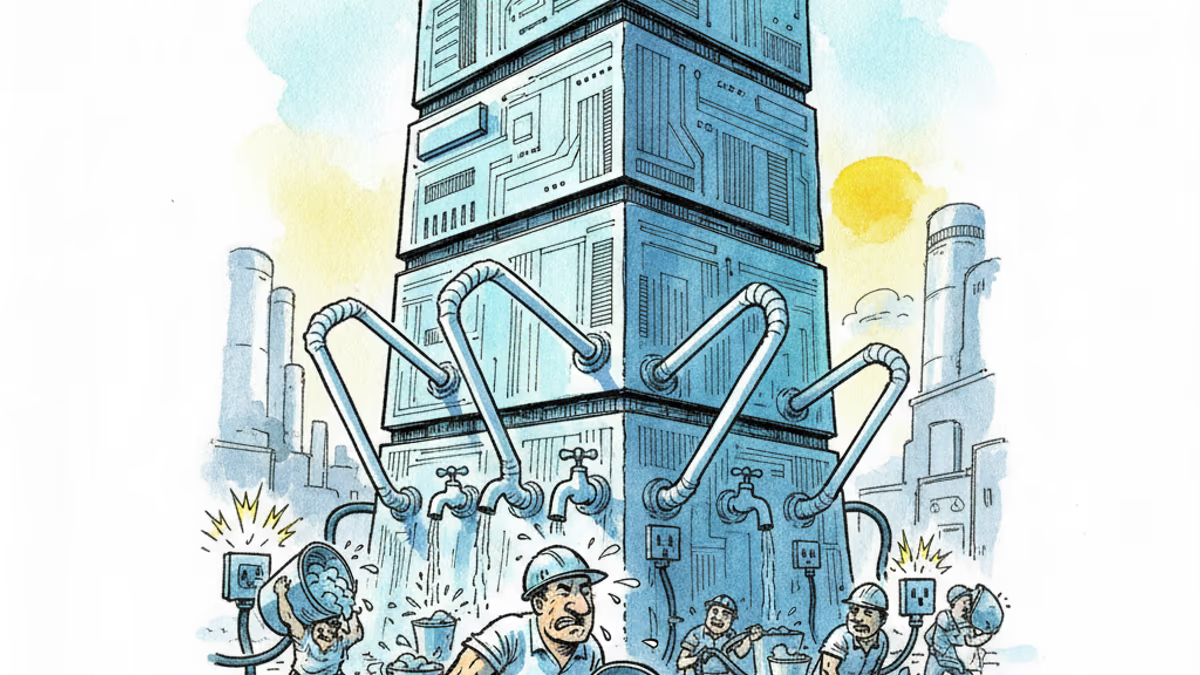
Samsung and SK unveiled a chip and AI investment package worth thousands of trillions of won on June 29. The headline number swings wildly by outlet, but the real contest isn't capital — it's water and power.
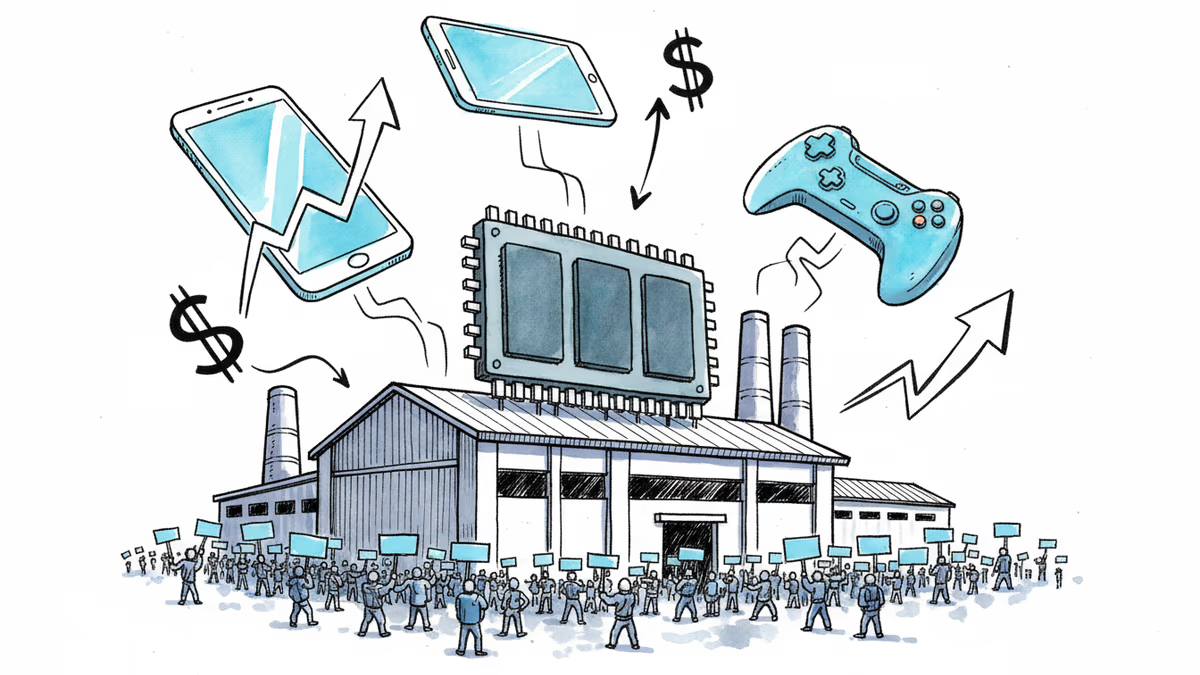
40,000 Samsung union workers rallied at its Pyeongtaek chip plant, threatening an 18-day strike over wages. With AI-driven RAM shortages already lifting consumer prices, the timing couldn't be worse.
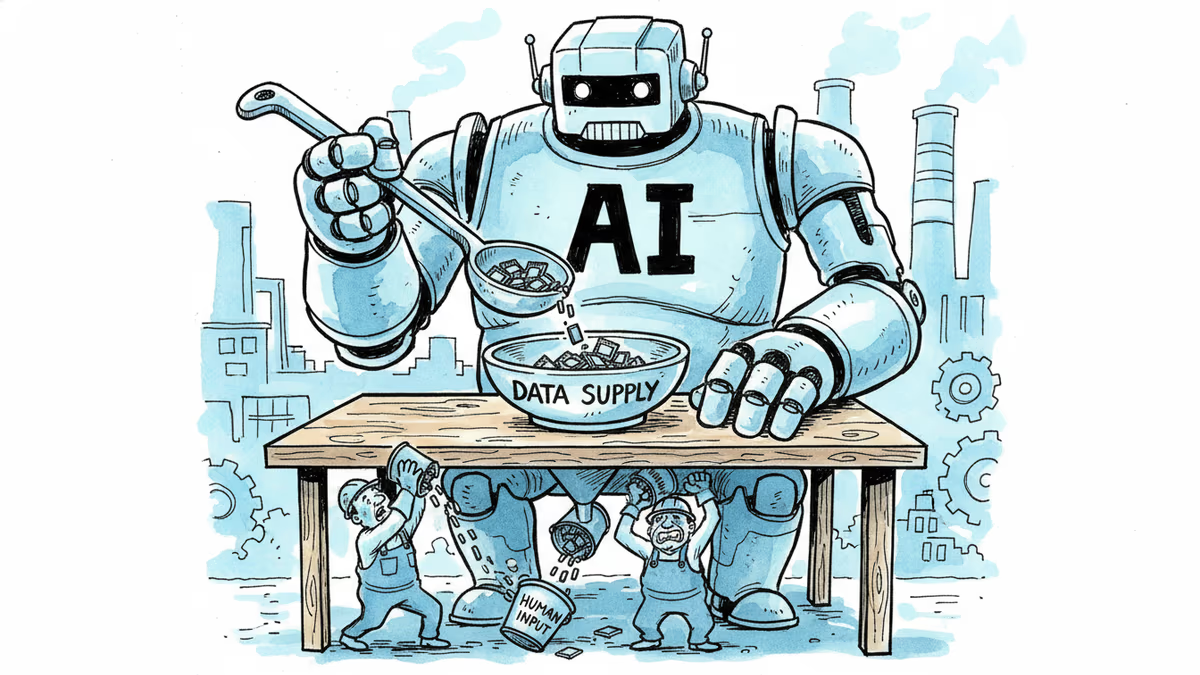
Memory makers can't build fabs fast enough. By end of 2027, supply will cover just 60% of demand. Here's why the shortage could last until 2030—and what it means for AI, your devices, and the chip industry.

A complete guide to backing up your Android phone in 2026 — Google One, Samsung Cloud, local storage, and the 2FA codes most people forget until it's too late.
Samsung and SK unveiled a chip and AI investment package worth thousands of trillions of won on June 29. The headline number swings wildly by outlet, but the real contest isn't capital — it's water and power.
40,000 Samsung union workers rallied at its Pyeongtaek chip plant, threatening an 18-day strike over wages. With AI-driven RAM shortages already lifting consumer prices, the timing couldn't be worse.
Memory makers can't build fabs fast enough. By end of 2027, supply will cover just 60% of demand. Here's why the shortage could last until 2030—and what it means for AI, your devices, and the chip industry.
A complete guide to backing up your Android phone in 2026 — Google One, Samsung Cloud, local storage, and the 2FA codes most people forget until it's too late.
Thoughts
Share your thoughts on this article
Sign in to join the conversation