

Why Saline Nasal Irrigation is the Best Cold Prevention Strategy 2026
Discover why saline nasal irrigation is a scientifically proven shield against colds in 2026. Learn how it reduces illness by 20% and how to do it safely.
Could a 5,000-year-old remedy be more effective than modern pharmacy drugs? On average, Americans contract two to three colds a year, costing the economy roughly $40 billion. As over-the-counter medicines offer only modest relief, science is turning back to Ayurveda and the practice of saline nasal irrigation to shield against seasonal bugs.
The Science Behind Saline Nasal Irrigation
In 2024, a massive study of 14,000 people funded by the UK's NIHR found that using saline spray at the first sign of infection slashed illness duration by 20 percent. Paul Little, a professor at the University of Southampton, explains that chloride in salt is converted into hypochlorous acid within nasal cells, which directly inhibits viral replication.
Beyond blocking replication, saline boosts the activity of neutrophils—white blood cells that fight pathogens. It also hydrates the nasal microbiome, making it harder for viruses like SARS-CoV-2 to latch onto ACE2 receptors. One study even noted that Covid-19 patients were 8 times less likely to be hospitalized if they practiced regular nasal rinsing.

Safe Practice for Maximum Saline Nasal Irrigation Benefits
While it's simple, safety is paramount. Experts like Amy Baxter from Augusta University emphasize using water you'd trust to drink. To avoid risks like Naegleria fowleri, always use distilled or boiled water. You can mix 8 ounces of water with 0.5 teaspoon of salt to create an effective DIY solution.
For the best results, rinse as soon as possible after exposure to someone with a cold. Older males or those who are overweight may benefit from higher volumes of saline due to a larger nasal surface area. It's a natural, cost-effective way to stay healthy during travel or peak winter months.
Authors
Related Articles

Samsung Electronics' union branch revealed that 84% of survey respondents oppose the government's roughly $290 billion (₩400 trillion) semiconductor megaproject in Gwangju. Government, management, the union and shareholders are all reading the same national project in sharply different ways.

Nvidia shipped roughly a billion RISC-V cores in 2024, then announced it would run CUDA on the open standard. We break down how royalty-free instruction sets and open software stacks are trying to route around CUDA's lock-in. Part 2 of the Semiconductor Sovereignty series.
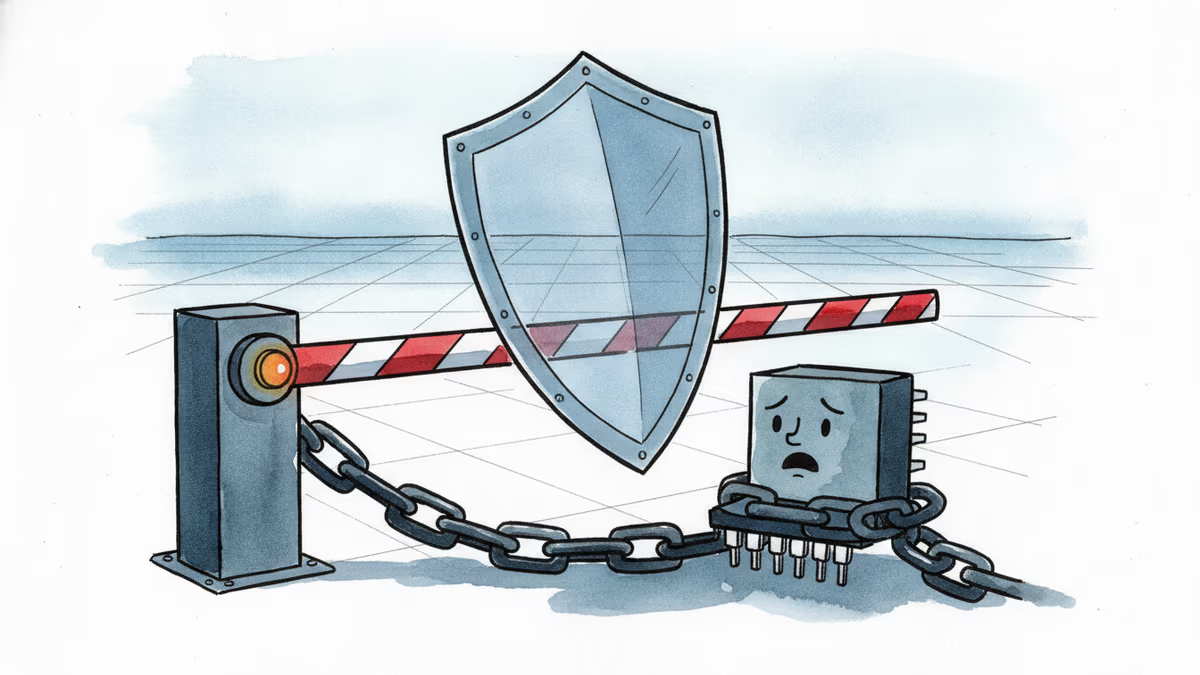
US AI-chip export controls split into three layers in the first half of 2026 — January easing, a May crackdown on circumvention, and a pending bill. Nvidia erased China from its guidance and still posted a record $81.6 billion quarter. A look at the export policy that both shields and cages it.
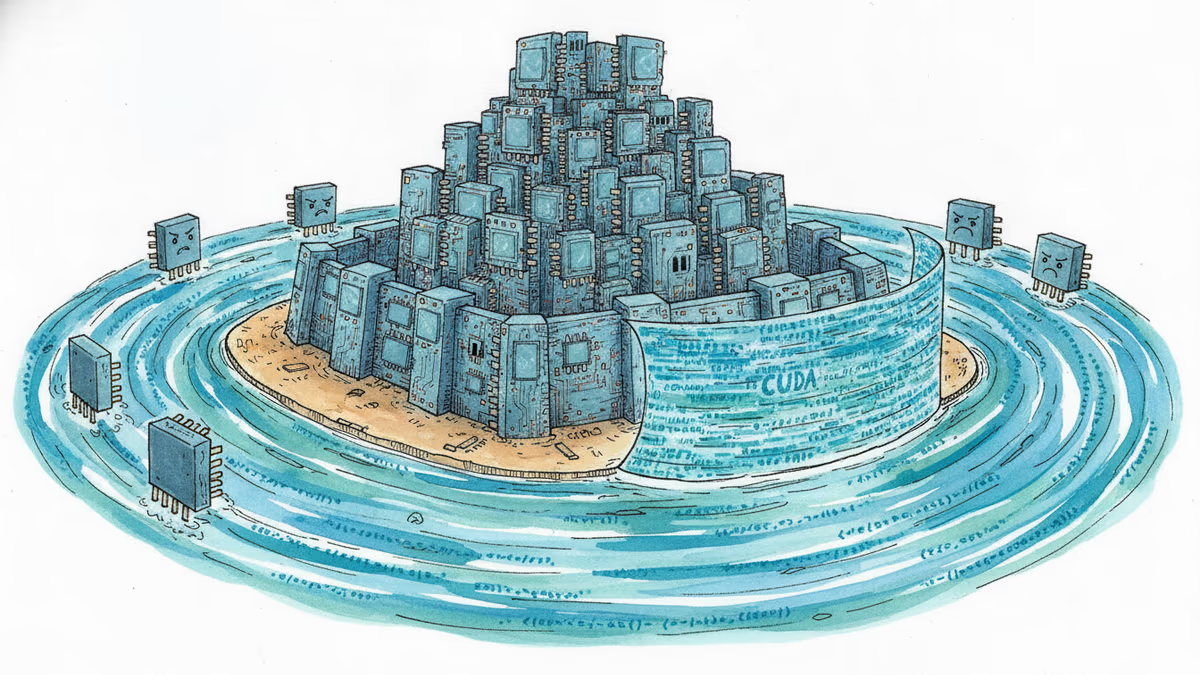
AMD's MI325X matches or beats Nvidia on memory and bandwidth — yet Nvidia's 86-92% share holds. The real moat is CUDA, 20 years in the making. Part 1 of 4.
Samsung Electronics' union branch revealed that 84% of survey respondents oppose the government's roughly $290 billion (₩400 trillion) semiconductor megaproject in Gwangju. Government, management, the union and shareholders are all reading the same national project in sharply different ways.
Nvidia shipped roughly a billion RISC-V cores in 2024, then announced it would run CUDA on the open standard. We break down how royalty-free instruction sets and open software stacks are trying to route around CUDA's lock-in. Part 2 of the Semiconductor Sovereignty series.
US AI-chip export controls split into three layers in the first half of 2026 — January easing, a May crackdown on circumvention, and a pending bill. Nvidia erased China from its guidance and still posted a record $81.6 billion quarter. A look at the export policy that both shields and cages it.
AMD's MI325X matches or beats Nvidia on memory and bandwidth — yet Nvidia's 86-92% share holds. The real moat is CUDA, 20 years in the making. Part 1 of 4.
Thoughts
Share your thoughts on this article
Sign in to join the conversation